
 Save 15% on your 1st Autoship learn more

 Email us
 Live Chat
 FAQs
FAQs





Introduction
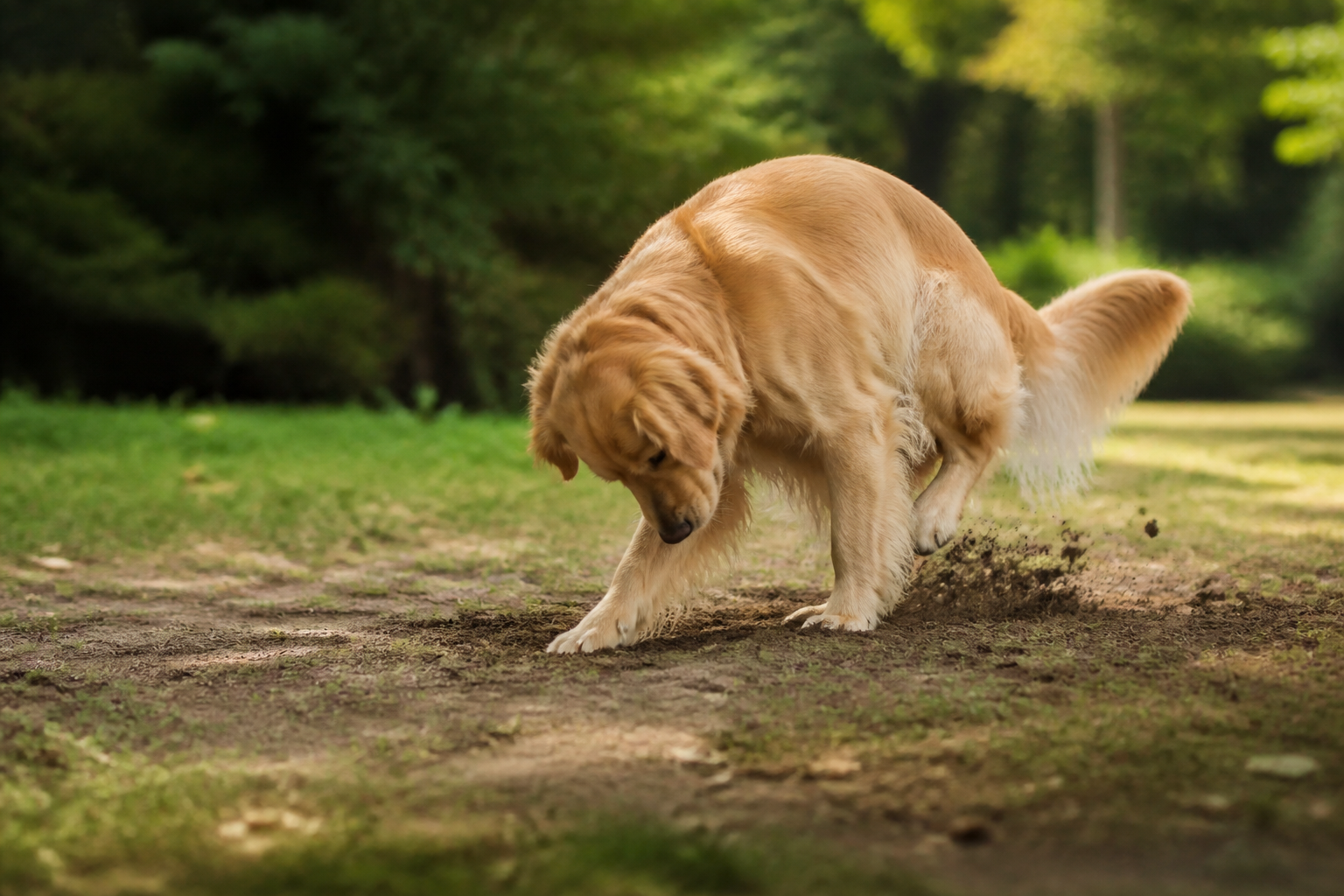
You are enjoying a quiet morning walk when your dog suddenly finishes their business and begins a frantic dance. They kick their back legs with surprising power. Clumps of grass and dirt fly through the air. To a passerby, it looks like your dog is trying to wipe their feet or perhaps cover up their mess like a cat. This common behavior often leaves owners wondering if their pet is trying to be tidy or if there is a deeper reason for the dirt-slinging display.
At BaxterBoo, we know that understanding these quirky canine habits helps you build a stronger bond with your pet. This behavior is officially known as ground-scratching. It is an instinctive action that dates back to your dog's wild ancestors. In this article, we will explore the biological and social reasons why dogs brush their feet after pooping. We will look at how they communicate through scent and what you should do if the behavior becomes a problem for your lawn or your dog's paws.
Quick Answer: Dogs brush their feet after pooping to mark their territory using scent glands in their paw pads and visual marks on the ground. It is a normal, instinctive form of communication inherited from wild canids like wolves and coyotes.
The Instinctive Roots of Ground-Scratching
While it might look like your dog is trying to be polite by covering their waste, the reality is quite different. In the wild, animals like wolves and coyotes use ground-scratching as a way to leave a clear message for others. It is not an attempt to hide. It is actually a way to stand out.
Domestic dogs have kept this ancient instinct. When a dog kicks up the earth, they are performing a "composite signal." This means they are using more than one sense to send a message. The act combines a physical scent with a visual signpost. Even though your dog lives in a suburban neighborhood rather than a forest, those wild instincts remain hard-wired into their brain.
Most experts agree that this behavior is about territory. By scratching the ground, a dog is saying that they were there. They are claiming the space or letting other dogs know whose neighborhood this is. This is why you might notice the behavior happening more often near the edges of your property or in busy local parks.
Scent Communication and Paw Glands
The most important part of the foot-brushing routine happens where you cannot see it. Dogs have specialized scent glands located between their toes and in their paw pads. These are called interdigital glands. When a dog presses their feet into the ground and kicks back, these glands release pheromones.
Pheromones are chemical signals that carry a lot of information. To another dog, these scents can reveal the age, sex, and health of the dog who left them. This chemical signature is much more durable than the scent of urine or feces alone. While a "yellow snow" mark might fade quickly in the wind or rain, the pheromones rubbed into the soil and the grass stay behind much longer.
Think of it like a business card that stays fresh for days. When another dog comes along, they sniff the ground to catch up on the local news. The pheromones released during ground-scratching provide a long-lasting record of who has been visiting that specific spot.
Why Pheromones Matter
- They provide a unique chemical identity.
- They signal reproductive status to other dogs.
- They can convey stress or calm levels.
- They act as a social "check-in" for the neighborhood pack.
Key Takeaway: Ground-scratching is a high-tech communication tool for dogs. It uses pheromones from the paw pads to leave a lasting social message that survives long after the waste is gone.
The Visual Power of the Scratch Mark
In addition to the scent, there is a very obvious visual component to this behavior. The physical slashes in the dirt or the patches of torn grass serve as a billboard. A dog might see these marks from a distance and know immediately that another canine has claimed that territory.
Scientists have observed that ground-scratching is often more vigorous when other dogs are watching. If your dog is at a busy park and starts kicking up dirt, they might be putting on a bit of a show. It is a way of asserting themselves in a social environment.
The visual marks act as a "signpost" that points directly to the scent. When a dog sees a patch of torn-up grass, their natural instinct is to go over and sniff it. The physical damage to the ground ensures that the chemical message is not missed by the next passerby.
Is It Always About Territory?
While territory is the primary reason, it is not the only one. Some dogs may brush their feet simply to clean them. If they accidentally stepped in something or have mud between their toes, the kicking motion helps dislodge the debris. For more ideas about keeping paws clean after outdoor adventures, read these tips for keeping your dog's paws clean.
There is also the "covering up" theory. While dogs are not as meticulous as cats, some do have a lingering instinct to hide their presence from predators. By kicking dirt over their waste, they may be trying to dampen the smell slightly to avoid attracting unwanted attention.
However, because the kicking usually spreads the scent further rather than containing it, this theory is less popular among animal behaviorists. Most evidence points back to communication and social standing. If your dog seems particularly focused on one area, they are likely responding to a "message" left by another dog earlier in the day.
Which Dogs Are Most Likely to Kick?
You might notice that not every dog brushes their feet. Some finish their business and walk away without a second glance. Others look like they are trying to dig a hole to the other side of the earth. Studies have shown some interesting patterns in which dogs exhibit this behavior.
Senior dogs are often more likely to engage in ground-scratching than puppies. This may be because older dogs have a more established sense of territory and social hierarchy. Male dogs are also frequently observed doing this, though females do it as well.
The intensity of the behavior can change depending on the environment. A dog that is calm at home might become a "super kicker" when they are in a new neighborhood or a place where many other dogs hang out. This is because the social pressure to leave a mark is much higher in those areas.
Potential Problems with Vigorous Kicking
For most dogs, ground-scratching is a harmless and healthy way to express their natural instincts. However, there are times when this behavior can cause issues. The most common problem is damage to your property. A high-energy kicker can quickly turn a manicured lawn into a series of brown patches and holes.
There is also the risk of physical injury to the dog. If a dog kicks aggressively on hard surfaces like concrete, asphalt, or packed gravel, they can wear down their nails too far. They can also tear or blister their paw pads. If you see your dog limping or licking their paws after a walk, you should inspect the area for redness, cracks, or bleeding. For additional guidance, read what to do when your dog has damaged paw pads.
Vet Tip: If your dog develops cracked or bleeding paw pads from repetitive scratching, consult your veterinarian to rule out underlying skin issues or infection. You can also explore our pet pharmacy for available pet health products.
Signs of Paw Irritation
- Excessive licking or chewing at the feet.
- Redness between the toes.
- Cracks or peeling on the paw pads.
- Limping immediately after ground-scratching.
- Nails that are worn down to the "quick" or bleeding.
How to Manage the Behavior
If your dog is tearing up the neighbor’s lawn or hurting their own feet, you might want to curb the behavior. Since this is an instinctual act, you cannot simply tell them to stop. Instead, you need to use redirection.
The best time to intervene is the moment they finish pooping. Before they can start the kicking motion, call their name and offer a high-value treat. You can also use a command like "heel" or "let's go" to move them away from the spot quickly. By changing their focus to a reward or a new task, you break the cycle of the instinct.
Another strategy is to manage where they go. If you have a specific part of your yard where you do not mind the grass getting a little torn up, lead them there for their potty breaks. Rewarding them for using the "correct" spot helps them learn where their territorial displays are allowed.
Step 1: Observe your dog's timing. / Most dogs have a specific rhythm. They finish, sniff, and then begin the kick.
Step 2: Interrupt the cycle. / Use a whistle, a clap, or a cheerful "Good boy!" the second they finish their business.
Step 3: Lure them away. / Use a treat or a favorite toy to move them at least ten feet away from the spot.
Step 4: Reward the calm. / Give them the treat once they have moved away without kicking.
The Role of Anxiety and Stress
Sometimes, ground-scratching can become excessive. If a dog feels insecure or anxious about their environment, they may over-mark. This is common in households with multiple dogs or in neighborhoods with many roaming stray animals. The dog feels a constant need to "re-apply" their scent to feel safe.
If the behavior seems obsessive or if your dog seems tense while doing it, it might be a sign of underlying stress. In these cases, focus on making the dog feel more secure in their environment. Providing plenty of mental stimulation and exercise can help lower their overall anxiety levels. For enrichment ideas, explore this guide to dog boredom busters, puzzles, and play.
For dogs with severe environmental anxiety, a vet visit is a good idea. Our pharmacy carries various calming aids and medications that can help manage behavioral health.
Why Social Context Matters
Dogs are incredibly social creatures. Their "conversations" happen mostly through scent and body language. When your dog brushes their feet, they are participating in a giant, neighborhood-wide social network.
If you take your dog to a new park, they are essentially "reading" the posts left by other dogs. When they kick after pooping, they are "replying." This is why a dog might spend five minutes sniffing a single bush before finally deciding to go. They are processing a massive amount of data about the other animals in the area.
Understanding this helps shift our perspective. Instead of seeing it as a messy habit, we can see it as a dog being a dog. As long as they are not hurting themselves or causing significant property damage, it is usually best to let them express this natural behavior. It provides them with a sense of accomplishment and social connection.
Protecting Your Dog's Paws
Since the paws are the primary tools for this behavior, keeping them healthy is essential. Regular nail trims are a must. If the nails are too long, the force of the kick can cause them to snag or break. Short, well-maintained nails are much less likely to cause pain during ground-scratching. Shop our paw and nail care supplies to help maintain your dog's feet.
You should also check the paw pads regularly for debris. Small pebbles, burrs, or bits of glass can get lodged in the crevices of the foot. When the dog kicks, these objects can be driven deeper into the skin. A quick "paw check" after every walk is a simple way to prevent infections and discomfort.
At BaxterBoo, we carry a wide range of grooming supplies to help you keep those paws in top shape. From grinders and clippers to moisturizing waxes, we have everything you need to maintain your dog's "communication tools." Browse our dog grooming supplies for grooming tools and care essentials.
Quick Paw Maintenance Checklist
- Trim nails every 2 to 4 weeks.
- Check for foreign objects after every walk.
- Apply a protective wax in winter or summer.
- Keep the hair between the pads trimmed short.
- Watch for signs of fungal or bacterial irritation.
When Ground-Scratching Happens Indoors
Occasionally, owners report their dogs "scratching" the floor or a rug after an indoor accident. This is the same instinctual drive, even though there is no dirt to move. The dog is trying to mark the area or respond to the stress of the situation.
If this happens, it is important not to punish the dog. Punishment usually increases anxiety, which can lead to more accidents or more intense marking. Instead, focus on cleaning the area with an enzymatic cleaner that breaks down pheromones. If the scent remains, the dog will be drawn back to the same spot to "update" their mark.
Conclusion
Seeing your dog kick up a storm after pooping is a perfectly normal part of being a pet parent. Whether they are leaving a chemical business card for the neighbor’s dog or simply following an ancient urge to mark their territory, ground-scratching is a sign of a dog in touch with their instincts. It is a complex form of communication that combines scent, sight, and social standing.
While the behavior is usually harmless, keep an eye on your dog's paw health and be mindful of where they choose to display their strength. If the kicking becomes destructive or leads to injury, simple redirection and training can help manage the habit. Remember that we are here to help with all your pet care needs, from grooming tools to pharmacy access for paw health.
Bottom line: Ground-scratching is a natural social behavior used for scent marking and territory, and it is rarely a cause for concern unless it leads to paw injuries or property damage.
To keep your dog's paws healthy and ready for their next walk, explore our Medical and Mobility section or sign up for our Autoship programme to help ensure you never run out of paw balms and grooming essentials.
FAQ
Why do some dogs kick with their front feet too?
While the back legs do most of the heavy lifting, some dogs use their front feet to add more scent and create deeper visual marks. Using all four feet increases the amount of pheromones released from the interdigital glands and creates a larger "signpost" for other dogs to see. It is just a more enthusiastic version of the same territorial behavior.
Does ground-scratching mean my dog is aggressive?
No, ground-scratching is not usually a sign of aggression. It is a form of communication and a way to assert presence or status within a social group. While it can be an "intimidation" display in some contexts among wild animals, for domestic dogs, it is typically just a way of saying "I am here" to the neighborhood.
My dog never used to do this and just started; is that okay?
It is common for dogs to start this behavior as they reach social maturity or if there have been changes in their environment. A new dog moving in next door or a change in your walking route can trigger the instinct to start marking territory. However, if any new behavior is accompanied by signs of pain or distress, it is always a good idea to consult your veterinarian.
Can I stop my dog from scratching the neighbor's lawn?
Yes, you can manage this through redirection and positive reinforcement. Carry high-value treats and call your dog to you the moment they finish their business, rewarding them for moving away quickly. You can also use a short leash to guide them away from sensitive landscaping before they have a chance to start kicking.






