
 Save 15% on your 1st Autoship learn more

 Email us
 Live Chat
 FAQs





Introduction
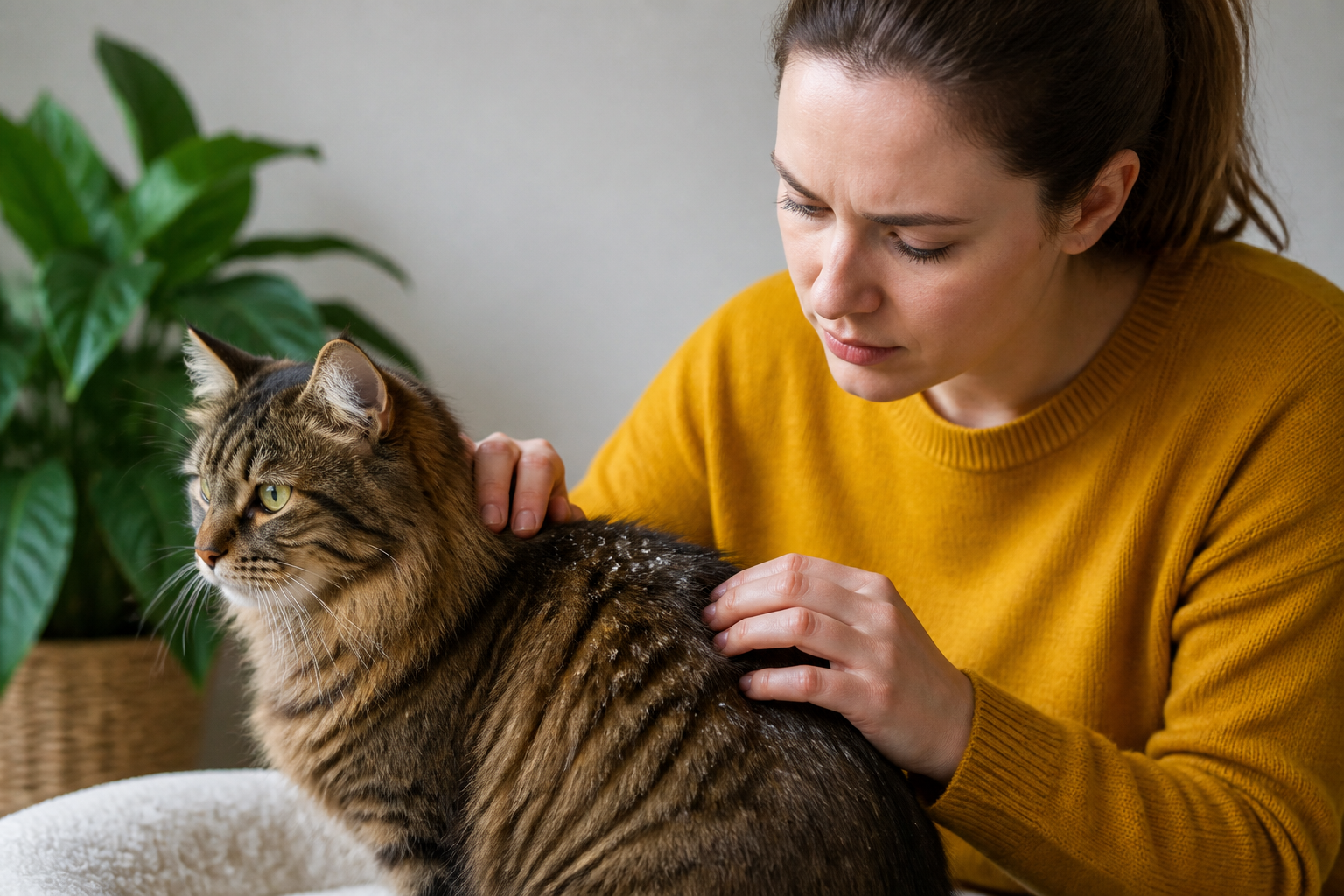
Petting your cat is a daily ritual that builds a strong bond. It can be startling when you run your hand down her spine and see a trail of white flakes. While humans deal with dandruff frequently, seeing it on your feline friend often indicates that something in her routine or health has shifted. At BaxterBoo, we see this often with cats of all ages. We want to help you understand what those flakes mean for your pet. This post covers why dandruff tends to collect on a cat's back, the role of grooming, and when you should seek professional help. Feline dandruff is rarely just a cosmetic issue. It is often a visible sign of an underlying health or environmental concern.
Quick Answer: Cat dandruff is a buildup of dead skin cells that have not been groomed away. It is often caused by mobility issues like obesity or arthritis, skin parasites, or a lack of moisture in the air.
What Exactly is Feline Dandruff?
Dandruff occurs when a cat's skin cells shed faster than they can be removed. In a healthy cat, the skin renews itself constantly. The old cells fall off during regular self-grooming sessions. You usually never see them because they are microscopic. When these cells clump together and become visible as white or grey flakes, we call it dandruff.
It is important to distinguish dandruff from dander. Every cat has dander. These are tiny skin particles that all animals shed. Dander is what often triggers human allergies. Dandruff is different because the flakes are large enough to see with the naked eye. It often appears alongside a coat that feels greasy, dry, or brittle.
Cat Skin & Coat Care













Why the Back and Tail Base are Hot Spots
Most owners notice dandruff specifically on the lower back and near the base of the tail. There is a very practical reason for this. These are the hardest areas for a cat to reach during grooming. If a cat cannot reach her back, the dead skin cells and natural oils build up.
Obesity and Flexibility
Weight is one of the most common reasons a cat stops grooming her back. An overweight cat lacks the flexibility to twist around and clean her rear half. When she stops licking those areas, the skin becomes congested. This leads to the classic "flaky back" look.
For additional guidance, read how to help your indoor cat lose weight without the drama.
Arthritis and Aging
Senior cats often develop osteoarthritis. This makes jumping, playing, and even grooming painful. If your cat has joint stiffness, she may skip cleaning her lower back because it hurts to reach. You might notice she spends less time grooming overall.
For more ideas about supporting older cats with mobility concerns, explore this guide to finding arthritis medicine for cats.
Key Takeaway: If dandruff is concentrated on the lower back, it is likely a sign that your cat has a physical limitation preventing her from grooming those specific areas.
Environmental and Seasonal Causes
Your home's environment plays a massive role in skin health. During the winter months, indoor heating strips the moisture from the air. This dries out your cat's skin just as it dries out yours.
- Low humidity: Dry air leads to flaky, itchy skin.
- Seasonal changes: Spring and autumn shedding cycles can increase flake visibility.
- Over-bathing: Using harsh soaps or bathing a cat too often can strip natural oils.
If you suspect dry air is the culprit, using a humidifier in the rooms where your cat sleeps can make a big difference. It helps maintain the skin's natural moisture barrier.
The Role of Parasites and Infections
Sometimes the white flakes you see are not just dead skin. Certain parasites can cause significant scaling. A common one is the Cheyletiella mite. This parasite is actually nicknamed "walking dandruff."
These mites are large enough to move, making the dandruff look like it is crawling. This condition is highly contagious to other pets and humans. Flea infestations can also cause skin irritation that leads to flaking. Cats with flea allergies will often chew at their lower backs, creating more irritation and flakes.
Browse our cat flea and tick collection for products intended to help manage flea-related concerns.
Vet Tip: If you see "moving" flakes or if your cat is scratching intensely, consult your veterinarian immediately. Our pharmacy offers FDA-approved flea and tick preventives through our partnership with Pet's Choice to help manage these issues.
For more information about parasite prevention, read how flea collars work.
Nutritional Deficiencies and Skin Health
What goes into your cat's body shows up on her coat. The skin is the body's largest organ. It requires high amounts of protein and specific fats to stay healthy. If a diet is low in Omega-3 fatty acids, the skin may become dry and prone to flaking.
Many commercial diets contain these nutrients. However, some cats have higher requirements due to their age or genetics. Supplements like fish oil can help support a shiny, flake-free coat. At BaxterBoo, we handpick supplements that focus on skin and coat health to ensure your pet gets the support she needs.
Explore our cat skin and coat care collection for grooming and nutritional support options.
For broader supplement guidance, read the ultimate pet supplement guide.
When Dandruff Signals a Medical Issue
While often benign, dandruff can sometimes be a secondary symptom of a more serious internal condition. Several systemic diseases affect the quality of a cat's skin.
- Diabetes: This can lead to a poor coat and flaky skin.
- Hyperthyroidism: An overactive thyroid often causes a greasy or unkempt appearance.
- Kidney Disease: Dehydration from kidney issues makes the skin less elastic and more prone to flaking.
If your cat shows other symptoms like increased thirst, weight loss, or lethargy, the dandruff is likely not the primary problem. In these cases, a vet visit is the only way to get a proper diagnosis.
For general wellness products, visit our cat healthcare category.
How to Manage and Reduce Flaking
Managing dandruff involves a mix of grooming and lifestyle changes. You can take several steps to help your cat feel more comfortable and look her best.
Step 1: Increase grooming sessions. / Use a soft brush or a fine-tooth comb to gently remove flakes. This mimics the cat's natural grooming and distributes oils.
Step 2: Evaluate the diet. / Ensure your cat is eating a high-quality, protein-rich food. Consider adding an Omega-3 supplement if your vet approves.
Step 3: Monitor weight and mobility. / If your cat is struggling to reach her back, she may need a weight management plan or joint support.
Step 4: Check for parasites. / Look for "flea dirt" or moving mites. Ensure your cat is on a year-round preventive.
Bottom line: Regular grooming and a moisture-rich diet are the most effective ways to manage mild feline dandruff.
Grooming Support for Senior or Overweight Cats
If your cat cannot groom herself, you must step in. This is especially true for senior cats. Use a damp cloth to wipe down the areas she cannot reach. This helps remove the buildup of dead skin and simulates a bath.
Do not use human dandruff shampoos on cats. Many of these contain ingredients like zinc or salicylic acid. These can be toxic if your cat licks her fur after the bath. Only use products specifically formulated for felines.
Using the BaxterBoo Pharmacy for Skin Health
Sometimes home grooming is not enough. If your cat has a fungal infection like ringworm or a parasitic infestation, she will need medication. Our pharmacy provides a convenient way to get these treatments.
Through our partnership with Pet's Choice, we offer prescription shampoos and topical treatments. These are FDA-approved and safe for your pet. If your vet prescribes a medicated diet for weight loss or skin allergies, we can fulfill those orders too. This ensures your cat gets exactly what she needs to resolve the root cause of her dandruff.
Key Takeaway: Dandruff caused by infections or parasites requires medical intervention rather than just topical grooming.
Conclusion
Seeing dandruff on your cat's back is a signal to pay closer attention to her daily habits. Whether she needs help reaching those tricky spots or requires a boost in her nutrition, most cases are manageable. Remember to watch for signs of discomfort or changes in behavior. Helping her maintain a healthy coat is a great way to ensure her overall well-being.
- Brush your cat daily to remove dead skin.
- Monitor her weight to ensure she can groom properly.
- Keep your home's air humidified during winter.
- Consult a vet if the dandruff is excessive or itchy.
If your cat needs specialized care, explore our cat skin and coat care collection. You can also work with your vet to order necessary medications through the BaxterBoo pharmacy.
FAQ
Is it normal for a cat to have a little dandruff?
A few small flakes can be normal, especially during seasonal changes or in dry winter air. However, if the dandruff is thick, covers a large area, or makes the coat look greasy, it usually indicates a problem with grooming or health. You should always monitor for secondary signs like redness or hair loss.
Can I use human dandruff shampoo on my cat?
No, you should never use human dandruff shampoos on a cat unless specifically told to by a vet. Many human products contain chemicals like coal tar or selenium sulfide which are toxic to cats. Always use a pH-balanced shampoo designed specifically for feline skin to avoid irritation or poisoning.
How does obesity cause cat dandruff?
Obesity limits a cat's range of motion. If a cat is too heavy, she physically cannot reach her lower back or the base of her tail to groom. This lack of grooming allows dead skin cells and oils to accumulate and form visible flakes. Weight management is often the first step in solving dandruff for overweight pets.
What is walking dandruff in cats?
Walking dandruff is a nickname for a skin mite called Cheyletiella. These mites live on the surface of the skin and are large enough to be seen with a magnifying glass. They move around under the scales of the skin, making it look like the dandruff is moving. This requires prescription treatment from a veterinarian.






- Site & Contents BaxterBoo.com. BaxterBoo is located in the United States.
- Privacy & Security
- Terms of Use
- Accessibility Statement
