Save 15% on your 1st Autoship learn more

 Email us
 Live Chat
 FAQs
FAQs





Introduction
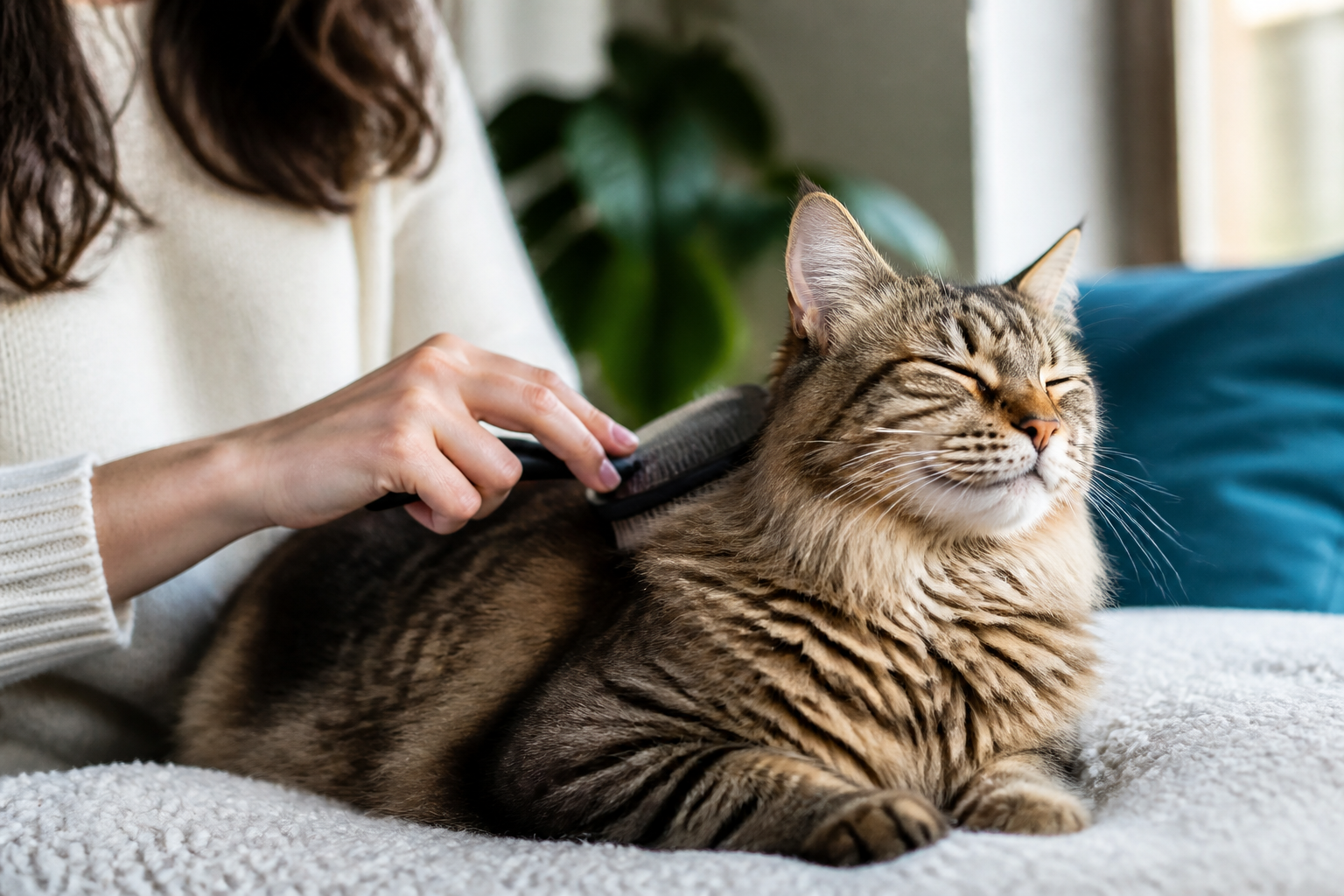
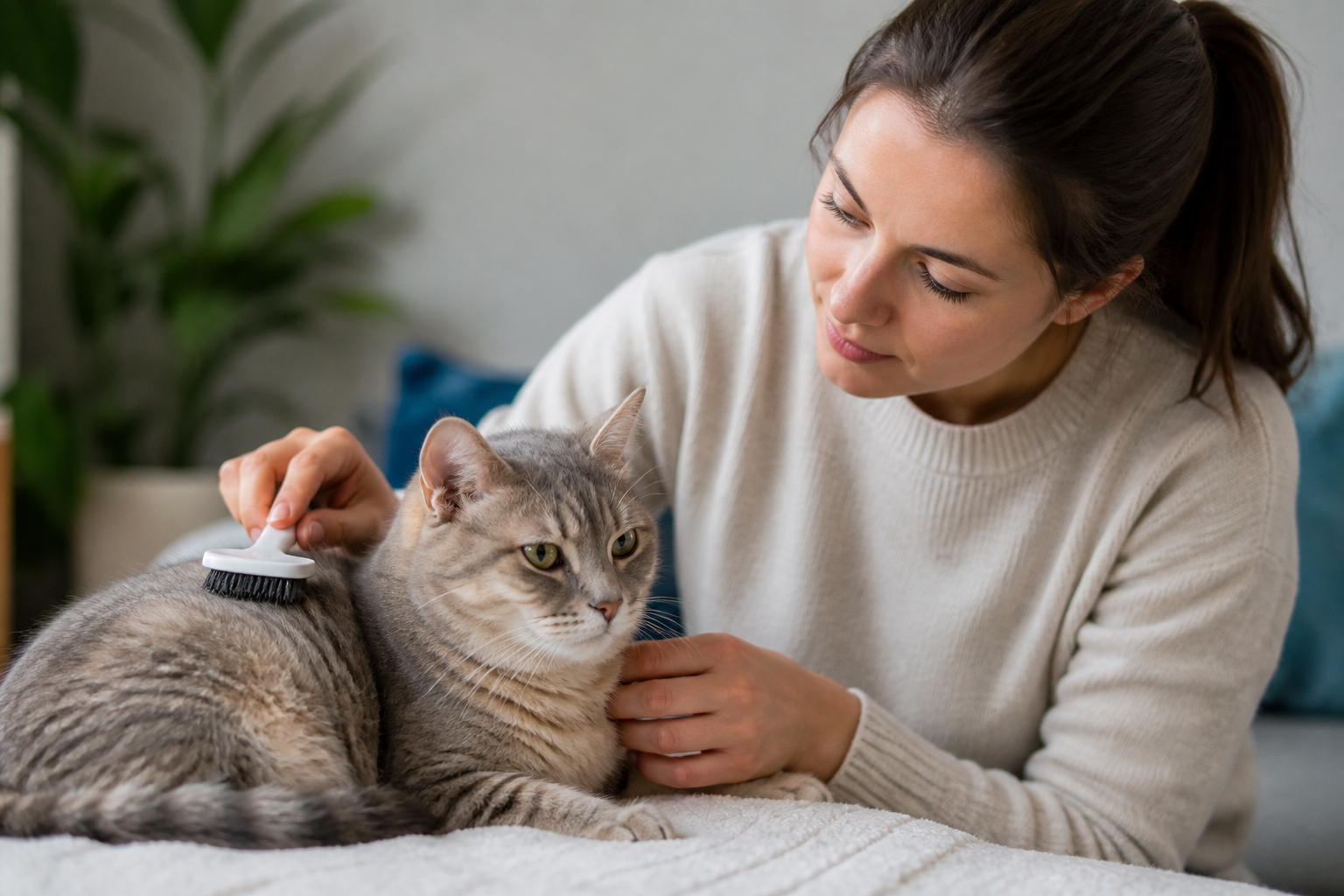
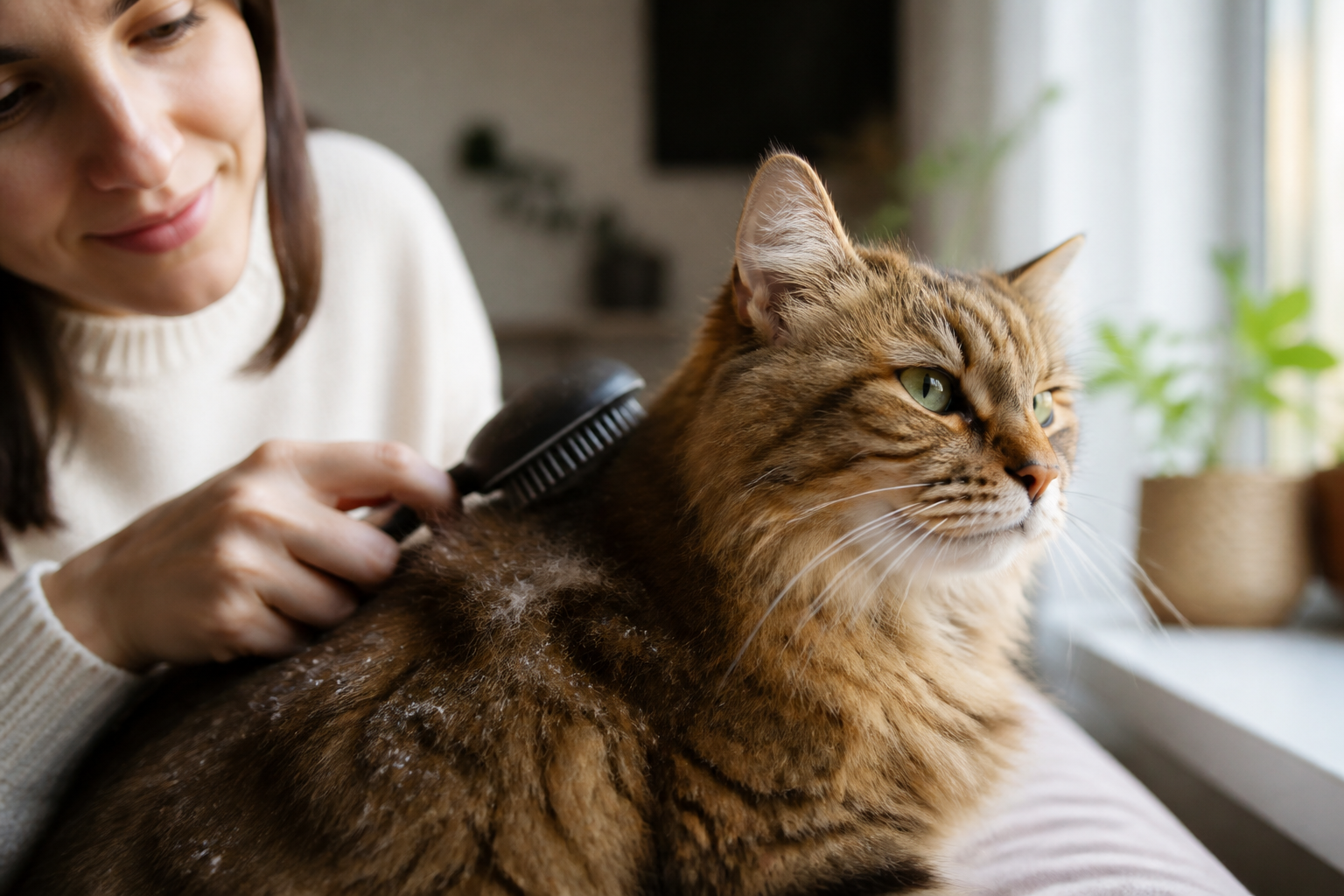
You are sitting on the sofa with your cat on your lap. You run a slicker brush through their soft fur, expecting a smooth finish. Instead, you see a flurry of white flakes rising to the surface. It looks like a light dusting of snow against their coat. This is a common moment for many cat owners. While it might look like the brushing is causing the problem, the brush is actually just revealing what was already hidden. At BaxterBoo, we help pet owners understand the subtle signs of their pet's health. This post covers why those flakes appear and what they say about your cat's skin. We will look at environmental factors, grooming habits, and when a vet visit is necessary. Finding flakes during a grooming session is the first step toward better skin health.
Quick Answer: Brushing your cat does not cause dandruff. It lifts dead skin cells that have already accumulated near the skin surface. This buildup often happens because of dry air, poor grooming, or underlying health issues that affect skin turnover.
Understanding Feline Dandruff Versus Dander
Many people use the terms dander and dandruff as if they are the same thing. They are actually very different. Dander consists of microscopic skin cells that every healthy cat sheds. You cannot see dander with the naked eye. It is perfectly normal and plays a role in human allergies.
Dandruff is much larger. It consists of visible flakes of dead skin that have clumped together. Vets often call this "scale." If you can see white or gray flecks on your cat's fur, you are looking at dandruff. It usually indicates that the skin is shedding cells faster than it should. It can also mean the cat is not able to remove those cells through their own grooming.
Normal skin turnover is a slow process. When that process speeds up or the cleaning process slows down, flakes appear. You might notice them more on dark-coated cats. On lighter cats, you might only see them when you use a fine-toothed comb or brush.
Why Brushing Brings the Flakes to the Surface
It is a common misconception that the brush is irritating the skin and creating flakes. In most cases, the dandruff was already sitting at the base of the hair follicles. Cats have very dense fur. This thick coat acts like a trap for dead skin cells.
When you brush your cat, you are doing a few things at once. First, you are breaking up the undercoat. This releases trapped particles. Second, the bristles reach down to the skin level. This physically dislodges the scales that were clinging to the surface.
Brushing is actually a good thing for a cat with dandruff. It helps distribute natural skin oils. These oils are the best defense against dryness. If your cat has a thick undercoat, the oils can get stuck at the skin. Brushing helps pull those oils down the length of the hair shaft.
For additional grooming tools, explore our cat grooming collection.
The Role of the Undercoat
Cats have different layers of fur. The outer coat consists of guard hairs. The undercoat is much softer and closer to the skin. If the undercoat is thick or matted, dead skin cells have nowhere to go. They become trapped. Brushing clears this "traffic jam" of fur and skin.
Key Takeaway: Seeing flakes during brushing is a sign that the skin turnover is high or the self-grooming process is failing. The brush is a diagnostic tool that uncovers an existing issue.
Environmental Factors and Seasonal Changes
The air inside your home plays a huge role in your cat's skin health. During the winter, indoor heating strips moisture from the air. This causes the skin to lose its natural hydration. When the skin gets too dry, it cracks and flakes.
This is very similar to how humans get dry skin in the winter. You might notice your cat's dandruff is worse when the furnace is running constantly. Summer air conditioning can also have a drying effect. If the humidity in your home drops below a certain level, the skin will react.
Low Humidity Solutions
If you think dry air is the cause, there are simple steps to take.
- Place a humidifier in the room where your cat sleeps most.
- Ensure your cat has access to multiple water sources to stay hydrated.
- Avoid placing your cat's favorite bed directly over a heating vent.
Grooming Challenges and Physical Limitations
Cats are famous for their cleanliness. They spend a large portion of their waking hours grooming. If you see a lot of dandruff, it often means the cat has stopped grooming effectively. This is rarely a sign of laziness. Usually, it is a sign of a physical problem.
Obesity and Accessibility
If a cat is overweight, they cannot reach every part of their body. You will often see the most dandruff along the lower back and the base of the tail. These are the hardest areas for a rounder cat to reach. The skin cells build up in these "dead zones" because the cat's tongue cannot clear them away.
For more guidance on safe feline weight management, read how to help your indoor cat lose weight.
Arthritis and Joint Stiffness
Senior cats often struggle with dandruff. Arthritis makes it painful to twist and turn. A cat might want to groom their back, but the movement causes discomfort in their hips or spine. If your older cat has flakes, it might be time to look at their mobility.
Vet Tip: If you notice your cat has stopped grooming their lower back or seems stiff when moving, consult your veterinarian. They can check for arthritis or other mobility issues. Managing pain can often lead to a cleaner, flake-free coat.
Nutrition and Skin Health
What your cat eats shows up on their skin. The skin is the largest organ in the body. It requires a lot of nutrients to stay healthy. Specifically, cats need high-quality proteins and essential fatty acids.
Omega Fatty Acids
Omega-3 and Omega-6 fatty acids are vital for the skin barrier. They help the skin retain moisture. If a cat's diet is low in these fats, the skin becomes brittle and prone to flaking. Many premium cat foods include these, but some cats need a boost.
Dehydration
Cats have a low thirst drive. They often do not drink enough water on their own. Chronic mild dehydration leads to dry skin. Adding wet food to their diet can significantly improve their hydration levels. This often results in a shinier coat and less dandruff.
You can compare moisture-rich options in our cat food category.
When Dandruff Indicates a Health Issue
Sometimes, flakes are a symptom of a more serious medical condition. Dandruff can be a "red flag" for internal problems that are not yet obvious.
Endocrine and Metabolic Disorders
Conditions like hyperthyroidism, diabetes, and kidney disease can all change the quality of a cat's skin. These diseases affect how the body uses nutrients and how it stays hydrated. In many cases, a dull, flaky coat is one of the first signs of an internal shift.
Parasites and "Walking Dandruff"
There is a specific mite called Cheyletiella. It is commonly known as "walking dandruff." These mites are large enough to be seen with the naked eye. They look like white flakes, but if you watch closely, they actually move. This condition is highly contagious and causes intense itching.
Allergies and Infections
Cats can have skin allergies to food, pollen, or fleas. This inflammation causes the skin to flake. Bacterial and fungal infections, like ringworm, can also cause localized dandruff and hair loss.
For supportive skin and coat products, browse our cat skin and coat care selection.
The BaxterBoo Pharmacy and Prescription Care
If your vet determines that a medical condition is causing the dandruff, you may need more than just a brush. Our pharmacy offers a wide range of FDA-approved medications and prescription pet foods. We provide these through our partnership with Pet's Choice.
If your cat is diagnosed with an infection or a chronic condition like hyperthyroidism, you can find the necessary treatments through us. We carry prescription diets formulated for skin sensitivities and weight management. Our pharmacy makes it easy to get exactly what your vet ordered delivered to your door.
Key Takeaway: Medical causes of dandruff require professional diagnosis. Once you have a prescription, we can help you manage your cat's health through our specialized pharmacy services.
Practical Steps to Manage Flakes at Home
You do not have to just live with the flakes. There are several ways to improve your cat's coat quality through daily care and better routines.
Improving Your Grooming Routine
- Step 1: Choose the right tool. Use a brush suited for your cat's hair length. Long-haired cats need a wide-tooth comb and a slicker brush. Short-haired cats do well with a rubber grooming mitt.
- Step 2: Be consistent. Brush your cat daily if they have dandruff. This prevents the buildup of dead skin.
- Step 3: Be gentle. Never scrub the skin. Use long, smooth strokes in the direction of hair growth.
- Step 4: Use a damp cloth. After brushing, wipe your cat down with a warm, damp washcloth. This picks up the loose flakes you just brought to the surface.
Diet and Supplementation
Check your cat's food label. Look for named animal proteins as the first ingredient. If you want to add supplements, look for fish oil or salmon oil. These provide the concentrated Omega-3s that support the skin barrier.
Weight Management
If obesity is the cause, talk to your vet about a weight loss plan. Helping your cat reach a healthy weight will allow them to start grooming themselves again. This is often the most effective "cure" for dandruff in younger, heavy cats.
Comparing Management Strategies
| Strategy | Best For | Benefit |
|---|---|---|
| Daily Brushing | All cats | Removes buildup and distributes oils. |
| Humidifier | Indoor cats in winter | Prevents skin from drying out due to heat. |
| Omega Supplements | Cats with dry, brittle hair | Strengthens the skin's moisture barrier. |
| Prescription Diet | Cats with allergies or illness | Addresses the internal cause of skin issues. |
Bottom line: Combining regular grooming with a moisture-rich diet is the most effective way to reduce non-medical dandruff.
When to See Your Veterinarian
While a few flakes can be normal, you should not ignore significant changes. Schedule a visit with your vet if you notice any of the following:
- Your cat is itching or scratching excessively.
- There are bald patches or thinning fur.
- The skin looks red, inflamed, or has sores.
- The "dandruff" appears to be moving (mites).
- Your cat has a change in appetite or thirst.
A vet can perform a skin scraping or blood work to rule out serious conditions. They can also provide guidance on the best prescription products for your cat's specific needs.
Summary of Next Steps
Dealing with cat dandruff is about looking beneath the surface. Brushing uncovers the flakes, but the environment and internal health dictate how many flakes there are. Start by improving the humidity in your home and the quality of your cat's diet.
Establish a daily grooming routine to help your cat manage their coat. If the dandruff persists or is accompanied by itching, seek veterinary advice. Our pharmacy is available for any prescription needs your vet identifies.
To make things easier, you can use our Autoship program. This ensures you never run out of the food or supplements your cat needs to keep their coat shiny. You also earn rewards through the MVP Rewards program on every purchase. Keeping your cat's skin healthy is a long-term commitment, but the reward is a happier, more comfortable pet.
FAQ
Is it normal for my cat to have a little dandruff?
A small amount of flaking can be normal, especially during seasonal changes. Cats naturally shed skin cells just like humans do. However, if the flakes are numerous, visible across the whole body, or paired with itching, it usually points to an underlying issue that needs attention.
Can I use human dandruff shampoo on my cat?
No, you should never use human dandruff shampoo on a cat. These products are formulated for the pH of human skin and often contain ingredients that are toxic to cats if swallowed. If your cat needs a medicated bath, only use products specifically labeled for felines or those recommended by your vet.
Does my cat's weight affect their dandruff?
Yes, weight is a major factor in feline skin health. Overweight cats often cannot reach their back or the base of their tail to groom. This leads to a buildup of dead skin and oils in those areas. Weight loss and manual brushing are usually required to fix this problem.
Can "walking dandruff" spread to humans?
Yes, the Cheyletiella mites that cause "walking dandruff" can temporarily live on humans. They can cause an itchy rash or small red bumps. If you suspect your cat has mites, it is important to treat all pets in the household and consult your vet to prevent the parasites from spreading further.