
 Save 15% on your 1st Autoship learn more

 Email us
 Live Chat
 FAQs
FAQs





Introduction
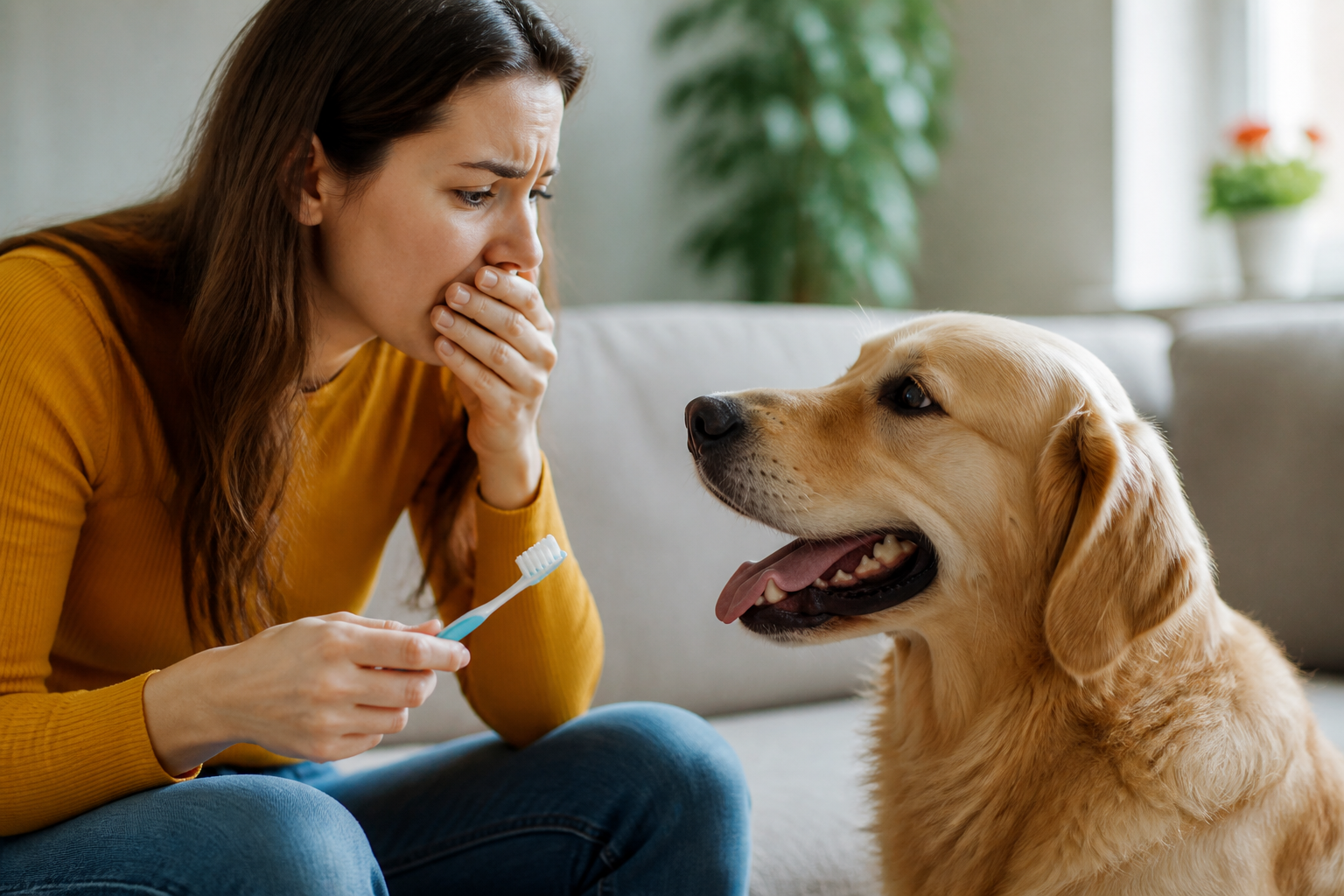
You have done the work. You wrestled your dog into the bathroom and scrubbed their teeth with poultry flavored toothpaste. Yet the moment they exhale near your face, that familiar, funky scent remains. At BaxterBoo, we hear from frustrated pet owners every day who wonder why their hard work is not paying off. While surface cleaning is a great habit, persistent bad breath often signals something happening deeper in the mouth or even inside the body.
Understanding why the smell lingers is the first step toward real freshness and better long term health. This post explores the common dental and medical reasons why brushing might fail to clear the air. We will look at everything from hidden tartar to systemic health issues that require a closer look from your veterinarian.
Quick Answer: If your dog still has bad breath after brushing, the cause is likely tartar buildup under the gumline or an underlying medical issue. Brushing only removes soft plaque. Hardened tartar and systemic conditions like kidney or liver disease require professional veterinary intervention.
The Difference Between Plaque and Tartar
To understand why brushing fails, you must understand what you are actually cleaning. When your dog eats, food particles mix with saliva and bacteria to form plaque. Plaque is a soft, sticky film. You can easily remove it with a toothbrush or even a sturdy chew toy.
The problem begins when plaque stays on the teeth for more than 48 hours. It reacts with minerals in your dog's saliva and hardens into tartar, also known as calculus. Tartar is as hard as concrete. Once it forms, a standard toothbrush cannot move it. If your dog has visible brown or yellow crusting near the gumline, you are smelling the bacteria trapped inside that hardened shell.
Why Brushing Only Goes So Far
Brushing is a preventative measure. It is designed to stop plaque from becoming tartar. If your dog already has significant tartar buildup, brushing the surface of that tartar will not eliminate the odor. The smell comes from the bacteria living within and underneath that hard layer.
The Saliva Factor
Every dog has a unique chemical makeup in their saliva. Some dogs produce more calcium and phosphorus, which causes plaque to harden faster. This is why two dogs in the same house can have very different breath despite eating the same food and sharing the same toothbrushing routine.
| Feature | Plaque | Tartar (Calculus) |
|---|---|---|
| Texture | Soft and sticky | Hard and crusty |
| Removal | Toothbrush or dental wipes | Professional veterinary cleaning |
| Timeline | Forms within hours of eating | Hardens within 48 to 72 hours |
| Color | Usually colorless or pale yellow | Dark yellow, brown, or grey |
Key Takeaway: Brushing is for plaque prevention. Once plaque hardens into tartar, only a professional dental cleaning can remove the source of the smell.
The Hidden Danger of Periodontal Disease
The most common reason for persistent bad breath is periodontal disease. This is an infection of the tissues that hold the teeth in place. While you might be focusing on the white parts of the teeth, the real trouble happens where you cannot see it.
Bacteria love to hide in the pocket between the tooth and the gum. As the infection progresses, it destroys the bone and the soft tissue. This process releases foul smelling sulfur compounds. Even if the visible crown of the tooth looks clean after brushing, the infection deepens under the gumline.
For more warning signs to watch for, read about how to recognize hidden dental problems in dogs.
Symptoms Beyond the Smell
Periodontal disease often comes with other signs. You might notice your dog's gums look red or swollen. They might bleed slightly when you brush. In more advanced stages, teeth can become loose. If your dog drops food while eating or seems hesitant to chew on their favorite Kong toy, they may be experiencing oral pain.
Small Breeds and Dental Crowding
Small and toy breeds are much more likely to struggle with bad breath. This is because they have the same number of teeth as large dogs but much less space in their mouths. This crowding creates tiny crevices where food and bacteria get trapped. For these dogs, even daily brushing might miss the hidden spots where rot begins.
Vet Tip: If you notice bleeding gums or loose teeth, stop brushing and call your vet. Brushing an active infection can be painful for your dog and may push bacteria into the bloodstream.
When the Smell Comes from the Stomach
Sometimes the mouth is perfectly healthy, but the breath is still terrible. This often happens when the odor originates in the digestive tract. If your dog has a habit of raiding the kitchen trash or eating things they find in the yard, their breath will reflect that.
Coprophagia: The Unpleasant Habit
It is a difficult topic for many pet owners, but eating stool is a common cause of foul breath. Whether it is their own, the cat's, or wildlife droppings, this habit introduces massive amounts of bacteria and odor to the mouth. No amount of minty toothpaste can fully mask the smell of digested waste.
Dietary Sensitivities and Gas
If your dog has difficulty digesting certain ingredients in their food, it can lead to an overgrowth of bacteria in the small intestine. This can cause gas to travel back up the esophagus. If your dog frequently burps or has a sour smell to their breath, it might be time to evaluate their diet. We carry highly digestible options from brands like Carna4 and Stella and Chewy's that focus on gut health.
Systemic Health Issues and the Pharmacy
If your dog's breath has a very specific, unusual odor, it might not be a dental problem at all. Internal organs like the kidneys and liver help filter toxins from the body. When these organs struggle, those toxins can build up and change the way a dog's breath smells.
Kidney Disease and Ammonia
If your dog's breath smells like urine or ammonia, this is a major warning sign. It often indicates that the kidneys are not properly filtering waste. This buildup of toxins can cause uremic breath. This is a serious condition that requires immediate veterinary attention.
Liver Disease and Foul Odors
A liver that is not functioning correctly can produce a breath odor that is described as musty or like a dead animal. This is often accompanied by other symptoms like a yellowish tint to the eyes or gums, vomiting, and loss of appetite.
Diabetes and Sweet Breath
If your dog's breath smells oddly sweet or fruity, it could be a sign of diabetes. This scent is caused by ketones, which the body produces when it cannot properly use sugar for energy. While "sweet" breath sounds better than "stinky" breath, it is a medical emergency that needs a professional diagnosis.
How Our Pharmacy Can Help
When a vet diagnoses a systemic issue, they often prescribe specific medications or therapeutic diets. Through our partnership with Pet's Choice, the dog pharmacy carries FDA approved medications and prescription pet foods. This includes brands like Farmina Vet Life, which offers formulas specifically designed for kidney and liver support. Managing the underlying disease is the only way to resolve the breath issues caused by these conditions.
Bottom line: Unusual smells like ammonia or fruit are medical red flags that brushing cannot fix.
Evaluating Your Brushing Technique
If your vet has ruled out health issues and your dog's teeth look relatively clean, the problem might be your technique. Many pet owners only brush the front teeth or the outer surfaces. However, the back molars are where the most saliva and food particles congregate.
Step 1: Choose the right tools. / Never use human toothpaste. It contains xylitol, which is toxic to dogs, and foaming agents that can upset their stomachs.
Step 2: Focus on the gumline. / Hold the brush at a 45 degree angle. Aim for the spot where the tooth meets the gum, as this is where plaque hides.
Step 3: Reach the back. / Lift the lip to reach the large carnassial teeth in the back of the mouth. These are the primary sites for tartar buildup.
Step 4: Check the tongue. / Bacteria also live on the tongue. If your dog allows it, a gentle swipe over the surface of the tongue can help remove odor-causing film.
For a poultry-flavored option made for pets, consider Virbac C.E.T. Enzymatic Pet Toothpaste.
Support Beyond the Toothbrush
Brushing is the gold standard, but it works best when combined with other dental health tools. If your dog hates the brush, or if you want to boost your current routine, consider these additions.
Dental Chews and Toys
Specific dental chews are designed to scrape the teeth as your dog bites down. Look for products that carry the Veterinary Oral Health Council (VOHC) Seal of Acceptance. Brands like Greenies and Oravet use a texture that allows the tooth to sink into the chew, cleaning all the way to the gumline. Rubber toys with nubs, like those from Kong, can also help massage the gums and stimulate saliva.
A daily option such as the Greenies Dental Dog Chew can complement your dog's regular brushing routine.
Water Additives and Gels
Dental water additives are an easy way to fight bacteria every time your dog takes a drink. These products usually contain enzymes or safe antimicrobial agents that break down plaque. Similarly, dental gels can be applied to the gums if your dog will not tolerate a full brushing session.
For a brush-free addition to your routine, explore the Zymox Oratene oral care water additive.
High Quality Nutrition
The food your dog eats affects the environment in their mouth. Some kibbles are specifically shaped to act like a tiny toothbrush, staying in contact with the tooth surface longer. We curate a wide selection of premium foods from brands like NutriSource and Open Farm that avoid the heavy fillers and sugars that can contribute to bacterial growth.
Key Takeaway: A multi-pronged approach using brushing, chews, and water additives provides the best defense against bad breath.
When to Schedule a Professional Cleaning
Even with perfect home care, most dogs eventually need a professional cleaning. This is similar to a human going to the dentist. A veterinarian will put the dog under general anesthesia to perform a thorough exam.
This is the only way to:
- Perform X-rays to see bone loss or abscesses under the gumline.
- Use ultrasonic scales to remove tartar from under the gums.
- Polish the teeth to smooth out microscopic scratches where bacteria hide.
- Extract painful or infected teeth that are causing chronic odor.
Most vets recommend a professional cleaning once a year, though small breeds may need them more frequently. For additional guidance, review these pet dental care tips.
Final Checklist for Fresh Breath
If you are still struggling with your dog's breath, use this checklist to narrow down the cause.
- Check the gumline for hard, brown, or orange buildup.
- Look for redness or bleeding in the mouth.
- Monitor your dog's bathroom habits and energy levels.
- Note any specific smells like ammonia, fruit, or sewage.
- Review your dog's access to trash or outdoor waste.
- Assess whether you are reaching the back molars during brushing.
Conclusion
Persistent bad breath is more than a social nuisance. It is a window into your dog's overall health. While regular brushing is a vital habit, it cannot solve every problem. If the smell remains after a week of consistent cleaning, it is time to consult your veterinarian to rule out periodontal disease or systemic issues.
At BaxterBoo, we are committed to helping you provide the best care possible. From expertly curated dental treats to our full service pharmacy for prescription needs, we have the tools you need to keep your dog healthy and happy. Start by exploring our Dental Care collection or set up an Autoship for your favorite dental chews to ensure your dog never misses a day of oral care.
Key Takeaway: Don't ignore the "stink." If brushing fails, the problem is likely below the surface or inside the body. Professional care is the next step.
FAQ
Why does my dog's breath smell like fish?
Fishy breath is often caused by a dog licking their anal glands. If the glands are full or irritated, the dog may groom that area, transferring the scent to their mouth. It can also be caused by certain fish based diets or oral infections.
Can a change in diet really help with bad breath?
Yes, a diet change can help if the bad breath is caused by poor digestion or low quality ingredients. High quality kibble that encourages chewing or foods with added probiotics can improve the bacterial balance in the mouth and gut.
Is it normal for older dogs to have worse breath?
While common, bad breath is not a normal part of aging. Senior dogs often have worse breath because they have had more time to accumulate tartar and are more prone to kidney or liver issues. Regular dental care is even more important as a dog ages.
How often should I give my dog dental chews?
Most manufacturers recommend one dental chew per day to help manage plaque. Always monitor your dog while they enjoy a chew to ensure they do not swallow large pieces, and remember to account for the calories in their daily food budget.






