
 Save 15% on your 1st Autoship learn more

 Email us
 Live Chat
 FAQs
FAQs





Introduction
You stand in your kitchen and look down at a bowl of dry kibble. Your dog might be staring back with zero interest. Or perhaps you have a senior dog who struggles to crunch those hard nuggets. You might even just worry that your dog is not drinking enough water throughout the day. These are common moments for pet owners that lead to one specific question: are you supposed to mix water with dry dog food?
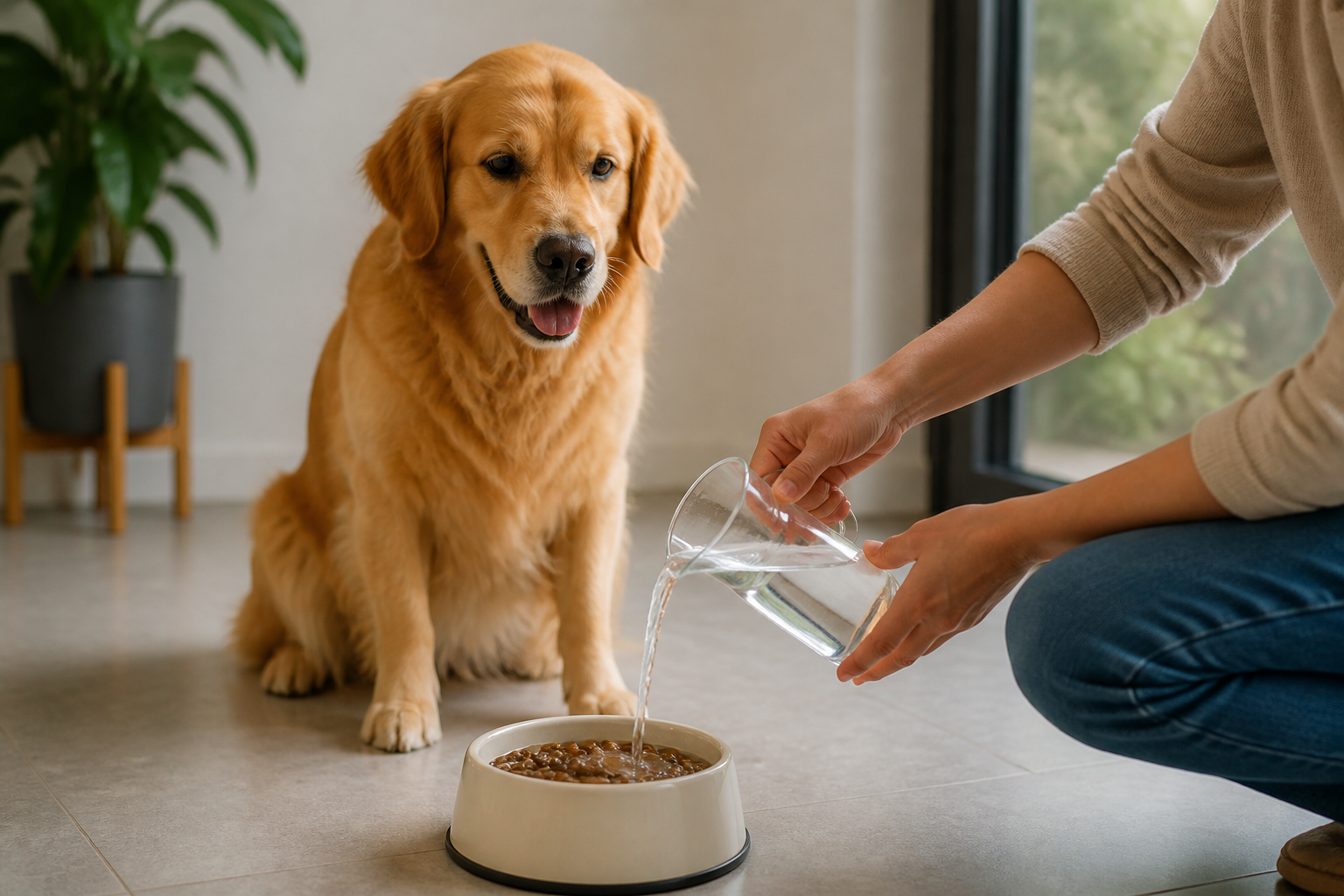
At BaxterBoo, we hear this question often from customers looking to improve their dog's mealtime experience. The short answer is that you certainly can mix water with kibble, and for many dogs, you probably should. This simple addition can transform a boring meal into a hydrating, aromatic feast. We will cover the benefits of hydration, the risks of spoilage, and the best ways to serve a moistened meal. Adding water is a safe and effective way to support your dog's health when done correctly.
Quick Answer: Yes, you can mix water with dry dog food to improve hydration, enhance flavor, and make chewing easier. Use warm water and serve the meal immediately to prevent bacterial growth or spoilage.
The Primary Benefits of Adding Water to Kibble
Most dry dog food contains very little moisture. It usually sits at around 10 percent water content. In contrast, a dog's natural diet or wet canned food contains significantly more moisture. By adding water to the bowl, you are helping bridge that gap.
Improved Hydration for Better Health
Water is the most important nutrient for any living creature. Many dogs do not drink enough from their water bowls. This can lead to concentrated urine and a higher risk of urinary tract issues or kidney stones. When you add water directly to the food, you ensure your dog consumes a specific amount of fluid with every meal.
This is especially helpful for dogs that are active or live in warmer climates. If your dog is a "lazy" drinker, mixing water into their kibble acts as a secret weapon for hydration. It helps the kidneys flush out toxins and keeps the entire system running smoothly.
Enhancing Aroma and Palatability
Dogs experience the world through their noses. Dry kibble straight out of the bag does not have a very strong scent. When you add warm water, it releases the fats and aromas trapped inside the biscuit. This makes the food smell much more enticing.
If your dog is a picky eater, this simple trick can often be enough to get them interested in their bowl again. The water creates a light "gravy" that coats the pieces. This changes the texture and makes the meal feel more like a gourmet treat than a pile of hard pellets.
Supporting Digestive Health
Kibble is very dense. When a dog eats dry food, their body has to pull moisture from other tissues to help break that food down in the stomach. This can slow down digestion and sometimes lead to discomfort.
By pre-soaking the food, you start the breakdown process before the food even reaches the stomach. This makes it much easier for the digestive enzymes to do their job. It can be a massive benefit for dogs with sensitive stomachs or those prone to occasional indigestion.
Key Takeaway: Adding water to dry food is one of the easiest ways to boost hydration and make meals more appealing to picky eaters.
Is It Better for Dental Health?
There is a long-standing belief that dry kibble cleans a dog's teeth through mechanical scraping. While some dental-specific diets are designed this way, most standard kibble is too brittle to provide much benefit. It often shatters upon the first bite.
The Myth of the Crunch
Many experts now believe that the "crunch" of standard kibble does very little to remove plaque or tartar. In fact, some kibble is high in carbohydrates that can stick to the teeth and actually contribute to dental issues. If you are worried that softening the food will ruin your dog's teeth, you can rest easy.
The best way to manage dental health is through regular brushing and specific dental and breath care products. Brands like Greenies or specialized dental toys are much more effective than relying on dry food alone. If your dog already has dental pain or missing teeth, softening the food with water is actually the much kinder choice.
Helping Senior Dogs and Puppies
Senior dogs often suffer from gum sensitivity or decaying teeth. For them, crunching on hard kibble can be physically painful. Puppies who are losing their baby teeth experience similar discomfort. Adding water makes the food soft enough to lap up without needing to apply pressure to sore spots.
Vet Tip: If your dog suddenly stops eating dry food or seems to struggle with the texture, schedule a dental checkup. Dental pain is a common reason for a change in eating habits.
Potential Risks and Drawbacks
While adding water is generally great, it does change how you need to handle the food. You cannot treat wet kibble the same way you treat dry kibble.
The Problem with Spoilage
Dry food stays fresh in the bowl for a long time because it lacks moisture. Once you add water, you create a breeding ground for bacteria. This is the same reason why wet canned food cannot stay out all day.
If your dog is a "grazer" who likes to take a few bites and come back later, adding water might not be the best idea. You must pick up any uneaten moistened food after about 30 to 60 minutes. Leaving it out longer increases the risk of mold or harmful bacterial growth.
Mess and Cleanup
Wet kibble is significantly messier than dry food. It can stick to your dog's muzzle or the hair around their mouth. It also tends to leave a residue on the bowl that hardens as it dries. You will need to wash your dog's bowl with hot, soapy water after every single meal to keep it sanitary.
How to Correctly Mix Water with Dry Food
Doing this correctly ensures your dog gets the most benefit without any safety risks. You do not need to overcomplicate it, but following a few steps helps.
Step 1: Choose the Right Temperature
Use warm water rather than cold or boiling water. Cold water does not release the aromas as effectively. Boiling water can destroy some of the heat-sensitive vitamins and minerals in the food. It also carries a risk of burning your dog's mouth. Warm tap water is usually perfect.
Step 2: Use the Correct Ratio
You do not want to turn the bowl into a soup unless your dog specifically prefers it that way. A good starting point is one part water to three or four parts kibble. For example, if you feed one cup of food, try adding a quarter cup of water. You can adjust this based on your dog's preference for "crunchy-soft" or "complete mush."
Step 3: Let It Sit
If you want the kibble to be truly soft, let it sit for about 10 to 15 minutes before serving. This allows the water to penetrate to the center of the nugget. If your dog likes a bit of texture, you can serve it immediately after mixing.
Step 4: Monitor the Portion
Remember that adding water increases the volume of the food but not the calories. Your dog might look fuller, but they are eating the same amount of nutrition. However, if your dog is on a weight management plan, the extra volume can help them feel more satisfied between meals.
Key Takeaway: Always use warm water and serve the meal immediately to ensure the best flavor and safety.
Using Other Liquids as Mixers
You do not have to stop at plain water. There are several other liquids that can add even more nutritional value to your dog's bowl.
- Bone Broth: Brands like Stella & Chewy's or Open Farm offer bone broths specifically for pets. These are packed with collagen and nutrients that support joint health. Make sure to use a pet-safe version, as human broths often contain onions or excessive salt.
- Goat's Milk: This is a great source of probiotics and can be easier to digest than cow's milk. It is a fantastic topper for dogs with sensitive stomachs.
- Wet Food: Mixing a bit of canned food with dry food is a classic way to add moisture and flavor. Just be sure to adjust the total calorie count so you do not overfeed.
When Adding Water is Highly Recommended
There are specific health situations where our team at BaxterBoo suggests adding moisture as a top priority. In these cases, hydration is not just a preference but a necessity for wellness.
Dogs with Urinary and Kidney Concerns
If your dog has a history of bladder stones or kidney issues, increasing water intake is vital. Diluted urine is much less likely to form crystals. Many veterinarians recommend prescription diets for these conditions. Our pharmacy carries many of these FDA-approved prescription foods through our partnership with Pet's Choice. If your vet prescribes a specific diet like Farmina Vet Life or Royal Canin, adding water can further support the goals of that therapeutic food.
Preventing Bloat and Gulping
Dogs that eat too fast often swallow a lot of air. This can lead to a dangerous condition called bloat. Softening the food can sometimes slow down a "gulper" because they have to lap the food rather than just inhaling dry pellets. You can also use a slow-feeder bowl with water to provide even more resistance to fast eating.
During the Weaning Process
If you are raising a litter of puppies, adding water is essential. When they transition from mother's milk to solids, their digestive systems are not ready for hard kibble. Creating a "gruel" by soaking the food helps them transition safely and comfortably.
For more guidance, read our article about when puppies can eat dry dog food.
Transitioning to Moistened Food
If your dog has always eaten dry food, do not be surprised if they are hesitant at first. The change in texture can be confusing for some pets.
- Start small. Add just a tablespoon or two of water to the top of the dry food.
- Increase slowly. Over the course of a week, add more water until you reach the desired consistency.
- Check the temperature. Ensure it is not too hot by testing it with your finger.
- Stay consistent. Dogs thrive on routine. Try to keep the ratio the same each day once you find what they like.
Feeding Type Comparison
| Feeding Method | Pros | Cons |
|---|---|---|
| Dry Only | Convenient, easy to store, stays fresh in bowl. | Low moisture, less aroma, harder to digest. |
| Water Mixed | High hydration, better smell, easier on teeth. | Spoils quickly, messier, requires bowl washing. |
| Wet/Canned Only | Extremely palatable, very high moisture. | More expensive, less shelf life once opened. |
| Liquid Toppers | Adds specific nutrients (collagen/probiotics). | Can be costly, adds extra calories to manage. |
For another perspective, compare the benefits of wet food versus dry food.
Managing Your Dog's Diet Long-Term
Deciding whether to mix water with dry food is part of a larger conversation about your dog's nutritional needs. Every dog is an individual. What works for a young Labrador might not be right for a senior Chihuahua.
Consulting Your Veterinarian
It is always a good idea to talk to your vet before making major changes to your dog's diet. This is especially true if you are managing a chronic health condition. A vet can help you determine the right amount of hydration for your dog's specific weight and activity level.
Vet Tip: Always consult your veterinarian before adding supplements or liquids to a therapeutic or prescription diet. These foods are precisely balanced, and you want to ensure you aren't diluting the medicinal benefits.
How BaxterBoo Can Help
We are committed to providing the best options for your dog's nutrition. Whether you need a high-quality dry kibble from brands like NutriSource or Acana, or you are looking for bone broth toppers, we have you covered.
Our hybrid model allows you to shop online for home delivery or visit our warehouse in Vernon Hills, Illinois. We have been helping pet owners find the right products since 2006. If your dog requires a specific diet for their health, remember that our pharmacy offers a wide selection of prescription foods through our partnership with Pet's Choice.
Bottom line: Adding water to dry dog food is a practical, low-cost way to improve your pet's health and happiness at every meal.
Summary of Best Practices
If you decide to start mixing water into your dog's meals, keep these final tips in mind. It is a simple habit that can lead to a much healthier dog over time.
- Use filtered, warm water for the best results.
- Discard any uneaten wet food after an hour.
- Wash the food bowl thoroughly after every use.
- Monitor your dog's hydration levels and weight.
- Check out the MVP Rewards program to save on your favorite kibble and toppers.
For the most convenience, consider using our Autoship program. You can have your dog's favorite food and toppers delivered on a schedule so you never run out. It even comes with a free MVP Gold membership and savings on your first order.
FAQ
Does adding water to dry dog food cause dental problems?
No, adding water does not inherently cause dental issues. While some people believe dry food scrapes teeth clean, standard kibble usually does not provide significant dental benefits. You should rely on regular brushing and dental chews for oral hygiene rather than the texture of the food.
How long can I leave moistened dog food in the bowl?
You should remove any moistened kibble after 30 to 60 minutes. Once water is added, the food can quickly grow bacteria or mold, especially in warm weather. If your dog does not finish their meal within that window, throw the leftovers away and wash the bowl.
Can I mix other liquids like milk or juice with dog food?
You should avoid most juices and human milks. Many dogs are lactose intolerant, and juices often contain too much sugar or dangerous ingredients like grapes or xylitol. Stick to plain water, pet-safe bone broth, or goat's milk specifically formulated for dogs.
Does adding water to kibble help with weight loss?
Adding water can help a dog feel fuller because it increases the physical volume of the food in the stomach. This can be helpful for dogs who are always hungry on a calorie-restricted diet. However, the water itself does not burn fat, so you must still manage their total caloric intake.






