Save 15% on your 1st Autoship learn more

 Email us
 Live Chat
 FAQs
FAQs





Introduction
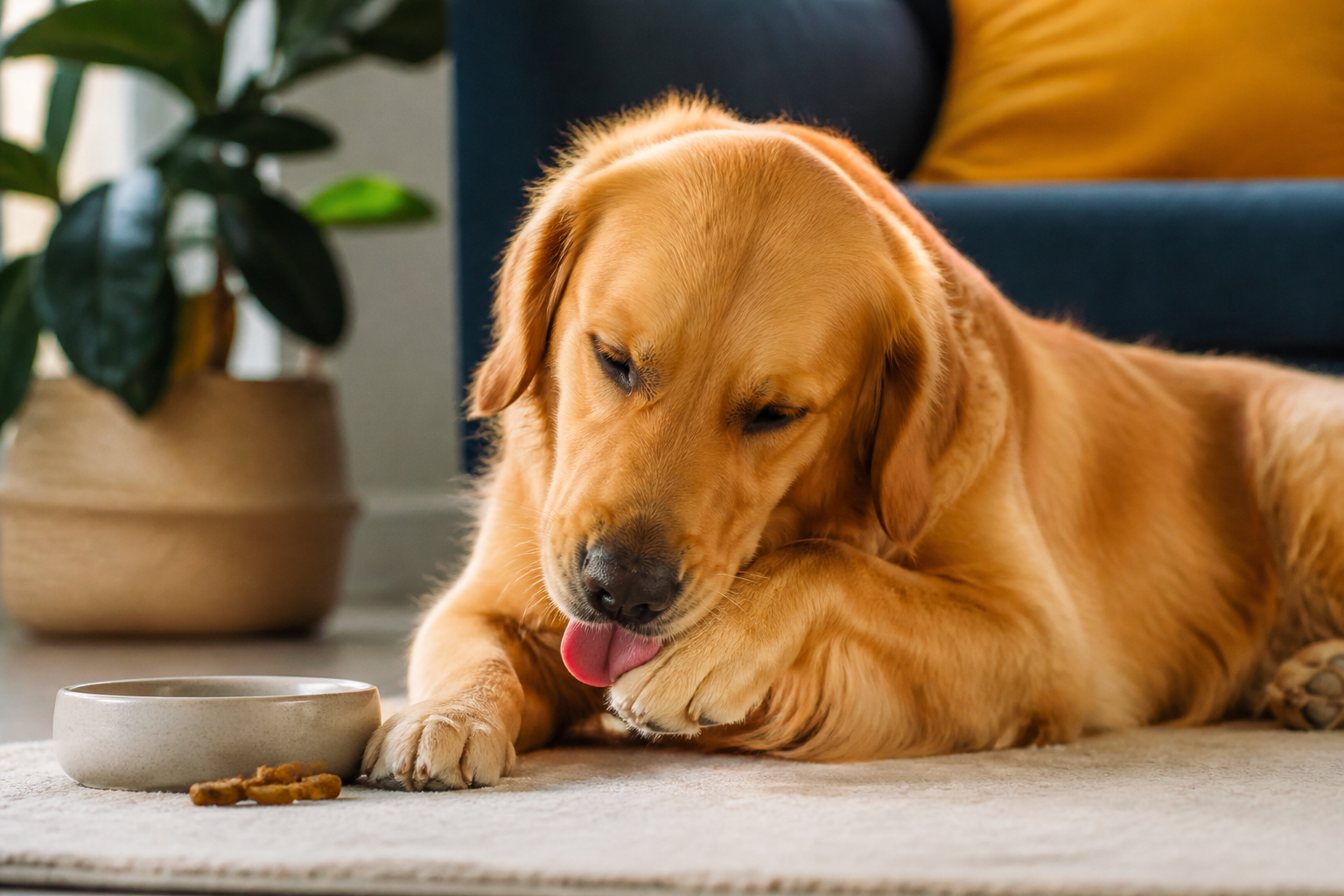
You are sitting on the couch after a long day when the sound starts. It is the rhythmic, wet sound of your dog licking their paws. Again. You check their feet and notice the fur is stained pink or the skin looks raw and irritated. This behavior often drives pet owners to distraction, but it is usually a sign that your dog is feeling significant discomfort. While topical sprays or paw balms provide temporary relief, many owners are finding that the real solution starts in the gut.
At BaxterBoo, we see thousands of pet parents looking for ways to soothe itchy skin and obsessive licking. This post covers how the gut microbiome influences skin health and how to choose the right supplements to help your dog find relief. We will look at specific probiotic strains and when it is time to move from supplements to a prescription plan. Understanding the connection between digestion and the immune system is the first step toward stopping the licking for good.
Quick Answer: Probiotics help stop paw licking by balancing the gut microbiome and reducing systemic inflammation. When the gut is healthy, the immune system is less likely to overreact to environmental or food allergens that cause itchy paws.
Why Do Dogs Lick Their Paws?
Before choosing a supplement, you need to understand what is triggering the behavior. Licking is a dog's way of trying to soothe an itch or a tingle. If the behavior happens mostly after walks, it might be environmental. If it happens year round regardless of the weather, it could be related to their diet.
Common causes of excessive licking include:
- Environmental Allergies: Pollen, grass, and mold can irritate the skin on contact.
- Food Sensitivities: Certain proteins or fillers can trigger an immune response that manifests as itchy skin.
- Yeast Infections: An overgrowth of yeast often creates a distinct corn chip smell and causes intense itching.
- Boredom or Anxiety: Licking can become a compulsive self-soothing habit.
- Dry Skin: Low humidity or lack of fatty acids can make the paw pads crack and itch.
If your dog has been licking so much that the skin is broken, bleeding, or oozing, you should skip the supplements and head to the vet. These are signs of a secondary infection that needs medical treatment.
Vet Tip: Persistent paw licking can lead to "lick granulomas" or deep tissue infections. Always consult your veterinarian to rule out mites, fungal infections, or underlying painful conditions before starting a new supplement routine.
The Surprising Link Between Gut Health and Skin
It might seem strange to treat a foot problem by focusing on the stomach. However, about 80 percent of a dog's immune system resides in the digestive tract. The gut microbiome is a complex ecosystem of trillions of bacteria. When this ecosystem is balanced, the immune system stays calm. When the wrong bacteria take over, the body goes into a state of chronic inflammation.
This inflammation does not stay in the stomach. It travels through the body and often shows up on the skin. This is known as the gut-skin axis. If your dog's gut is out of whack, their skin becomes more sensitive to allergens. Probiotics work by reintroducing "good" bacteria that crowd out the "bad" ones. This helps strengthen the gut lining and prevents inflammatory signals from reaching the skin.
For more guidance on choosing supplements, see our pet supplement guide.
Understanding Systemic Inflammation
When a dog has a leaky gut or a bacterial imbalance, toxins can enter the bloodstream. The immune system reacts by releasing histamines. These are the same chemicals that cause humans to sneeze or get watery eyes. In dogs, histamines almost always cause itchy skin, especially on the belly, ears, and paws. By calming the gut, you are essentially turning down the volume on the immune system's overreaction.
What to Look for in a Dog Probiotic
Not all probiotics are created equal. You cannot simply share your morning yogurt with your dog and expect their paw licking to stop. Canine digestive tracts have a different pH balance and different bacterial needs than humans. You need a product formulated specifically for dogs.
You can compare options in our dog probiotic selection.
Colony Forming Units (CFU)
The CFU count tells you how many live, active bacteria are in each serving. For a dog struggling with active skin issues, you generally want a higher count. Look for products that offer between 1 billion and 5 billion CFUs per serving. This ensures that enough bacteria survive the trip through the stomach acid to reach the intestines where they are needed.
Specific Bacterial Strains
Different strains of bacteria perform different jobs. For skin health and allergy support, look for these specific names on the label:
- Lactobacillus acidophilus: Supports the immune system and helps with nutrient absorption.
- Bifidobacterium animalis: Excellent for reducing the duration of digestive upset and supporting skin health.
- Bacillus coagulans: A hardy, spore-forming bacterium that is very effective at surviving stomach acid.
- Lactobacillus rhamnosus: Specifically studied for its ability to help manage skin irritations and allergies in dogs.
Key Takeaway: The best probiotics for paw licking contain multiple strains and a high CFU count to ensure the beneficial bacteria can actually colonize the gut and influence the immune system.
The Role of Our Pharmacy and Prescription Diets
Sometimes a high-quality supplement is not enough. If your dog has severe food allergies or a chronic condition like Inflammatory Bowel Disease (IBD), they may need a targeted medical approach. Our dog healthcare category includes supplements and wellness products, while prescription needs should be discussed with your veterinarian.
If your vet determines that the paw licking is caused by a severe protein allergy, they might prescribe a hydrolyzed protein diet. Brands like Farmina Vet Life offer specialized formulas that break down proteins so small that the immune system does not recognize them as a threat. These diets work hand-in-hand with probiotics to heal the gut from the inside out. Since we are a hybrid retailer with a physical warehouse and a dedicated pharmacy partner, we can help you manage both your daily supplements and your prescription needs in one place.
How to Transition Your Dog to Probiotics
When you start a new supplement, you should go slowly. Introducing too many new bacteria at once can cause temporary gas or loose stools. This is usually just a sign that the microbiome is shifting, but it can be uncomfortable for your dog.
Step 1: Consult your veterinarian. / Ensure the paw licking isn't caused by a medical issue that needs immediate intervention.
Step 2: Choose a format. / Decide if your dog prefers soft chews, powders mixed into food, or capsules.
Step 3: Start with a half dose. / Give your dog a smaller amount for the first three to five days to let their stomach adjust.
Step 4: Monitor the behavior. / Keep a journal of how often they lick their paws to see if there is an improvement over the next month.
Step 5: Increase to the full dose. / Once your dog is digesting the supplement well, move to the daily amount recommended on the package.
Bottom line: Patience is vital when using probiotics. It can take four to six weeks of consistent daily use to see a visible change in your dog's skin and licking habits.
Comparing Probiotic Formats
We carry several different types of probiotics at BaxterBoo. The right one for you depends on your dog's personality and your daily routine.
| Format | Pros | Cons |
|---|---|---|
| Soft Chews | Easy to give as a treat; often flavored like duck or beef. | May contain extra calories or binders that sensitive dogs react to. |
| Powders | Easy to hide in wet food; usually has the highest CFU counts. | Picky eaters might notice the change in food texture or smell. |
| Capsules | Can be opened or given whole; usually very pure formulas. | Difficult to give to dogs who are "pill smart" and spit out medicine. |
| Liquids/Sprays | Can be added to water or food; fast absorption. | Shorter shelf life and may require refrigeration. |
For a capsule option, consider Nutramax Proviable Digestive Health Supplement Multi-Strain Probiotics and Prebiotics.
Why Quality Matters in Supplements
The supplement industry is not regulated the same way as medications. This is why we are very picky about the brands we stock. We look for companies that use third-party testing and carry the NASC (National Animal Supplement Council) seal. This seal means the company follows strict quality control standards and accurate labeling.
Brands like Zesty Paws, NutriSource, and PureVita are popular because they are transparent about their ingredients. When you buy from a trusted source, you know that the 5 billion CFUs promised on the label are actually in the jar. This is especially important for dogs with allergies, as cheap fillers in low-quality supplements can actually make the paw licking worse.
Supporting the Gut with Prebiotics and Postbiotics
You might see the terms "prebiotic" and "postbiotic" on supplement labels. These are not the same as probiotics, but they are just as important for stopping that itchy paw behavior.
- Prebiotics: These are specialized fibers that act as food for the good bacteria. Common examples include inulin and chicory root. Without prebiotics, the probiotics you give your dog might starve before they can do their job.
- Postbiotics: These are the beneficial byproducts created when probiotics break down prebiotics. They help strengthen the gut lining and directly communicate with the immune system to reduce inflammation.
Using a "synbiotic" supplement, which contains both prebiotics and probiotics, is often more effective than using a probiotic alone.
Other Ways to Stop the Licking
While we focus on the gut, you can also support your dog from the outside. Combining internal support with external care often leads to faster results.
- Wipe the paws: Use a damp cloth or pet-safe wipe after every walk to remove pollen and environmental triggers.
- Omega fatty acids: Supplements like salmon oil or krill oil support the skin's natural moisture barrier.
- Topical sprays: Use a soothing spray containing hydrocortisone or lidocaine for immediate relief while the probiotics work on the root cause.
- Keep them busy: Use puzzle toys or long-lasting chews to distract your dog from licking out of boredom.
For additional paw-care ideas, read our complete dog paw pad care guide.
Key Takeaway: Probiotics are a long-term solution. For immediate comfort, use topical treatments and environmental management while the gut health improves.
When Probiotics Aren't Enough
We want every dog to find relief through natural supplements, but sometimes the immune system needs more help. If your dog is losing fur, has a fever, or is in pain, supplements should not be the only treatment. Chronic licking can be a sign of Atopic Dermatitis, a complex condition that often requires a combination of prescription medication, specialized diets, and supplements.
Through our pharmacy partnership with Pet's Choice, you can access FDA-approved allergy medications like Apoquel or Cytopoint (via your vet's prescription). These medications stop the itch signal at the brain level, providing instant relief while you work on long-term gut health. Our goal is to provide a total care solution, whether that is a bag of Stella and Chewy's freeze-dried food or a monthly prescription for allergy relief.
Summary of the Probiotic Path
Managing paw licking is a marathon, not a sprint. By focusing on the gut-skin axis, you are addressing the underlying inflammation rather than just masking the symptoms.
- Check for signs of infection or injury first.
- Select a dog-specific probiotic with at least 1 billion CFUs.
- Look for strains like Lactobacillus and Bifidobacterium.
- Introduce the supplement slowly to avoid digestive upset.
- Maintain a clean environment by wiping paws after outdoor activity.
- Consult your vet if the licking does not improve within six weeks.
Bottom line: A healthy gut leads to healthy skin, and a high-quality probiotic is one of the best tools you have to stop the cycle of paw licking.
Conclusion
Watching your dog struggle with itchy paws is frustrating, but there is a clear path to relief. By supporting their microbiome with the right probiotics, you can help calm their immune system and reduce the inflammation that triggers licking. Whether you choose a tasty soft chew from Zesty Paws or a high-potency powder, consistency is the most important factor.
We have been helping pet owners in Vernon Hills and across the country since 2006. Our team handpicks every product we carry to ensure it meets our high standards for quality and safety. If your dog's licking persists, remember that our pharmacy is here to help with prescription diets and medications through our Pet's Choice partnership. To get started on your dog's wellness journey, explore our dog digestive health category or sign up for our Autoship programme to ensure you never miss a daily dose of gut support.
FAQ
Can I give my dog human probiotics for paw licking?
It is not recommended to give your dog probiotics designed for humans. Dogs have different types of bacteria in their digestive systems and a much more acidic stomach environment. Human supplements may not survive the canine digestive process or provide the specific strains your dog needs for skin health.
How long does it take for probiotics to stop dog paw licking?
Most pet owners see an improvement in skin health and a reduction in licking within four to six weeks. The bacteria need time to colonize the gut and influence the immune system. You should continue the supplement daily even after the licking stops to maintain a healthy balance.
Are there side effects to starting my dog on probiotics?
Some dogs may experience mild gas, bloating, or a temporary change in stool consistency when first starting a probiotic. These symptoms usually go away within a few days. Starting with a half dose and gradually increasing to the full amount can help prevent these issues.
What is the best way to give a picky dog probiotics?
For picky dogs, flavored soft chews are usually the best option as they taste like treats. If you use a powder, try mixing it into a small amount of wet food, plain pumpkin puree, or low-sodium chicken broth. Some powders are flavorless and can be easily hidden in a high-value snack.