
 Save 15% on your 1st Autoship learn more

 Email us
 Live Chat
 FAQs
FAQs





Introduction
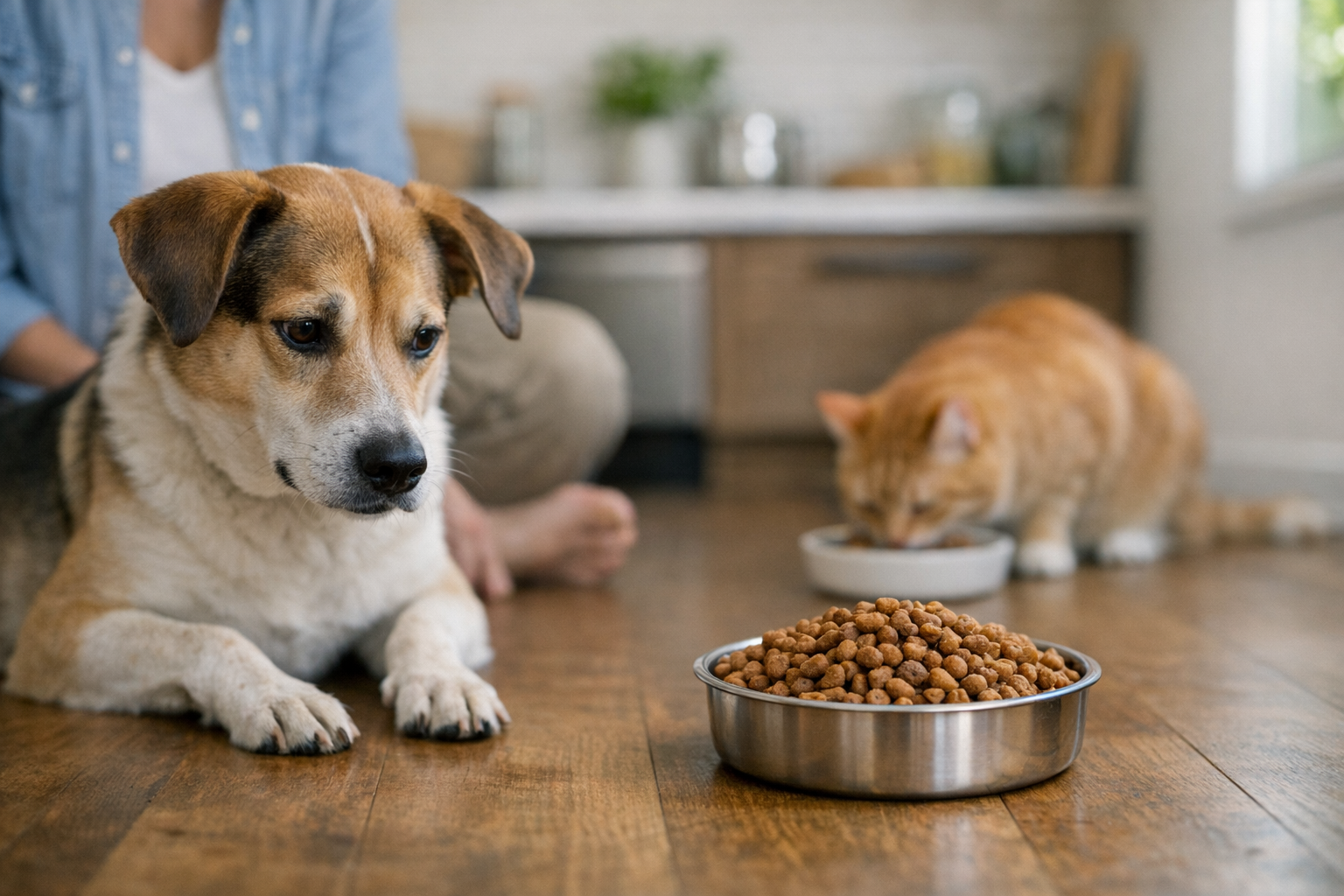
You are walking through the kitchen when you hear a rhythmic crunching sound coming from the corner where the cat usually eats. You turn the corner only to find your dog with their head buried deep in the cat's bowl, happily polishing off the last of the dry kibble. Many pet owners face this exact scenario every day. At BaxterBoo, we understand the worry that follows. You might wonder if that stolen snack will lead to a late-night vet visit or if it is just a harmless treat. While cat food is not technically toxic to dogs, it is not designed for them either. This post covers the nutritional differences between the two species, the immediate risks of a high-fat meal, and the long-term health consequences. You will learn how to protect your dog's health while keeping both pets satisfied.
Quick Answer: Dry cat food is not toxic to dogs in small amounts, but it can cause significant health issues if eaten regularly. The high protein and fat content can lead to gastrointestinal upset, obesity, or even life-threatening pancreatitis in sensitive dogs.
The Nutritional Divide Between Dogs and Cats
To understand why cat food can be problematic, you first have to look at how these two animals are built. Cats are obligate carnivores. This means their bodies are biologically designed to get their nutrients exclusively from animal tissue. They have a very high requirement for protein and specific amino acids that they cannot produce on their own.
Dogs are omnivores. Their bodies are much more flexible. They can derive nutrition from a mix of animal and plant-based sources. Because their needs are so different, the bags of food in your pantry are formulated with entirely different chemical profiles. If you feed a dog a diet meant for a cat, you are giving them a fuel source their body is not equipped to handle long term.
Protein and Fat Levels
Most dry cat foods contain significantly more protein and fat than a standard bag of dog food. According to AAFCO standards, adult dog food requires a minimum of 18 percent protein. Adult cat food requires at least 26 percent. The fat minimum for dogs is 5.5 percent, while cats need at least 9 percent.
In reality, many premium dry cat foods go well beyond these minimums. They often reach protein levels of 30 to 40 percent. When a dog eats this, it is the equivalent of a human eating a double cheeseburger for every single meal. It tastes great to them, but it puts a massive load on their digestive system and organs. If you are comparing everyday options, browse our dog food category.
Essential Nutrients and Additives
There are several specific nutrients that cats must have in their food which dogs can often produce themselves. Cat food is supplemented with these extra ingredients:
- Taurine: This amino acid is vital for cat heart and eye health. Most dogs can synthesize their own, so dog food does not always include it.
- Arachidonic Acid: This is an essential fatty acid for cats that must come from animal fat.
- Vitamin A: Cats cannot convert beta-carotene from plants into Vitamin A. Their food contains "pre-formed" Vitamin A from animal sources.
When a dog eats these concentrated nutrients frequently, it can lead to an imbalance. For example, excessive Vitamin A intake over a long period can be harmful to dogs.
| Nutrient | Adult Dog Minimum | Adult Cat Minimum |
|---|---|---|
| Crude Protein | 18% | 26% |
| Crude Fat | 5.5% | 9% |
| Taurine | Not required | 0.1% (dry) |
| Vitamin A | 5,000 IU/kg | 3,332 IU/kg |
Bottom line: Cats and dogs have distinct biological needs that make their foods fundamentally incompatible for long-term use.
Short-Term Risks: What Happens Immediately
If your dog just finished a bowl of dry cat food, the first thing you may notice is an upset stomach. The rich, fatty nature of the kibble is a shock to the canine digestive tract. This often results in gas, bloating, and loose stools.
Some dogs have particularly sensitive systems. For these pets, even a single large meal of cat food can trigger vomiting or diarrhea. This is often because the dog's pancreas is not used to processing such high levels of fat all at once. For more on the early warning signs, read Tummy Trouble Tips: How To Treat Your Dog's Upset Stomach.
The Danger of Pancreatitis
The most serious immediate risk is a condition called pancreatitis. This occurs when the pancreas becomes inflamed. It is often triggered by a high-fat "splurge" meal. Symptoms include severe abdominal pain, a hunched back, repeated vomiting, and lethargy.
Pancreatitis is a medical emergency. If your dog shows these signs after raiding the cat's food, you must contact a veterinarian immediately. Certain breeds, such as Schnauzers and Shetland Sheepdogs, are more prone to this condition. However, any dog can develop it if they consume too much fat. If you want a deeper look at this topic, see Is Dry Cat Food Bad for Dogs?.
Gastrointestinal Distress
Even if the dog avoids pancreatitis, they might suffer from "garbage gut." This is a general term for the inflammation caused by eating rich or inappropriate foods. You might hear loud gurgling noises from their belly. They may also become very thirsty as their body tries to process the salt and protein levels.
Vet Tip: If your dog eats a large amount of cat food, monitor them closely for 24 hours. Watch for signs of pain, such as guarding their stomach or refusing to move. If vomiting persists more than twice, call your vet for guidance on managing the inflammation.
Long-Term Health Consequences
The real danger often comes from the "stealth" eater. This is the dog that sneaks a few bites of cat food every day for months or years. These small amounts add up to a significant nutritional imbalance.
Weight Gain and Obesity
Dry cat food is incredibly calorie-dense. Because it is packed with fat and protein, a small handful of cat kibble has many more calories than the same amount of dog kibble. Dogs that regularly snack on cat food almost always gain weight.
Obesity in dogs leads to a host of other problems. It puts extra stress on the joints, which is especially hard on senior dogs or breeds prone to hip dysplasia. It can also increase the risk of heart disease and respiratory issues.
Kidney and Liver Stress
The kidneys and liver are responsible for processing protein and filtering waste from the blood. When a dog consistently eats a diet with 30 percent or 40 percent protein, these organs have to work much harder. Over time, this constant overwork can lead to organ stress.
For older dogs or those with underlying kidney issues, this can be devastating. High-protein diets can speed up the progression of kidney disease. This is why many senior dog foods actually have controlled protein levels.
Nutritional Deficiencies
While cat food is "too much" of some things, it might be "not enough" of others for a dog. Dog food is formulated with specific fiber levels and carbohydrate balances that support canine gut health. A dog living primarily on cat food may miss out on the vitamins and minerals necessary for a healthy coat and strong immune system.
Key Takeaway: Regular consumption of cat food leads to a "double whammy" of health risks: excessive fat and protein intake combined with a lack of species-appropriate fiber and nutrients.
Why Dogs Crave Cat Food So Much
It can be frustrating when your dog turns up their nose at premium dog food but acts like cat kibble is a five-star meal. There is a simple reason for this behavior. Cat food is designed to be highly palatable for a very picky species.
Cats have fewer taste buds than dogs, so their food has to be very aromatic and flavorful to get their attention. It is usually much higher in animal fats and flavor enhancers. To a dog, cat food smells like a concentrated treat. It is basically the "junk food" of the pet world. If your dog is motivated by reward-style snacks, check out our dog treats category.
Along with the flavor, there is also the element of competition. If your dog sees the cat eating something, they naturally assume it is high-value. This social pressure makes the cat's bowl much more interesting than their own.
What to Do If Your Dog Raids the Cat Bowl
If you catch your dog in the act, do not panic. Most healthy adult dogs will be fine after a single incident. Follow these steps to manage the situation and keep them comfortable.
Step 1: Remove the food immediately. Take the bowl away and check how much was eaten.
Step 2: Monitor for symptoms. Look for vomiting, diarrhea, or a distended belly over the next few hours.
Step 3: Provide plenty of fresh water. The high protein and salt content will likely make your dog thirsty.
Step 4: Skip the next meal. If your dog ate a full bowl of cat food, their digestive system needs a break. Skipping one meal allows the inflammation to settle.
Step 5: Gradually return to their normal diet. Start with a smaller portion of their regular dog food to ensure their stomach is stable. If tummy trouble keeps coming back, our dog healthcare category is a good place to continue your search.
How to Prevent Future Food Theft
Prevention is the best way to keep your dog safe. You have to make it physically impossible for the dog to reach the cat's dry food. This protects the dog from illness and ensures the cat actually gets the nutrition they need.
- Use Elevated Feeding Stations: Cats love to climb. Place the cat's bowl on a sturdy counter, a cat tree, or a dedicated feeding shelf that the dog cannot reach.
- Install a Microchip Feeder: These specialized bowls only open when they sense your cat's specific microchip or collar tag. This is the most effective way to stop a food-thieving dog.
- Utilize Baby Gates: Use a gate with a small "cat door" built into it. This allows the cat to enter a laundry room or spare bathroom to eat while keeping the dog out.
- Timed Feedings: Stop free-feeding your cat. Put the food down for 20 minutes and then pick up whatever is left. This removes the temptation for the dog to scavenge throughout the day.
- Door Props: Use a device that keeps the door open just a few inches. It should be wide enough for a cat but too narrow for a dog's head.
Key Takeaway: Managing the environment is more effective than trying to train a dog to ignore a bowl of highly scented, delicious cat food.
Managing Health Conditions and Prescription Needs
If your dog has already developed a habit of eating cat food, they may need medical support. At BaxterBoo, we work with many owners whose pets have sensitive stomachs or chronic conditions like pancreatitis. Our pharmacy offers prescription support for dogs who need it.
If your vet determines that your dog has developed kidney issues or chronic GI distress from inappropriate eating, a therapeutic diet may be necessary. These diets are specially formulated to be highly digestible or to limit specific minerals. You can fulfill these prescriptions through our pharmacy, which provides a convenient way to manage your pet's ongoing health needs alongside your regular shopping. For repeat items that need regular refills, consider our Autoship programme.
Always consult your veterinarian if your dog has a history of stomach issues before trying to manage a "food raid" at home. They may recommend a specific course of probiotics or a bland diet to help your dog recover faster. If you shop often, the MVP Rewards programme can help you earn rewards on qualifying purchases.
Conclusion
Dry cat food is not a safe long-term diet for dogs. While a few stolen kibbles usually only result in a bit of gas or a soft stool, regular access can lead to obesity, organ stress, and painful pancreatitis. The high fat and protein levels that keep cats healthy are simply too much for the canine body to process. By understanding these risks and setting up a secure feeding environment, you can keep your dog healthy and your cat's dinner safe.
- Cat food is too high in fat and protein for most dogs.
- Short-term risks include GI upset and life-threatening pancreatitis.
- Long-term risks include obesity and kidney stress.
- Environmental controls like microchip feeders are the best prevention.
If your dog is struggling with a sensitive stomach or needs a weight management plan, visit our dog healthcare category or our pharmacy for specialized support.
FAQ
Can a dog die from eating cat food?
It is very unlikely for a dog to die from a single instance of eating cat food. However, a dog could die if the high fat content triggers a severe, untreated case of pancreatitis. Chronic consumption also leads to obesity and organ failure over time, which significantly shortens a dog's lifespan.
My dog ate cat food once, should I go to the vet?
If your dog is healthy and only ate a small amount, you likely do not need an immediate vet visit. Monitor them for vomiting, diarrhea, or signs of abdominal pain. If your dog has a history of pancreatitis or kidney disease, you should call your vet right away to discuss preventative measures.
Can I use dry cat food as a high-value training treat?
While dogs find cat food delicious, it is better to use treats specifically formulated for dogs. Even small amounts of cat food used as treats can add up to too much fat for sensitive dogs. Look for high-protein dog treats or freeze-dried meat treats that offer the same "stinky" appeal without the nutritional imbalance.
Is kitten food more dangerous for dogs than adult cat food?
Yes, kitten food is even more problematic because it is designed for rapid growth. It contains significantly higher levels of protein, fat, and calories than adult cat food. If a dog gets into a bag of kitten kibble, they are at an even higher risk for severe digestive upset or rapid weight gain.






