
 Save 15% on your 1st Autoship learn more

 Email us
 Live Chat
 FAQs
FAQs





Introduction
You reach into the pantry to scoop out dinner and a strange, sour scent hits you. The kibble looks fine, but your dog is sniffing the bowl with uncharacteristic hesitation. Many pet owners assume that because dry food is shelf-stable, it lasts forever. At BaxterBoo, we know that while kibble has a long shelf life, it can and does spoil if handled incorrectly. If you’re comparing options, our dry dog food category is a good place to start. This can lead to decreased nutrition or even digestive upset for your pet. In this guide, we will cover the shelf life of opened bags, the warning signs of rancid fats, and the best ways to keep your dog's food safe. Understanding how to manage your dog's food supply ensures every meal provides the fuel they need to stay healthy.
The Reality of Kibble Shelf Life
Dry dog food is processed to remove moisture. This prevents the growth of mold and bacteria while the bag is sealed. Most unopened bags are good for twelve to eighteen months from the date of manufacture. You can find this date printed on the back or bottom of the bag, often labeled as a "Best By" or "Use By" date.
Once you break that seal, the clock starts ticking. Oxygen and light begin to break down the preservatives and fats in the food immediately. Most experts recommend using a bag of dry food within four to six weeks of opening it. After this window, the nutritional quality begins to drop. Even if it is not technically "rotten," it may not be providing the vitamins and minerals promised on the label.
Quick Answer: Yes, dry dog food can spoil. Once opened, a bag of kibble typically stays fresh and nutritionally complete for four to six weeks if stored in a cool, dry place.
How to Identify Spoiled Dog Food
Detecting bad food is not always as obvious as seeing green mold on a loaf of bread. You have to use all your senses to determine if the kibble is still safe for your dog to eat.
The Smell Test
The most common sign of spoilage is a change in odor. Fresh kibble usually has a mild, grainy, or meaty scent. When the fats in the food go rancid, they produce a sharp, sour, or "paint-like" smell. If the food smells like old oil or chemicals, it has oxidized and should be discarded.
Texture and Appearance
Kibble should be dry and crunchy. If the pieces feel oily, sticky, or soft to the touch, moisture has likely compromised the batch. Look closely for any signs of fuzzy growth or white "dust" that could be mold. You should also check for small holes in the bag or movement inside the kibble. These are signs of a pest infestation, such as grain mites or weevils.
Your Dog’s Behavior
Dogs have a sense of smell that is significantly more powerful than ours. If your usually enthusiastic eater suddenly walks away from the bowl, listen to them. They can often detect rancidity long before we can. Never force a dog to eat food they are rejecting, as this is often their first line of defense against food poisoning.
Key Takeaway: Trust your dog's nose. If they refuse to eat or if the food smells sour or chemical-like, it is safer to throw the bag away than to risk a vet visit.
Why Dry Food Goes Bad
Several environmental factors contribute to the degradation of dry pet food. Managing these factors is the key to making the food last as long as possible.
- Oxygen: This is the primary enemy of freshness. Oxidation happens when air hits the fats in the kibble. This process creates free radicals and off-flavors.
- Heat: Storing food in a warm garage or near a kitchen stove speeds up the breakdown of fats. High temperatures also encourage bacterial growth.
- Moisture: Humidity is a major threat. If moisture gets into the bag, it creates a breeding ground for mold. This is why you should never store dog food in a damp basement.
- Light: If you use a clear container, UV rays can degrade the food. Always choose opaque storage or keep clear bins inside a dark pantry.
Proper Storage Techniques
Many pet owners make the mistake of pouring the kibble out of the bag and directly into a plastic bin. While this seems organized, it can actually cause the food to spoil faster. Plastic bins are often porous. Over time, fats from the food soak into the plastic and go rancid. If you do not scrub the bin with hot, soapy water between every single bag, that old fat will contaminate your fresh food.
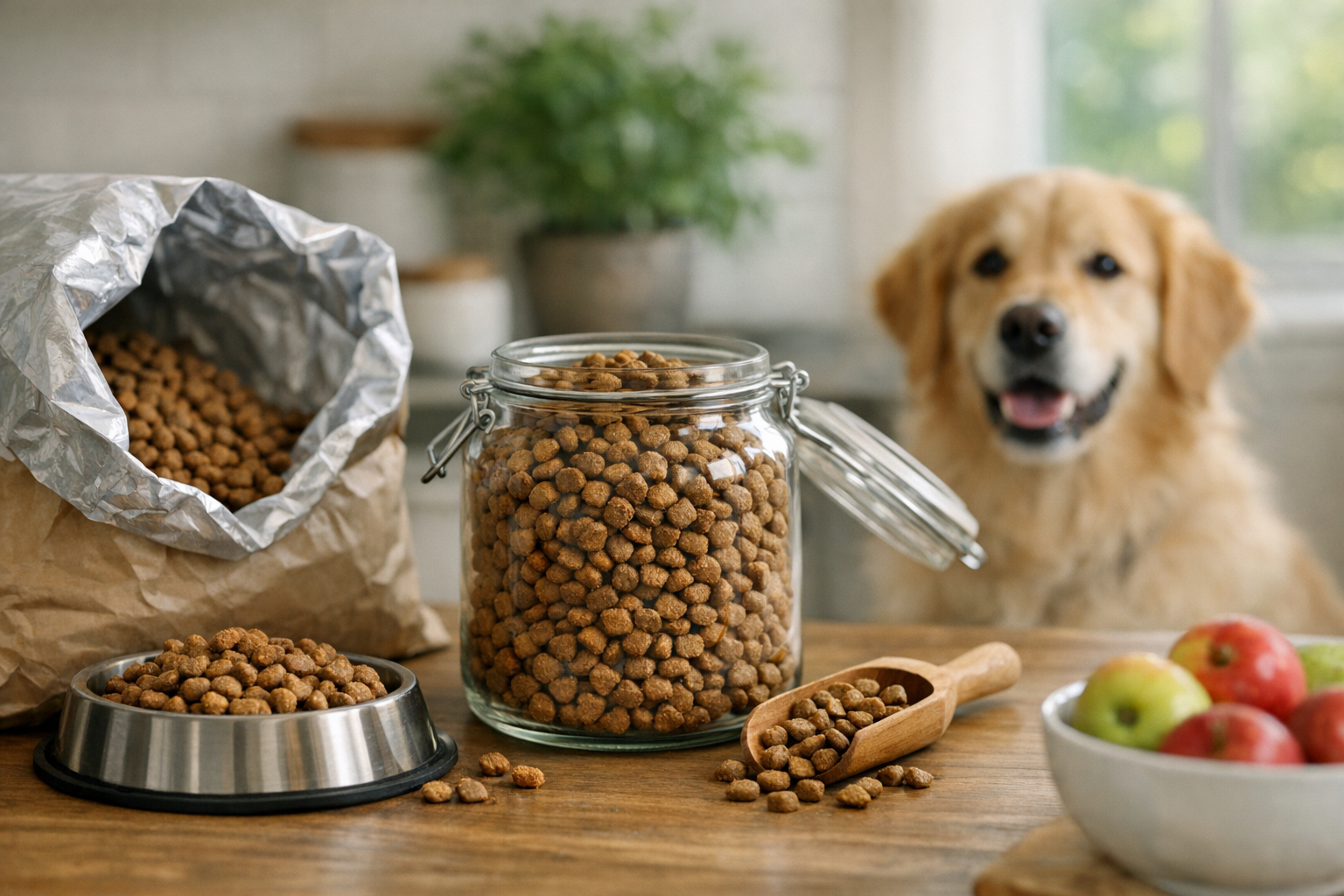
The best way to store kibble is to keep it in its original packaging. The bags used by premium brands are designed with specialized liners to keep oxygen and moisture out. Simply roll the top of the bag down tightly and secure it with a heavy-duty clip.
For extra protection, you can place the entire bag inside an airtight plastic or metal container. This provides a double barrier against pests and air. If you need a better setup, our dog food storage collection can help.
Step 1: Keep the food in the original bag. / This preserves the lot number and expiration date in case of a recall. Step 2: Squeeze out excess air. / Fold the top of the bag over several times to create a seal. Step 3: Secure with a clip. / Use a strong chip clip or a dedicated bag sealer. Step 4: Place the bag in a dark, cool spot. / A climate-controlled pantry is ideal.
Vet Tip: If your dog develops sudden vomiting or diarrhea after starting a new bag of food, stop feeding it and contact your veterinarian. Keep the original packaging so the vet can check the lot number for any potential safety recalls.
Health Risks of Spoiled Kibble
Feeding spoiled food is not just about a bad taste. It can lead to serious health complications for your pet.
Bacterial Contamination
Spoiled or improperly stored food can grow harmful bacteria like Salmonella or E. coli. These pathogens cause severe gastrointestinal distress. Symptoms include vomiting, bloody diarrhea, and lethargy. In some cases, these bacteria can even be passed from the dog to the humans in the household during handling or cleaning.
Mycotoxins
If kibble gets damp, it can grow molds that produce mycotoxins. These toxins are extremely dangerous and can cause liver failure or tremors. Mold is not always visible to the naked eye, so if you notice any moisture in the bottom of the bag, it is best to err on the side of caution.
Nutritional Deficiencies
When vitamins like Vitamin E and Vitamin A oxidize, they lose their potency. If a dog eats stale food for several months, they may develop skin issues, coat dullness, or a weakened immune system. Freshness is a core component of balanced nutrition.
Managing Your Food Supply
One of the easiest ways to ensure your dog always has fresh food is to buy the right amount. It is tempting to buy the largest bag available to save money. However, if you have a small dog, that thirty-pound bag might sit open for three months. By the time you reach the bottom, the food will likely be rancid.
Try to purchase a bag size that your dog can finish in about four weeks. If you find that you are constantly running out or the food is going stale, consider a subscription service. Our Autoship programme allows you to schedule deliveries so a fresh bag arrives right as you need it. This takes the guesswork out of storage and ensures your pet never has to eat stale kibble.
If your pet has a specific health condition that requires a prescription diet, freshness is even more critical. Our pet pharmacy offers prescription options that should be stored correctly so your dog gets the full benefit of the treatment.
Common Storage Mistakes to Avoid
Avoiding these few habits can significantly extend the life of your dog's meals.
- Mixing Old and New Food: Never pour the last few cups of an old bag into a new bag. The older food is already oxidized and will jump-start the spoilage process in the fresh batch.
- Leaving the Bag Open: It takes only a few minutes of exposure for oxygen to start doing damage. Close the bag immediately after every feeding.
- Leaving Food in the Bowl: If your dog is a "free feeder," do not leave dry food in the bowl for more than twenty-four hours. Saliva from your dog's mouth can introduce bacteria to the bowl, which then grows in the remaining kibble.
- Storing in the Garage: Unless your garage is climate-controlled, the temperature swings are too extreme. Humidity and heat will ruin the food within days during the summer months.
Bottom line: The original bag is your best friend for maintaining freshness and tracking important recall information.
Signs Your Dog Needs a Different Diet
Sometimes, even fresh food doesn't sit well with a dog. If you are confident the food is fresh but your dog still has soft stools, itchy skin, or a lack of appetite, they may have a food sensitivity. This is a great time to consult your veterinarian about specialized diets.
For dogs with chronic digestive issues or allergies, a prescription diet from our dog healthcare category might be the answer. These foods are formulated under strict quality controls. When combined with proper home storage, they can make a world of difference in your pet's quality of life.
Final Thoughts
Keeping dry dog food fresh is a simple but vital part of pet ownership. By keeping the food in its original bag, sealing it tightly, and storing it in a cool, dry place, you protect your dog from bacteria and rancidity. Pay attention to the "Best By" dates and your dog's reaction to their meals. If you want a deeper dive into freshness basics, our blog post on how long dry dog food stays fresh once opened is a helpful next step.
To help maintain a fresh supply, you can:
- Use a heavy-duty clip to seal bags.
- Store bags in a dedicated pantry or cupboard.
- Clean bowls and storage bins regularly.
- Buy smaller bags if you have a single small dog.
If you are looking for ways to stay organized and save, consider joining our MVP Rewards programme. You can earn points on every bag of food you buy, which helps offset the cost of buying smaller, fresher bags more frequently. Keeping your pet healthy starts with what goes into their bowl every day.
FAQ
How long does dry dog food last once the bag is opened?
Once you open a bag of kibble, it is best to use it within four to six weeks. While the food may not look different after this time, the fats begin to oxidize and the vitamins lose their nutritional value. Proper sealing can help it stay fresh toward the longer end of that window.
Can I store dry dog food in the refrigerator to keep it fresh?
Storing dry food in the refrigerator is generally not recommended because it can introduce moisture. When you take the bag out to feed your dog, condensation can form inside the bag, which leads to mold growth. A cool, dark pantry is a much better environment for dry kibble.
What happens if my dog eats spoiled dry food?
If a dog eats spoiled food, they may experience vomiting, diarrhea, or a loss of appetite. In more serious cases involving mold or heavy bacterial growth, they could suffer from food poisoning or mycotoxin illness. If your dog shows any signs of distress after eating, contact your veterinarian immediately.
Why is it better to keep the food in the original bag?
The original bag is designed by the manufacturer to be a barrier against oxygen and moisture. It also contains the lot number and expiration date, which are necessary if there is ever a product recall. Keeping the bag inside an airtight bin is the most effective way to ensure safety and freshness.






