
 Save 15% on your 1st Autoship learn more

 Email us
 Live Chat
 FAQs
FAQs





Introduction
You finally found the perfect kibble that your dog actually gets excited about at mealtime. You probably bought the largest bag available to save money and reduce trips to the store. A few weeks later, you might notice the kibble feels a bit oily or your dog seems less enthusiastic about their bowl. This raises a common question for many pet owners: how long does dry dog food stay fresh once opened?
At BaxterBoo, we know that keeping your pet healthy starts with the quality of their food. While dry food is convenient and shelf-stable, it does not last forever once you break the seal. This post covers the exact timeline for kibble freshness, the science behind food spoilage, and the best storage methods to protect your dog's nutrition. You will learn how to spot signs of bad food and how to shop smarter to ensure every bite is as fresh as the first. If you are comparing options, start with our dry dog food category.
Quick Answer: Once opened, dry dog food typically stays fresh and nutritionally complete for about 4 to 6 weeks. While the "Best By" date applies to unopened bags, exposure to air, light, and moisture begins the clock on spoilage the moment the seal is broken.
The Six-Week Freshness Window
Most pet owners assume that as long as the food is before its expiration date, it is safe to eat. This is true for unopened bags kept in a cool environment. However, the "Best By" date printed on the packaging refers to the food in its original, sealed state. Once you open that bag, the internal environment changes completely.
A standard bag of kibble should be consumed within 4 to 6 weeks of opening. This timeframe is the industry standard for maintaining the integrity of the fats and vitamins within the food. After six weeks, the nutritional value begins to decline significantly. Even if the food does not look or smell "bad" to you, it may no longer provide the balanced diet your dog needs.
The reason for this short window involves the way pet food is manufactured. Dry food is often coated with fats and oils to make it palatable and provide essential fatty acids. These fats are highly sensitive to oxygen. Once exposed, they begin a process called oxidation, which eventually leads to rancidity.
Key Takeaway: Treat the opening date of your dog food like the opening date of a gallon of milk. Mark the date on the bag with a permanent marker so you can track exactly how long it has been sitting in your pantry.
Why Oxygen and Light Are the Enemies
Oxygen is the primary driver of food spoilage in dry pet products. When oxygen hits the fats in the kibble, it breaks them down at a molecular level. This does more than just change the flavor. Rancid fats can actually be toxic to dogs over a long period. They can lead to digestive upset and, in some cases, more serious health issues.
Light also plays a major role in degradation. Many vitamins, particularly B vitamins and Vitamin A, are light-sensitive. If you store your dog food in a clear container in a sunny kitchen, those nutrients will vanish much faster than if they were kept in the dark. This is why high-quality dog food comes in thick, opaque bags designed to block out the sun.
Heat is the third part of this spoilage trio. Storing food in a garage or a laundry room where temperatures fluctuate can cause the oils to rise to the surface of the kibble. This makes the food go rancid almost twice as fast as food stored at room temperature. We recommend keeping food in a climate-controlled area below 80 degrees Fahrenheit.
The Original Bag vs. Plastic Bins
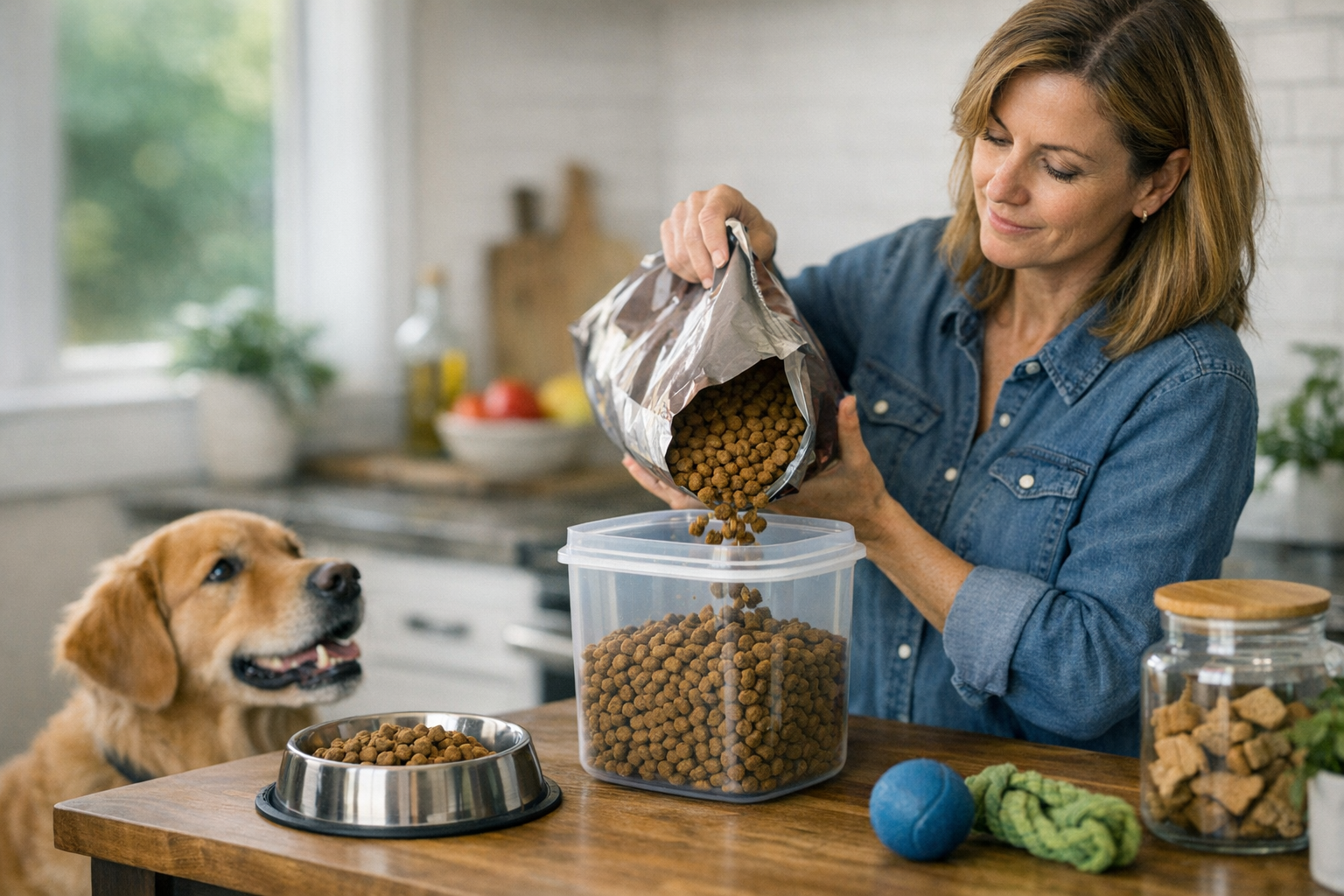
A common mistake many pet owners make is pouring the kibble directly into a plastic storage bin. While these bins are great for keeping out pests, they can actually harm the food. Plastic is porous. Over time, the fats and oils from the kibble soak into the walls of the plastic container.
These old oils become rancid very quickly. When you pour a fresh bag of food on top of the residue from the last bag, you are effectively contaminating the new food. The old, rancid oils act as a catalyst, speeding up the spoilage of your fresh kibble.
The best method is to keep the food inside its original bag. Premium brands invest a lot of money into their packaging. These bags are usually made with multi-layer barriers designed to keep moisture out and oils in. Instead of dumping the food out, simply roll the top of the original bag down tightly and place the entire bag inside your plastic or metal storage bin. For extra help, browse our dog food storage collection.
Vet Tip: If your dog has a sudden onset of itchy skin or digestive issues, the food storage might be the culprit. Storage mites can thrive in old, open bags of food. Always consult your veterinarian if you notice these symptoms, as they can help determine if it is a food allergy or an environmental issue.
Identifying Spoiled Dry Dog Food
Dogs have a much more sensitive sense of smell than humans. Often, a dog will stop eating their food because they can smell the rancid fats before we can. If your normally hungry pup suddenly turns their nose up at their bowl, do not assume they are just being picky. Inspect the food immediately.
Here are the most common signs that your dry dog food has gone bad:
- A Sour or Musty Odor: Fresh kibble should smell like the proteins it contains. If it smells like old paint, sour chemicals, or heavy oil, it is likely rancid.
- Visible Mold: If moisture has entered the bag, you may see white, green, or black fuzzy spots. Even a small amount of mold means the entire bag should be thrown away.
- Soft or Crumbly Texture: Dry food should have a distinct crunch. If it feels soft, damp, or crumbles easily in your fingers, humidity has gotten to it.
- Bug Activity: Look for small moths, weevils, or tiny crawling insects. These pests are attracted to the grain and protein in the food.
- Oily Sheen: While some kibble is naturally oily, an excessive amount of oil pooling at the bottom of the bag or a sticky film on the kibble can indicate heat damage.
Bottom line: When in doubt, throw it out. The cost of a new bag of food is much lower than the cost of a veterinary visit for food poisoning.
The Danger of Storage Mites
Storage mites are microscopic pests that are naturally present in the environment. They are especially fond of grain-based dry foods. These mites can multiply rapidly in an open bag of food, especially if the environment is warm and humid.
For many dogs, storage mites are a significant allergen. If your dog suffers from chronic ear infections, red paws, or itchy skin, they may be reacting to the presence of these mites. Because the mites are invisible to the naked eye, you may not even realize they are there. If skin or digestion issues keep showing up, check our dog healthcare category.
To prevent storage mites, keep your food in a very dry area. Some pet owners choose to freeze a portion of their dry food if they know they cannot finish a bag within the four-week window. While freezing can help, it can also introduce moisture through condensation when you take it out. Keeping the food sealed and using it quickly is the most effective defense.
How to Clean Your Food Containers
If you do choose to use a storage bin, you must clean it thoroughly between every single bag of food. Simply wiping it out with a paper towel is not enough. The microscopic oil residue will remain and continue to build up.
Step 1: Empty the bin completely. / Never add new food on top of old food leftovers. Step 2: Wash with hot, soapy water. / Use a mild dish soap to break down the grease and oils on the interior walls. Step 3: Rinse with a diluted vinegar solution. / This helps neutralize odors and acts as a natural disinfectant. Step 4: Dry the container completely. / Any remaining moisture can lead to mold growth the moment you put fresh food inside.
Choosing the Right Bag Size
It is tempting to buy the 40-pound bag when it is on sale. However, if you only have one small dog, that bag might last you three or four months. By the time you get to the bottom of the bag, the food is no longer providing the nutrition your dog needs. It has likely become stale and less appetizing.
Calculate how much your dog eats per day. A 40-pound bag contains roughly 160 cups of food. If your dog eats 2 cups a day, that bag will last 80 days. That is nearly 12 weeks, which is double the recommended window for freshness. In this case, buying two 20-pound bags would be a much better choice for your pet's health. For portion planning, see our guide on how much dry food to feed a dog.
For owners of multiple large dogs, the big bags are usually fine. The goal is to match the bag size to your dog's consumption rate so that the food is always finished within that 6-week window. This ensures they get the full benefit of the vitamins and minerals the manufacturer intended.
Specialty and Prescription Diets
Some foods are more sensitive than others. For example, foods high in fish oils or those with limited synthetic preservatives will go bad faster than standard kibble. If your dog is on a prescription diet for allergies or kidney health, freshness is even more critical. These formulas are often very specific and any degradation can interfere with the management of the health condition.
Our pharmacy for dogs carries a wide range of FDA-approved prescription pet foods through our partnership with Pet's Choice. If your veterinarian has prescribed a specific diet for a chronic condition, you can manage those orders through us for home delivery. Since these foods are often more expensive, proper storage is vital to protect your investment and your dog's health.
If you are managing a sensitive stomach or skin allergies, you may also be using supplements. Products like Cosequin for joints or Zesty Paws for skin health should also be stored in a cool, dry place. Just like kibble, the active ingredients in supplements can break down when exposed to heat and air.
Smart Shopping and Autoship
One of the easiest ways to ensure your dog always has fresh food is to schedule regular deliveries. This prevents the need to buy "emergency" giant bags that sit in the pantry for months. We offer our Autoship programme that allows you to set the frequency of your deliveries based on exactly how much your dog eats.
By using Autoship, you can time your next bag to arrive just as the old one is hitting that 4-to-6-week mark. This keeps your supply fresh without you having to remember to check the bag every week. Plus, it often comes with additional savings and the MVP Rewards programme that can be used on other essentials like treats or grooming supplies.
Our warehouse in Vernon Hills, Illinois, carries over 500 trusted brands including our selection of Farmina products, our selection of NutriSource products, and our selection of Stella & Chewy's products. We handpick every product we stock to ensure it meets our standards for quality and safety. When you order from us, you are getting food that has been stored in a professional, climate-controlled environment before it ever reaches your door.
Conclusion
Feeding your dog fresh food is one of the simplest things you can do to support their long-term health. While dry food seems indestructible, it is a biological product that is susceptible to the environment. Remember the 6-week rule and keep that original bag sealed tight inside a secondary container.
By paying attention to storage and choosing the right bag size, you can prevent digestive issues and ensure your dog gets the most out of their nutrition. If you ever have concerns about your dog’s reaction to their food, always consult your veterinarian first. They can help rule out underlying health issues and give you specific guidance on the best diet for your pet’s life stage and activity level. For the best selection of premium kibble, visit our dry dog food category when you are ready to shop.
- Keep food in its original packaging.
- Store in a cool, dry, dark location.
- Clean storage bins between every bag.
- Aim to finish opened bags within 4 to 6 weeks.
Key Takeaway: Proper food storage is not just about preventing waste; it is about protecting the nutritional integrity of every meal you serve your dog.
FAQ
Can I store dry dog food in the garage?
It is generally not recommended to store dog food in a garage. Garages often experience extreme temperature swings and high humidity, which can cause the oils in the kibble to go rancid much faster. For the best results, keep your dog's food inside your home in a climate-controlled pantry or closet.
Is it safe to feed dog food that is a few days past the "Best By" date?
The "Best By" date is the manufacturer's estimate of peak quality. If the bag is unopened and has been stored in a cool, dry place, the food is likely safe for a short period after that date. However, once the bag is opened, that date is no longer a reliable indicator of freshness, and you should follow the 6-week rule instead.
Why does my dog's food smell like old paint?
A smell similar to old paint or chemicals is a classic sign of rancidity. This happens when the fats and oils in the food oxidize due to exposure to air and heat. If you notice this smell, you should stop feeding the food immediately and dispose of the remaining contents of the bag.
Does grain-free dog food spoil faster than regular kibble?
Grain-free foods are not necessarily more prone to spoilage, but the types of fats and preservatives used in the recipe can make a difference. Many premium grain-free brands use natural preservatives like Vitamin E (tocopherols) and rosemary extract, which are effective but do not last as long as synthetic chemicals. Always follow the 6-week window regardless of the ingredient list.






