
 Save 15% on your 1st Autoship learn more

 Email us
 Live Chat
 FAQs
FAQs





Introduction
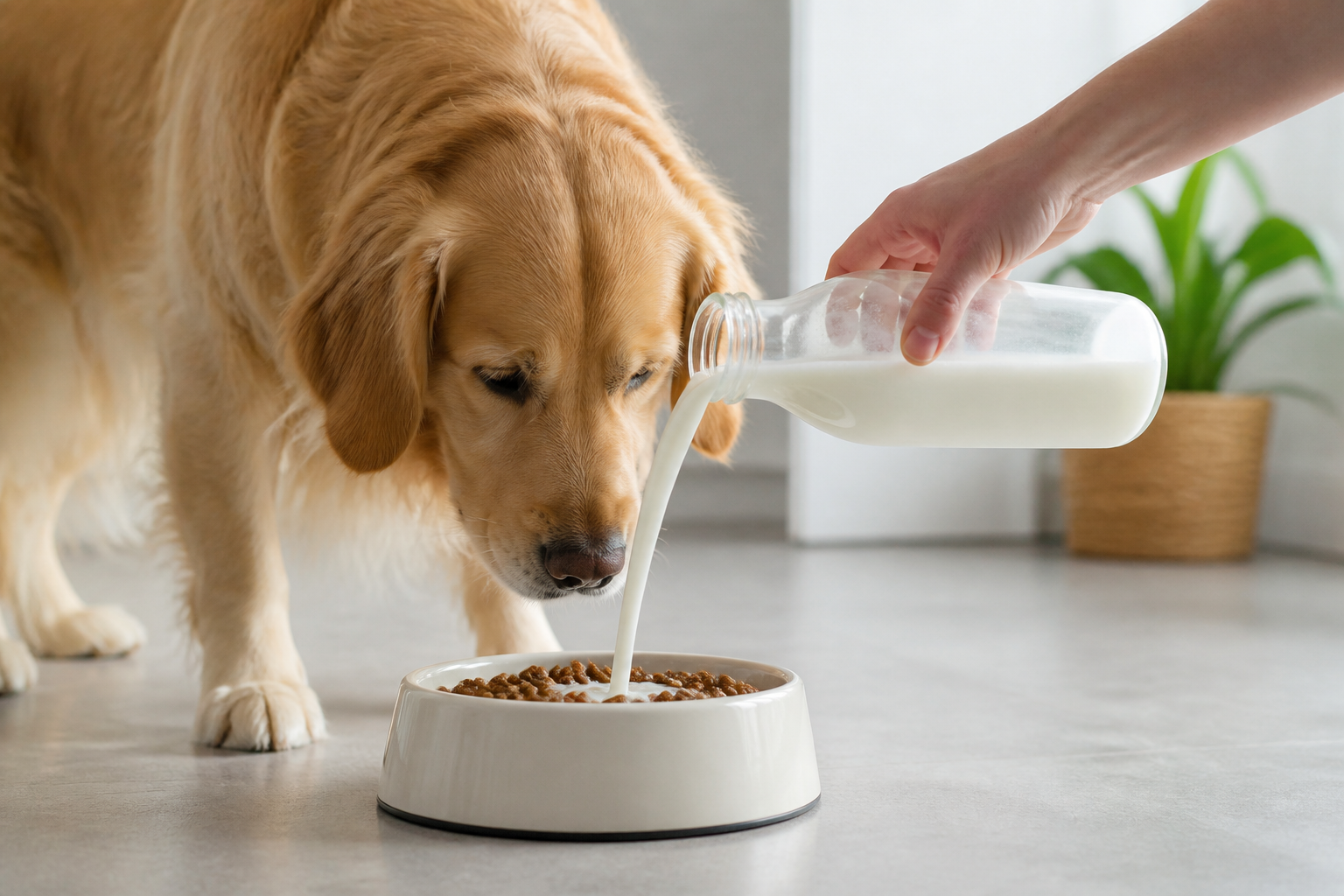
You are standing in your kitchen with a carton of milk in one hand and your dog’s bowl of dry kibble in the other. Your pup is looking up with those hopeful eyes. Maybe the kibble looks a little too dry today. Perhaps you want to give them a nutritional boost or just a tasty treat. At BaxterBoo, we hear this question often from pet parents who want to spice up mealtime. While it seems like a harmless addition, the answer is more complicated than a simple yes or no. Most adult dogs struggle to process dairy, which can lead to messy digestive issues. This guide will cover why cow's milk is often a poor choice, which alternatives are safer, and how to hydrate kibble correctly. We want to help you make the best choice for your dog's unique digestive system.
Quick Answer: While cow's milk is not toxic, it is generally not recommended as a regular addition to dry food. Most adult dogs are lactose intolerant and can suffer from gas, bloating, or diarrhea after consuming dairy.
Understanding the Lactose Factor in Dogs
To understand why milk might be a problem, we have to look at how a dog's body works. When puppies are born, they produce an enzyme called lactase. This enzyme allows them to break down the sugars found in their mother's milk. As they grow and transition to solid food, their bodies naturally stop producing as much lactase. This process is normal for almost all mammals.
Once a dog reaches adulthood, they often become lactose intolerant. This means the lactose in cow's milk stays in their digestive tract without being broken down. Bacteria then ferment these sugars. This fermentation process leads to the uncomfortable symptoms many owners see after giving their dog a bowl of milk.
Common Signs of Lactose Intolerance
If you have already added a splash of milk to your dog's food, watch for these signs over the next few hours:
- Loose stools or sudden diarrhea
- Excessive gas or a rumbling stomach
- Abdominal bloating
- Vomiting in more sensitive dogs
- A sudden lack of appetite
Every dog is different. Some can handle a tablespoon of milk without an issue. Others will have an upset stomach from just a tiny lick. Because there is no way to know your dog's tolerance without risking a mess, we usually suggest avoiding cow's milk altogether.
Key Takeaway: Adult dogs naturally lose the ability to digest milk as they age. What starts as a treat can quickly lead to painful bloating and digestive distress.
The Nutritional Reality of Cow's Milk
Milk is often praised for being a source of calcium and protein for humans. However, your dog should already be getting these nutrients from their high quality dry food. We carry brands like NutriSource and Open Farm that are formulated to be nutritionally complete. This means adding milk for the sake of "nutrients" is usually unnecessary. You can browse our dog food category to explore complete meal options.
Cow's milk also contains high levels of fat and natural sugars. For a small dog, even half a cup of whole milk can be a massive calorie bomb. If you do this daily, it can lead to weight gain. Obesity in dogs contributes to serious health problems like joint pain and diabetes. If your dog is already on a weight management plan, milk is definitely something to leave out of the bowl.
A Note on Fat Content
Milk is rich. High fat foods can sometimes trigger a condition called pancreatitis in susceptible dogs. This is a painful inflammation of the pancreas that requires immediate veterinary care. If your dog has a history of a sensitive stomach, adding rich dairy to their dry food is a significant risk.
Safer Liquid Alternatives for Dry Food
If your goal is to make the kibble softer or more appealing, there are much better options than cow's milk. These alternatives provide the moisture your dog needs without the digestive risks.
1. Warm Water
The simplest and cheapest option is often the best. Adding warm water to dry food releases the natural aromas of the kibble. This makes the food more enticing for picky eaters. Let the food sit for about ten minutes until it absorbs the water. This creates a soft texture that is easy on the teeth.
2. Bone Broth
Bone broth is a favorite among our customers at BaxterBoo. It is packed with collagen, which supports joint health. It also adds a savory flavor that most dogs cannot resist. When choosing a broth, look for brands like The Honest Kitchen or Caru. Never use human grade onion or garlic infused broths from the grocery store. These ingredients are toxic to dogs. Our dog food toppers and broths offer options made for adding flavor and moisture to meals.
3. Goat's Milk
If you really want to give your dog a milk-like treat, goat's milk is the way to go. It is often called "universal milk" because it is much easier to digest than cow's milk. The fat globules in goat's milk are smaller, and it contains less lactose. Many pet owners use it to support gut health because it is rich in natural probiotics. We carry goat's milk options that are specifically formulated for pets.
4. Plain Yogurt
A small dollop of plain, unsweetened Greek yogurt is usually safer than liquid milk. The fermentation process used to make yogurt breaks down much of the lactose. It also provides a boost of beneficial bacteria for the gut. Just make sure the yogurt contains zero xylitol. This artificial sweetener is deadly to dogs and is sometimes found in "low fat" or "flavored" human yogurts.
Vet Tip: If your dog has a severe reaction to any new food, including milk, contact your veterinarian. For dogs with chronic digestive issues or those needing prescription diets, our pet pharmacy can help you get the specialized food your vet recommends.
Why Adding Moisture to Kibble Matters
You might wonder why you should bother adding any liquid at all. Dry kibble is convenient, but it only contains about 10 percent moisture. In the wild, a dog's diet would consist of much more water. By adding a safe liquid to the bowl, you are helping your dog in several ways.
Better Digestion
Water is a critical part of the digestive process. It helps break down the hard nuggets of kibble so the body can absorb nutrients. If a dog eats dry food and does not drink enough water afterward, their stools can become hard. This leads to constipation and straining.
Kidney and Urinary Health
Keeping the urinary system flushed is vital for preventing stones and infections. This is especially important for male dogs or breeds prone to urinary issues. Adding moisture to the food ensures they are getting a steady intake of fluids throughout the day.
Weight Management
Liquid adds volume to the meal without necessarily adding a lot of calories if you use water or low calorie broth. This can help a dog feel full more quickly. If your dog always seems hungry, a "kibble soup" might help them feel more satisfied after dinner. For another perspective on moistening meals, read how to wet dry dog food for better digestion and hydration.
Bottom line: Hydrating dry food is a great habit, but the liquid you choose should be water or a pet-safe broth rather than cow's milk.
How to Safely Introduce New Liquids
If you decide to try goat's milk or bone broth, do not pour a whole cup in at once. Any sudden change in diet can cause an upset stomach. Follow these steps to ensure a smooth transition.
Step 1: Start with a very small amount. / Add just one or two tablespoons of the liquid to their normal portion of dry food.
Step 2: Observe your dog for 24 hours. / Look for any changes in their bathroom habits or energy levels.
Step 3: Gradually increase the amount. / If they handle the small dose well, you can slowly add more over the next week.
Step 4: Keep it consistent. / Once you find a liquid and an amount that works, try to stick with it to keep their digestion stable.
When to Talk to a Professional
While we love helping you find the right toppers and treats, we are not veterinarians. If your dog is a very picky eater, it might not be a matter of flavor. Dental pain, nausea, or underlying health conditions can all cause a dog to turn away from their bowl.
If you find that you are adding milk or other toppers just to get your dog to eat anything at all, a vet visit is necessary. They can rule out medical issues. If your vet prescribes a specific diet for allergies or kidney health, our pharmacy can help fulfill those needs. We work with Pet's Choice to offer a wide range of prescription foods and medications for our community.
Special Considerations for Puppies
You might think that because puppies drink their mother's milk, cow's milk is fine for them. This is a common mistake. Cow's milk does not have the same nutritional balance as canine milk. It actually has more lactose and less protein than what a puppy needs. Giving a puppy cow's milk can cause severe diarrhea. In a small puppy, diarrhea leads to dehydration very quickly. This can become a medical emergency in a matter of hours.
If you have a puppy that needs extra calories or is being weaned, use a specific puppy milk replacer. These are designed to mimic a mother dog's milk perfectly. Our puppy food and milk replacer selection includes options to help your newest family member grow strong.
Comparing Liquid Add-ins for Dogs
| Liquid Option | Lactose Level | Calorie Count | Best Use Case |
|---|---|---|---|
| Cow's Milk | High | Moderate/High | Not recommended for most dogs |
| Goat's Milk | Low | Moderate | Sensitive stomachs and gut health |
| Bone Broth | Zero | Low | Picky eaters and joint support |
| Warm Water | Zero | Zero | Daily hydration and softening kibble |
| Plain Yogurt | Low | Moderate | Probiotic boost (small amounts) |
The Role of Treats and Variety
We know that you want to show your dog love through food. Adding things to their bowl is a way to bond. However, you can provide variety without risking a stomach ache. Instead of milk, consider rotating their protein sources. We carry 500+ trusted brands, many of which offer different flavors within the same product line.
Using high quality treats as toppers is another great way to add excitement. You can crumble a freeze dried liver treat or a bit of air dried fish over their kibble. These options provide an intense flavor and a nutritional boost without the lactose found in dairy. Brands like Stella and Chewy's or Vital Essentials offer excellent meal mixers that are designed for exactly this purpose. For more ideas, explore our freeze-dried food collection.
Managing Dietary Sensitivities
Some dogs are naturally more sensitive than others. If your dog belongs to a breed known for digestive issues, you have to be extra careful. Adding milk to the dry food of a German Shepherd or a Great Dane might be more risky than doing so for a hearty mixed breed.
If your dog has been diagnosed with food allergies, dairy is often one of the common triggers. A dairy allergy is different from lactose intolerance. An allergy involves the immune system and can cause itchy skin, ear infections, and hot spots. If your dog is constantly scratching after eating dairy, it is time to cut it out completely.
Final Thoughts on Milk and Dry Food
At the end of the day, your dog's health depends on a stable and nutritious diet. While a tiny bit of milk might not hurt some dogs, it rarely offers enough benefit to justify the risk of an upset stomach. Stick to safer ways to hydrate that kibble. Your dog will appreciate the extra moisture and flavor, and you will appreciate the lack of clean up in the backyard.
Key Takeaways for Pet Parents
- Cow's milk is high in lactose, which most adult dogs cannot digest.
- Safe alternatives include warm water, pet-safe bone broth, and goat's milk.
- Hydrating dry food supports kidney health and improves digestion.
- Introduce any new liquid slowly to monitor for allergies or intolerance.
- Always avoid milk or yogurt containing the sweetener xylitol.
If you are looking for ways to improve your dog's mealtime, we invite you to explore our selection of food toppers and hydration aids. From bone broths to specialized goat's milk, we have the expert-curated options you need. Our MVP Rewards program can even help you save on these everyday essentials. For any specialized health needs, remember that our pharmacy partnership is here to support your vet's recommendations with prescription diets and medications.
FAQ
What happens if my dog drinks too much milk?
If a dog consumes a large amount of milk, they will likely experience significant digestive distress. This often includes severe diarrhea, vomiting, and painful abdominal cramping. In some cases, the high fat content can lead to a flare up of pancreatitis, which requires immediate veterinary attention. Always provide plenty of fresh water to help them stay hydrated if they have an upset stomach.
Can I give my dog lactose-free milk?
Lactose-free milk is safer than regular milk because the lactose has already been broken down. However, it still contains sugars and fats that your dog does not necessarily need. While it is less likely to cause a stomach ache, it should still be treated as an occasional treat rather than a daily addition to their dry food.
Is goat's milk better for dogs than cow's milk?
Yes, goat's milk is generally much better for dogs. It contains less lactose and the molecular structure makes it easier for a canine's digestive system to process. Many pet owners use it as a topper to provide probiotics and enzymes that support a healthy gut. We recommend using goat's milk specifically marketed for pets to ensure it is safe and appropriately processed.
How much bone broth should I add to dry food?
A good rule of thumb is to add about two tablespoons of broth for every cup of dry kibble. You want enough to coat the pieces and provide some moisture without turning the bowl into a soup, unless your dog prefers that texture. Always ensure the broth is room temperature or slightly warm, but never hot, to avoid burning your dog's mouth.






