
 Save 15% on your 1st Autoship learn more

 Email us
 Live Chat
 FAQs





Introduction
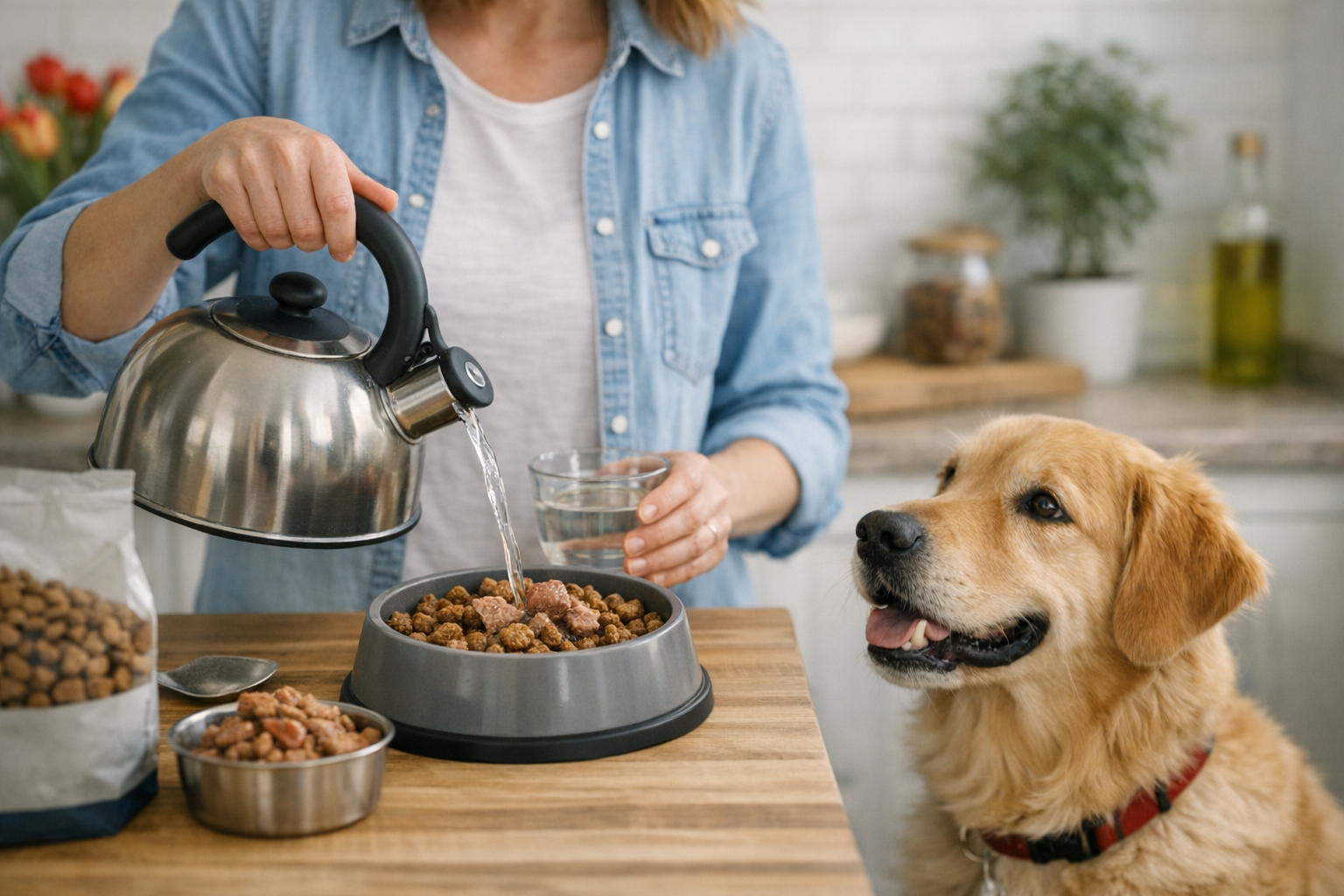
Your dog’s usual kibble may seem a little too crunchy, or you may want to add some moisture to mealtime without changing foods. The simplest way to wet dry dog food is to measure the usual portion, add warm water, and let it soften. You can serve it as softened pieces or mash it for a smoother texture.
At BaxterBoo, we know that a small feeding change can bring up plenty of questions. How much water should you use? How soft should the food be? And what should you do if your dog suddenly struggles to chew? Start with plain water and adjust the texture to your dog’s needs. If eating has become difficult or your dog’s appetite changes, talk with your veterinarian.
How to Soften Kibble With Water
You only need your dog’s regular dry food, a clean bowl, and drinking water. Start with one meal at a time so you can see how much water the kibble absorbs and how your dog responds.
Step 1: Measure the dry food
Put your dog’s usual portion of kibble in a bowl with room for the pieces to expand. Measure before adding water, since wet kibble takes up more space.
Step 2: Add warm water
Pour a little warm, not hot, water over the food and stir. For a very soft mash, you can add more water as the kibble absorbs it.
Step 3: Let the kibble soften
Leave the food covered while it soaks, then check a piece with a fork. The time varies with the kibble and the texture you want, so use softness rather than the clock as your guide.
Step 4: Adjust the texture
Serve the pieces once they are soft enough, or mash them with a fork. Add a little more water if the mash is too thick.
Step 5: Check and serve
Make sure the meal is comfortably cool before offering it. Serve it promptly, and wash the bowl after your dog finishes.
For a mash, Metro-East Home Vet Care’s softening method uses roughly equal amounts of kibble and water, then mashes the softened pieces. That’s a starting point rather than a required ratio. You can use less water for a lightly moistened meal or adjust it as needed for your dog’s food.
Dry Dog Food



Choose the Texture Your Dog Needs
Wetting kibble can mean anything from a splash of water to a smooth mash. The right texture depends on what your dog can comfortably eat and what your veterinarian recommends.
| Texture | How to make it | When it may be useful |
|---|---|---|
| Lightly moistened | Add a small splash of water and stir. | Your dog is getting used to a change in texture. |
| Softened pieces | Add more water and soak until the pieces yield to a fork. | You want less crunch while keeping the kibble recognizable. |
| Mash | Soak the kibble until soft, then break it up thoroughly. | Your dog needs a softer meal and can manage this consistency. |
If your dog is unsure about a wet meal, start with a small splash and increase it gradually. Some dogs prefer recognizable pieces, while others prefer more liquid. If your veterinarian has instructed you to feed a soft diet, follow that guidance instead of making a gradual texture change.
A fork or potato masher can break down softened kibble. You can also blend it with a little water for a smoother consistency. Clean the equipment afterward, just as you would the food bowl.
Vet Tip: After dental surgery, ask your veterinarian what texture to feed and how long to use it. A mash is not a substitute for the recovery instructions for your dog.
How Much Water and Soaking Time Should You Use?
There is no single amount of water that works for every kibble. Piece size, shape, and density affect how quickly it absorbs water. Your dog’s preference matters, too.
For a first try, add a small amount and stir. If the pieces remain harder than you want, add a little more water and check again. For a mash, the roughly equal-parts approach can give you more moisture to work with, but you may need to adjust it for the food in your bowl.
Prepare the meal close to feeding time rather than leaving it at room temperature for hours. If the kibble is still too firm for a dog who needs soft food, mash it further or ask your veterinarian about a suitable alternative.
Use warm water to help the food soften, but skip boiling water. Check the finished meal before serving, especially if you have added more warm water near the end.
Why Add Water to Dry Dog Food?
Adding water changes the texture of your dog’s regular food without requiring a new recipe. It also adds moisture to that meal. Some dogs may find a moistened meal more appealing, while others may prefer their kibble dry.
Softened pieces may be easier for a dog who has trouble with a crunchy texture. That can be helpful during a vet-directed soft-food period, but it does not explain or fix the reason chewing has become difficult.
Water also lets you change the meal without adding another food or its calories. Keep offering fresh drinking water separately. A wet meal does not replace access to a water bowl.
There are tradeoffs. Wet kibble takes preparation, can be messier, and should not be left out for a dog to graze on all day. If your dog eats a little at a time, you may find it easier to offer smaller, freshly prepared meals rather than wetting the full daily portion at once.
A few things to check as you try the new texture:
- Is your dog eating the full measured portion?
- Can your dog manage the pieces comfortably?
- Does your dog prefer a light splash, softened pieces, or a mash?
- Can you prepare and clean up the meal promptly?
Water, Broth, or Wet Food?
Plain water is the simplest choice. It adds moisture without changing the food’s ingredients or adding calories.
Broth can add flavor, but it requires more care. Human broths may contain ingredients or levels of salt that are not suitable for dogs. If you want to use a broth, ask your veterinarian about the ingredients, including those in products made for pets.
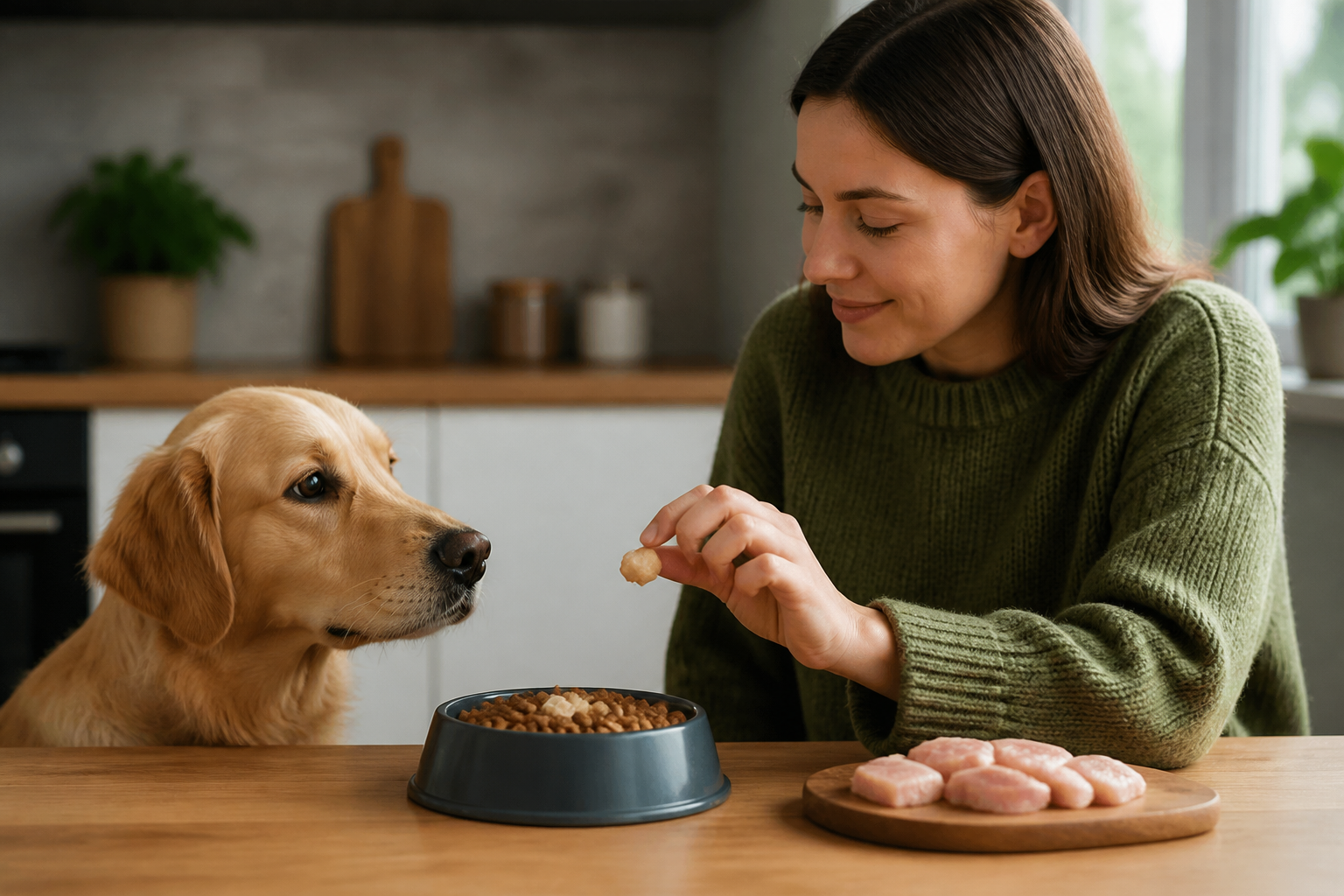
Canned dog food is another way to change the meal’s texture and flavor. It does not necessarily soften the dry pieces, though, so add water and soak the kibble first if your dog needs softer food.
Wet food also adds calories. When you mix it with dry food, count both foods as part of the meal rather than simply adding a full serving of wet food on top of the usual kibble. Check the labels, and ask your veterinarian to help work out portions if you are unsure.
Introduce a new food gradually unless your veterinarian gives you different instructions. Choose a food appropriate for your dog’s life stage, and check with your veterinarian before adding anything to a prescription diet.
Keep Moistened Food Fresh
Dry food can stay in its package until mealtime, but once you add water, treat the portion as a fresh meal. Prepare what your dog will eat, serve it promptly, and discard leftovers rather than leaving the bowl out for grazing.
Now Fresh’s guidance on adding water to kibble recommends discarding uneaten moistened food after 60 minutes. Don’t use that as a reason to prepare a bowl hours ahead and leave it on the counter. For the simplest routine, make each portion close to mealtime.
Afterward, wash the bowl and any fork or masher with hot, soapy water. Keep the remaining kibble dry in its original package or an appropriate closed container until the next meal.
If you need to prepare meals ahead for a dog with special dietary needs, ask your veterinarian about a handling plan. Fresh preparation also makes it easier to see how much your dog has eaten.
When to Call Your Veterinarian
A dog who has always preferred a softer texture is different from one who suddenly avoids crunchy food. If your dog starts dropping pieces, chewing differently, eating less, or refusing usual food, contact your veterinarian. Those changes deserve attention even if adding water seems to help.
Call your veterinarian as well if your dog has ongoing digestive symptoms, seems unwell, or cannot comfortably manage the prepared meal. For a puppy moving to solid food, ask about the appropriate food and consistency rather than assuming an adult dog’s feeding routine will fit.
If your dog needs a prescription diet, check before changing how you prepare it or adding toppers. Your veterinarian can help you keep the meal consistent with the feeding plan.
Conclusion
Wetting kibble is a straightforward way to offer your dog’s regular food with a softer texture. Start with water, check the pieces as they soak, and adjust the consistency to suit your dog.
- Measure the dry portion before adding water.
- Prepare one meal at a time and discard uneaten food.
- Ask your veterinarian about sudden appetite changes or trouble chewing.
Next step: Explore our dog food category if you’re choosing a food for your dog’s next feeding routine.
FAQ
Can I use cold water to wet dry dog food?
Yes. Cold or room-temperature drinking water can moisten kibble, although the pieces may take longer to soften than they would in warm water. Check the texture before serving rather than relying on a fixed soaking time.
Can I wet my dog’s kibble at every meal?
You can use water to soften your dog’s regular food at mealtimes if your dog accepts it. Prepare each portion close to serving and clean the bowl afterward. If your dog follows a special diet or has a medical condition, check the routine with your veterinarian.
Is softened kibble the same as canned dog food?
No. Adding water changes the moisture and texture of the kibble, but it does not turn it into the recipe in a can of wet food. Measure the kibble while dry so you know how much food you are serving.
Can I leave wet kibble out overnight?
Don’t leave moistened kibble at room temperature overnight. Make a fresh portion near mealtime and discard what your dog doesn’t finish. If you need an advance preparation routine, ask your veterinarian for guidance.


- Site & Contents BaxterBoo.com. BaxterBoo is located in the United States.
- Privacy & Security
- Terms of Use
- Accessibility Statement
