
 Save 15% on your 1st Autoship learn more

 Email us
 Live Chat
 FAQs
FAQs





Introduction
You are standing in your kitchen with a half-packed suitcase. Your dog is watching your every move. You have the travel crate ready and the leash by the door. The only question left is what to do about their dinner. You want to maintain their routine, but you are not sure if security will let you pass with a bag of kibble.
At BaxterBoo, we know that traveling with your pet is an adventure that requires careful planning. Keeping your dog on their regular diet is the best way to prevent stomach issues while you are away from home. This guide will walk you through the current regulations for bringing dry dog food on a plane. We will cover TSA rules, packing strategies, and how to handle international customs. By the time you reach the airport, you will feel prepared to keep your dog well fed and happy.
Understanding TSA Rules for Dry Dog Food
The Transportation Security Administration (TSA) oversees what goes into your luggage for domestic flights. For dog owners, the news is generally good. Dry dog food is classified as a solid food item. This means it is not subject to the strict liquid rules that govern your shampoo or bottled water.
You are allowed to bring dry dog food in both your carry-on bag and your checked luggage. There is no specific weight limit set by the TSA for pet food. You can pack enough for a long weekend or a month-long stay. However, the way you pack it can affect how quickly you get through the security line.
Quick Answer: Yes, you can bring dry dog food on a plane in carry-on and checked bags. TSA classifies dry kibble as a solid food, so it does not fall under the 3-1-1 liquid rule.
Carry-On vs. Checked Bags
If you put dog food in your carry-on, be prepared for extra screening. High-density organic materials can sometimes look suspicious on the X-ray machine. To make the process faster, consider placing your bag of food in a separate bin. This is similar to how you handle a laptop or a bag of toiletries.
Checked bags are an easier option for large amounts of food. You do not have to worry about the food triggering an alarm during your own security screening. Just be mindful of your airline’s weight limits. A large bag of premium kibble can be heavy. If your suitcase exceeds 50 pounds, you might face an overweight baggage fee.
Wet Food and Dehydrated Alternatives
While dry kibble is easy, wet dog food is different. TSA treats canned or pouched wet food as a liquid or gel. If you want to put wet food in your carry-on, the containers must be 3.4 ounces or smaller. All containers must fit inside a single quart-sized clear bag.
Many pet owners find that freeze-dried or dehydrated foods are better for travel. Brands like Stella and Chewy's or The Honest Kitchen offer lightweight options. These count as solid foods. You can carry them on easily and just add water once you reach your destination. You can compare options in our dog food category.
Bottom line: Stick to dry or freeze-dried food in your carry-on to avoid the hassles of the 3-1-1 liquid rule.
Why Packing Your Own Food Matters
It is tempting to leave the bulky food at home and buy a new bag when you land. While this saves space, it can be a risk for your dog’s health. Dogs have sensitive digestive systems. A sudden change in diet can lead to gas, lethargy, or diarrhea. This is the last thing you want to deal with in a hotel room or at a relative's house.
Familiar food also provides comfort. A dog in a new environment is dealing with strange sights and smells. Eating the same kibble they have at home can lower their stress levels. It signals to them that even though the location has changed, their care remains the same.
If your dog requires a prescription diet, packing your own is even more important. You cannot guarantee that a local store will have the specific medical food your dog needs. Our pharmacy at BaxterBoo carries a wide range of FDA-approved prescription pet foods. If you need to restock before a big trip, check our pet pharmacy to ensure your dog has their necessary nutrition.
Vet Tip: If your dog is on a prescription diet, always carry at least three days' worth of food in your carry-on bag. This ensures your dog stays healthy even if the airline loses your checked luggage.
How to Pack Dry Dog Food for a Flight
Packing kibble is more than just throwing a bag in your suitcase. You want to ensure the food stays fresh and does not spill all over your clothes.
Step 1: Calculate your portions. Count the number of days you will be away. Add two extra days of food to the total. This covers you if there are flight delays or if you decide to stay longer.
Step 2: Use airtight bags. Air and moisture will make kibble go stale. Use heavy-duty freezer bags with a double-seal. These are better than the original bulky packaging because they take up less space as you use the food.
Step 3: Label every bag. Use a permanent marker to write your dog's name and the serving size on the bag. This is helpful if you are staying with friends who might help with feeding.
Step 4: Pack a collapsible bowl. Do not forget to bring a way for your dog to eat and drink. A silicone collapsible bowl is lightweight and clips onto your backpack.
Separation for Security
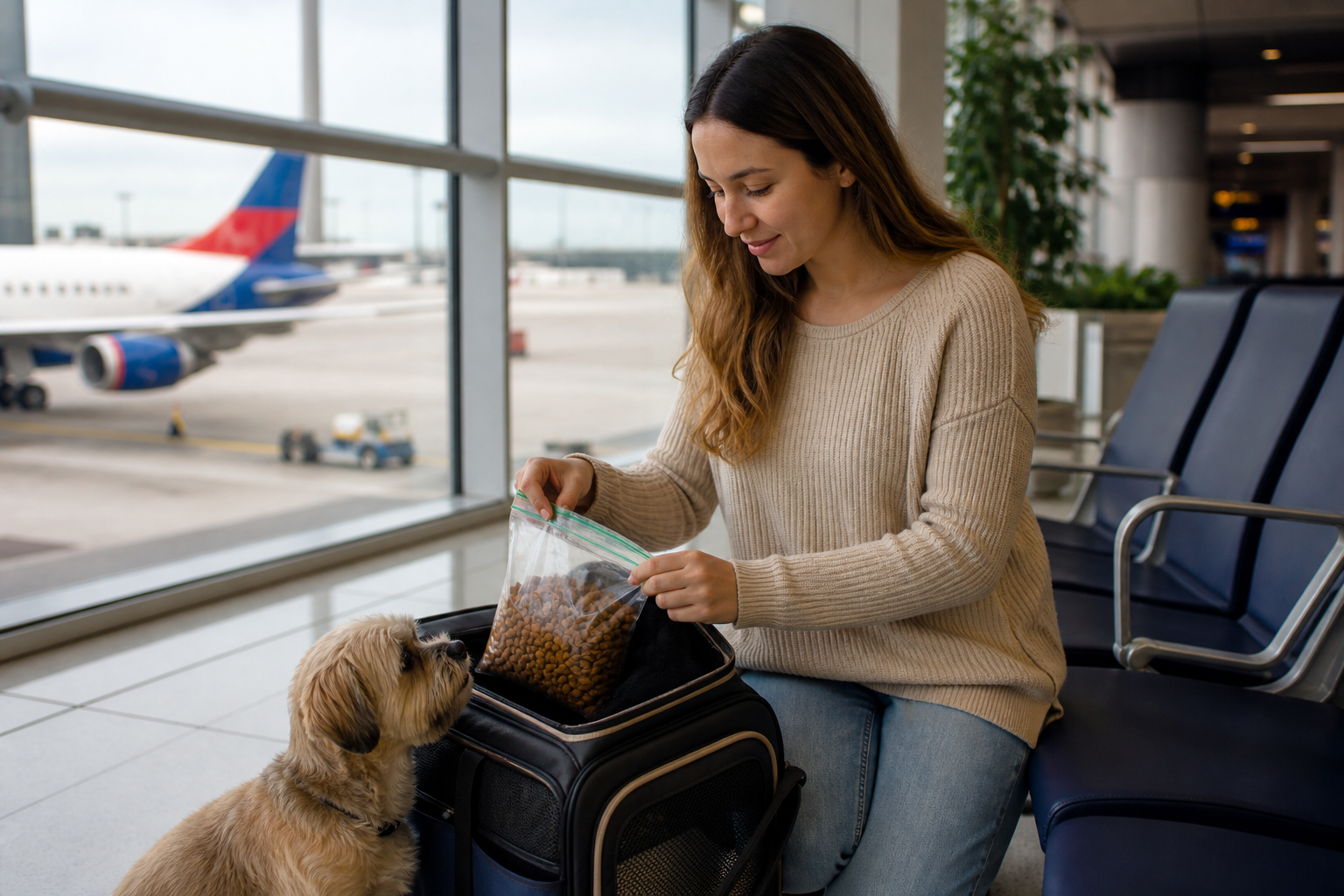
When you pack your carry-on, place the food near the top. You want to be able to reach it quickly if a TSA officer asks to see it. If you use a clear bag, they can often inspect it without even opening it. This keeps the line moving and gets you to your gate faster.
Key Takeaway: Proper packing prevents spills and keeps food fresh, while labeling ensures your dog gets the right amount even if someone else feeds them.
International Travel Considerations
If you are flying to another country, the rules change significantly. TSA handles the security of the plane, but the destination country’s customs agents handle the safety of their borders. Many countries have strict bans on importing meat-based products. This is to prevent the spread of diseases like Foot and Mouth Disease.
Before you fly internationally, check the "Pet Travel" section of the destination country's official government website. Some countries allow small amounts of pet food if it is in its original, sealed commercial packaging. Others will confiscate any open bags or specific proteins like beef or poultry.
Researching Your Destination
If your food is likely to be confiscated, you will need a plan for arrival. Look up pet stores near your destination. See if they carry the same brand you use at home. If they do not, you might need to start a slow transition to a new food a week before you leave. For more guidance, read about helping your dog transition during a move.
| Travel Type | Rule for Dry Food | Potential Issues |
|---|---|---|
| Domestic US | Allowed in carry-on and checked | May require extra X-ray screening |
| International | Varies by country | Frequent confiscation of meat products |
| US to Hawaii | Very strict | Requires specific documentation |
Bottom line: Customs rules are much stricter than security rules, so always verify the laws of your destination country before packing meat-based kibble.
Feeding Your Dog on Travel Days
Timing is everything when it comes to feeding your dog on the day of your flight. A full stomach and a pressurized cabin do not always go well together. Some dogs experience motion sickness or anxiety that can lead to an upset stomach.
The Pre-Flight Meal
Most experts recommend feeding a smaller meal than usual about four to six hours before the flight. This gives your dog enough time to digest the food and go to the bathroom before they enter the airport. Avoid feeding a large meal right before you head to the gate.
During the Flight
If your flight is short, your dog can skip a meal. Focus on hydration instead. Air travel is very dehydrating for animals. Bring an empty water bottle through security and fill it at a water fountain. Offer your dog small sips of water during layovers or if they are traveling in the cabin with you.
For long-haul flights, you can offer a small snack of kibble. Avoid giving them new treats they have never had before. Stick to the familiar food you packed. If your dog is a senior or has specific health needs, a small snack can help keep their energy levels stable.
Managing Anxiety
If your dog is a nervous traveler, food can be a helpful distraction. You can use a small portion of their dry food inside a sturdy toy like a Kong. This gives them something to focus on while the plane is taking off or landing. However, if your dog is prone to vomiting when stressed, it is better to wait until you land to give them a full meal.
Vet Tip: If your dog shows signs of severe travel anxiety or motion sickness, talk to your veterinarian. They may suggest a prescription calming aid or an anti-nausea medication, which you can often find at our BaxterBoo pharmacy.
Maintaining Your Routine at Your Destination
Once you arrive, try to get back to your normal schedule as soon as possible. If your dog usually eats at 7:00 AM at home, feed them at 7:00 AM in your new location. This helps their internal clock adjust to the new time zone.
If you find that your dog is too stressed to eat, do not force it. Offer a little bit of warm water mixed with their kibble to make it smell more appealing. For additional feeding ideas, see how to get your dog to eat dry food. Most dogs will resume eating once they have had a chance to explore their new surroundings and have a good nap.
Storage at Your Destination
Keep your food in a cool, dry place. If you are staying in a vacation rental, avoid keeping the food under the sink where it might get damp. If you are in a tropical or humid climate, an airtight container is essential to prevent mold and pests.
We offer several travel-friendly storage solutions at BaxterBoo. Using these can help keep your dog’s food as fresh on day seven of your trip as it was on day one. If you travel frequently, consider setting up our Autoship programme for your favorite food and treats. This ensures you always have a fresh supply ready before you head to the airport.
Returning Home and Restocking
When you return home, your dog might be tired from the journey. This is a good time to lean back into your familiar home routine. Check your food supply when you get back. If you are running low, the MVP Rewards programme is a great way to earn points on your restock orders. You can get up to 5% back on the supplies you need to keep your dog healthy.
If your dog experienced any digestive issues during the trip, keep a close eye on them for a few days. If they have persistent diarrhea or refuse to eat once you are home, it is time for a check-up. You can also read whether dry food can cause diarrhea in dogs for more information.
Key Takeaway: Consistency is the best tool for a happy traveling dog. Pack the food they love, stick to their schedule, and stay hydrated.
Summary of Travel Tips
Traveling with your dog takes a bit of extra effort, but it is worth it to have them by your side. Here is a quick checklist for your next flight:
- Pack dry kibble in clear, airtight bags.
- Bring at least two extra days of food for delays.
- Keep a portion of food in your carry-on bag.
- Research international customs if leaving the US.
- Offer water frequently but keep meals light on travel days.
- Use familiar treats and toys for comfort.
By following these steps, you can ensure that "can I bring dry dog food on a plane" is the easiest question you have to answer during your trip. We are here to help you every step of the way, from providing the right travel gear to fulfilling your pet's prescription needs.
FAQ
Can I bring an open bag of dog food on a plane?
Yes, you can bring an open bag of dog food on a domestic flight. However, it is much better to transfer the food into clear, airtight bags for easier screening. If you are traveling internationally, customs agents may be more likely to confiscate food that is not in its original, sealed commercial packaging.
Does dog food count as a carry-on item?
Dog food itself is not a separate item, but it counts toward the weight and size limits of your carry-on bag. If you have a large amount of food, it might take up space that you would otherwise use for your own belongings. Always check your airline’s specific baggage policies to see if they allow a separate small bag for pet essentials.
What should I do if my dog's food is confiscated?
If your food is taken by customs or security, do not panic. Ask the agents if there is a local pet store at the airport or nearby. Look for a high-quality brand with similar ingredients to what you usually feed. To prevent stomach upset, you can also look for a "sensitive stomach" formula until you can find your regular brand.
Can I bring prescription dog food on a plane?
Yes, you can bring prescription dog food on a plane. TSA does not have a specific medical exemption for pet food like they do for human medication, so it must still follow the liquid rules if it is wet food. If you are carrying a large amount, it can be helpful to bring a copy of the prescription from your vet to show security or customs officers.






