
 Save 15% on your 1st Autoship learn more

 Email us
 Live Chat
 FAQs
FAQs





Introduction
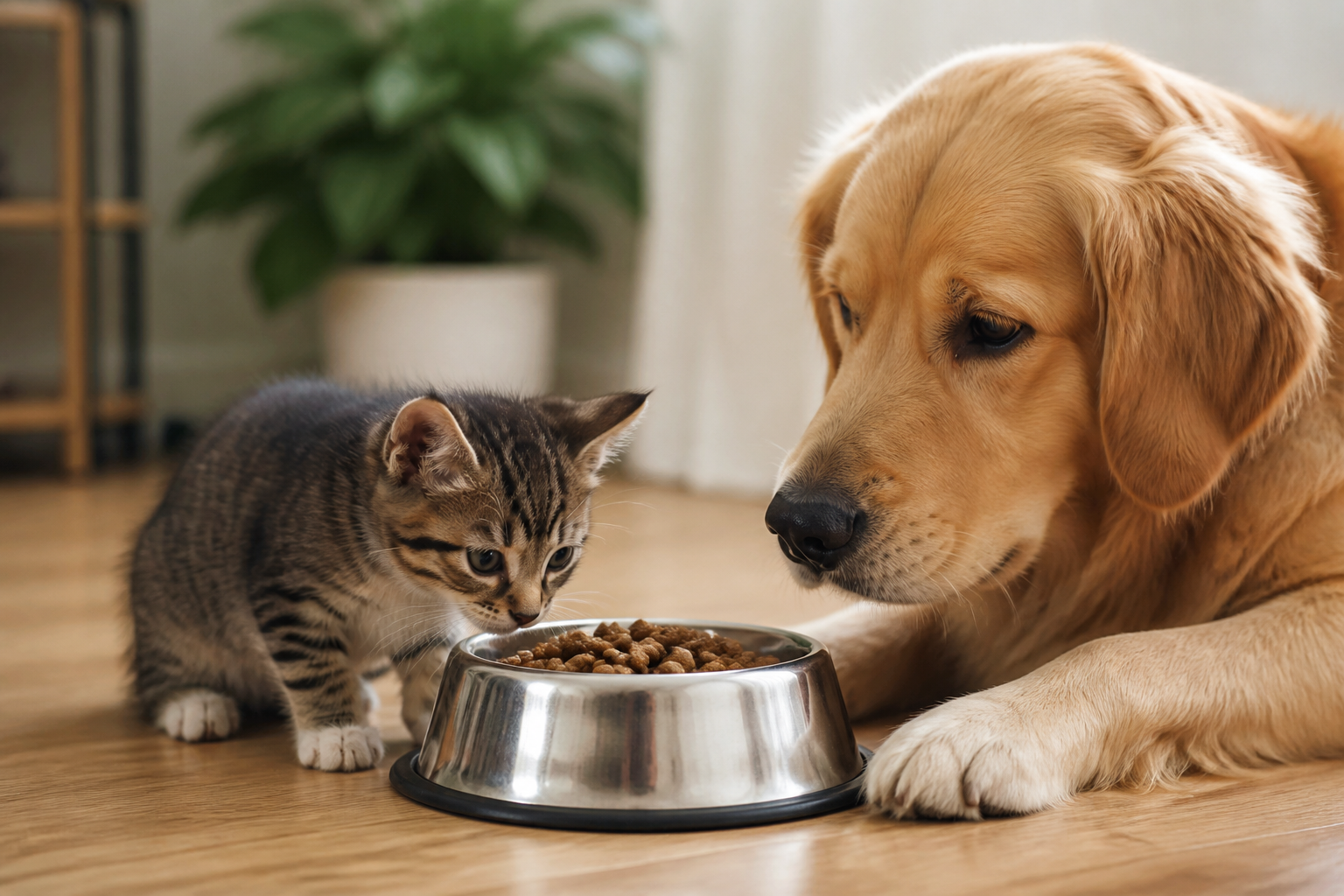
You have just brought home a tiny, energetic kitten and your house is finally full of purrs and play. You turn your back for one second to grab a toy, and suddenly you find your new feline friend face-deep in the golden retriever’s food bowl. It seems harmless in the moment, but as pet lovers at BaxterBoo, we know that what looks like a simple snack can lead to real nutritional gaps over time. This article covers why dog food fails to meet the unique needs of growing kittens and how to manage a multi-pet household during mealtime. While a single stray kibble is rarely a cause for panic, relying on dog food for a kitten can lead to serious health consequences. We want to ensure your kitten has the best start in life with the right nutrition.
If you are shopping for species-appropriate food, start with our kitten food category.
Quick Answer: Kittens should not eat dry dog food as a meal replacement. While a few bites are not toxic, dog food lacks the specific protein, taurine, and vitamin levels essential for a kitten’s rapid growth and development.
The Biological Difference Between Cats and Dogs
To understand why your kitten needs their own food, you first have to look at the biology of the animals. Dogs are omnivores. This means their bodies are designed to process a variety of food sources, including meat, grains, and vegetables. Their nutritional requirements are flexible because they can synthesize certain vitamins and amino acids from plant-based ingredients.
Kittens and adult cats are obligate carnivores. This term means they must eat meat to survive. Their bodies are biologically tuned to process animal protein and fat. They cannot effectively derive all their essential nutrients from plants. When you look at the back of a bag of dog food, you will often see more plant-based fillers and different nutrient ratios than what a cat requires.
For more kitten-focused reading, see our favorite sensitive stomach kitten foods.
The Role of Protein and Fat
Kittens are in a stage of explosive growth. Their weight can double or triple in just a few weeks. To support this, they need a diet that is much higher in protein and fat than a typical dog diet. Most high-quality kitten foods consist of at least 30 percent protein. Dog food is usually significantly lower. If a kitten eats dog food regularly, they may suffer from stunted growth or muscle wasting because they are not getting the building blocks their bodies require.
Vital Nutrients Missing in Dog Food
The most dangerous part of feeding dog food to kittens is the lack of specific micronutrients. Manufacturers formulate dog food based on what a canine needs to thrive. These formulas often miss or under-dose the exact things a kitten needs for their eyes, heart, and brain.
The Taurine Requirement
Taurine is an amino acid that is non-negotiable for cats. Most mammals, including dogs, can produce their own taurine. Because dogs make it naturally, dog food manufacturers do not always add extra taurine to their recipes.
Cats cannot produce enough taurine on their own. They must get it directly from their food. If a kitten is raised on dog food, a taurine deficiency can develop quickly. This can lead to:
- Dilated cardiomyopathy (an enlarged, weakened heart).
- Central retinal degeneration (permanent blindness).
- Digestive issues and poor immune response.
Vitamin A and Arachidonic Acid
Dogs can convert beta-carotene from plants into Vitamin A. Kittens cannot. They need "preformed" Vitamin A, which is found in animal tissues. Without it, a kitten may suffer from poor coat quality, skin irritation, and night blindness.
Similarly, cats need a fatty acid called arachidonic acid. Dogs can produce this themselves, but cats must consume it in their diet. It is essential for managing inflammation and supporting skin health. Most dog foods do not contain the levels of these nutrients that a growing kitten needs.
Key Takeaway: Kittens require specific animal-based nutrients like taurine and preformed Vitamin A that are often absent or insufficient in dog food.
The Physical Dangers of Dog Kibble
Beyond the nutritional chemistry, the physical size of the food matters. Dog food is often made into large, hard nuggets designed for much larger mouths. A kitten's mouth is tiny, and their "baby" teeth are delicate.
Choking Hazards
Large dog kibble can be a significant choking hazard for a small kitten. Even if they manage to swallow it, the large pieces may be difficult for their small stomachs to break down. This can lead to indigestion or vomiting.
Dental Stress
Kittens have deciduous teeth that eventually fall out to make room for adult teeth. Forcing a kitten to crunch down on large, hard dog kibble can put undue stress on these small teeth. Kitten-specific dry food is usually made into very small, easily breakable shapes to accommodate their dental structure.
To compare dry and wet options for kittens, you can browse our cat food category.
Vet Tip: If your kitten is struggling to chew even kitten-sized dry food, try mixing it with a bit of warm water or wet food. If they continue to have trouble eating or show signs of mouth pain, consult your veterinarian to rule out dental issues or developmental delays.
The Weaning Process and Introducing Dry Food
If you are raising a very young kitten, you might be wondering when it is appropriate to start any kind of dry food. The transition from mother's milk or formula to solid food is a delicate process called weaning.
Step 1: Start with a "gruel" / Around 4 weeks of age, you can begin mixing a high-quality canned kitten food with kitten milk replacer. This creates a soupy consistency that is easy to lap up. Step 2: Introduce dry kitten kibble / Around 5 to 6 weeks, you can start adding a few pieces of dry kitten food to the wet mix. Ensure the dry food is specifically formulated for kittens. Step 3: Reduce the moisture / Over the next two weeks, slowly decrease the amount of liquid and increase the amount of dry food. Step 4: Full transition / By 8 to 10 weeks of age, most kittens can successfully eat dry kitten food on its own.
If you are looking for tried-and-true kitten formulas, explore our selection of Royal Canin products and our selection of Farmina products.
What to Do If Your Kitten Sneaks Dog Food
Accidents happen. If your kitten manages to eat a small amount of dog food, do not panic. A single incident is unlikely to cause long-term harm. However, you should monitor them for the next 24 hours for any signs of digestive upset.
Watch for these symptoms:
- Diarrhea or loose stools.
- Vomiting shortly after eating.
- Lethargy or lack of interest in play.
- Bloating or a tense abdomen.
If your kitten displays these symptoms or seems persistently uncomfortable, it is time to call the vet. Some kittens have more sensitive stomachs than others, and the high grain or fiber content in some dog foods can cause acute distress.
Managing a Multi-Pet Household
One of the biggest challenges of owning both a dog and a kitten is the "buffet" effect. Both animals are often curious about what is in the other's bowl. To prevent your kitten from making a habit of eating dog food, you need a solid management plan.
Scheduled Feedings
Avoid "free-feeding," which is leaving food bowls out all day. If food is always available, the kitten will eventually wander over to the dog's dish. Set specific meal times for both pets. Once 15 or 20 minutes have passed, pick up any leftover food and put it away.
Vertical Feeding
Use your kitten's natural climbing ability to your advantage. Place your kitten's food bowl on a sturdy counter, a cat tree, or a dedicated feeding shelf. Most dogs cannot reach these high spots, allowing your kitten to eat in peace. This also prevents the dog from eating the kitten's high-calorie food, which can make dogs overweight.
Separate Rooms
If your pets are particularly food-motivated, feed them in separate rooms with the door closed. This removes the temptation and reduces mealtime anxiety. Once everyone is finished, you can let them back together.
Use Technology
There are microchip-activated feeders available that only open for a specific pet. While these are an investment, they are highly effective in households where one pet needs a specific diet or a prescription food.
If your routine depends on regular deliveries, our Autoship programme can help keep mealtime predictable.
Key Takeaway: Scheduled mealtimes and separate feeding areas are the most effective ways to ensure every pet eats the food meant for their species.
When to Seek Professional Guidance
If your kitten seems constantly hungry despite eating their recommended portions, or if they have a persistent habit of seeking out non-cat food, there might be an underlying issue. Sometimes, kittens with intestinal parasites or malabsorption issues will go to great lengths to find extra calories.
Our pet pharmacy offers options for prescription diets and other health-focused cat products when your veterinarian recommends a specialized plan. We carry brands like Royal Canin and Farmina Vet Life that offer specialized support for kittens with unique health requirements.
Vet Tip: Always consult your veterinarian before switching your kitten to a prescription diet or starting a new supplement routine. They can provide accurate dosing and ensure the formula is appropriate for your kitten’s specific life stage.
Choosing the Best Food at BaxterBoo
At BaxterBoo, we pride ourselves on carrying over 500 trusted brands. We know that picking the right kitten food can feel overwhelming because there are so many options. When you shop with us, you are choosing products handpicked by people who genuinely care about animals.
Look for labels that mention "complete and balanced for kittens" or "all life stages." The Association of American Feed Control Officials (AAFCO) sets the standards for these labels. An "all life stages" food is formulated to meet the high demands of a growing kitten, making it a safe choice if you have a multi-cat household with both youngsters and adults.
Value and Convenience
Raising a kitten is an investment in their future. To help manage the costs of high-quality nutrition, we offer several programs:
- Autoship: Save on your first order and get a free MVP Gold membership. This ensures you never run out of kitten food unexpectedly.
- MVP Rewards: Earn up to 5 percent back on your purchases.
- Frequent Buyer Program: Earn free products faster on participating brands like NutriSource or PureVita.
To stretch your budget on future purchases, you can also explore the MVP Rewards programme and our Frequent Buyer Program.
We have been operating since 2006, and our 4.9-star Google review average reflects our commitment to helping pet owners like you. Whether you are visiting our warehouse in Vernon Hills or ordering online for home delivery, we are here to support your journey as a pet parent.
Summary of Feeding Kittens
Feeding your kitten correctly in the first year of life sets the stage for a long, healthy adulthood. While dry dog food might look similar to kitten kibble, the two are worlds apart in terms of nutritional chemistry. Dog food lacks the high protein, essential taurine, and specific vitamins that kittens need to grow their hearts, eyes, and muscles.
Keep these points in mind:
- Kittens are obligate carnivores and need animal protein.
- Dog food can lead to taurine deficiency, which causes heart disease and blindness.
- Kibble size in dog food can be a choking hazard for small kittens.
- Scheduled, separate feedings prevent "bowl poaching" in multi-pet homes.
- Always provide plenty of fresh water, especially when feeding dry food.
For more mealtime management tips, read how kittens with sensitive stomachs thrive on the right foods.
Bottom line: Stick to high-quality kitten-specific dry and wet food to ensure your pet gets the exact nutrients they need to thrive.
If you are ready to stock up on the best nutrition for your new arrival, check out our full collection of kitten food and treats. You can even set up an Autoship account today to save on your first order and ensure your kitten never has to resort to the dog's bowl for a meal.
FAQ
Can a kitten die from eating dog food?
A kitten will not die from eating a small amount of dog food once or twice. However, if a kitten is fed dog food as their primary diet for several weeks or months, they can develop life-threatening conditions. The lack of taurine can cause heart failure, and the lack of proper protein can lead to severe malnutrition and organ failure.
Is wet dog food better for kittens than dry dog food?
Neither wet nor dry dog food is appropriate for a kitten. While wet dog food might be easier to chew, it still lacks the high calorie count, taurine, and Vitamin A levels that kittens require. Always choose food specifically labeled for kittens, whether it is wet or dry.
Why does my kitten prefer the dog's food over their own?
Kittens are naturally curious and often find the "forbidden" food more interesting. Dog food may also have different aromas or fats sprayed on the kibble to make it palatable for dogs, which can attract a curious kitten. It is usually a matter of novelty rather than the dog food being "better" for them.
Can I mix dog food and kitten food to save money?
We do not recommend mixing the two. By diluting the kitten food with dog food, you are lowering the overall nutrient density of the meal. Your kitten may end up with a deficiency even if they are eating a full bowl. To save money, consider using our MVP Rewards programme or our Frequent Buyer Program on high-quality kitten brands.






