
 Save 15% on your 1st Autoship learn more

 Email us
 Live Chat
 FAQs
FAQs





Introduction
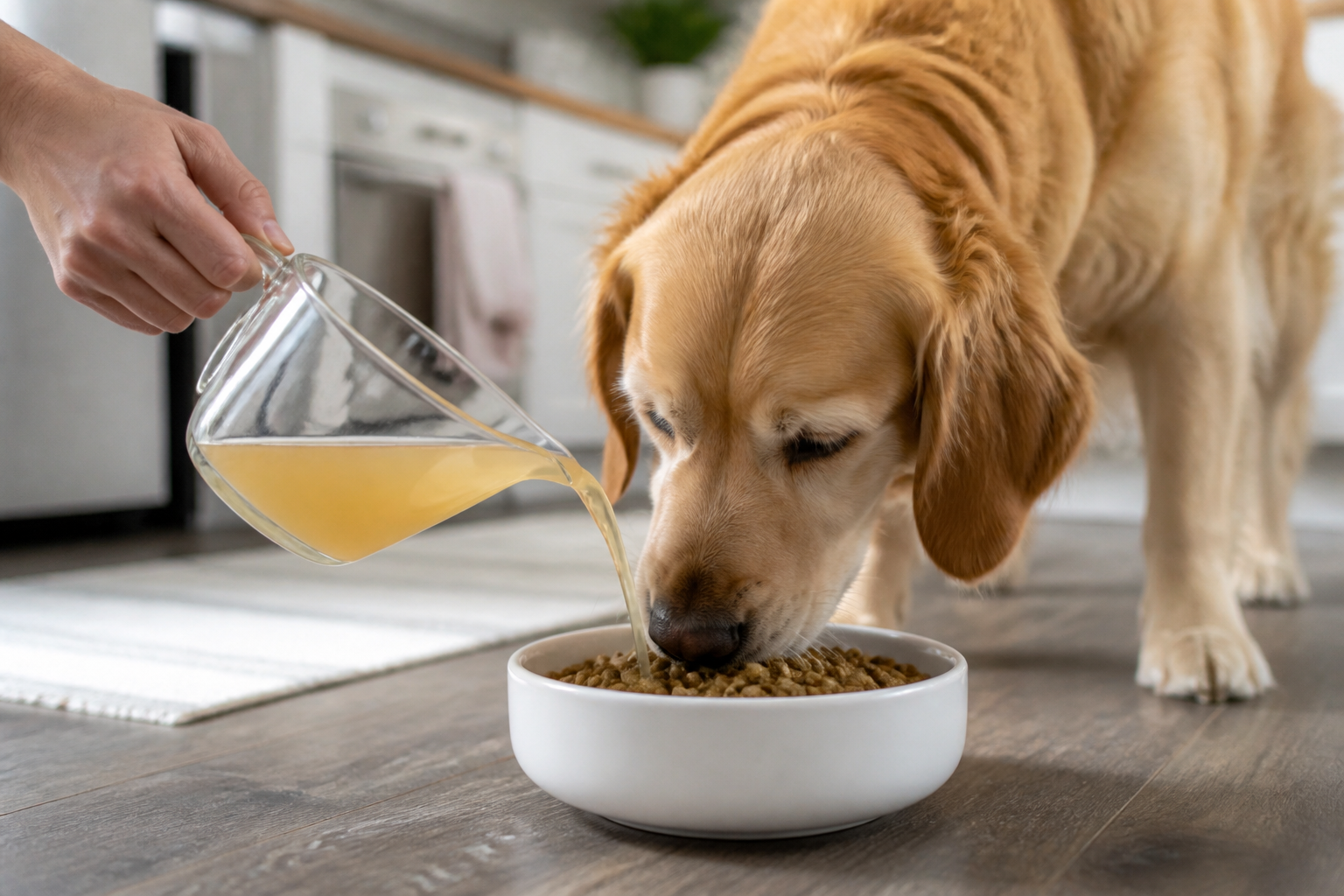
You fill the bowl with high-quality kibble and set it down. Your dog walks over, takes one sniff, and walks away. This moment is frustrating for any pet owner. You might look in your pantry and see a carton of chicken broth. It seems like a simple way to make that dry food more appealing. We at BaxterBoo hear this question often from owners of picky eaters and senior dogs. Adding broth can be a great way to boost hydration and flavor. However, you must know which ingredients are safe and which can be dangerous. This post covers the benefits of adding liquid to kibble and how to do it safely. You will learn what to look for on labels and how to prepare a dog-safe version at home.
Quick Answer: Yes, you can add chicken broth to dry dog food. It helps with hydration and encourages picky eaters to finish their meals. You must ensure the broth is low-sodium and free from onions, garlic, and artificial seasonings.
The Benefits of Adding Broth to Dry Food
Dry dog food usually contains about ten percent moisture. This is very low compared to a natural diet or wet food. Adding broth to kibble changes the texture and the nutritional profile of the meal. It is one of the easiest ways to improve a daily routine without changing the base diet.
For more ideas on improving hydration and mealtime texture, read our guide to wetting dry dog food for better digestion and hydration.
Improved Hydration
Many dogs do not drink enough water from their bowls. This is especially true for dogs that spend a lot of time outside or those with certain health conditions. When you add broth to kibble, the biscuits soak up the liquid. Your dog consumes that moisture as they eat. This supports kidney function and helps keep the urinary tract healthy.
Enhanced Scent and Flavor
Dogs have a sense of smell that is thousands of times more sensitive than ours. They "taste" food primarily through their nose. Dry kibble loses some of its aroma once the bag has been open for a while. Adding a splash of warm chicken broth releases the fats and proteins in the kibble. This creates a much stronger scent that can tempt a dog that has lost its appetite.
Easier Chewing for Seniors and Puppies
As dogs age, they often develop dental issues or sensitive gums. Hard kibble can be painful to crunch. Puppies also go through a teething phase where their mouths are sore. Broth softens the hard nuggets. It turns a crunchy meal into something more like a stew. This allows senior pets to get the nutrition they need without physical discomfort.
Key Takeaway: Adding broth is a multi-purpose tool that helps with hydration, dental comfort, and appetite stimulation. It is a simple way to elevate a standard meal.
The Hidden Dangers in Human Broth
You might be tempted to grab the same broth you use for your Sunday soup. This is where most pet owners run into trouble. Most commercial broths made for humans are formulated with ingredients that are toxic to dogs. You must be a diligent label reader before pouring anything into your dog's bowl.
The Sodium Problem
Salt is the most common additive in human broth. It is used for preservation and flavor. Dogs are much more sensitive to sodium than humans are. A single cup of standard chicken broth can contain over 800 milligrams of sodium. This is far too much for most dogs. High salt intake can lead to increased blood pressure and strain on the heart. In severe cases, it can lead to salt poisoning. Signs of too much salt include extreme thirst, vomiting, and tremors.
Onions and Garlic
Most savory broths use onions, garlic, or leeks for depth of flavor. These ingredients belong to the Allium family. They are toxic to dogs in all forms, including fresh, dried, or powdered. These plants contain compounds that can damage a dog's red blood cells. This leads to a condition called hemolytic anemia. Even small amounts of onion powder found in commercial broths can be harmful if fed regularly.
Xylitol and Artificial Sweeteners
Some "low sodium" or "diet" broths use sugar substitutes. Xylitol is a common sweetener that is extremely toxic to dogs. It causes a rapid drop in blood sugar and can lead to liver failure. While less common in broth than in peanut butter, it is still something to watch for on any processed food label.
Vet Tip: Always check the ingredient list for onion powder, garlic powder, and high salt levels. If a label says "natural flavors," it often includes these toxic aromatics. If you are unsure, do not feed it to your pet.
Choosing the Right Store-Bought Broth
If you do not have time to make your own broth, you can find safe options. You just need to know what to look for in the aisles of the grocery store or in our dog food supplement selection.
Low-Sodium vs. No-Salt-Added
There is a big difference between these two labels. "Low-sodium" usually means it has less salt than the original version, but it still has added salt. You should look for "no-salt-added" or "sodium-free." These versions are much safer for the average dog. Even then, you must still check for onions and garlic.
Pet-Specific Broths and Toppers
The safest option is to buy broth specifically made for dogs. We carry a wide variety of these at BaxterBoo. These products are formulated without toxic seasonings. Many of them are also enriched with extra nutrients like glucosamine or turmeric. Our dog food topper collection includes broth powders and other meal add-ins.
- Bone Broth for Dogs: This is different from standard chicken broth. It is simmered for a long time to pull collagen and minerals from the bones.
- Dehydrated Broth: These come in powder form. You just add warm water. They are great for travel and have a long shelf life.
- Meal Toppers: These are often thick liquids or gravies. They provide a more intense flavor than plain broth.
Ingredient Checklist for Buyers
When you are looking at a carton, use this checklist to ensure it is safe:
- Is the first ingredient chicken or chicken stock?
- Does it explicitly state "no salt added"?
- Is it free of onions and garlic?
- Are there any artificial colors or preservatives?
- Is it free of MSG and yeast extract?
How to Make Dog-Safe Chicken Broth at Home
Making your own broth is the most cost-effective way to ensure safety. You have total control over every ingredient. It is also a great way to use up chicken scraps or bones that might otherwise go to waste.
The Simple Recipe
You do not need a lot of ingredients to make a broth that dogs will love. A basic version requires only two things: chicken and water.
Step 1: Place chicken pieces in a large pot. You can use a whole chicken, drumsticks, or even a leftover carcass. Avoid using pre-seasoned or rotisserie chickens from the store.
Step 2: Add dog-safe vegetables. Carrots, celery, and green beans are excellent choices. They add vitamins and extra flavor without any risk.
Step 3: Cover with water. Fill the pot until the water is two inches above the ingredients. Do not add salt, pepper, or spices.
Step 4: Simmer on low. Bring the water to a boil, then turn the heat down. Let it simmer for two to three hours. If you are making bone broth, you can let it simmer for up to 24 hours in a slow cooker.
Step 5: Strain the liquid. This is the most important step. Use a fine-mesh strainer to remove every piece of bone and vegetable. Cooked bones are brittle and can splinter, causing internal damage to your dog.
Step 6: Cool and skim. Let the broth sit in the fridge. Once cold, a layer of fat will form on the top. Skim this off and throw it away. High levels of fat can cause digestive upset or pancreatitis in some dogs.
Bottom line: Homemade broth is the gold standard for safety because you eliminate all hidden salt and toxins.
Proper Serving Sizes and Ratios
Adding too much liquid can make the food soggy and unappealing. It can also cause your dog to feel full before they get enough calories. You want to find a balance that adds flavor without overwhelming the meal.
The 1:4 Ratio
A good rule of thumb is to use one part broth to four parts kibble. For example, if you feed your dog one cup of dry food, add a quarter cup of broth. This provides plenty of flavor and moisture without turning the bowl into soup. For more mealtime ideas, browse our dog food category.
Texture Preferences
Some dogs like their food immediately after the broth is added. They enjoy the mix of crunchy and soft textures. Other dogs prefer it when the kibble has soaked for ten minutes. This creates a uniform, soft consistency. You may need to experiment to see what your dog prefers.
Temperature Matters
Avoid serving broth straight from the refrigerator. Most dogs prefer their food at room temperature or slightly warm. Warming the broth helps release the aroma. Always test the temperature with your finger before serving. It should be warm to the touch, never hot.
| Dog Size | Recommended Daily Broth Amount |
|---|---|
| Small (Under 20 lbs) | 1–2 tablespoons |
| Medium (20–50 lbs) | 1/4 to 1/2 cup |
| Large (Over 50 lbs) | 1/2 to 1 cup |
Storing and Handling Broth Safely
Because homemade or opened store-bought broth does not have preservatives, it spoils quickly. You must treat it like any other fresh meat product.
Refrigeration
Broth stays fresh in the refrigerator for about four to five days. Keep it in a sealed glass jar or a BPA-free plastic container. If it starts to smell sour or develops mold, throw it away immediately.
Freezing for Convenience
If you made a large batch of homemade broth, freezing is the best option. Use silicone ice cube trays to freeze the broth into small portions. Once frozen, move the cubes to a freezer bag. You can pop one cube out and melt it over your dog's food every morning. This ensures you always have a fresh supply without any waste. For another convenient option, explore our freeze-dried food hub.
Cleaning the Bowl
Once you add liquid to dry food, the "clock" starts. Bacteria grow much faster in wet environments. If your dog does not finish their meal within 30 minutes, you should discard the leftovers. Wash the bowl thoroughly with soap and water after every meal to prevent biofilm buildup.
Note: Moistened kibble should never be left out all day. If your dog is a "grazer" who eats small amounts over many hours, broth might not be the best choice for them.
When to Consult Your Veterinarian
While chicken broth is generally safe, it is not a cure for underlying health issues. Sometimes a refusal to eat is a sign of a medical problem rather than pickiness.
Sudden Loss of Appetite
If your dog usually loves their food but suddenly stops eating, do not just try to mask the problem with broth. A sudden change in appetite can indicate dental pain, digestive issues, or more serious internal conditions.
Weight Management and Allergies
Chicken is a common allergen for some dogs. If you notice your dog itching, licking their paws, or having loose stools after adding broth, they may have a sensitivity. Additionally, while broth is low in calories, those calories still count. If your dog is on a strict weight-loss plan, you should account for the broth in their daily calorie total.
Managing Chronic Conditions
Dogs with kidney disease or heart failure need very specific nutrient balances. Even a small amount of naturally occurring minerals in broth can be too much for some sick pets. Our pharmacy offers a variety of prescription diets and supplements. If your vet has prescribed a specific diet, always ask them before adding any toppers or broths to the bowl.
Vet Tip: If your dog has a history of pancreatitis, be extremely careful with broth. Even a small amount of animal fat can trigger a painful flare-up. Always skim every bit of fat off the top of homemade broth.
Using Other Liquid Toppers
If you find that your dog does not like chicken broth, there are other safe alternatives. Some dogs prefer different proteins or textures.
- Beef or Turkey Broth: Follow the same safety rules as chicken broth. Ensure it is sodium-free and onion-free.
- Goat's Milk: This is very easy for most dogs to digest. It is packed with probiotics and is highly enticing to picky eaters.
- Plain Water: Sometimes just a splash of warm water is enough to release the aroma of the kibble.
- Wet Food Mix-ins: You can take a spoonful of high-quality canned food and whisk it with warm water to create a quick gravy.
Practical Tips for Success
Introducing anything new to a dog's diet should be done slowly. Their digestive systems thrive on consistency.
- Start Small: Begin with just one tablespoon of broth. Monitor your dog for any signs of upset stomach or diarrhea over the next 24 hours.
- Be Consistent: If your dog likes the broth, try to give the same amount at the same time each day.
- Check the Poop: This is the best way to tell if a new food agrees with your dog. Firm, consistent stools are a sign that the broth is a good addition.
- Use it for Medication: If your dog needs to take a pill, soaking the kibble in broth can help hide the medication. The strong scent of the chicken helps mask the smell of the medicine.
Conclusion
Adding chicken broth to dry dog food is an excellent way to support your pet's health and happiness. It provides much-needed moisture for their kidneys and makes mealtime more exciting for picky eaters. By following basic safety rules, you can turn a boring bowl of kibble into a nutritious feast. Remember to prioritize no-salt-added versions and avoid toxic ingredients like onions and garlic. Whether you choose a pet-safe option from us or make your own at home, your dog will appreciate the extra effort. If you find your dog needs more specialized nutritional support, visit our dog food supplement selection to explore meal toppers and wellness products. We are here to help you keep your dog healthy, hydrated, and well-fed.
Bottom line: Chicken broth is a safe and effective meal topper when it is free of sodium and toxic aromatics. It is an ideal solution for senior dogs and reluctant eaters.
FAQ
Can I use store-bought chicken broth for my dog?
You can use store-bought broth only if it is "no-salt-added" and contains no onions, garlic, or leeks. Most standard human broths are too high in sodium and contain toxic seasonings. It is often safer to purchase a broth made specifically for pets or to make your own at home.
How much chicken broth should I add to kibble?
A standard ratio is one part broth to four parts dry food. For a medium-sized dog eating one cup of kibble, about a quarter cup of broth is usually sufficient. Start with a smaller amount to ensure your dog likes the flavor and does not have any digestive upset.
Is bone broth better than regular chicken broth for dogs?
Bone broth is typically more nutrient-dense because it is simmered longer, which extracts collagen and minerals from the bones. It is especially beneficial for senior dogs who need joint support. Regular chicken broth is still a great option for simple hydration and flavor enhancement.
Can chicken broth help a dog with an upset stomach?
Plain chicken broth can be very soothing for a dog with a mild stomach upset. It helps them stay hydrated when they might not want to drink plain water. However, if your dog is vomiting or has severe diarrhea, you should consult your veterinarian before offering any food or broth.






