
 Save 15% on your 1st Autoship learn more

 Email us
 Live Chat
 FAQs
FAQs





Introduction
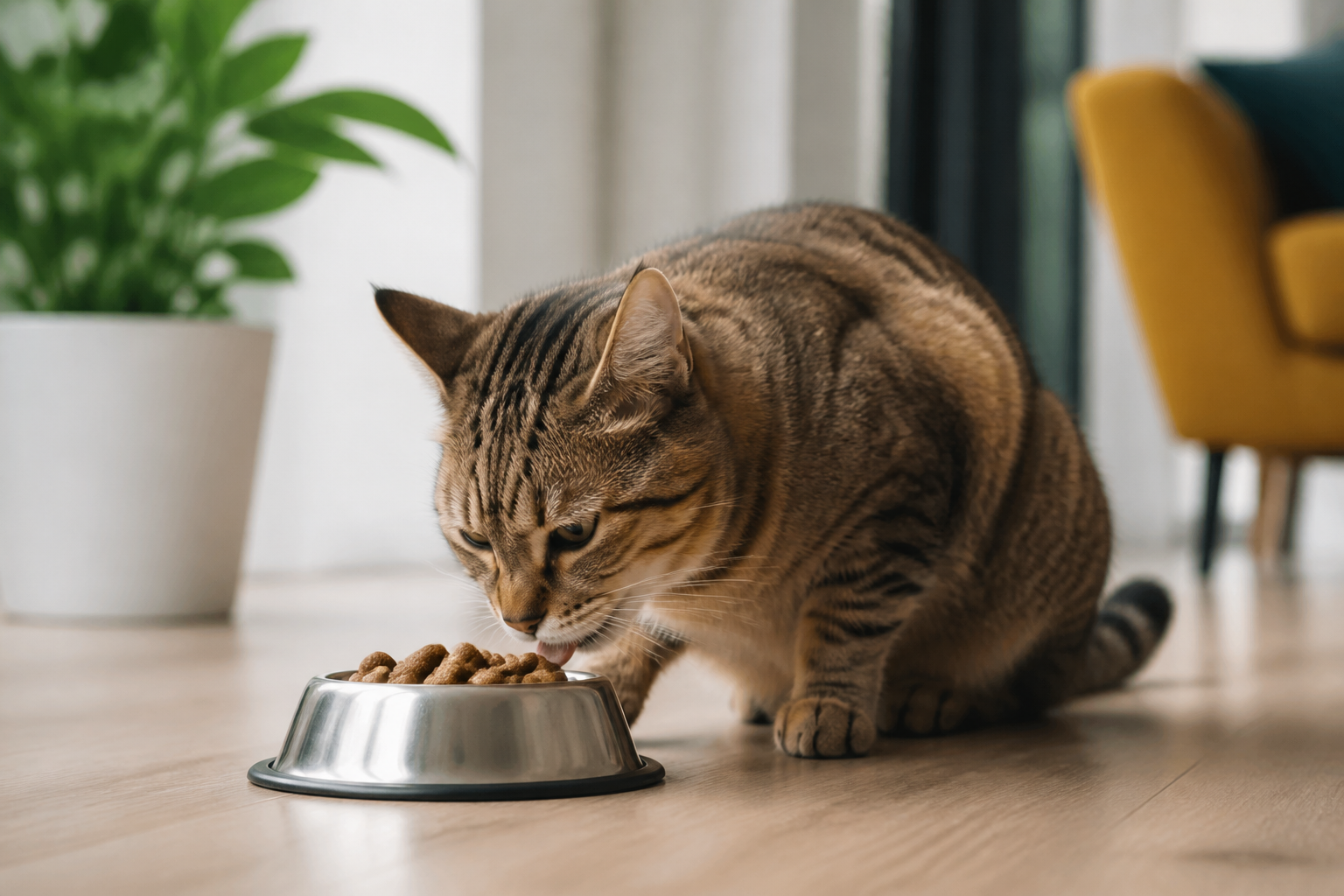
You reach for the bag of cat food only to find it completely empty. It is late, the stores are closed, and your cat is staring at you with that judgmental gaze only a feline can muster. Nearby, the dog has a full bowl of kibble. You might wonder if a single meal of dog food will hurt your cat or if the two species can simply share a diet to make your life easier. At BaxterBoo, we hear these questions often from multi-pet households looking to simplify their routines. While a few stolen bites of kibble likely will not cause an immediate crisis, feeding dog food to a cat as a regular meal is a different story. This post covers the nutritional gaps between the species, the health risks of long-term feeding, and how to manage a household where everyone wants a taste of someone else's dinner.
Quick Answer: A cat can safely eat a small amount of dog food in a true emergency, but it cannot survive on it long-term. Cats are obligate carnivores with specific needs for taurine, vitamin A, and high protein that dog food does not provide.
The Short-Term vs. Long-Term Reality
If your cat sneaks into the dog’s dish and crunches on a few pieces of dry kibble, you do not need to rush to the emergency room. Dog food is not toxic to cats. It does not contain ingredients that act as an immediate poison. For most healthy cats, the biggest short-term risk of eating a bowl of dog food is a bit of dietary indiscretion. This usually manifests as a mild upset stomach, some vomiting, or perhaps diarrhea because the ingredients are unfamiliar.
The danger begins when dog food replaces cat food for more than a day or two. Cats and dogs have evolved very different digestive systems and metabolic pathways. A dog is an omnivore, meaning they can thrive on a mix of animal and plant material. Cats are obligate carnivores. This means their bodies are biologically designed to process animal protein and specific nutrients found only in meat.
When a cat eats dog food consistently, they are essentially starving for specific nutrients even if their belly feels full. Over weeks or months, this leads to severe malnutrition. This is not a matter of a cat being "picky" or "refined." It is a matter of basic survival.
Why the Nutritional Gaps Matter
To understand why you cannot feed a cat dry dog food, you have to look at the Association of American Feed Control Officials (AAFCO) standards. These standards set the minimum nutrient requirements for different species. The gap between a "complete and balanced" dog food and a "complete and balanced" cat food is massive. When restocking, explore our cat food selection for formulas made specifically for feline nutritional needs.
The Protein Requirement
Cats require a much higher percentage of protein in their diet than dogs. Protein provides the amino acids that cats use for energy and tissue repair. While a standard adult dog food might have a protein minimum of 18 percent, adult cat food starts much higher, often around 26 percent or more. Brands like Carna4 or Farmina, which we carry, prioritize these high-protein inclusions because they know a cat's liver enzymes are constantly working to break down protein. If the protein is not in the food, the cat's body may begin to break down its own muscle tissue to compensate.
The Taurine Factor
This is perhaps the most critical difference. Dogs can synthesize their own taurine, an essential amino acid. Because they make it themselves, many dog foods do not add extra taurine to the formula. Cats cannot make their own taurine. They must get every milligram of it from their diet.
Key Takeaway: Taurine is non-negotiable for felines. Without it, cats can develop dilated cardiomyopathy, a condition where the heart becomes enlarged and weak. It also leads to irreversible retinal degeneration and eventual blindness.
Vitamin A and Niacin
Dogs can convert beta-carotene from plants into Vitamin A. This is why you see carrots and sweet potatoes in many high-quality dog foods. Cats lack the enzyme to make this conversion. They need "preformed" Vitamin A, which is found in animal organs like liver. Similarly, cats cannot convert the amino acid tryptophan into niacin like dogs can. They need a direct source of niacin in their food. A cat eating dog food will eventually become deficient in these vitamins, leading to poor coat quality, skin sores, and muscle weakness.
Arachidonic Acid
This is an essential fatty acid that cats must consume. Dogs can produce it within their own bodies, so it is rarely a focus in dog food formulations. Cats use this fatty acid to manage inflammatory responses and maintain healthy skin and reproductive function. Without it, a cat's health will slowly decline.
Comparing the Nutrient Profiles
The table below illustrates the minimum requirements set by AAFCO for adult maintenance. It shows why the two foods are not interchangeable.
| Nutrient | Adult Dog (Minimum) | Adult Cat (Minimum) |
|---|---|---|
| Crude Protein | 18% | 26% |
| Crude Fat | 5.5% | 9.0% |
| Taurine (Dry) | Not Required | 0.10% |
| Vitamin A | 5,000 IU/kg | 3,332 IU/kg (Preformed) |
| Arachidonic Acid | Not Required | 0.02% |
| Niacin | 13.6 mg/kg | 60 mg/kg |
Health Consequences of Feeding Dog Food to Cats
If the feeding of dog food continues for a prolonged period, the symptoms of malnutrition will start to appear. At first, they might be subtle. You might notice your cat is less active or that their fur looks dull and feels greasy.
As the deficiencies deepen, the problems become more serious:
- Heart Disease: As mentioned, taurine deficiency leads to a weakened heart. This can result in heart failure.
- Vision Loss: The retina begins to degrade without taurine. By the time you notice your cat bumping into furniture, the damage is often permanent.
- Liver Issues: A lack of high-quality protein can lead to hepatic lipidosis if the cat stops eating their calorie-light dog food.
- Digestive Distress: Dog food contains more carbohydrates and fiber than a cat’s short digestive tract is meant to handle. This can cause chronic bloating and discomfort.
Vet Tip: If you discover your cat has been eating dog food for an extended period, schedule a veterinary exam immediately. A blood panel and a heart checkup can identify deficiencies or early signs of cardiomyopathy before they become life-threatening. For cats needing specialized nutrition after such an event, our pet pharmacy offers prescription diets through our partnership with Pet's Choice.
What to Do in an Emergency
If you are truly out of cat food and cannot get to a store, dog food is a better choice than letting a cat go hungry for 24 hours. Cats can develop liver issues very quickly if they stop eating entirely. However, there are often better "fridge" options than dry kibble if you need a bridge meal.
Step 1: Check the fridge for plain protein. / Cooked chicken, turkey, or even a plain scrambled egg is closer to a cat's natural requirements than dry dog kibble. Ensure there is no onion, garlic, or heavy seasoning.
Step 2: Offer a small portion of dog food if no meat is available. / If you must use dog food, keep the portion small. Wet dog food is slightly better than dry because it usually has higher protein and moisture content.
Step 3: Monitor for digestive upset. / Watch for vomiting or diarrhea. If your cat has a sensitive stomach, even a small amount of dog food might cause trouble.
Step 4: Restock as soon as possible. / Make getting proper feline nutrition your first priority the next morning. You might also consider setting up our Autoship programme so you never run out again.
Managing Multi-Pet Mealtimes
The reason many owners ask about feeding cats dog food is that the cat seems to prefer it. Cats are naturally curious. If they see the dog eating something, they want to investigate. Some cats also enjoy the larger crunch of a dog kibble or the specific flavorings used in dog diets.
To keep your cat healthy, you must prevent them from making the dog’s bowl their primary cafeteria. This requires a bit of household management.
Scheduled Feedings
Free-feeding, where you leave bowls of food out all day, is the easiest way for pets to swap meals. By switching to scheduled mealtimes, you can supervise who eats what. Give your pets 15 to 20 minutes to eat, then pick up the bowls. This ensures the cat only has access to their own formulated food.
Separate Spaces
If your cat is a persistent food thief, feed your pets in different rooms. Close a door or use a baby gate that the dog cannot jump but the cat can navigate. Feeding the cat on an elevated surface, like a counter or a sturdy cat tree, is also a great way to keep the dog away from the cat's food, which is often even more tempting to dogs due to its high fat content.
Using Technology
For the most persistent issues, consider a microchip-activated feeder. These bowls only open when they sense a specific pet’s microchip or a tag on their collar. It is a foolproof way to make sure the cat eats cat food and the dog eats dog food. We carry various gear and feeding solutions that help manage these interactions in a busy home.
Bottom line: Preventing food theft is easier than treating a nutritional deficiency caused by a mismatched diet.
Recognizing Quality Cat Food
When you do restock your cat's pantry, look for foods that emphasize animal protein as the first few ingredients. Cats do not need a "balanced" diet in the way humans do; they need a meat-focused diet. Brands like Orijen, ACANA, and Stella & Chewy’s are excellent choices because they mirror the biological needs of a carnivore.
Avoid foods that rely heavily on "fillers" like corn, wheat, or soy. While these ingredients provide calories, they do not provide the specific amino acids your cat needs to thrive. A high-quality dry cat food will have added taurine and Vitamin A clearly listed on the label. For more options, browse our dry cat food collection.
If your cat has specific health concerns, such as kidney issues or severe allergies, their diet is even more critical. In these cases, sneaking dog food is not just a nutritional gap but a genuine health risk. Our pharmacy carries FDA-approved medications and prescription pet foods for these chronic conditions, providing a reliable source for your cat’s ongoing medical needs.
Why Dogs Want Cat Food Too
It is worth noting that the "food envy" often goes both ways. Your dog likely wants the cat’s food even more than the cat wants the dog’s. Cat food is very dense in fat and protein, making it smell and taste like a high-value treat to a dog.
However, dog food is bad for cats, and cat food can be problematic for dogs. For a dog, the high fat content in cat food can trigger pancreatitis, a painful and serious inflammation of the pancreas. It can also lead to rapid weight gain. Keeping the bowls separate protects the health of every animal in your home. For more on the other side of the issue, read whether dry cat food is bad for dogs.
Summary of Feeding Guidelines
Caring for a cat means respecting their unique biology. They are not "small dogs," and their internal chemistry reflects their history as specialized hunters. At BaxterBoo, we want to help you make the best choices for your pets so they can stay by your side for years to come.
- Occasional Snacking: A few pieces of dry dog food won't hurt a healthy cat.
- Emergency Meals: Use dog food only if no cat-safe meat or eggs are available.
- Long-Term Health: Never use dog food as a staple diet for a cat.
- Vital Nutrients: Cats must have taurine, preformed Vitamin A, and high protein.
- Separation: Use different rooms or elevated surfaces to prevent food swapping.
- Veterinary Care: Consult a professional if your cat shows signs of lethargy or vision changes.
Key Takeaway: Proper feline nutrition is the foundation of your cat's health. While dog food seems like a convenient substitute, the lack of taurine and adequate protein makes it a dangerous choice for any cat over the long term.
Conclusion
Feeding your cat dry dog food might seem like a quick fix during a busy week, but it is a choice that carries real risks. Cats are obligate carnivores with specialized needs that an omnivorous dog diet simply cannot meet. From heart health to vision, the nutrients found in dedicated cat food are essential for your pet's survival. By managing mealtimes and choosing high-quality, species-specific brands, you ensure your feline friend gets exactly what they need. If you are ever in doubt about your cat's nutritional health, your veterinarian is the best resource for guidance. You can explore our premium cat food selection and health supplies at BaxterBoo to keep your pet's pantry well-stocked and their health on track.
FAQ
Can a cat eat wet dog food instead of dry?
Wet dog food is usually closer in protein content to what a cat needs, but it still lacks the essential taurine and vitamin levels required for feline health. While it might be a slightly better emergency option than dry kibble, it is still not a safe long-term substitute. Always return to a balanced cat food as soon as possible to avoid nutritional deficiencies.
What are the first signs of taurine deficiency in cats?
The earliest signs of taurine deficiency are often invisible to the naked eye, as the heart and retinas begin to weaken slowly. You might eventually notice your cat becoming easily winded, acting lethargic, or having trouble navigating in low light. Because these symptoms appear only after significant damage has occurred, it is vital to never let your cat rely on dog food.
My cat loves the dog's food more than their own. Why?
Cats are often attracted to the "novelty" of a different food or the specific fats used to coat dog kibble. Some cats also prefer the larger size of dog kibble if they enjoy a heavy crunch. If your cat is acting like a picky eater, try a high-protein cat food with different textures or flavors rather than letting them eat the dog's meal.
Is it okay to use dog treats for my cat?
Most dog treats are safe for cats in very small quantities, but they are not ideal. Dog treats are often larger and harder, posing a potential choking hazard for smaller cats. They also lack the taurine cats need. It is always better to use treats specifically formulated for felines to ensure you are not accidentally diluting their diet with "empty" calories.






