
 Save 15% on your 1st Autoship learn more

 Email us
 Live Chat
 FAQs
FAQs





Introduction
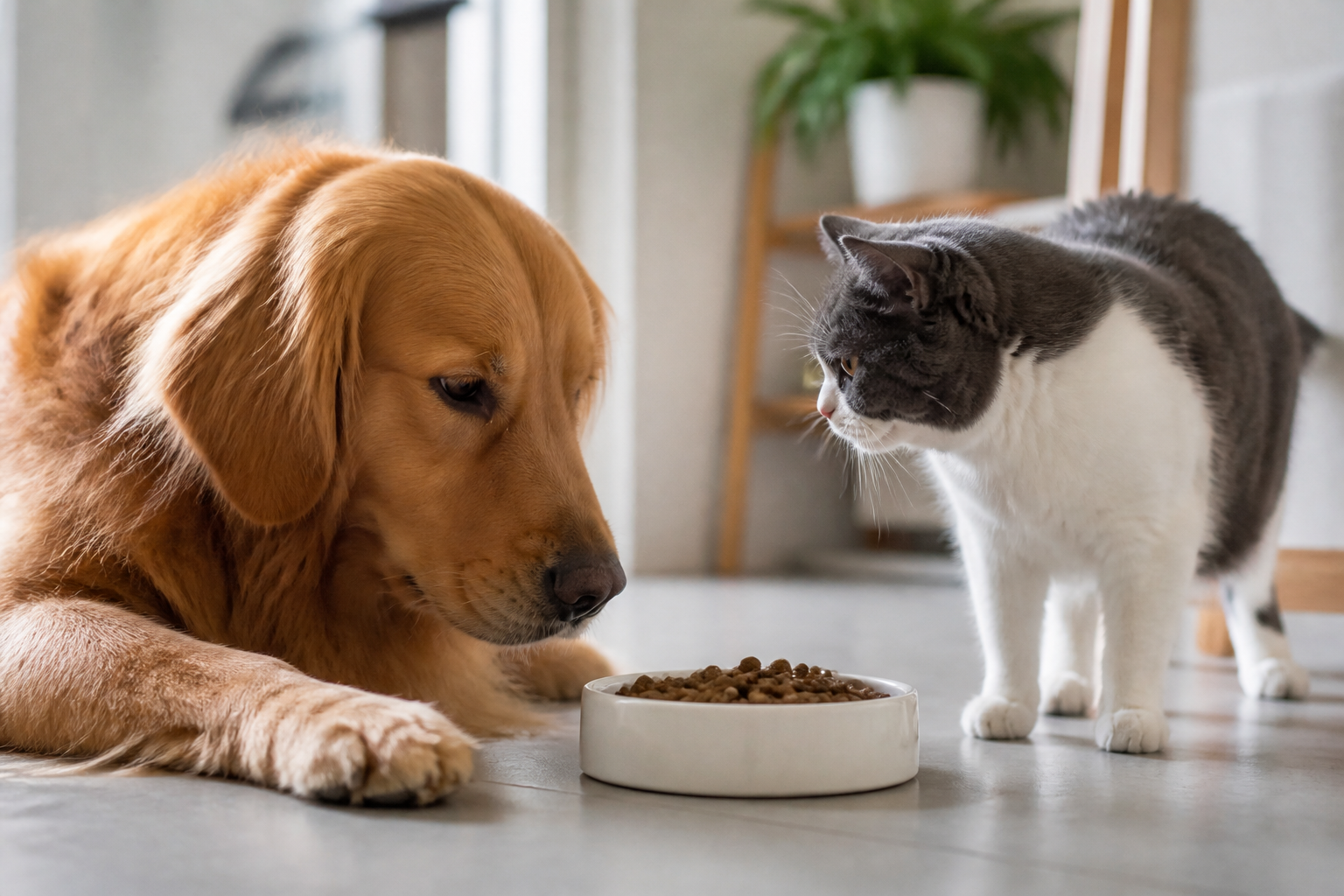
It happens to almost every multi-pet household at some point. You walk into the kitchen to find your dog with their head buried in the cat’s dish, or you realize you have run out of kibble and wonder if the feline's bag will do for a night. Dogs often find cat food irresistible because it is packed with the fats and proteins that smell like a five-star meal to a canine. At BaxterBoo, we talk to owners every day who are managing the dietary needs of both dogs and cats under one roof. While a single stolen bite is rarely a cause for panic, using cat food as a regular meal replacement can lead to significant health issues. This guide covers the nutritional differences between the species, the risks of long-term feeding, and how to keep your dog out of the cat’s bowl for good.
Quick Answer: While a small amount of cat food is generally not toxic to dogs, it is not a suitable meal replacement. Cat food is too high in fat and protein for dogs, which can cause weight gain, digestive upset, or serious conditions like pancreatitis.
The Biological Difference Between Dogs and Cats
To understand why cat food is not ideal for dogs, you have to look at how these animals evolved. Dogs are classified as omnivores. This means their bodies are designed to derive nutrients from a variety of sources, including animal protein, grains, and vegetables. They are remarkably flexible and can thrive on a diet that balances these different ingredients.
Cats are obligate carnivores. Their bodies are biologically programmed to require nutrients found only in animal tissue. They lack the metabolic pathways to process plant-based nutrients as efficiently as dogs do. Because of this, cat food is formulated with much higher concentrations of meat-based proteins and fats. When a dog eats this dense, rich food, it is like a human eating a diet consisting entirely of fast-food cheeseburgers. It tastes great to them, but it is far too much for their system to handle daily.
Nutritional Breakdown: Dog Food vs. Cat Food
The Association of American Feed Control Officials (AAFCO) sets the standards for pet food nutrition in the United States. When you look at the labels on the bags we carry, you will notice the minimum requirements for cats are much higher across several categories.
| Nutrient | AAFCO Minimum for Adult Dogs | AAFCO Minimum for Adult Cats |
|---|---|---|
| Protein | 18% | 26% |
| Fat | 5.5% | 9% |
| Vitamin A | 5,000 IU/kg | 3,332 IU/kg |
| Taurine | Not Required | 0.1% (Dry) |
Cat food also contains specific amino acids and fatty acids that dogs can actually produce on their own. For example, cats must get taurine and arachidonic acid directly from their diet. While these additions do not necessarily hurt a dog, the sheer volume of protein and fat that comes with them is the real concern.
Protein Levels
Most high-quality dog foods hover around 20 to 25 percent protein. Some performance or puppy formulas might go higher. Cat foods, however, frequently start at 30 percent and can go much higher in premium brands like Ziwi Peak or Orijen. This intense protein load can put unnecessary strain on a dog’s kidneys over time. Our dog food category offers formulas made for canine nutritional needs.
Fat and Palatability
Fat is what makes food taste good to pets. Since cats are notoriously finicky, manufacturers increase the fat content to make the kibble more appealing. Dogs are scavengers by nature and are naturally drawn to high-fat foods. This is why your dog might ignore their own balanced meal in favor of the cat’s "junk food."
Key Takeaway: Dogs are omnivores that need a balance of protein and carbohydrates, while cats are carnivores that require high-protein, high-fat diets. Cat food lacks the fiber and varied nutrient profile a dog needs to stay healthy.
The Risks of Feeding Cat Food to Dogs
If your dog manages to sneak a few kibbles from the cat, they will likely be fine. However, if they consume a large amount at once or eat it regularly, several health problems can arise.
Digestive Upset
The most immediate reaction to a dog eating cat food is often vomiting or diarrhea. Their digestive system is not used to the richness of the feline formula. This is particularly common in dogs with sensitive stomachs or those who are used to a very consistent diet.
Pancreatitis
This is the most serious short-term risk. Pancreatitis is the inflammation of the pancreas, often triggered by a meal that is too high in fat. It is a painful condition that requires immediate veterinary attention. Symptoms include hunched back, repeated vomiting, fever, and a painful abdomen. Some breeds, like Schnauzers, are more prone to this than others, but any dog can be affected.
Weight Gain and Obesity
Because cat food is so calorie-dense, a dog eating it regularly will pack on the pounds quickly. Obesity in dogs leads to a host of other issues, including joint pain, heart disease, and a shortened lifespan. If you have a senior dog, this extra weight can make mobility issues much worse.
Kidney and Liver Strain
Processing high levels of protein requires the kidneys and liver to work overtime. In healthy young dogs, this might not show immediate symptoms. However, for older dogs or those with underlying organ issues, a cat food diet can accelerate the progression of disease. Our dog healthcare category is a useful place to explore supportive care options.
Vet Tip: If your dog accidentally consumes a large amount of cat food and begins vomiting or acting lethargic, contact your veterinarian immediately. Persistent digestive issues can lead to dehydration or indicate the onset of pancreatitis.
When Cat Food Might Be Used (With Caution)
There are very rare instances where a veterinarian might suggest cat food for a dog. This is usually reserved for dogs battling extreme weight loss, muscle wasting, or a total loss of appetite due to terminal illness. In these cases, the high calorie count and strong aroma of cat food can help keep the dog interested in eating.
However, you should never make this switch on your own. If your dog is a picky eater, there are better ways to encourage them to eat dog-appropriate food. Adding a topper from The Honest Kitchen or a splash of low-sodium bone broth is a much safer way to boost flavor without risking a pancreatic flare-up. For another perspective on choosing between food formats, read our guide to dry and wet dog food.
How to Prevent Your Dog from Eating Cat Food
Managing a household with both species requires a bit of strategy. Dogs are opportunistic, and if the food is on the floor, they consider it fair game. At BaxterBoo, we suggest several practical ways to keep the peace during mealtime.
Elevated Feeding
Cats love to climb, and dogs generally stay on the ground. Placing the cat's food on a sturdy counter, a dedicated cat tree, or a high shelf is the easiest way to keep it out of reach. Ensure the cat feels safe and has enough space to eat without feeling cornered.
Microchip Feeders
If you have a dog that is the same size as your cat, elevated feeding might not work. Microchip feeders are a great solution. These bowls only open when they sense the specific microchip or RFID collar tag of your cat. When the dog approaches, the lid stays shut.
Scheduled Mealtimes
Leaving bowls of food out all day, known as free-feeding, is an open invitation for a dog to scavenge. Instead, feed your pets at the same time in separate rooms. Close the door or use a baby gate to create a physical barrier. Once the cat is finished, pick up any leftover food immediately.
Physical Barriers and Cat Doors
You can install a small cat door on a laundry room or closet door. This allows the cat to enter a private feeding area while keeping the dog out. There are also door straps available that hold a door open just wide enough for a cat to slip through but keep a larger dog from entering.
What to Do in an Emergency
If you find yourself late at night with an empty bag of dog food and a hungry pup, a single serving of cat food is a better "emergency" meal than let’s say, a bowl of human cereal or nothing at all. But there are better alternatives in your pantry.
Step 1: Check for plain proteins. / Cooked, unseasoned chicken or lean ground turkey is an excellent temporary meal.
Step 2: Add a safe starch. / Plain white rice or canned pumpkin (not pie filling) can help fill your dog up and is easy on the stomach.
Step 3: Resume normal feeding quickly. / Get to the store or wait for your next delivery to get your dog back on their balanced kibble as soon as possible.
If your dog does eat the cat's food in a pinch, monitor them closely for the next 24 hours. If they have a sensitive stomach, they may skip their next meal on their own. This is often their body's way of resetting after a heavy, fatty meal. Planning ahead with our cat food selection can also help you keep each pet’s meals separate.
Supporting Your Dog’s Digestive Health
If your dog is a repeat offender when it comes to the cat’s bowl, their gut might need some extra support. Probiotics and digestive enzymes can help maintain a healthy flora, which is especially important if they are prone to dietary indiscretion. We carry a wide range of supplements from trusted brands like Zesty Paws and Honest Paws that focus on gut health.
For dogs that have developed chronic issues like allergies or recurring digestive upset, a prescription diet may be necessary. Our pharmacy offers a variety of FDA-approved medications and prescription pet foods through our partnership with Pet's Choice. Whether your vet recommends a hydrolyzed protein diet or a low-fat gastrointestinal formula, having access to a reliable pharmacy ensures your dog gets exactly what they need to recover. Explore our pet pharmacy for available options.
Bottom line: While cat food tastes great to dogs, the high fat and protein levels make it a dangerous choice for a long-term diet.
Making the Switch to Better Habits
If you have been using cat food as a treat or an occasional meal, now is the time to transition back to a species-appropriate diet. Dogs thrive on consistency. When they know exactly what and when they are eating, they are less likely to hunt for "extra" snacks in the cat’s dish.
Our Autoship program is a great tool for preventing those "empty bag" emergencies. You can set up recurring deliveries for your favorite brands like NutriSource or Acana and save on every order. Plus, it ensures you never have to reach for the cat food bag because you forgot to stop at the store. Set up our Autoship programme for recurring deliveries.
If you are a regular shopper with us, our MVP Rewards program helps you earn points on every purchase, which can be used for discounts on future bags of food or treats. It is our way of helping you provide the best care for your pets while keeping an eye on the budget. You can learn more about the MVP Rewards programme before your next order.
Conclusion
Feeding a dog cat food might seem like a harmless shortcut, but the nutritional gap between the two species is too wide to ignore. A dog's body simply isn't built to process the intense levels of fat and protein found in a feline diet. By sticking to a high-quality dog food and using management strategies like elevated feeding, you can protect your dog from obesity, kidney strain, and the pain of pancreatitis. If your dog is struggling with their appetite or needs a specialized diet for a health condition, our pharmacy is here to help with prescription options through our Pet's Choice partnership.
Keep these points in mind:
- Cat food is too high in fat for most dogs.
- The protein levels can strain a dog's kidneys.
- Pancreatitis is a real risk for dogs who eat fatty cat food.
- Always consult your veterinarian if your dog shows signs of illness after eating non-canine food.
For more specialized nutrition or to manage chronic health conditions, visit our pharmacy for a wide selection of prescription diets and medications.
FAQ
Is cat food toxic to dogs?
No, cat food is not inherently toxic to dogs like chocolate or grapes are. It contains ingredients that are safe for animals, but the ratios of those ingredients are incorrect for a dog's long-term health. The danger comes from the high fat and protein content, not from poisonous substances.
My dog ate a bowl of cat food, should I be worried?
For most healthy dogs, a single bowl of cat food will only cause a mild stomach ache or loose stools. However, you should monitor them for signs of severe distress, such as repeated vomiting or a very painful abdomen, which could indicate pancreatitis. If your dog has pre-existing kidney or liver issues, contact your vet for advice.
Can I use cat food as a high-value training treat for my dog?
While many trainers do use cat treats or kibble because they are small and smelly, it is generally better to use treats formulated for dogs. If you do use cat food as a treat, it should make up less than 10 percent of your dog's daily caloric intake. For dogs prone to weight gain or digestive issues, even a small amount might be too much.
Why does my dog prefer the cat's food over their own?
Cat food is designed to be highly palatable with high levels of fat and animal protein, which smells and tastes much stronger than standard dog kibble. To a dog, cat food is essentially the "junk food" of the pet world. If your dog is refusing their own food, they may be holding out for the richer feline version, or they may have an underlying dental or health issue that requires a vet visit.






