
 Save 15% on your 1st Autoship learn more

 Email us
 Live Chat
 FAQs
FAQs





Introduction
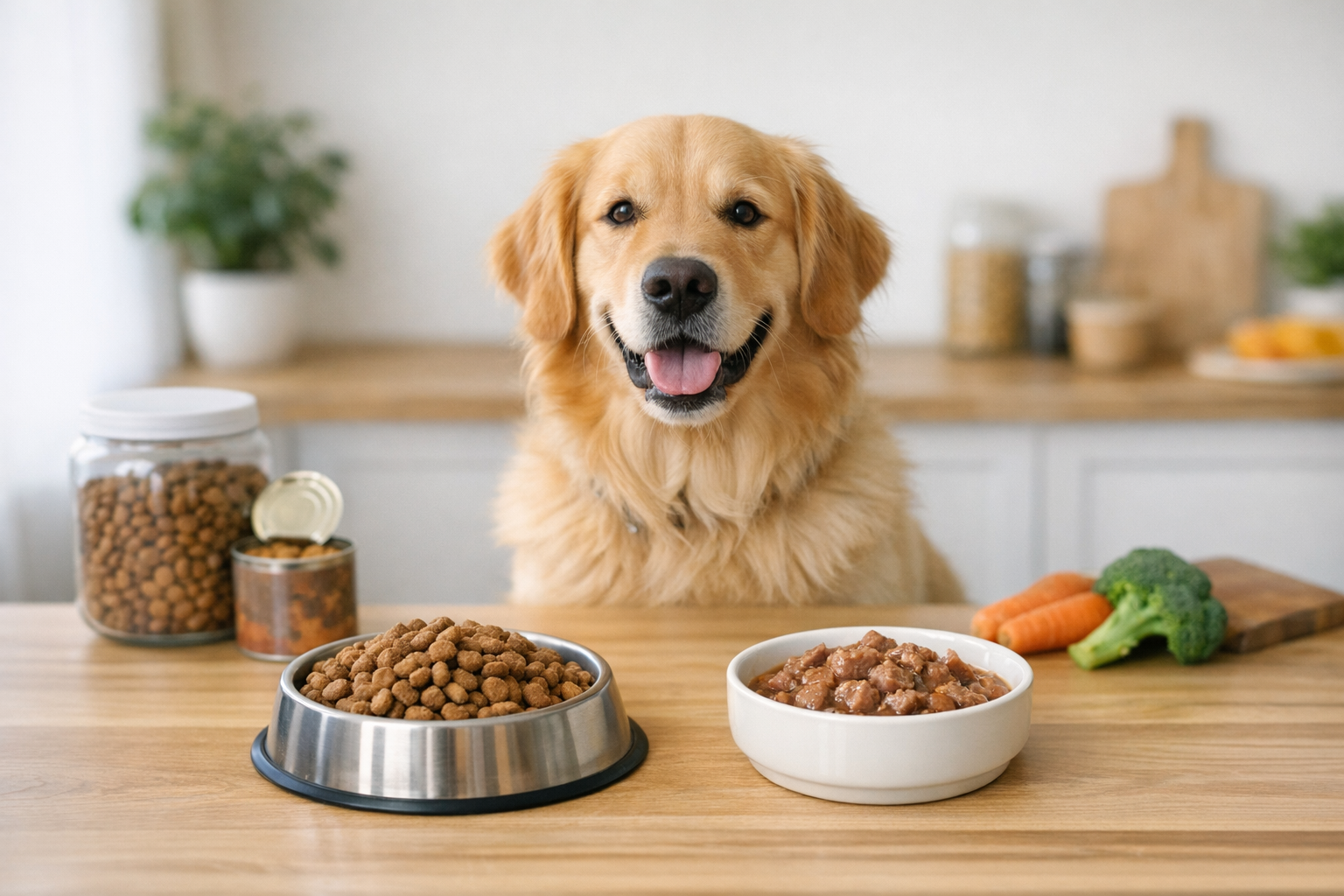
Standing in the pet food aisle can feel like an impossible task. You are surrounded by hundreds of bags and cans, all promising the best nutrition for your dog. You might find yourself staring at a bag of crunchy kibble in one hand and a can of savory stew in the other. Every dog owner wants to make the right choice to keep their pup healthy and happy. At BaxterBoo, we talk to pet owners every day who are trying to balance nutrition, convenience, and cost. This article covers the essential differences between dry and wet food. We will look at the health benefits of both and how to decide which fits your lifestyle. Our goal is to give you the confidence to choose a diet that helps your dog thrive through every life stage, and our dog food category is a helpful place to start comparing options.
Quick Answer: Both dry and wet food offer complete nutrition if they meet AAFCO standards. Dry food is convenient and supports dental health, while wet food provides essential hydration and is often more appealing to picky eaters.
Understanding the Difference in Processing
The biggest difference between these two types of food starts in the kitchen. While the basic ingredients like proteins and grains might be similar, the way they are cooked changes the final product. Dry dog food, or kibble, goes through a process called extrusion. This involves mixing the ingredients into a dough and cooking them under high heat and pressure. The dough is then pushed through a machine that cuts it into specific shapes. After the kibble is formed, it is dried to remove almost all moisture. This gives it the long shelf life that many owners appreciate.
Wet food takes a different path. It begins with ground protein sources mixed with a liquid gravy or jelly. This mixture includes added vitamins and minerals to ensure a balanced meal. Once the ingredients are combined, the food is put into cans or pouches. These containers are then sealed and sterilized at high temperatures. This cooking method preserves the moisture and the natural aromas of the meat. It creates a texture that is much closer to what a dog would eat in the wild, which is why many owners browse our wet dog food collection when they want a softer meal option.
Key Takeaway: Dry food is highly processed to be shelf-stable and crunchy, while wet food is sterilized in its packaging to maintain a high moisture content and soft texture.
The Major Benefits of Wet Dog Food
Wet food is a favorite for many dogs because of its smell and taste. It often contains more animal protein and fewer carbohydrates than dry kibble. This makes it a great choice for several specific situations.
Superior Hydration for Health
The most significant advantage of wet food is the moisture content. Most dry foods only contain about 10 percent water. In contrast, wet food usually sits around 75 to 80 percent moisture. This extra water intake is vital for dogs that do not drink enough from their water bowls. Proper hydration helps flush the urinary system and supports kidney function. If your dog has a history of urinary crystals or kidney disease, a wet diet might be the better path.
Appealing to Picky Eaters and Seniors
As dogs age, their sense of smell and taste can fade. This can lead to a loss of appetite. Wet food is much more aromatic than dry kibble. The strong scent of meat and gravy can entice even the pickiest dog to finish their bowl. It is also an excellent option for senior dogs or puppies with small teeth. The soft texture is easy to chew and swallow. This is especially helpful if your dog has lost teeth or is suffering from gum sensitivity.
Supporting Weight Management
It might seem surprising, but wet food can help some dogs lose weight. Because it is mostly water, it has a lower calorie density by volume. This means your dog can eat a larger portion of food without consuming too many calories. A full belly helps the dog feel satisfied, which prevents begging between meals. This feeling of fullness is called satiety. It is a key factor in keeping a dog at a healthy weight.
Vet Tip: If your dog has chronic kidney issues or recurrent urinary tract infections, talk to your vet about switching to a wet diet. The increased moisture can significantly support their long-term health management.
The Advantages of Feeding Dry Dog Food
Dry food remains the most popular choice for dog owners in the United States. It offers a level of convenience and value that is hard to beat.
Promoting Better Dental Health
One of the biggest perks of kibble is the mechanical cleaning it provides. As a dog crunches on dry pieces, the gritty texture helps scrape away plaque and tartar. While it does not replace regular tooth brushing, it can slow down the buildup of dental problems. Some specialized dry foods are even shaped specifically to maximize this cleaning action. At our warehouse in Vernon Hills, we see many owners choosing brands like Royal Canin for their specific dental health formulas.
Convenience and Stability
Kibble is much easier to manage for busy families. You can measure out a portion and leave it in the bowl for a dog that likes to graze throughout the day. It will not spoil or attract flies the way wet food does if left out. It is also easier to store. A large bag can last for several weeks if kept in a cool, dry place. This makes it a great option for owners who want to buy in bulk and save on trips to the store.
Mental Stimulation and Enrichment
Dry food is perfect for use in puzzle toys and slow feeders. Brands like Kong make various toys that can be stuffed with kibble. This forces the dog to work for their food, providing mental stimulation and preventing boredom. You can also use individual pieces of kibble as training treats. This helps keep your dog's daily calorie intake in check since you are using their regular meal as a reward, and our dog toys collection is a great place to find enrichment tools.
How to Decide What is Right for Your Dog
Choosing between the two depends on your dog's unique needs. You should consider their age, health status, and even their breed.
Consider Life Stages
Puppies have high energy needs and small teeth. They often benefit from the soft texture of wet food during weaning. As they grow, transitioning to a high-quality dry food can support their developing jaws. Senior dogs often face the opposite challenge. They may need the extra hydration and softer texture of canned food to manage age-related health conditions.
Evaluate Health Conditions
If your dog is healthy and has no dental or urinary issues, dry food is a perfectly fine foundation for their diet. However, if your dog is prone to obesity, wet food might help them feel more satisfied with fewer calories. For dogs with severe allergies or sensitive stomachs, you might need a specialized prescription diet. Our pet pharmacy carries many FDA-approved prescription foods for these specific cases. Through our partnership with Pet's Choice, we can help you get the exact formula your veterinarian recommends.
- Large breeds: Dry food is often more economical and easier to portion for big appetites.
- Small breeds: These dogs can be more prone to dental issues and might prefer smaller kibble sizes or wet food.
- Active dogs: Working dogs or highly active pets might need the concentrated calories found in high-protein dry foods.
Key Takeaway: There is no single correct answer. Evaluate your dog's specific health goals, your budget, and how much time you have for meal preparation before making a final decision.
The Best of Both Worlds: Mixing Wet and Dry
You do not have to choose just one. Many pet owners find that a combination of both provides the most benefits. This is often called mixed feeding or using a topper.
Enhancing Flavor and Nutrition
Adding a spoonful of wet food to a bowl of dry kibble can transform a boring meal into a gourmet experience. This is a great way to get the dental benefits of dry food while adding the hydration and aroma of wet food. It is also a budget-friendly way to improve the quality of your dog's diet without switching entirely to expensive cans.
Managing Portions Correctly
The biggest risk of mixing food is overfeeding. If you add wet food to a full portion of dry food, your dog will likely gain weight. You must adjust the amounts. For example, if you add a quarter-can of wet food, you should remove a corresponding amount of dry kibble. Your veterinarian can help you calculate the exact calories your dog needs based on their activity level.
Step-by-Step Transition
If you decide to change your dog's diet or start mixing foods, do it slowly. A sudden change can lead to an upset stomach. For a fuller walkthrough, our guide to switching from dry to wet dog food covers the safest transition timeline.
- Days 1-3: Start with 75 percent of the old food and 25 percent of the new food.
- Days 4-6: Move to a 50/50 split of the two foods.
- Days 7-9: Feed 25 percent old food and 75 percent new food.
- Day 10: Your dog is now fully transitioned to the new diet or the new mixture.
What to Look for on the Label
Regardless of the texture you choose, the quality of the ingredients is what matters most. Not all dog foods are created equal. You should always read the guaranteed analysis and the ingredient list.
Identifying Quality Ingredients
Look for a named animal protein as the first ingredient. This should be something like chicken, beef, or lamb. Avoid foods that list vague terms like "meat by-products" or "animal meal" without specifying the source. High-quality brands like Stella & Chewy's prioritize transparency in their sourcing. They avoid artificial colors and flavors that do not add any nutritional value.
Avoiding Fillers
Some cheaper foods use excessive amounts of corn, wheat, or soy as fillers. While dogs can digest these ingredients, they are often used to bulk up the food at a lower cost. A nutrient-dense food will have more room for healthy fats, fibers, and essential vitamins. If you notice your dog has excessive gas or large, soft stools, it might be a sign that their food contains too many fillers.
Bottom line: The best food is the one that has high-quality protein, meets AAFCO standards, and results in a healthy coat and solid stools for your dog.
Health Concerns and Prescription Diets
Sometimes a standard commercial diet is not enough. Dogs with chronic health issues like heart disease, severe allergies, or kidney failure often require specialized nutrition. These diets are formulated with precise levels of minerals and proteins to manage the condition.
The Role of Prescription Food
Prescription diets are only available through a veterinarian. They are considered a part of the medical treatment for a pet. For example, a dog with kidney disease might need a food with very low phosphorus levels. A dog with severe skin allergies might need a hydrolyzed protein diet where the protein is broken down so the immune system does not react to it.
Accessing the BaxterBoo Pharmacy
If your vet has prescribed a specific diet, we can help you manage those recurring needs. Our Autoship programme is especially useful for owners who want to make sure they never run out of the food their dog needs to stay healthy.
Vet Tip: Never switch your dog to a prescription diet or a restricted-ingredient diet without a veterinarian's guidance. These foods are formulated for specific medical needs and may lack certain nutrients that a healthy dog requires.
Proper Storage for Freshness and Safety
How you store your dog's food is just as important as what is inside the bag. Improper storage can lead to the loss of nutrients or even the growth of harmful bacteria.
Storing Dry Food
Once you open a bag of kibble, it begins to oxidize. This means the fats in the food can start to go rancid when exposed to air. It is best to use a bag of dry food within four to six weeks. Keep the kibble in its original bag rather than pouring it into a plastic bin. The bags are designed to keep the food fresh. If you want to use a bin, place the entire bag inside it. Always seal the bag tightly after every meal, and our dog food storage & accessories collection can help you keep things organized.
Storing Wet Food
Wet food is much more perishable. Once a can is opened, it must be refrigerated immediately. You should use the remaining food within three days. If you do not think your dog will finish a large can in that time, look for smaller cans or pouches. Covering the can with a plastic lid or silicone cover will help prevent the food from drying out and keep smells from spreading in your fridge.
- Keep food in a cool, dry place away from direct sunlight.
- Wash your dog's bowl daily with hot, soapy water.
- Check "best by" dates before purchasing or feeding.
- Discard any wet food left in the bowl for more than two hours.
Cost Considerations and Value
Budget is a reality for most pet owners. Feeding a large dog an entirely wet food diet can be very expensive. Dry food is almost always more cost-effective per calorie. This is because you are not paying for the weight of the water.
Finding Value Without Compromise
You do not have to buy the most expensive food on the shelf to give your dog good nutrition. Many mid-priced brands offer excellent ingredient profiles. Joining our MVP Rewards programme is a great way to get value back on every purchase. You can also take advantage of our Frequent Buyer Program on participating brands to earn free products over time.
The Long-Term Savings of Good Nutrition
While high-quality food might cost more upfront, it can save you money in the long run. Better nutrition can lead to fewer vet visits for skin issues, dental problems, or digestive upset. Investing in a diet that supports your dog's specific needs is one of the best ways to ensure they live a long, healthy life.
Conclusion
The debate between dry and wet food does not have a single winner. For many dogs, a high-quality dry kibble provides the foundation for good health and dental hygiene. For others, the hydration and palatability of wet food are essential for managing health conditions or picky eating habits. Many owners find that a combination of both offers the best balance of nutrition and convenience.
Remember these key steps for your dog's nutrition:
- Consult your veterinarian to determine your dog's specific caloric and health needs.
- Look for named protein sources and avoid unnecessary fillers.
- Consider a mixed feeding approach to get the benefits of both textures.
- Store food properly to maintain its nutritional value and safety.
At BaxterBoo, we are here to support you in every step of your pet parenting journey. Whether you are looking for a premium kibble, a specialized wet food, or a prescription diet through our pharmacy, we have the selection to meet your needs.
Bottom line: Choose the food that fits your budget, your lifestyle, and most importantly, your dog's health requirements.
FAQ
Is wet food better for a dog's kidneys than dry food?
Wet food is often recommended for dogs with kidney issues because it has a much higher moisture content. This extra hydration helps the kidneys process waste more effectively and keeps the urinary system flushed. If your dog has been diagnosed with kidney disease, your vet may even recommend a specific prescription wet food from our pharmacy.
Can a dog live healthily on only dry food?
Yes, a dog can live a very healthy life on a high-quality dry food diet. As long as the food is nutritionally complete and balanced, it provides everything a dog needs for their daily energy and health. However, you must ensure your dog always has access to plenty of fresh water to make up for the low moisture content in kibble.
Does dry food really clean a dog's teeth?
Dry food provides a mechanical scraping action that can help reduce the buildup of plaque and tartar on the teeth. While it is beneficial, it is not a substitute for regular dental care like brushing or professional cleanings. Some dogs may still develop dental issues even on a dry diet, so regular vet checkups are important.
Is it okay to mix different brands of wet and dry food?
It is generally safe to mix brands as long as both foods are high-quality and nutritionally balanced for your dog's life stage. However, if your dog has a sensitive stomach or allergies, mixing different brands might make it harder to identify the cause of a reaction. Always introduce any new food slowly over a week to avoid digestive upset.






