
 Save 15% on your 1st Autoship learn more

 Email us
 Live Chat
 FAQs
FAQs





Introduction
You are standing in the kitchen with a bag of kibble and a bowl. Maybe your dog has been sniffing at their dinner and walking away. Perhaps you have a senior dog who seems to struggle with those hard, crunchy nuggets. You might simply wonder if adding a splash from the tap makes their meal a bit more interesting. It is a common question for many pet owners who want to improve their dog's mealtime experience.
At BaxterBoo, we know that the right nutrition involves more than just picking a bag off a shelf. It is about how your dog interacts with their food every single day, and our dog food category makes it easy to compare options. This article explains the benefits of adding water to dry food, the potential risks like spoilage, and the best way to transition your pet. We want to help you decide if a little extra moisture is the right move for your dog's bowl.
Quick Answer: Yes, you can safely mix dry dog food with water. Adding moisture can improve hydration, make the food more aromatic for picky eaters, and help senior dogs with dental issues chew more easily.
The Main Benefits of Adding Water to Kibble
Dry dog food is convenient and shelf stable because most of the moisture has been removed. This process is called extrusion. While it makes the food easy to store, it can also make the kibble quite hard and a bit bland. Adding water changes the physical properties of the food in several helpful ways.
Better Hydration for Your Dog
Many dogs do not drink enough standing water from a bowl. This can be a concern during hot summer months or for dogs with specific health needs. When you add water directly to the food, you ensure your dog is taking in fluids with every bite. Proper hydration supports kidney function, helps flush out toxins, and keeps the urinary tract healthy.
Releasing the Aroma
Dogs experience the world through their noses. Dry kibble often has a mild scent until it gets wet. Warm water helps release the fats and aromas trapped inside the biscuits. This can be a total game for a picky eater or a dog recovering from an illness who has lost their appetite. The smell of a warm, moist meal is often much more enticing than cold, dry pellets.
Making Food Easier to Chew
As dogs age, they often develop dental issues or sensitive gums. Crunching down on hard kibble can become painful. Softening the food with water allows senior dogs to continue eating the brands they love without physical discomfort. This is also helpful for puppies who are transitioning from milk to solid food but still have tiny, sensitive teeth.
Helping With Digestion
Dry kibble must absorb fluid in the stomach before it can be fully broken down. By adding water before your dog eats, you start the breakdown process early. This can make the nutrients more accessible to your dog's digestive system. Some owners find that it also helps prevent "gulping," where a dog eats so fast they swallow air, which can lead to gas or more serious stomach upset.
Key Takeaway: Adding water to kibble is an easy way to boost hydration and palatability while making the meal gentler on your dog's digestive system.
How to Properly Mix Water and Dry Food
You should not just drench the bowl and walk away. There is a right way to prepare a moistened meal to ensure your dog gets the most benefit without any mess or waste.
The Right Ratio
A good starting point is one part water to four parts kibble. For example, if you feed your dog one cup of food, try adding a quarter cup of water. You can adjust this based on your dog's preference. Some dogs like a thick, gravy-like consistency, while others prefer just a light coating.
The Temperature Matters
Use warm water rather than cold or boiling water. Warm water is the most effective at releasing aromas and softening the kibble quickly. Never use boiling water, as it can destroy some of the heat-sensitive vitamins and minerals in the food. It also poses a risk of burning your dog's mouth. Filtered water is always a great choice to avoid excess chlorine or minerals found in some tap water.
The Waiting Period
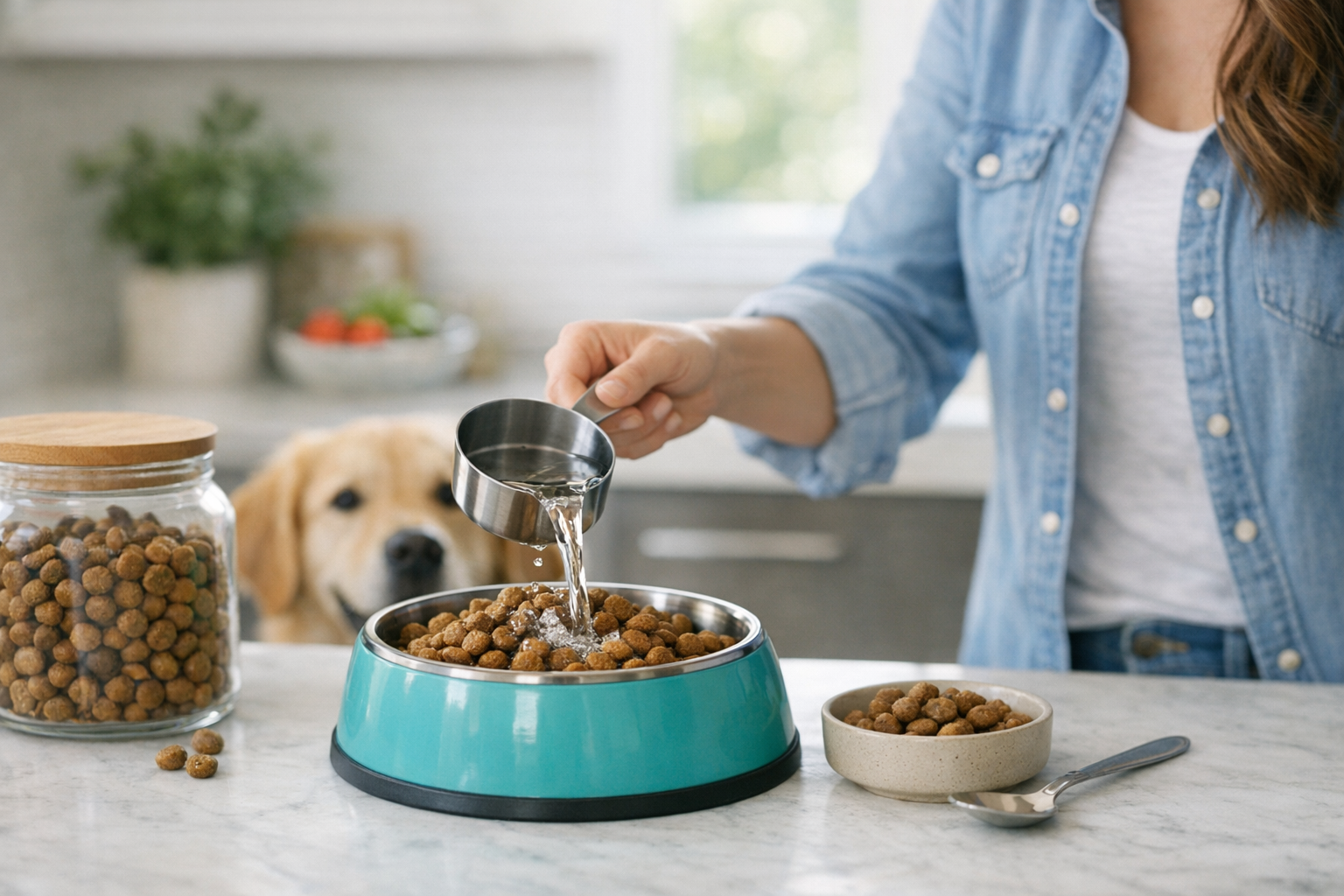
After you add the water, let the bowl sit for about five to ten minutes. This gives the kibble time to "bloom" or expand. The outside will get soft, and the water will turn into a light broth. If you serve it immediately, the water might just sit at the bottom of the bowl, and the kibble will stay hard.
Step-by-Step Mixing Guide
Step 1: Measure your dog's standard portion of dry food into a clean stainless steel or ceramic bowl.
Step 2: Add warm, filtered water using the 1:4 ratio as a starting point.
Step 3: Stir the mixture gently to ensure all the kibble is coated.
Step 4: Let the bowl sit for five minutes to allow the moisture to soak into the center of the biscuits.
Step 5: Give it one last stir and serve it to your dog.
Managing the Risks of Wet Kibble
While there are many benefits, adding water to dry food introduces a few challenges. The biggest concern is safety and hygiene.
The Spoilage Rule
Dry food can sit out in a bowl for hours without spoiling. Once you add water, that changes instantly. Moisture creates the perfect environment for bacteria to grow. If your dog does not finish their moistened meal within 30 to 60 minutes, you must throw it away. Do not leave wet kibble out all day for a "grazer" to snack on.
Dental Health Considerations
There is a long-standing belief that dry kibble helps clean a dog's teeth through mechanical scraping. When you soften the food, you lose that minor abrasive benefit. If you choose to feed a moistened diet, it is even more important to stay on top of your dog's dental care. We recommend regular brushing and providing our dog dental health collection to compensate for the softer food texture.
Keeping the Area Clean
Moistened food is messier than dry kibble. It can stick to the fur around your dog's mouth, especially if they have a long beard or floppy ears. You may need to wipe their face after they eat to prevent the food from drying in their fur and causing irritation or a foul smell.
Vet Tip: If your dog suddenly stops eating their dry food or seems to find it painful to chew, please consult your veterinarian. While adding water can help, a lack of appetite or difficulty chewing can be a sign of underlying dental disease or other health issues that need professional care.
Alternatives to Plain Water
If you want to provide even more nutrition or variety, you do not have to stick to plain water. There are several other liquids that can enhance your dog's meal.
Bone Broth
Bone broth is a fantastic alternative to water. It is packed with collagen, amino acids, and minerals that support joint health and digestion. However, you must use broth specifically made for dogs. Human bone broths often contain onions, garlic, and high levels of sodium, all of which are toxic or unhealthy for pets.
Goat Milk
Raw or fermented goat milk is often called "universal milk" because it is very easy for most dogs to digest. It is rich in probiotics, which can help dogs with sensitive stomachs. Adding a splash of goat milk to kibble provides a creamy texture and a massive boost to gut health.
Wet Food Toppers
If your goal is to increase palatability, you can mix a small amount of canned wet food with the dry kibble. This provides a variety of textures and intense flavor. We carry many "complete and balanced" wet foods that can be used as a topper or a full meal replacement.
| Addition | Primary Benefit | Best For |
|---|---|---|
| Warm Water | Hydration & Aroma | Everyday use, budget-friendly |
| Dog-Safe Bone Broth | Joint & Gut Support | Senior dogs, picky eaters |
| Goat Milk | Probiotics & Nutrients | Dogs with sensitive stomachs |
| Canned Wet Food | High Palatability | Ultra-picky eaters, variety |
Bottom line: While water is the most convenient option, bone broth and goat milk offer extra nutritional perks for dogs who need a little more support.
When to Talk to a Professional
Changing how you feed your dog is usually simple, but sometimes a lack of appetite is a medical signal. If your dog is refusing dry food even when it is moistened, it is time for a vet visit. This is especially true for senior dogs who might be managing chronic conditions.
Through our partnership with Pet's Choice, our pet pharmacy offers FDA-approved medications and prescription pet foods. If your veterinarian recommends a specific therapeutic diet for kidney issues, allergies, or weight management, we can help you get those specialized formulas delivered to your door. Prescription diets are formulated with very specific goals in mind. Always check with your vet before adding water or toppers to a therapeutic diet, as you want to ensure you are not diluting the medicinal benefits.
Our team at BaxterBoo has been helping pet owners since 2006. We have seen how small changes, like adding moisture to a bowl, can improve a dog's quality of life. Whether you are using a high-quality kibble like our selection of NutriSource products or a premium option like our selection of Farmina products, we are here to support your journey.
Transitioning Your Dog to Moistened Food
Most dogs take to moistened food immediately because it smells so much better. However, some dogs are sensitive to changes in texture. If your dog is hesitant, start very slowly.
- Day 1-2: Add just a tablespoon of water to the top of the food without stirring it in.
- Day 3-4: Add a small amount of water and stir it so the food is slightly damp but still crunchy.
- Day 5-6: Increase the water and let it sit for a few minutes to soften the edges.
- Day 7: Move to the full 1:4 ratio and let the food soak completely.
Maintaining a consistent routine helps your dog feel secure. If you find that your dog prefers their food dry, do not force the change. You can always focus on other ways to increase hydration, such as using a pet fountain or offering moisture-rich treats like watermelon or cucumbers, or explore our puppy food category if you are feeding a younger dog.
Saving Time and Money with Smart Shopping
Feeding a high-quality diet can be an investment. We offer several programs to help you manage the cost without sacrificing quality. Our MVP Rewards programme allows you to earn up to 5% back on your purchases, which adds up quickly when buying bags of premium kibble.
If you decide that moistened food is the way to go, you might find you go through bags at a predictable rate. Our Autoship programme is perfect for this. You can set your delivery schedule and save on your first order. Plus, Autoship customers get a free MVP Gold membership, giving you even more ways to save on the 500+ brands we carry.
Key Takeaway: Proper feeding is about balance. Use water to enhance the meal, keep the bowl clean to prevent bacteria, and use reward programs to keep your pantry stocked with the best brands.
Final Thoughts on Mixing Dry Food and Water
Mixing dry dog food with water is a simple, effective, and low-cost way to improve your dog's health and happiness. It solves the problem of dehydration, helps picky eaters enjoy their meals, and provides much-needed relief for dogs with dental pain. Just remember the golden rule of wet food: if they do not eat it quickly, throw it away.
By taking these small steps, you are showing your dog that you care about their comfort and their health. Whether you are adding plain warm water or a nutrient-dense bone broth, your dog will likely thank you with a wagging tail and a clean bowl. We invite you to explore our food topper and broths category at BaxterBoo to find the perfect combination for your furry friend.
Bottom line: Adding water to kibble is a vet-approved method to boost hydration and flavor, provided you follow strict hygiene rules to prevent spoilage.
FAQ
Does adding water to dry dog food cause bloat?
There is no definitive evidence that adding water to kibble causes bloat. In fact, for dogs that eat too quickly, soaking the food can prevent them from gulping air, which is a known risk factor for bloat. However, if your dog is a high-risk breed for Gastric Dilatation-Volvulus (GDV), you should always discuss their specific feeding routine with your veterinarian.
Can I mix cold water with my dog's food?
You can use cold water, but it will not release the food's aroma as effectively as warm water. Cold water also takes much longer to soften the center of the kibble. Warm water is generally preferred by most dogs because it mimics the temperature of fresh prey and makes the meal smell much more appealing.
Will adding water to kibble make my dog's teeth rot?
Adding water does not directly cause tooth decay, but it removes the slight mechanical cleaning benefit of crunchy kibble. To keep your dog's teeth healthy while feeding a soft diet, you should implement a regular dental care routine. This includes brushing their teeth with pet-safe toothpaste and providing high-quality dental chews or toys.
Can I use milk instead of water to soak kibble?
Standard cow's milk is not recommended because many dogs are lactose intolerant and can develop diarrhea or an upset stomach. If you want to use a milk product, choose a specially formulated goat milk for pets. Goat milk contains smaller fat globules and different proteins that make it much easier for dogs to digest while providing beneficial probiotics.






