
 Save 15% on your 1st Autoship learn more

 Email us
 Live Chat
 FAQs
FAQs





Introduction
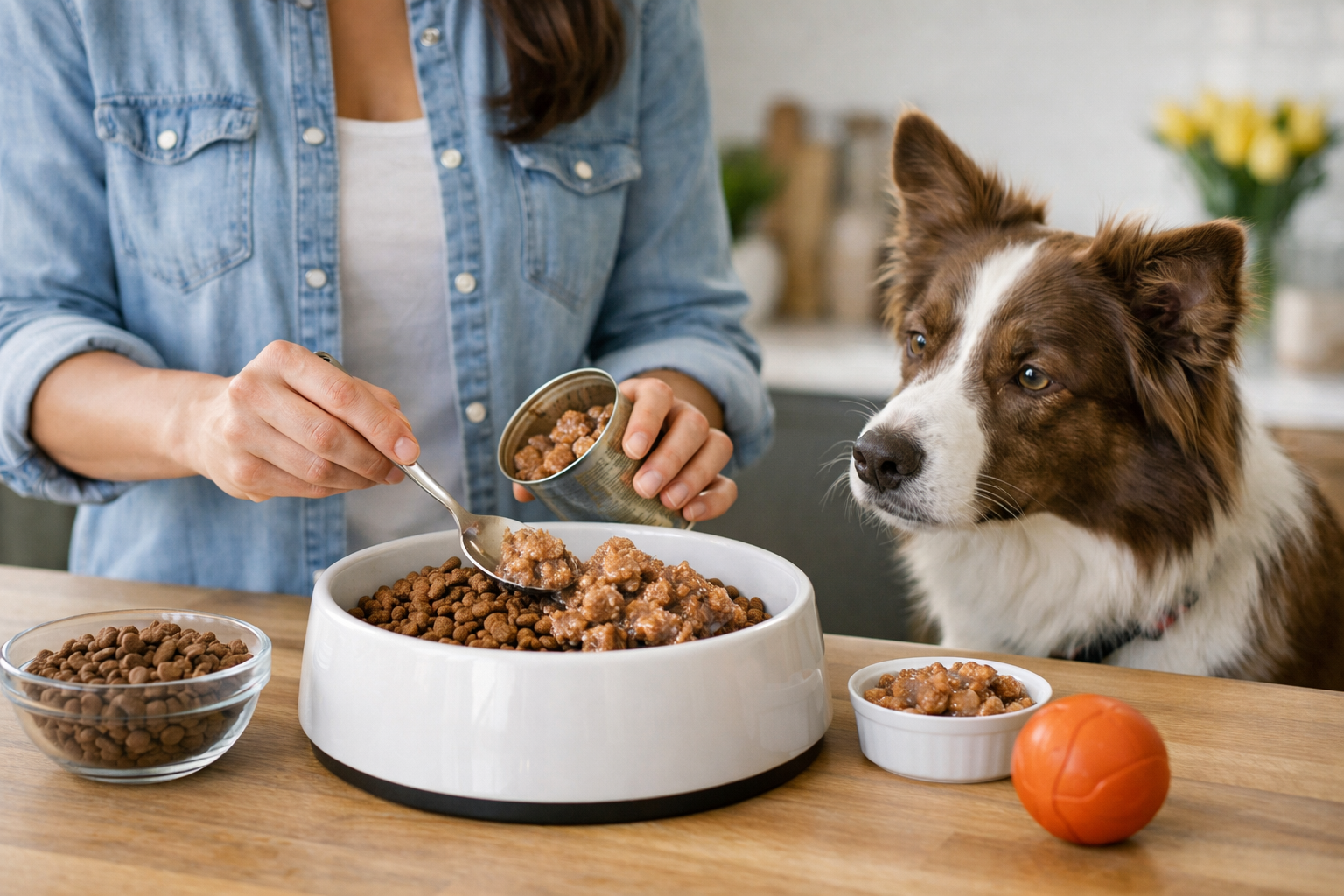
You fill the bowl with high-quality kibble, but your dog just stares at it with a bored expression. We have all been there as pet owners. You want your dog to be excited about mealtime, but you also want to ensure they get the right nutrition. Mixing wet and dry food is one of the most common ways to bridge that gap. At BaxterBoo, we see many pet parents looking for ways to add variety without causing a stomach ache or accidental weight gain. This post covers the benefits of a mixed diet, how to calculate the right portions, and when you should stick to a single type of food. Mixing these two textures can provide the hydration of wet food and the convenience of dry kibble, and our dog food category makes it easy to compare formulas side by side.
Why Mix Wet and Dry Dog Food?
Many pet owners find that a combination of textures works better than choosing just one. Dry food is incredibly convenient for storage and can be left out longer during the day. Wet food offers a rich aroma and a high moisture content that most dogs find irresistible. When you combine them, you create a meal that is both practical for you and exciting for your pet.
Hydration is a major factor in this feeding style. Most dry kibble contains only about ten percent water. Wet food can contain up to eighty percent moisture. Adding a scoop of wet food to a bowl of dry kibble is an easy way to help your dog stay hydrated. This is especially helpful for dogs that do not drink enough water from their bowls during the day.
The aroma of wet food can also encourage a dog to finish their meal. Dogs rely heavily on their sense of smell to determine if something is worth eating. A dry nugget of kibble may not smell like much to a senior dog or a picky eater. A splash of savory gravy or a spoonful of pate can change their mind instantly.
Quick Answer: Yes, you can mix wet and dry dog food as long as both are labeled as complete and balanced. This method improves hydration, increases palatability for picky eaters, and provides a variety of textures.
Managing the Calorie Balance
One of the biggest mistakes owners make is simply adding wet food on top of a full serving of dry food. This leads to overfeeding and weight gain. To keep your dog at a healthy weight, you must replace a portion of the dry food with an equivalent amount of wet food.
It is not a one-to-one swap by weight or volume. One cup of dry kibble usually contains far more calories than one cup of wet food. You need to look at the calorie count on both labels to do the math correctly. Most pet food brands provide a calorie count per cup or per can on the packaging.
A common starting point is the 75/25 rule. This means seventy-five percent of the calories come from dry food and twenty-five percent come from wet food. This keeps the cost down while still providing the benefits of the wet food. If your dog needs more hydration or has trouble chewing, you might move toward a 50/50 split.
Key Takeaway: Always calculate calories when mixing food types to avoid obesity. A small amount of wet food can contain a significant number of calories depending on the brand.
Who Benefits Most From a Mixed Diet?
While most healthy dogs can enjoy a mixed diet, certain dogs find it particularly helpful. Life stages and specific health conditions often dictate how a dog should eat.
Picky Eaters
Some dogs are simply bored with their daily routine. If a dog refuses plain kibble, they may just be holding out for something better. Mixing in a small amount of wet food can make the meal smell like a gourmet treat. This often solves the problem of "hunger strikes" without needing to switch the entire base diet. For more ideas, our guide to whether wet dog food is healthier than dry breaks down the tradeoffs between the two meal styles.
Senior Dogs
As dogs age, their sense of smell and taste can fade. This makes food less appealing. Senior dogs may also struggle with dental issues or missing teeth. The soft texture of wet food can help soften hard kibble, making it easier for them to chew and swallow. It also provides extra moisture for aging kidneys.
Dogs With Low Appetites
If a dog is recovering from an illness or a medical procedure, they may lose interest in food. The strong smell of a canned stew or pate can stimulate the appetite. It is a gentle way to get them back into a regular eating routine.
Small Breed Dogs
Small breeds often have big personalities and very specific tastes. They can also be prone to dental crowding. A mix of crunchy kibble for dental support and soft food for flavor often works well for these tiny pets.
The Importance of Brand Consistency
If your dog is healthy, you can often mix and match different high-quality brands. However, if your dog is on a therapeutic or prescription diet, you should stay within the same brand family. Our pet pharmacy carries several prescription brands through our partnership with Pet's Choice. These foods are formulated to manage specific conditions like kidney disease, skin allergies, or urinary crystals.
Mixing a prescription dry food with a standard grocery store wet food can ruin the effectiveness of the diet. For example, if your dog is on a low-protein kidney diet, adding a high-protein wet topper will throw the whole balance off. Always check if the brands you use have a matching wet version for their dry formulas.
Vet Tip: If your dog is on a prescription diet for a health condition, consult your veterinarian before mixing in any outside foods. Our pharmacy staff can help you find the matching wet versions of FDA-approved prescription diets to ensure the treatment remains effective.
Transitioning to a Mixed Diet
If your dog currently eats only dry food, do not switch to a half-and-half mix overnight. A sudden change in moisture and fat content can cause loose stools or gas. A slow transition allows the digestive system to adapt.
Step 1: Start with a very small amount of wet food. / Add just a tablespoon of wet food to their regular portion of dry food for the first two days.
Step 2: Reduce the dry food slightly. / On days three and four, take out a small amount of kibble and replace it with a bit more wet food.
Step 3: Monitor your dog's bathroom habits. / If the stool remains firm, you can continue to increase the wet food ratio.
Step 4: Reach your target ratio. / By day seven, you should be at your desired mix of wet and dry food.
If at any point your dog develops diarrhea or starts vomiting, go back to the previous step. Some dogs have very sensitive stomachs and may need a longer transition period.
Textures and Mixing Styles
There is more than one way to serve a mixed meal. The best method depends on why you are mixing the food in the first place.
- The Topper Method: Place a dollop of wet food right on top of the kibble. This works well for dogs that love to lick the wet food off first.
- The Thorough Mix: Stir the wet and dry food together until every piece of kibble is coated. This is the best strategy for picky eaters who might try to pick out only the wet chunks.
- The Marinate Method: Add a little warm water or low-sodium broth to the mix and let it sit for ten minutes. This softens the kibble significantly, which is perfect for senior dogs with sensitive teeth.
At our warehouse in Vernon Hills, we stock over 500 brands including Stella and Chewy's, Open Farm, and NutriSource. Many of these brands offer specific "mixers" or "toppers" designed exactly for this purpose. These are often smaller pouches or cans that make portioning much easier than using a full-sized can, and our food topper collection is a good place to start.
Safety and Storage Tips
Wet food requires much more care than dry food. Once a can is opened, the clock starts ticking. Bacteria can grow quickly in moist environments at room temperature.
Never leave a mixed meal out for more than thirty minutes. If your dog does not finish the food, you must throw it away. You cannot put a half-eaten bowl of wet and dry food back in the fridge for later. The saliva from your dog's mouth will already be starting to break down the food.
Unused portions of wet food should be stored in the refrigerator immediately. Use a silicone lid or an airtight container to keep it fresh. Most wet foods stay safe for about three to five days once opened. If you do not think you can finish a large can in that time, look for smaller cans or pouches. For more practical tips, our dry dog food freshness guide covers how to keep kibble in better condition, too.
| Food Type | Room Temp Limit | Fridge Limit | Main Benefit |
|---|---|---|---|
| Dry Kibble | Several hours | Not required | Convenience/Oral Health |
| Wet Food | 30 minutes | 3 to 5 days | Hydration/Taste |
| Mixed Food | 30 minutes | Do not store | Best of both worlds |
Bottom line: Freshness is the most important safety factor when feeding wet food to your dog.
Reading the Label for Nutritional Balance
Before you start mixing, ensure both foods are high quality. Look for the AAFCO (Association of American Feed Control Officials) statement on the back or side of the package. This statement confirms that the food is a complete and balanced meal for your dog's specific life stage.
Avoid mixing a "complete" dry food with a "supplemental" wet food if it makes up a large part of the diet. Supplemental foods are meant to be treats or occasional toppers. They do not have the vitamins and minerals needed for long-term health. If the wet food is just a tiny garnish, it matters less. If it is twenty percent or more of the meal, it must be balanced.
Life stage also matters. Do not mix a puppy wet food with an adult dry food unless your vet recommends it. Puppies need much higher levels of calcium and phosphorus. Mixing life stages can lead to growth issues in young dogs or unnecessary weight gain in older ones.
Common Myths About Mixing Food
There are several misconceptions about feeding a mixed diet. One of the most common is that wet food causes tooth decay. While dry food provides some mechanical scraping of the teeth, it is not a substitute for dental care. Most kibble is too small and brittle to provide significant cleaning.
Another myth is that mixing food causes a "spoiled" dog. Adding wet food does not make a dog spoiled; it makes the meal more biologically appropriate by adding moisture. However, if you only add wet food when your dog refuses dry food, you may be accidentally training them to hold out for the "better" stuff. It is better to make the mix a consistent part of their routine.
Some people believe that you can never mix different protein sources, like chicken kibble with beef wet food. For most dogs, this variety is actually beneficial. It exposes them to different amino acid profiles. The only exception is a dog with a confirmed food allergy. If your dog is allergic to chicken, every part of their diet must be chicken-free.
Dental Health and the Mixed Diet
Many owners worry that adding wet food will ruin their dog's teeth. While kibble does offer some crunch, it is not a magic toothbrush. Most dogs swallow their kibble whole or break it into only a few pieces. This provides very little contact with the tooth surface.
If you are worried about dental health, we suggest using specific dental treats or water additives. We carry many options like Greenies or Cosequin that can help support overall wellness alongside a mixed diet. Regular brushing and annual vet cleanings are much more effective than relying on dry food alone.
The moisture in wet food can actually be helpful for oral health in some cases. It helps wash away food particles that might otherwise stick to the gums. For dogs with existing gum disease, the soft texture of a mixed diet is much more comfortable than hard, sharp kibble.
Cost Considerations
Feeding a hundred percent wet food can be very expensive, especially for large breeds. Mixing wet food with dry kibble is a great way to provide a premium experience without the premium price tag. You get the nutritional boost and flavor of high-end canned food while the dry kibble provides the bulk of the calories at a lower cost.
Buying in bulk can help save money. You can use our Autoship programme to get your favorite dry and wet foods delivered on a schedule. This often includes a discount on your orders and ensures you never run out of your dog's favorite mix. Many of the brands we carry, like Royal Canin and NutriSource, also participate in our Frequent Buyer Program.
Key Takeaway: Mixed feeding is a budget-friendly way to improve your dog's nutrition. It allows you to use high-quality wet food as a flavor booster while keeping kibble as the affordable base.
Special Considerations for Weight Management
If your dog needs to lose a few pounds, mixing wet food might actually help. Wet food is less calorie-dense by volume because of the high water content. A full cup of wet food might only have 300 calories, while a cup of dry food could have 500.
The extra volume and moisture can help your dog feel full faster. This prevents them from begging for more food shortly after a meal. Look for wet foods that are labeled for weight management or "light" formulas. These often have higher fiber content to help with satiety.
If your dog is severely overweight, talk to your vet about a prescription weight loss plan. We can fulfill those prescriptions through our pharmacy, offering brands like Farmina Vet Life for dogs that need a more specialized approach.
Conclusion
Mixing wet and dry dog food is a practical and effective way to improve your pet's mealtime experience. It offers a balance of hydration, flavor, and texture that plain kibble often lacks. By following a few simple rules, you can ensure your dog stays healthy and happy.
- Always calculate total daily calories to prevent weight gain.
- Transition slowly over five to seven days to avoid digestive upset.
- Stick to the same brand for therapeutic or prescription diets.
- Store opened wet food in the fridge and discard leftovers after thirty minutes.
Whether you are looking to help a picky eater or support a senior dog, a mixed diet is a wonderful tool in your pet care kit. You can find a huge selection of both wet and dry options at BaxterBoo, along with the expert guidance you need to make the right choice. If you are looking to stretch your budget, our guide to discounted dog food is another helpful next step.
Key Takeaway: Successful mixing requires calorie math and a slow transition. When done right, it provides superior hydration and flavor that keeps your dog excited for every meal.
Check out our full collection of wet and dry dog food to find the perfect pairing for your pup.
FAQ
Is it okay to mix different brands of wet and dry dog food?
For a healthy dog without allergies, it is generally safe to mix different brands. However, ensure both are labeled as complete and balanced. If your dog has a sensitive stomach or a prescription need, sticking to one brand is usually better for consistency.
How much wet food should I add to dry food?
There is no single correct amount, but many owners follow a 75/25 or 50/50 ratio. The most important thing is to reduce the amount of dry food when you add the wet food. Always check the calorie counts on the labels to ensure the total daily intake remains the same.
Can I mix wet and dry food for a puppy?
Yes, you can mix them once a puppy is fully weaned onto solid food. Make sure both the wet and dry foods are specifically formulated for puppies or "all life stages." Puppies have different nutritional requirements than adults, so using the right life stage is critical.
How long can mixed wet and dry food sit out?
Mixed food should not sit out for more than thirty minutes at room temperature. The moisture in the wet food creates an environment where bacteria can grow quickly. If your dog does not eat it within that window, throw the leftovers away and wash the bowl.






