
 Save 15% on your 1st Autoship learn more

 Email us
 Live Chat
 FAQs
FAQs





Introduction
You reach for the bag of kibble in the pantry and pull back the clip. As you scoop the morning meal, you notice a faint, metallic scent that was not there last week. The bits feel slightly greasy or perhaps a bit softer than usual. Every dog owner has experienced this moment of doubt. You wonder if that big economy bag you bought a month ago is still safe for your pup. While dry food looks shelf-stable, it is a perishable product made of proteins, fats, and vitamins.
At BaxterBoo, we know that keeping your pet’s food fresh is about more than just taste. It is a matter of safety and nutrition. This post covers how to tell if your dog’s food has spoiled, the risks of feeding old kibble, and the best ways to store it to ensure every bowl is as healthy as the first. For a place to compare options, start with our dry dog food category. Proper food management helps your dog stay vibrant and saves you from unnecessary waste.
The Difference Between Best By Dates and Expiration
Most dog owners look at the date on the bottom of the bag and assume it is a hard expiration date. However, there is a difference between when a food is "expired" and when it is no longer at peak quality. The date printed on the bag by brands like our selection of NutriSource products or our selection of Open Farm products is typically a "Best By" date. This date tells you how long the unopened bag will maintain its guaranteed nutritional profile.
Manufacturers use these dates to account for the natural breakdown of vitamins and minerals. Over time, even in a sealed bag, certain nutrients begin to lose their potency. The preservatives used to keep fats from going rancid also have a limited lifespan. Once that date passes, the food may not provide the full balance of nutrition promised on the label.
Quick Answer: Dry dog food typically stays fresh for about one year if the bag remains unopened and stored in a cool, dry place. Once you open the bag, the food begins to oxidize and should ideally be consumed within four to six weeks for maximum safety and nutrition.
How Long Does Dry Dog Food Last Once Opened?
The clock starts ticking the second you break the seal on a new bag of food. Opening the bag introduces oxygen, moisture, and light to the kibble. These three elements are the primary enemies of food freshness. While the bag might have a Best By date six months away, that date no longer applies once the seal is broken.
Most experts recommend finishing a bag of dry food within six weeks. If you have a small dog but buy a forty pound bag to save money, the food will likely go stale before your dog can finish it. This leads to a loss of flavor that might make your dog stop eating. It also increases the risk of the fats in the food turning rancid.
For more on portion planning, see our blog post on how much dry food to feed a dog.
Five Signs Your Dog’s Food Has Gone Bad
You cannot always rely on your eyes to tell if kibble is spoiled. Sometimes the changes are subtle. Use your senses and observe your dog’s behavior to determine if it is time to throw the bag away.
1. A Rancid or Off Smell
Fresh kibble has a mild, grainy, or meaty scent. When the fats in the food oxidize, they produce a sharp, sour, or metallic odor. Some people describe it as smelling like old paint or chemicals. If the smell makes you wrinkle your nose, it is definitely not fit for your dog.
2. Visible Mold or Moisture
If you live in a humid climate, moisture can get trapped inside the bag. This creates the perfect environment for mold to grow. Look for fuzzy white, green, or black spots on the kibble. Even if you only see mold on a few pieces, the microscopic spores have likely spread through the whole bag. You must discard the entire container.
3. Change in Texture
Kibble should be dry and crunchy. If the pieces feel damp, sticky, or crumble easily between your fingers, they have absorbed too much moisture. This texture change is a warning sign that the food is degrading and could soon harbor bacteria.
4. Pest Infestation
Bugs are attracted to the protein and fats in dog food. Storage mites, weevils, and even ants can find their way into bags that are not sealed properly. Storage mites are especially problematic because they are tiny and hard to see. They can also trigger skin allergies and itching in some dogs.
5. Your Dog Refuses to Eat
Dogs have a much stronger sense of smell than humans. They can often detect rancid fats or early mold growth before we can. If your normally enthusiastic eater suddenly turns their nose up at the bowl, do not assume they are just being picky. Inspect the food for any of the signs mentioned above.
If that happens often, our blog post on getting dogs to eat dry food is a helpful next step.
Key Takeaway: Never force your dog to eat food they are rejecting. Their nose is a highly sensitive tool that can detect spoilage long before visible mold appears.
The Science of Spoiled Kibble: Why It Happens
Understanding why food goes bad helps you prevent it. There are three main processes that ruin dry dog food.
First is oxidation. When fats are exposed to oxygen, they break down into smaller molecules. This process changes the smell and taste of the food. It also destroys the healthy omega fatty acids your dog needs for a shiny coat and healthy skin. Premium brands like Stella and Chewy's or Orijen use natural preservatives like rosemary extract or mixed tocopherols. These are healthier than chemical preservatives, but they do not last as long once exposed to air.
Second is humidity. Moisture is the catalyst for mold and bacterial growth. If you store your dog food in a garage or a damp basement, the humidity can seep through the packaging. This is especially true if the bag is sitting directly on a concrete floor, which can draw up moisture.
Third is heat. High temperatures speed up the chemical reactions of oxidation. If your pantry gets hot during the summer, the food inside will spoil much faster. Keeping food in a temperature controlled environment is essential for maintaining its integrity.
Health Risks of Feeding Spoiled Food
Feeding your dog bad food is not just about a bad taste. It can lead to serious health complications. Spoiled fats can cause upset stomachs, including vomiting and diarrhea. In more severe cases, long term consumption of rancid fats can lead to more significant internal issues.
Contaminated food can also harbor harmful bacteria like Salmonella or E. coli. These can make your dog very sick and can even be passed to the humans in your household during handling. Moldy food is perhaps the most dangerous. Certain molds produce mycotoxins that can lead to tremors, seizures, or liver failure.
If your dog has ongoing health needs, our pet pharmacy can be part of a more careful routine when you are managing food and medication together.
Vet Tip: If your dog accidentally eats spoiled food and shows signs of lethargy, persistent vomiting, or loss of appetite, contact your veterinarian immediately.
Expert Storage Tips: Keeping the Crunch
The way you handle the bag after you buy it determines how long it stays fresh. Follow these steps to maximize the shelf life of your dog's meals.
Keep It in the Original Bag
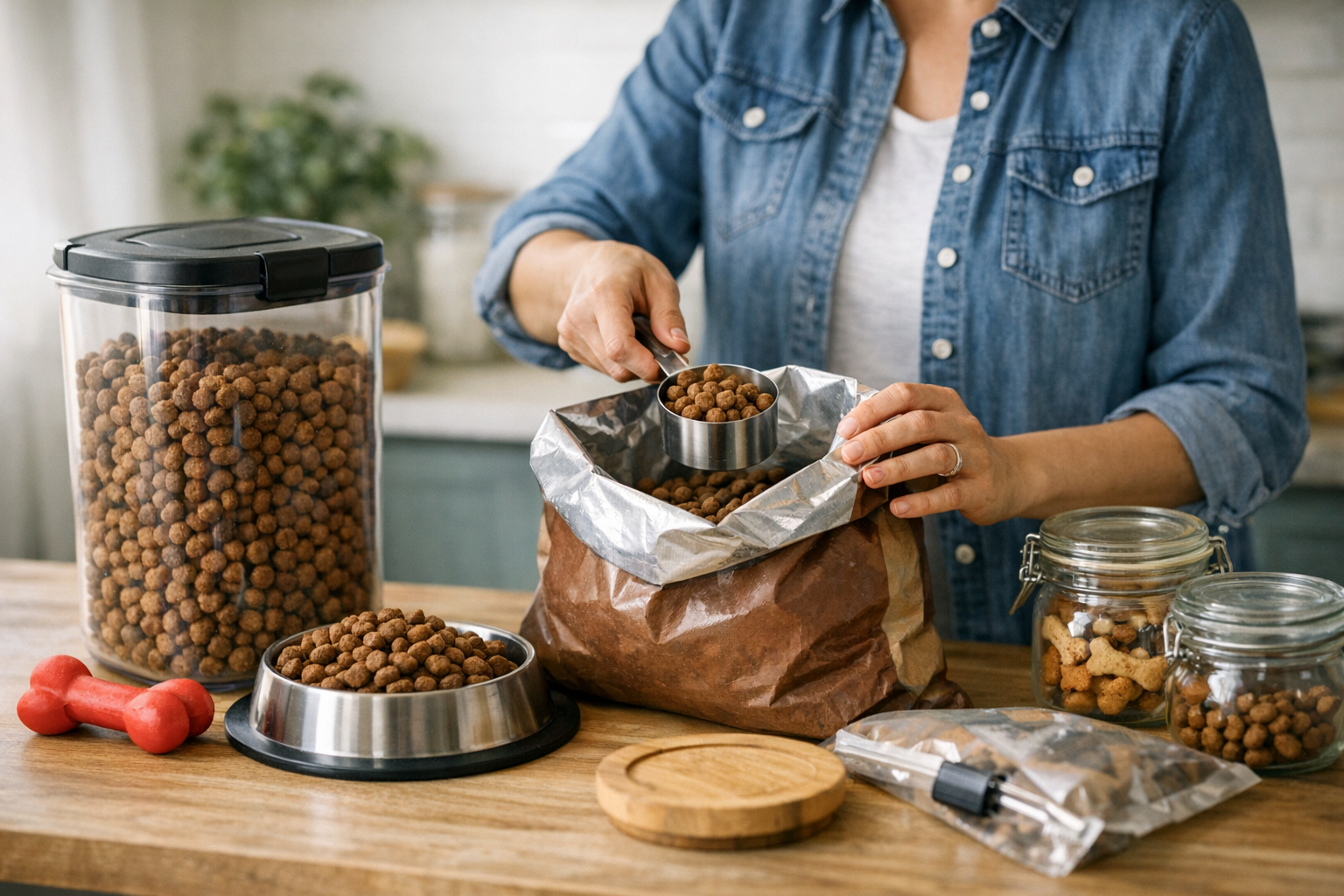
Many owners make the mistake of pouring the kibble directly into a plastic bin. This is actually counterproductive. The original bags used by high quality brands are designed with specialized liners. These liners act as a barrier against oxygen and moisture. Plastic bins can also absorb oils from the kibble over time. These oils can turn rancid and contaminate the next batch of fresh food you pour in.
Use an Airtight Container
Instead of pouring the food out, place the entire bag inside an airtight container. This gives you a double layer of protection. It keeps the food in its protective bag while the container prevents pests from getting in. For storage gear that can help, browse our dog food storage collection.
Store It Off the Floor
Do not leave your dog food bag sitting directly on the floor. This makes it easier for bugs to find and allows temperature fluctuations from the ground to affect the food. Store the bag or container on a shelf or a dedicated pallet in a cool, dark closet or pantry.
Clean Your Gear
If you do use a bin, wash it thoroughly with hot water and mild soap between every single bag of food. Never "top off" a bin by pouring new food over a few inches of old food. This mixes the old, oxidizing kibble with the fresh stuff, causing the whole batch to spoil faster.
Step-by-Step Food Handling
Step 1: Check the Best By date. / Ensure the bag has several months of shelf life left before you buy it. Step 2: Seal the bag tightly. / Squeeze out as much air as possible before closing the bag with a heavy duty clip. Step 3: Monitor the temperature. / Ensure the storage area stays below 80 degrees Fahrenheit and away from direct sunlight. Step 4: Wash the scoop and bowl. / Clean your measuring scoop and your dog's bowl daily to prevent bacteria from building up and transferring back to the bag.
Managing Your Food Supply
One of the easiest ways to ensure your dog always has fresh food is to buy the right amount. It is tempting to buy the largest bag available to save money. However, if that bag lasts your dog three months, you are not actually saving money. You are likely feeding your dog stale, less nutritious food for the last six weeks of that bag.
Calculate how much your dog eats per day. A forty pound bag usually contains about 160 cups of food. If your dog eats two cups a day, that bag will last 80 days. That is nearly 11 weeks, which is much longer than the recommended six week window. In this case, buying two twenty pound bags is a much better choice for freshness.
We offer our Autoship programme that can help you manage this timing. You can set up recurring deliveries so that a fresh bag arrives just as you are finishing the current one. This prevents you from needing to "bulk buy" and store huge amounts of food that might go bad.
Bottom line: Buy only as much food as your dog can realistically finish within six weeks to ensure every meal is fresh and nutrient dense.
Common Myths About Dry Dog Food Storage
There is a lot of misinformation about how to keep kibble fresh. Some people believe that freezing dry dog food is a good idea. While you can freeze kibble, it is not always practical. Thawing the food can introduce condensation, which leads to moisture issues and mold. If you must freeze it, do so in small, airtight portions that can be used immediately upon thawing.
Another myth is that dry food never goes bad because it is "processed." While kibble is cooked at high temperatures, it is still made of biological material. The vitamins and fats are delicate. They are not immortal. Treat your dog's food with the same respect you give your own dry goods, like cereal or flour.
Finally, some think that a clip on the bag is enough. While a clip helps, it does not create a true airtight seal. Air still circulates through the folds of the bag. Using a secondary airtight container is always the safest bet for long term freshness.
Conclusion
Feeding your dog fresh food is one of the simplest ways to support their long term health. By paying attention to Best By dates, using proper storage techniques, and staying vigilant for signs of spoilage, you protect your pet from illness and malnutrition. Remember that the original bag is your friend. Keep it sealed, keep it cool, and keep it off the floor.
To help stay on top of your dog's nutrition:
- Inspect every new bag of food for a fresh scent and consistent texture.
- Store the original bag inside an airtight container in a climate controlled room.
- Use our Autoship programme to get fresh food delivered right when you need it.
- Join the MVP Rewards programme to earn back on every bag of premium food you purchase.
Key Takeaway: Proper storage protects your investment in high quality nutrition and ensures your dog stays happy, healthy, and eager for every meal.
FAQ
Can I feed my dog food that is a few days past the Best By date?
An unopened bag that is only a few days past the date is likely still safe, though it may have slightly fewer vitamins. However, if the bag has been opened for more than six weeks, or if you notice any off smells, you should discard it regardless of the date. Always prioritize your dog's safety over saving a few dollars.
Is it okay to pour dog food directly into a plastic storage bin?
It is better to keep the food inside its original bag and place the whole bag into the bin. Plastic containers can leach chemicals or absorb fats that turn rancid over time. Keeping the bag also ensures you have the lot number and expiration date in case there is ever a product recall.
Why does my dog's food smell like old metallic paint?
That metallic or "chemical" smell is a classic sign of rancid fats. When the oils in the kibble are exposed to oxygen and heat, they oxidize and break down. This not only tastes bad to your dog but can also cause digestive upset and should not be fed.
How can I tell if there are bugs in my dog's dry food?
Look for fine, dust-like webbing or tiny moving specks that look like grains of sand. These are often storage mites. You might also see small holes in the kibble or actual insects like weevils or ants. If you see any signs of pests, throw the food away and thoroughly clean the storage area to prevent them from returning.






