
 Save 15% on your 1st Autoship learn more

 Email us
 Live Chat
 FAQs
FAQs





Introduction
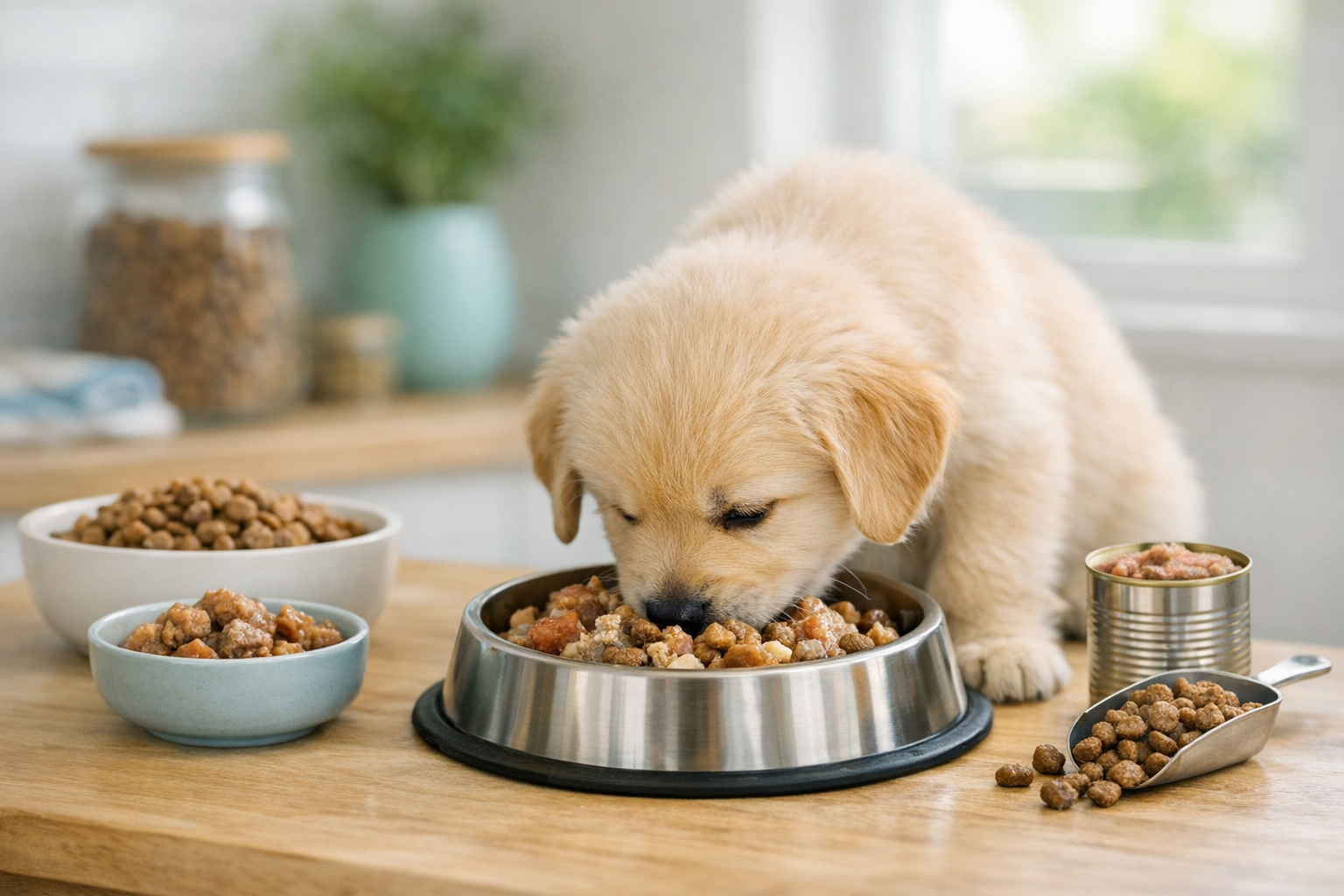
You stand in the kitchen with a bag of premium kibble in one hand and a can of savory paté in the other. Your puppy is looking up with wide eyes and a wagging tail. You want to give them the best start in life. You also want to make sure they actually finish their dinner. It is a common moment for new pet owners. At BaxterBoo, we know that puppy nutrition can feel like a complex puzzle, and our puppy food category is a great place to start. Many owners wonder if combining textures is safe or if it might upset a growing dog’s stomach. This post covers the safety, benefits, and practical steps of mixing wet and dry food for your puppy. Mixing these two formats is not only safe but often highly beneficial for a puppy’s development.
The Basics of Puppy Nutrition
Puppies are not just small dogs. They are fast growing animals with high energy needs. Their bodies require a specific balance of protein, fat, calcium, and phosphorus. This balance supports bone growth and brain development. When you look at any food for your puppy, the label must state it is for growth or all life stages. This ensures it meets AAFCO standards for young dogs.
Mixing wet and dry food is perfectly fine as long as both products are puppy specific. If you mix a high quality puppy kibble with an adult wet food, you might dilute the nutrients your puppy needs. This could lead to growth issues or nutritional deficiencies. Always check that every component of the meal is formulated for the growth stage.
Quick Answer: Yes, you can safely mix wet and dry dog food for puppies. Ensure both the wet and dry options are specifically formulated for puppies to maintain the correct nutritional balance for growth.
Why Mix Wet and Dry Food?
There are several practical reasons to offer a combination of textures. Each type of food brings something unique to the bowl. By combining them, you give your puppy a more well rounded eating experience.
Better Hydration
Puppies are active and can get dehydrated quickly. Wet food is often 75 to 78 percent water. Adding a spoonful of wet food to kibble is an easy way to increase their daily fluid intake. This is especially helpful if your puppy is not a big water drinker.
Improved Palatability
Some puppies are naturally picky. Others might lose their appetite during teething when their gums are sore. The strong aroma of wet food is often enough to entice a reluctant eater. The gravy or juice in canned food coats the kibble and makes the entire meal more appealing.
Dental Health and Jaw Strength
Dry kibble provides a crunch that helps scrape away some plaque as your puppy chews. It also gives their developing jaws a workout. Wet food is softer and easier to swallow. A mix allows them to benefit from the mechanical cleaning of kibble while enjoying the soft texture of canned food.
Key Takeaway: Mixed feeding combines the dental benefits of crunchy kibble with the hydration and high palatability of wet food. This approach supports overall health and makes mealtime more exciting for your puppy.
How to Calculate the Right Portions
One of the biggest risks of mixing food is overfeeding. It is easy to add a "little bit" of wet food without realizing how many calories you are adding. Puppies need to stay lean to protect their developing joints. Carrying extra weight can lead to long term mobility issues.
The best way to start is by looking at the feeding guidelines on both packages. Most brands provide a daily total based on weight and age. If you want to feed a 50/50 split, you must give half the recommended amount of dry and half the recommended amount of wet.
Many owners prefer a topper approach. In this case, you might use 75 percent of the recommended kibble and replace the remaining 25 percent of calories with wet food. Do not just guess. Use a standard measuring cup for the dry food and a kitchen scale or the label's ounce markings for the wet food.
Vet Tip: Consult your veterinarian to determine your puppy's ideal daily calorie count. They can help you calculate the exact ratio of wet to dry food to ensure your puppy grows at a healthy, steady rate.
Transitioning Your Puppy to Mixed Meals
Puppies have sensitive digestive systems. A sudden change in diet can cause diarrhea or upset stomachs. If your puppy currently eats only dry food, you must introduce wet food slowly. This process should take about a week.
- Days 1 and 2: Keep the kibble amount nearly the same. Add just one teaspoon of wet food and mix it well.
- Days 3 and 4: Slightly reduce the kibble and increase the wet food to a few tablespoons.
- Days 5 and 6: Move closer to your final desired ratio while watching for any changes in stool consistency.
- Day 7: Your puppy should now be fully adjusted to the mixed meal.
If you notice any vomiting or loose stools, go back to the previous step for a few more days. Some puppies need more time for their gut bacteria to adjust to the rich ingredients in wet food.
Choosing the Right Brands
We carry over 500 trusted brands at BaxterBoo to give you the best selection for your puppy. When choosing foods to mix, look for brands that offer both wet and dry versions of the same recipe. This can make digestion easier because the protein sources and base ingredients are often similar.
Brands like Royal Canin, Farmina, and NutriSource offer specialized puppy formulas in both formats. For owners who prefer raw or minimally processed options, our selection of The Honest Kitchen products can be a great fit for mixers and toppers.
The Role of Prescription Diets
Sometimes a puppy has a specific health concern. This might include food sensitivities, digestive issues, or skin allergies. If your veterinarian prescribes a specific diet, you must be careful with mixing. Mixing a prescription kibble with a standard grocery store wet food can ruin the effectiveness of the medical diet.
Our pet pharmacy provides access to prescription pet foods through our partnership with Pet's Choice. If your puppy requires a therapeutic diet like Farmina Vet Life or Royal Canin Veterinary Diet, we can help you fulfill that through our pharmacy services. Always stick to the same brand and line for both wet and dry when dealing with medical needs.
Practical Tips for Daily Feeding
Mixing food requires a little more cleanup and storage care than feeding dry kibble alone. Wet food is a fresh product once the seal is broken. It can spoil quickly if left out in the bowl.
Storage and Safety
Once you open a can or pouch of wet food, it must be refrigerated. Most wet foods stay fresh for two to three days in the fridge. You can use a silicone can cover to keep the food from drying out and to stop odors from spreading.
When you are ready to feed, you can take the wet food out of the fridge a few minutes early. Most puppies prefer food at room temperature rather than cold. You can even add a splash of warm water to the mix to further enhance the aroma.
Cleanup
Bacteria grow quickly in wet food residue. Unlike dry kibble bowls that might only need a quick rinse, mixed feeding bowls must be washed with hot, soapy water after every single meal. Stainless steel or ceramic bowls are the best choices because they do not have pores where bacteria can hide.
- Wash bowls after every meal.
- Discard any uneaten mixed food after 30 minutes.
- Keep opened cans tightly sealed in the refrigerator.
- Check expiration dates on both wet and dry food regularly.
Bottom line: Hygiene is essential when mixing food. Wash bowls daily and never leave wet food sitting out at room temperature for more than half an hour.
Managing Picky Eaters and Teething
Teething is a difficult time for puppies. Their gums are often red and swollen. During this phase, they may find hard kibble painful to chew. This is a perfect time to increase the ratio of wet food. If you want more guidance on that transition, our weaning timeline for dry dog food walks through the early feeding stages.
You can even let the kibble sit in the wet food for ten minutes before serving. This allows the dry pieces to soften. It ensures your puppy still gets the calories they need without the discomfort of crunching. Once the adult teeth are in, you can return to a crunchier mix.
If your puppy is still picky, consider the temperature and texture. Some puppies like a chunky stew, while others prefer a smooth paté. Rotating flavors within the same brand can also help keep them interested. Just ensure each flavor is still a puppy specific formula.
The Financial Side of Mixed Feeding
Feeding a puppy entirely on high quality wet food can be expensive. Wet food typically costs more per calorie than dry food. This is why many of our customers choose a mixed approach. It provides the premium experience and health benefits of wet food while the dry food keeps the overall cost manageable.
You can save even more by using our Autoship programme. This allows you to set a recurring delivery schedule for your puppy's favorite food and treats. You get savings on your first order and a free MVP Gold membership. It is a great way to ensure you never run out of the food your puppy depends on.
Signs Your Puppy is Thriving
When you find the right mix, you will see the results in your puppy's appearance and behavior. A healthy puppy on a balanced diet should have:
- Steady Growth: They should be gaining weight consistently without becoming "round" or losing their waistline.
- Clear Skin and Shiny Coat: High quality fats in wet and dry food support skin health.
- Good Energy Levels: Your puppy should be playful and alert.
- Consistent Digestion: Stools should be firm and easy to pick up.
If your puppy seems lethargic, has a dull coat, or suffers from chronic diarrhea, the food mix might not be right for them. For more ideas on supporting puppy wellness, our best supplements for puppies guide is a helpful next read. Always consult your veterinarian if you notice these signs. They can rule out underlying issues and help you adjust the diet.
Conclusion
Mixing wet and dry dog food for puppies is an excellent way to provide variety and nutrition. It helps with hydration, makes meals more appetizing, and offers the dental benefits of kibble. By choosing high quality brands and measuring portions carefully, you give your puppy a great foundation for a healthy life. We are here to support you with a huge selection of premium foods and the convenience of our pharmacy for any medical needs.
- Always choose puppy specific formulas for both wet and dry components.
- Measure portions to avoid overfeeding and unhealthy weight gain.
- Introduce new wet foods gradually over seven days.
- Store opened wet food in the refrigerator and wash bowls after every meal.
Our pharmacy at BaxterBoo is ready to assist if your veterinarian recommends a prescription diet. You can also join the MVP Rewards programme to earn points on every food purchase. Start your puppy on a path to wellness by finding the perfect mix today.
Bottom line: Mixed feeding is a practical, healthy choice for puppies that balances cost, convenience, and nutrition.
FAQ
Is it okay to mix different brands of wet and dry puppy food?
Yes, you can mix different brands as long as both are labeled as "complete and balanced" for puppies. However, if your puppy has a sensitive stomach, sticking to the same brand for both wet and dry food may be easier on their digestion. Some owners find that staying within one brand’s product line ensures the nutrient profiles are more compatible.
How much wet food should I add to my puppy's kibble?
A common ratio is 75 percent dry kibble and 25 percent wet food, but this depends on your puppy's specific caloric needs. You must reduce the amount of kibble when you add wet food to prevent overfeeding. Check the feeding guides on both packages and use a measuring cup to keep the total calories consistent with your vet's recommendations.
Can I leave mixed food out for my puppy to eat later?
No, you should not leave mixed food out for more than 30 minutes. Wet food contains moisture that allows bacteria to grow quickly at room temperature. If your puppy does not finish the meal, pick up the bowl, discard the leftovers, and wash the bowl thoroughly with hot, soapy water.
Will mixing wet food into kibble cause my puppy to have diarrhea?
It can cause loose stools if the transition happens too quickly. To avoid digestive upset, start by adding a very small amount of wet food to the kibble and gradually increase the amount over a week. If diarrhea persists for more than 24 hours, contact your veterinarian to ensure there isn't an underlying health issue or a specific food allergy.






