Save 15% on your 1st Autoship learn more

 Email us
 Live Chat
 FAQs
FAQs





Introduction
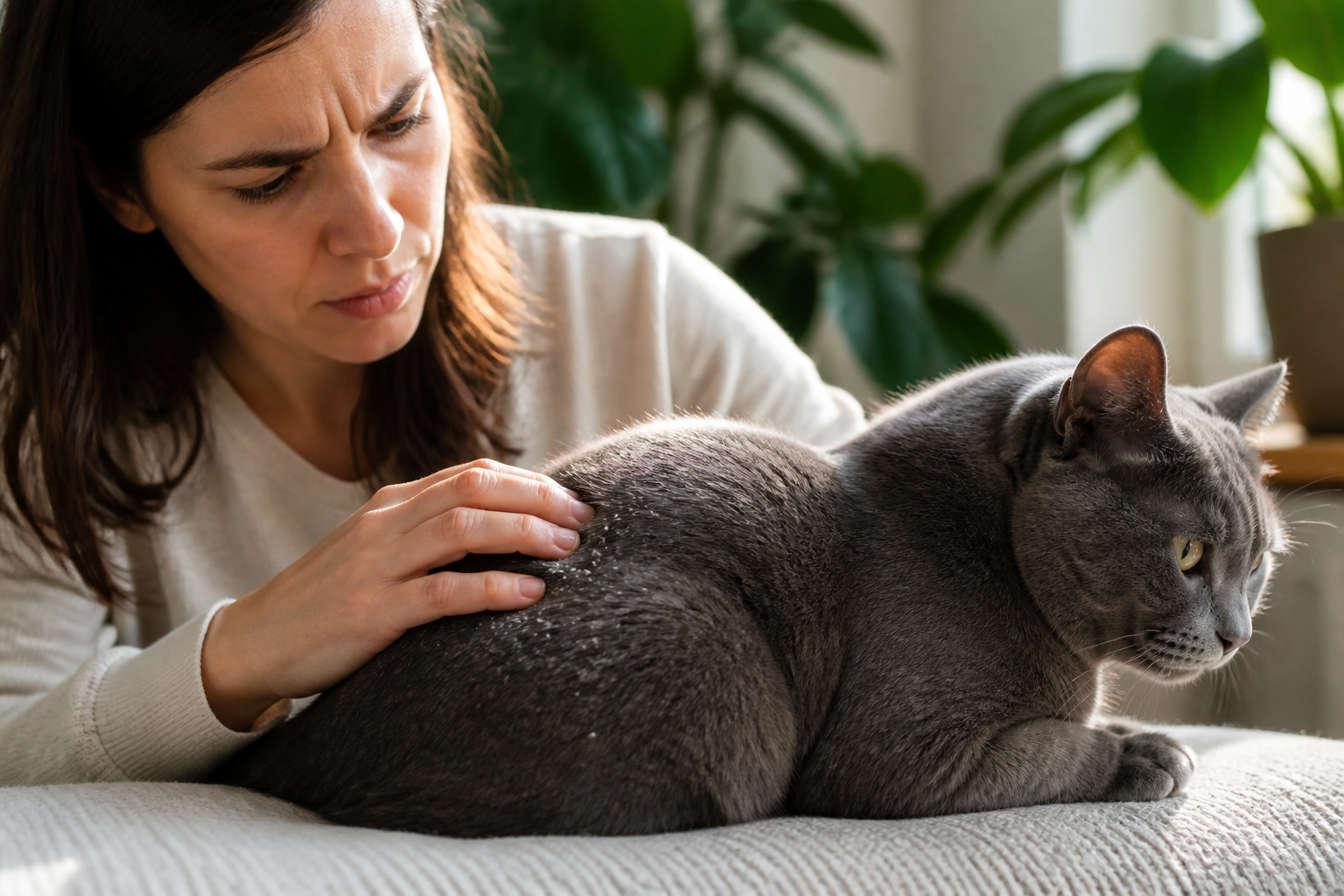
You are relaxing with your cat when you notice small white flakes scattered across their fur. As you pet them along their spine, the flakes become more obvious near the base of their tail. This is a common sight for many owners. We at BaxterBoo know that a glossy, flake-free coat is a hallmark of a healthy cat. When you see debris on the lower back, it usually means the natural grooming process has been interrupted. This article covers why these flakes appear and how you can help your cat regain a healthy coat. We will look at physical obstacles, environmental factors, and underlying health concerns. Understanding the source of the skin irritation is the first step toward finding a lasting solution for your feline friend.
Quick Answer: Cat dandruff on the lower back often happens because the cat cannot reach that area to groom. Common causes include obesity, arthritis, skin parasites, or dry indoor air. If the flakes are accompanied by redness or itching, a veterinary visit is necessary to rule out infections.
Understanding Feline Dandruff
Feline dandruff is not the same as dander. Every cat produces dander. Dander consists of microscopic skin cells that shed naturally as part of the body's renewal process. You cannot see dander with the naked eye. It is the protein in dander that often triggers human allergies. Dandruff is different because the flakes are large enough to see. These flakes are clumps of dead skin cells that have shed prematurely or accumulated in the fur.
Healthy skin continuously creates new cells and sheds old ones. In a normal cycle, a cat grooms these cells away before you ever notice them. Their rough tongues act like natural combs to keep the coat clean. When you see white specks, it means the shedding cycle is out of balance. It might also mean the cat is physically unable to remove the debris.
Dandruff can be dry and flaky or oily and waxy. Dry dandruff usually feels like fine powder or small scales. Oily dandruff may cause the fur to feel greasy or look clumped together. Both types suggest that the skin barrier is not functioning as it should. Identifying whether the skin is dry or greasy helps determine the best approach for care.
Why the Lower Back is a Common Trouble Spot
The lower back and the base of the tail are the most frequent places to find dandruff on a cat. This is rarely a coincidence. These areas are the hardest for a cat to reach during their daily cleaning routine. If a cat is healthy and flexible, they can twist their body to groom every inch of their spine. However, several factors can make this movement difficult.
Mechanical Grooming Obstacles
Obesity is a leading cause of dandruff on the lower back. If a cat is overweight, their physical size prevents them from reaching past their midsection. The skin on the lower back becomes a "blind spot" for their tongue. Dead skin cells and natural oils build up over time. This leads to visible flakes and sometimes matting. Helping your cat reach a healthy weight is often the most effective way to clear up skin issues in this specific area. For additional guidance, read about helping an indoor cat lose weight.
Age and Joint Comfort
Senior cats often develop stiffness in their joints. Arthritis in the spine or hips makes the twisting motion of grooming very painful. A cat may try to groom but stop once they feel a pinch or ache in their back. Because they avoid the area, the lower back quickly becomes covered in dandruff. You might notice your cat looks clean on their front half but looks unkempt toward the tail. This is a clear sign that they need help with their hygiene.
Key Takeaway: Dandruff localized to the lower back is usually a sign of a grooming gap. Whether due to weight or joint pain, the cat cannot physically reach the area to clean it.
Environmental and Lifestyle Factors
The environment inside your home plays a major role in your cat's skin health. Just like humans, cats react to changes in humidity and temperature. During the winter, indoor heating systems strip moisture from the air. This dry air pulls hydration out of your cat's skin. The result is a brittle skin barrier that flakes easily.
Stress is another lifestyle factor that people often overlook. When a cat is stressed, their body may produce more cortisol. This can lead to changes in skin cell turnover and oil production. A stressed cat might also over-groom one area while completely neglecting another. If you have recently moved houses or added a new pet to the family, the dandruff could be a physical reaction to that anxiety. Keeping the litter area comfortable may also help; see these tips for cleaning a litter box.
Water intake also matters. Cats have a low thirst drive by nature. If they are slightly dehydrated, their skin is one of the first places to show it. Dehydrated skin loses its elasticity and begins to scale. Encouraging more water consumption through fountains or wet food can help keep the skin supple from the inside out.
Parasites and Skin Infections
If you see flakes moving, you are likely dealing with a parasite. Cheyletiella mites are often called "walking dandruff" because they are white and move across the skin surface. These mites are highly contagious and can cause significant irritation. They tend to congregate along the dorsal line of the cat, which is why you see them most on the back.
Fleas are another common culprit. Some cats have a severe allergy to flea saliva. This is known as flea allergy dermatitis. Even a single flea bite can cause the skin to become inflamed and scaly. You might see "flea dirt" alongside the dandruff. Flea dirt looks like small black pepper flakes. If you touch a damp paper towel to these black specks and they turn red, it is flea debris. For more information, read how flea collars work.
Ringworm is a fungal infection that can also cause scaly patches. Unlike simple dandruff, ringworm often causes circular patches of hair loss. The skin in these areas may look red or crusty. Because ringworm can spread to humans, it is important to have any suspicious bald spots checked by a professional.
Vet Tip: If your cat is scratching excessively or has red, inflamed skin along with dandruff, consult your veterinarian. They can perform a skin scraping to check for mites or fungus. Our pet pharmacy for cats offers prescription products through a veterinary prescription process.
Health Conditions That Impact the Coat
Dandruff is sometimes a secondary symptom of a systemic health issue. The skin is the largest organ of the body. When internal systems are struggling, the coat often reflects that struggle. Our cat healthcare collection includes products for a range of feline wellness needs.
- Hyperthyroidism: This condition is common in older cats. It speeds up the metabolism and can lead to a greasy, unkempt coat with plenty of dandruff.
- Diabetes: Poorly managed blood sugar affects hydration and nutrient delivery to the skin. This often results in dry, thinning fur and flaky skin.
- Dental Disease: If a cat has a painful mouth, they will stop grooming entirely. The act of licking their fur becomes too painful, leading to a buildup of dandruff all over the body.
- Kidney Issues: Chronic kidney disease can cause dehydration. As the body struggles to maintain fluid balance, the skin becomes dry and flaky.
If you notice your cat is drinking more water than usual, losing weight, or acting lethargic, the dandruff is likely a piece of a larger puzzle. A veterinarian can run blood work to see if an underlying condition is the root cause.
Nutrition and the Skin Barrier
What your cat eats directly affects the quality of their fur. The skin requires high-quality proteins and specific fats to remain healthy. Specifically, Omega-3 and Omega-6 fatty acids are vital for the skin's moisture barrier. These fats help "glue" the skin cells together, preventing moisture from escaping.
Many commercial cat foods contain these nutrients, but some cats need more than the standard amount. If a diet is low in essential fatty acids, the skin becomes "leaky." It loses water and begins to shed cells too quickly. Vitamin E and Vitamin A are also important for skin regeneration. Our cat vitamins and supplements include options for skin and coat support.
Step-by-Step: Improving Your Cat's Skin Through Diet
- Evaluate the current food. Ensure the first ingredient is a high-quality animal protein.
- Add moisture. Switch some of their dry kibble for wet food to improve hydration.
- Introduce Omega-3s. Use a fish oil supplement designed for cats. Start with a small dose to avoid upset stomachs.
- Monitor for results. Skin cells take about three weeks to turn over. You should see a difference in coat quality after a month of consistent nutrition.
Practical Solutions for Home Care
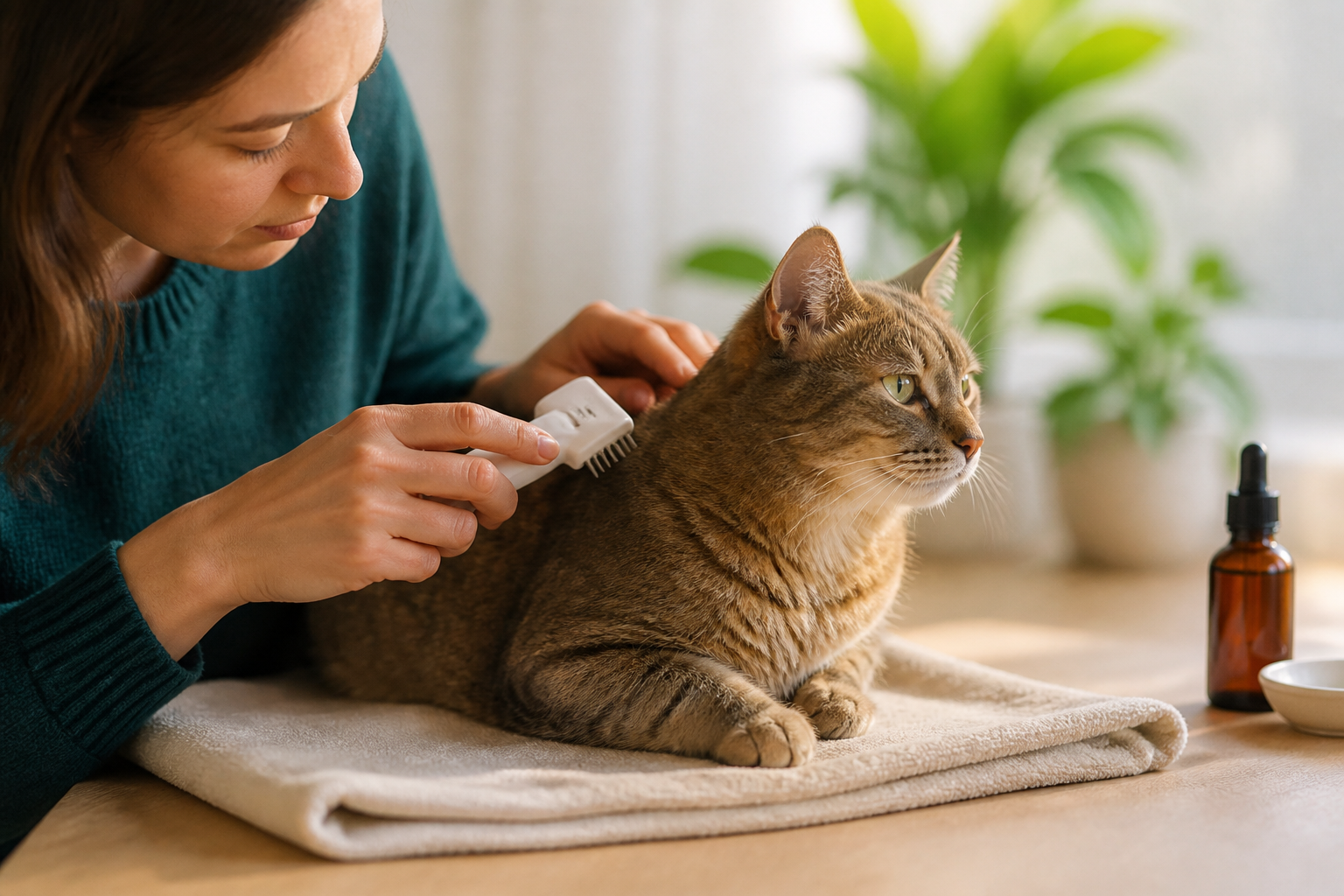
While you wait for dietary changes or medical treatments to work, you can take steps to manage the flakes at home. Consistent care helps remove the buildup and makes your cat more comfortable. Our cat grooming supplies include brushes, combs, wipes, and other care products.
Choosing the Right Grooming Tools
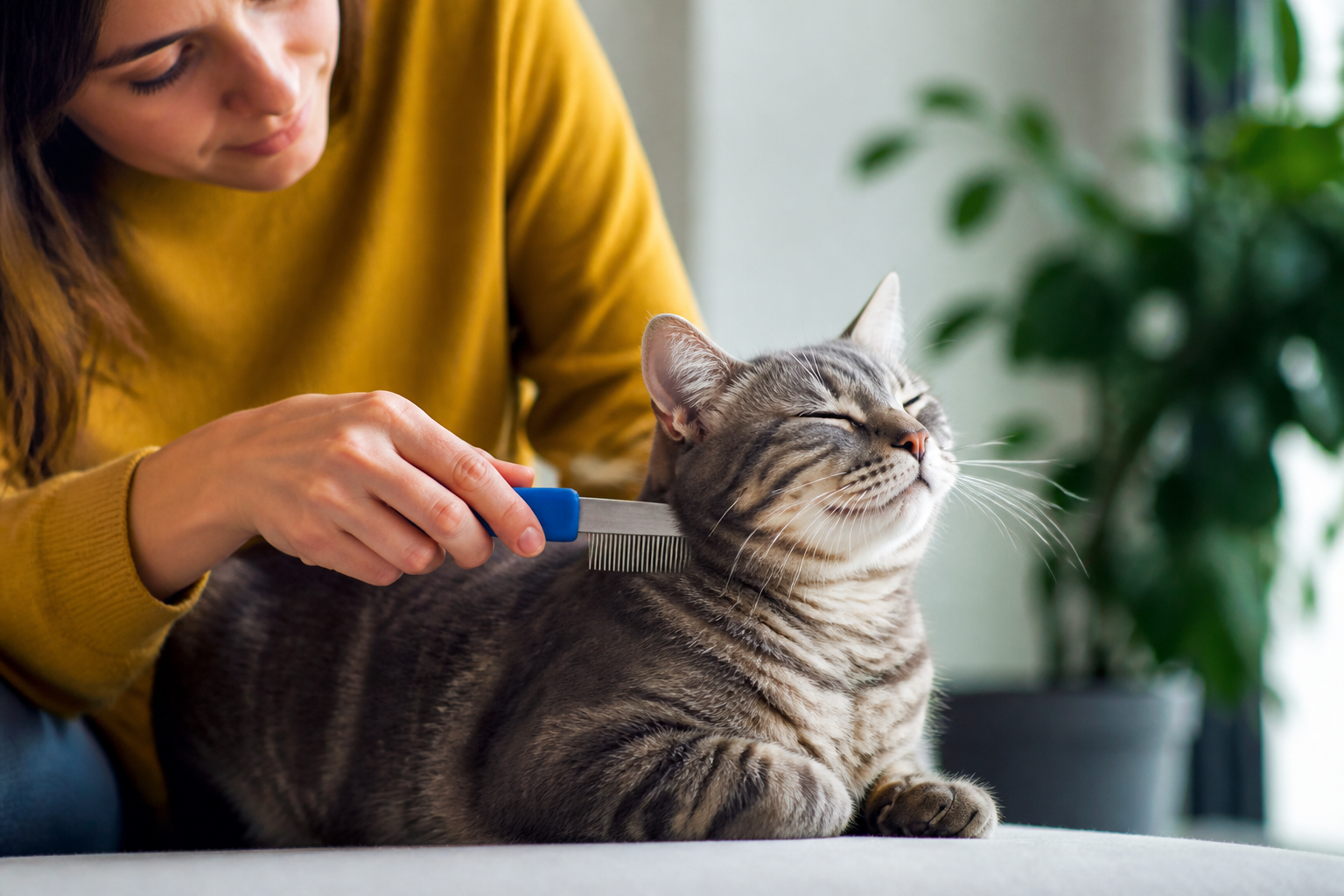
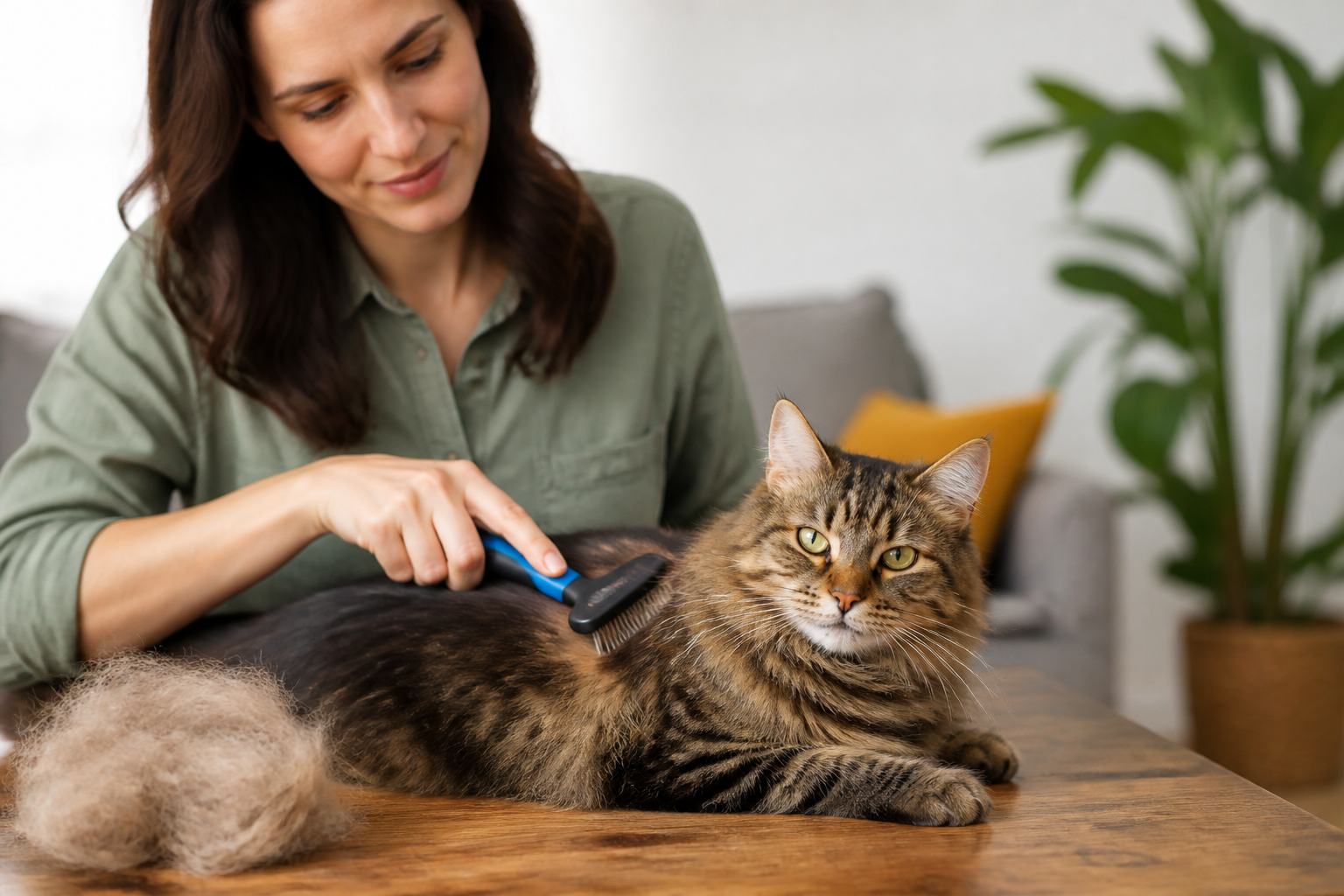
Brushing is the most effective way to manage dandruff on the lower back. If your cat cannot reach the area, you must do it for them. For short-haired cats, a soft rubber curry brush or a fine-toothed comb works well. For long-haired cats, a slicker brush or an undercoat rake is better. The Master Grooming Tools Ergonomic Slicker Dog and Cat Brush is one option designed for brush-outs and mat removal.
Be gentle when brushing the lower back. If the cat has arthritis, the skin might be sensitive. Use slow, rhythmic strokes. Regular brushing distributes the natural oils from the skin across the hair shaft. This moisturizes the fur and prevents new flakes from forming.
Managing Indoor Air Quality
If your dandruff issues are seasonal, focus on the air in your home. A small humidifier placed near your cat's favorite sleeping spot can make a huge difference. Aim to keep your home's humidity between 40% and 50%. This prevents the skin from drying out during the winter months.
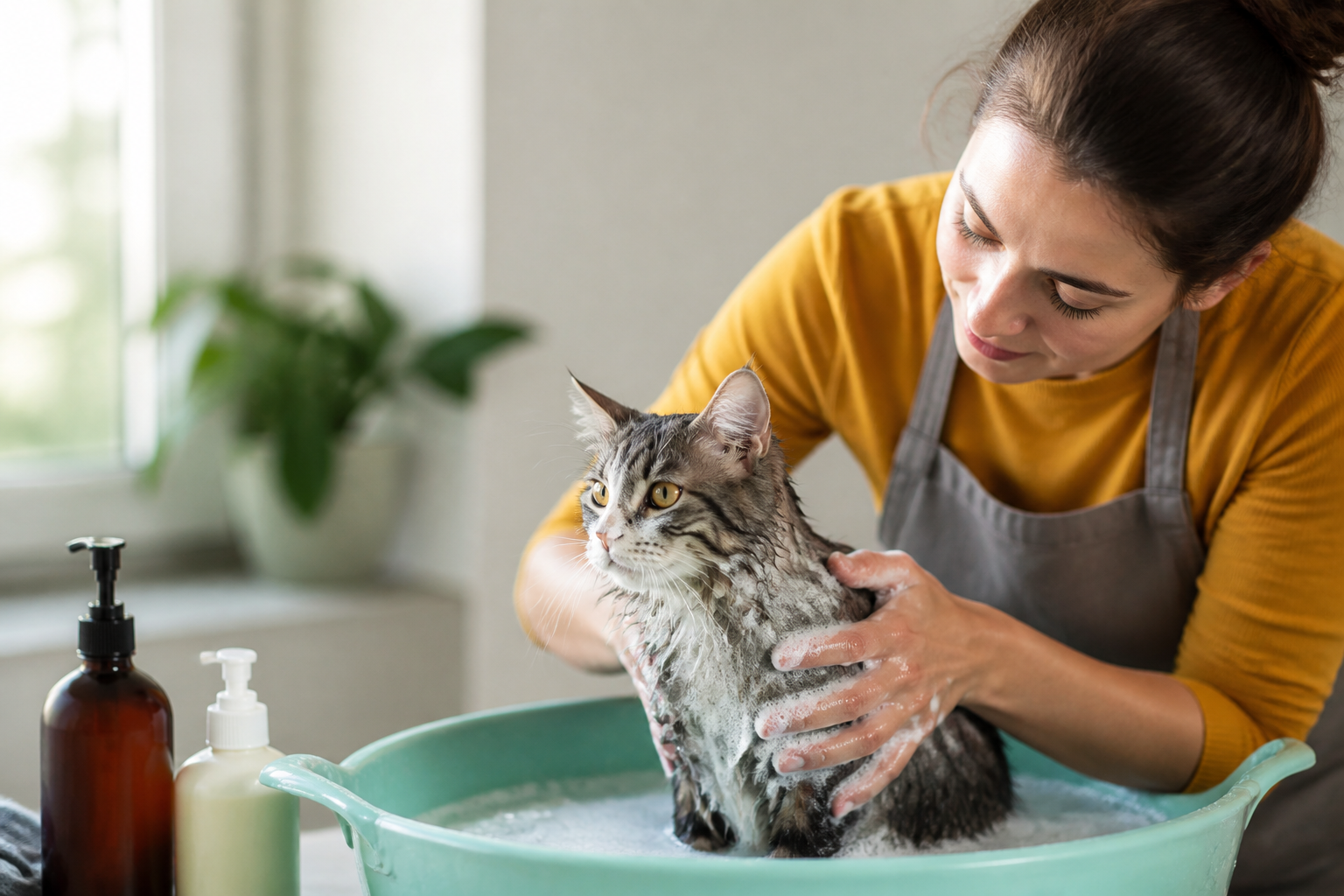
You should generally avoid bathing your cat unless they are truly greasy or have been exposed to something toxic. Cats find baths very stressful. Stress can dry out the skin further and lead to more flaking. If you must use a cleaning product, choose a waterless foam shampoo or grooming wipes specifically formulated for cats, such as Vet's Best Dry Clean Waterless Cat Bath.
Key Takeaway: Daily brushing is the best way to help a cat that cannot groom their own lower back. It removes dead skin and moves healthy oils down the hair shaft.
When to Call the Veterinarian
Most cases of mild dandruff can be handled with better grooming and nutrition. However, some signs indicate a need for professional help. You should never ignore skin issues that seem to be causing your cat pain or distress.
Schedule an appointment if you notice:
- The skin is bright red or bleeding.
- There are patches of complete hair loss.
- The cat is biting or chewing at their lower back.
- You see "walking" specks or black debris.
- The cat has a foul odor coming from their skin.
A vet can provide a professional diagnosis and prescribe medicated shampoos or ointments. If your cat requires prescription skin support diets or medications, our pet pharmacy for cats offers these through a veterinary prescription process. This ensures you get the exact formula your vet recommends for chronic conditions like allergies or endocrine disorders.
Bottom line: While dandruff is often just a sign that your cat needs help grooming, it can also be the first symptom of a medical issue that requires a vet's attention.
Conclusion
Finding dandruff on your cat's lower back is a signal to look closer at their overall health and environment. Whether the cause is a lack of flexibility, dry winter air, or a need for better nutrition, most cases are manageable with consistent care. Regular brushing and a high-quality diet go a long way in keeping the skin barrier strong. If home care does not solve the problem, do not hesitate to seek a professional opinion. Visit BaxterBoo for the grooming tools and skin supplements you need to keep your cat’s coat looking its best. Our team is here to support you in providing the best possible care for your pet's wellness journey.
FAQ
Can I use human dandruff shampoo on my cat?
No, you should never use human dandruff shampoo on a cat. These products often contain ingredients like zinc pyrithione or salicylic acid that are toxic if the cat licks their fur. Cats have a different skin pH than humans, and these shampoos can cause severe irritation or chemical burns. Always use a product specifically formulated for feline skin.
Is cat dandruff a sign of a food allergy?
Dandruff can be a symptom of a food allergy, but it is usually accompanied by other signs. Cats with food allergies often have very itchy skin, ear infections, or digestive issues like vomiting. If you suspect an allergy, work with your vet to try an elimination diet rather than just switching brands on your own.
How often should I brush my cat to get rid of dandruff?
For a cat with active dandruff on their lower back, daily brushing for five to ten minutes is ideal. This helps remove the buildup of dead skin before it can clump together. Once the skin condition improves, you can move to a maintenance schedule of two or three times a week.
Does indoor heating cause cat dandruff?
Yes, indoor heating is a major cause of dry skin in pets during the winter. Forced-air heating systems lower the humidity in the home, which dries out the feline skin barrier. Using a humidifier and ensuring your cat stays hydrated can help combat the effects of a warm, dry house.