Save 15% on your 1st Autoship learn more

 Email us
 Live Chat
 FAQs
FAQs





Introduction
You notice it the moment your dog walks into the room. It is that unmistakable, musty odor that smells a bit like corn chips or old socks. Your dog is constantly licking their paws until the fur turns a rusty red. They might be shaking their head or rubbing their belly against the carpet to find relief from a persistent itch. These are the classic signs of a yeast overgrowth, and as a pet owner, it can be incredibly frustrating to watch your dog struggle.
At BaxterBoo, we talk to pet owners every day who have tried every shampoo and topical spray on the market. While those products offer temporary relief, the real solution often starts from the inside. We want to help you understand how the gut influences the skin. This post covers the science behind the gut-skin axis, which probiotic strains matter most, and how to balance your dog’s microbiome to keep yeast in check. Probiotics are not a quick fix for an active infection, but they are a powerful tool for long-term health.
What is a Yeast Infection in Dogs?
Most people think of a yeast infection as an outside invader that their dog "caught" at the park or from another pet. In reality, the most common type of yeast on dogs, called Malassezia pachydermatis, is a normal resident of your dog’s skin and ears. Under healthy conditions, your dog’s immune system and a balanced population of "good" bacteria keep this yeast in a tiny, harmless colony.
A yeast infection occurs when the environment on the skin or inside the body shifts. This shift allows the yeast to multiply out of control. It is an opportunistic overgrowth rather than a contagious disease. When the yeast population explodes, it produces toxins that irritate the skin, leading to inflammation, grease, and that signature smell.
Several factors can trigger this overgrowth. Allergies to food or environmental triggers like pollen are common culprits because they cause skin inflammation. Long-term use of antibiotics can also clear out the beneficial bacteria that usually compete with yeast for space. When those "good bugs" are gone, the yeast has a clear field to expand.
Quick Answer: Yes, probiotics can help manage and prevent yeast infections by restoring the balance of beneficial bacteria in the gut. While they do not kill yeast directly like a medication, they support the immune system and create an environment that makes it harder for yeast to thrive.
The Connection Between the Gut and the Skin
It might seem strange to treat an itchy ear or paw by focusing on the stomach. However, about 70% of your dog’s immune system resides in the gut. Scientists call the relationship between these two areas the "gut-skin axis." When the gut microbiome is out of balance, it can lead to systemic inflammation that shows up on your dog's skin.
A healthy gut acts as a barrier. It ensures that nutrients are absorbed while keeping pathogens and toxins from entering the bloodstream. If the gut lining becomes irritated or "leaky," those toxins can escape. The body often tries to eliminate these toxins through the skin, which can lead to the redness and itching we associate with yeast. For additional context, see our guide to pet supplements and digestive health.
By introducing probiotics, you are essentially sending in a reinforcement team for the gut. These beneficial microbes help maintain the integrity of the intestinal wall. They also communicate with immune cells to help the body distinguish between a real threat and a harmless substance. This can be especially helpful for dogs with atopic dermatitis or chronic allergies.
How Probiotics Compete with Yeast
Probiotics help control yeast through a process called competitive inhibition. Think of your dog's gut and skin as a piece of real estate. There is only so much "housing" and "food" available for microorganisms. When you fill that space with billions of healthy, beneficial bacteria, there is no room left for yeast to set up shop. You can explore our dog probiotic and digestive health selection when comparing options.
In addition to taking up space, certain probiotic strains produce substances that are naturally antifungal. For example, some bacteria produce lactic acid. This lowers the pH of the local environment. Yeast typically prefers a more neutral pH to reproduce. By making the environment slightly more acidic, probiotics create a "home" that is much less welcoming for Malassezia.
Some specific strains also produce short-chain fatty acids like butyrate. These fatty acids help fuel the cells of the gut lining and strengthen the skin barrier. A strong skin barrier is your dog's first line of defense against the moisture and irritation that yeast loves.
Vet Tip: If your dog has a severe or worsening yeast infection with raw, bleeding skin or a heavy ear discharge, consult your veterinarian first. Probiotics are a supportive supplement, but active infections often require a professional diagnosis and prescription medication to clear the initial flare-up.
Key Probiotic Strains for Yeast Support
Not all probiotics are the same. Some are great for occasional diarrhea, while others are better suited for skin and immune support. When you are looking for a supplement to help with yeast, you want a multi-strain formula. This more closely mimics the natural diversity of a healthy microbiome.
Here are a few strains that have shown promise for canine skin health:
- Lactobacillus acidophilus: This is one of the most well-researched strains. It helps produce lactic acid to keep the gut environment acidic and inhospitable to yeast.
- Lactobacillus rhamnosus: Recent studies suggest this strain can help improve the skin barrier in dogs with atopic dermatitis.
- Bifidobacterium animalis: This strain is often used to support the immune system and reduce the duration of digestive upsets.
- Saccharomyces boulardii: This is actually a beneficial yeast. It is very hardy and can survive passage through stomach acid better than some bacteria. It is excellent for dogs who have recently been on antibiotics.
When selecting a product, look for the "CFU" count, which stands for Colony Forming Units. This tells you how many live, active microbes are in each dose. For a dog struggling with chronic yeast, a higher CFU count is often more effective than a maintenance dose.
Key Takeaway: Look for multi-strain probiotics that include Lactobacillus and Bifidobacterium species. These work together to balance pH levels and support the immune system more effectively than single-strain products.
The Role of Diet in Yeast Management
You cannot out-supplement a poor diet. Yeast loves sugar. In your dog's body, sugar does not just come from sweet treats. It also comes from simple carbohydrates and starches. Most commercial kibbles are quite high in starch because it is necessary to hold the "crunchy" pieces together.
When a dog eats a diet heavy in corn, wheat, rice, or potatoes, those starches break down into sugars in the digestive tract. This provides a constant food source for yeast. If you are trying to resolve a chronic yeast issue, many experts recommend moving to a lower-carb diet. This might mean choosing a high-protein grain-free food or a fresh, raw diet that uses fewer binders. Browse our dog food selection when reviewing dietary options.
We also suggest looking at the quality of the fats in your dog’s food. Omega-3 fatty acids, like those found in fish oil, are excellent for reducing skin inflammation. A less inflamed skin surface is less likely to develop the microscopic cracks that yeast uses to take hold.
Foods to Limit During a Yeast Flare-up
- High-starch grains like corn and wheat.
- Starchy vegetables like white potatoes and peas.
- Honey or molasses often found in baked dog biscuits.
- High-sugar fruits like bananas (stick to blueberries in moderation).
Understanding the "Yeast Die-Off" Phase
When you start your dog on a potent probiotic or change their diet to starve the yeast, you might notice things get a little worse before they get better. This is sometimes called the Herxheimer Reaction or "yeast die-off."
As the yeast cells die, they release toxins into the dog's system. The body has to process and eliminate these toxins. This can lead to a temporary increase in itching, loose stools, or a slight change in energy levels. This phase usually only lasts for a few days to a week.
It is important to introduce probiotics slowly. Start with a half dose for the first few days to give your dog’s system time to adjust. If you see a major reaction, scale back and consult your vet. Once the die-off phase passes, most owners see a significant improvement in skin clarity and a reduction in that "corn chip" smell. If paw licking is a major concern, our dog paw care guide offers additional maintenance ideas.
Bottom line: A temporary worsening of symptoms can occur when you first start probiotics, but this usually clears quickly as the body detoxifies.
How to Choose the Best Probiotic Supplement
Walking down the supplement aisle can be overwhelming. At our warehouse in Vernon Hills, we hand-pick every supplement we carry to ensure quality. We look for reputable brands that provide clear labeling. You want to know exactly what strains are in the bottle and that they are guaranteed to be alive through the expiration date.
Probiotics are sensitive to heat and moisture. Some require refrigeration, while others are "shelf-stable." If you live in a very hot climate, shelf-stable options are often safer for shipping. Look for products that have the NASC (National Animal Supplement Council) seal, which is a sign of high manufacturing standards.
We carry many trusted brands like Zesty Paws, Honest Paws, and NutriSource. You can review our selection of Honest Paws products alongside other supplement choices. These companies use high-quality ingredients and often include prebiotics. Prebiotics are types of fiber that act as "food" for the probiotics, helping them grow and colonize the gut more effectively.
Checklist for Buying Probiotics
- Does it contain multiple strains of bacteria?
- Is the CFU count clearly listed on the label?
- Does it include a prebiotic like inulin or chicory root?
- Is the brand reputable and transparent about its sourcing?
- Are there any "fillers" like sugar or corn starch that might feed the yeast?
When to Use the BaxterBoo Pharmacy
Sometimes, a probiotic and a diet change are not enough to beat a stubborn yeast infection. If your dog’s ears are bright red and painful, or if the skin has turned black and thickened (a condition called lichenification), you may need medical intervention.
Our pet pharmacy offers FDA-approved medications through our partnership with Pet's Choice. This includes prescription antifungal tablets and medicated ear drops that can knock down a severe overgrowth. We also carry prescription diets specifically formulated for dogs with severe skin sensitivities or food allergies.
Using the pharmacy is a great way to save money on the medications your vet prescribes. Once you have a valid prescription, you can order through us for home delivery. Combining medical treatment with long-term probiotic support is often the fastest way to get your dog back to their happy, non-itchy self. For more information about paw and skin infections, read our guide to dog leg infections.
Vet Tip: Prescription antifungal medications work quickly but can be hard on the liver. If your vet prescribes these, ask about using a liver support supplement like S-Adenosyl (SAMe) alongside a daily probiotic to help your dog process the medication safely.
A Multi-Layered Approach to Relief
Ending the yeast cycle requires attacking the problem from multiple angles. If you only use a shampoo, the yeast will come back from the inside. If you only use a probiotic, it may take a long time to clear the yeast already sitting on the surface of the skin.
Step 1: Clean the surface. Use a medicated antifungal shampoo two to three times a week during a flare-up. Focus on the paws, armpits, and skin folds.
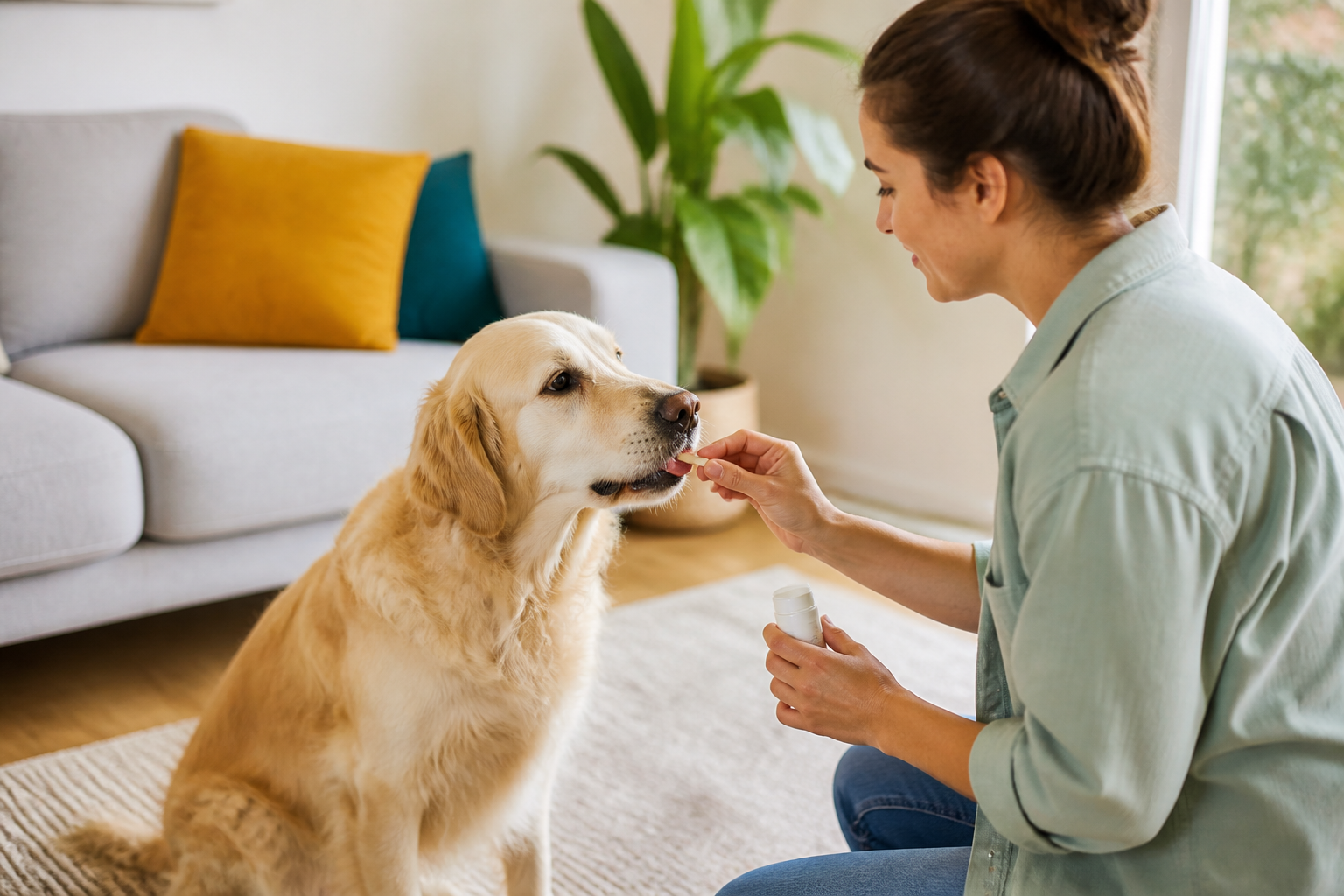
Step 2: Balance the gut. Start a high-quality multi-strain probiotic. Introduce it slowly to avoid digestive upset.
Step 3: Adjust the fuel. Transition to a lower-starch diet. Avoid treats that contain grain or sugar.
Step 4: Maintain the barrier. Add an Omega-3 supplement to help repair the skin.
Step 5: Stay consistent. It can take four to six weeks to see the full benefits of a probiotic and diet change.
By following these steps, you are not just treating a symptom. You are changing your dog’s internal ecosystem so that yeast no longer has the upper hand. Most of our customers find that once the balance is restored, they can reduce the frequency of medicated baths and rely on daily supplements for maintenance.
Summary of Probiotic Benefits for Yeast
Probiotics are a safe and effective way to support your dog's journey to healthier skin. They work by outcompeting yeast for resources, lowering the pH of the gut and skin environment, and boosting the immune response. While the "die-off" phase can be a minor hurdle, the long-term result is a dog that smells better, itches less, and feels more comfortable in their own skin.
- Probiotics support the gut-skin axis and 70% of the immune system.
- Strains like Lactobacillus acidophilus help create an environment yeast dislikes.
- Dietary starches should be reduced to "starve" the yeast.
- Consistency is key, as shifts in the microbiome take time.
Key Takeaway: Managing yeast is a marathon, not a sprint. Combining topical cleaning with internal probiotic support offers the best chance at long-term relief for your dog.
To start your dog on a better path, consider signing up for our Autoship programme. This ensures you never run out of your favorite probiotics or specialty food, and it earns you a free MVP Gold membership for even more savings. You can also explore the MVP Rewards programme for additional details. If you need help choosing the right supplement or getting a prescription filled, we are here to help.
FAQ
How long does it take for probiotics to work for a dog's yeast infection?
It typically takes four to six weeks of daily use to see a visible change in your dog's skin and coat. While the gut begins to balance almost immediately, it takes time for the systemic inflammation to calm down and for new, healthy skin cells to grow. Consistency is the most important factor during this period.
Can I give my dog human probiotics for yeast?
While human probiotics are generally not toxic to dogs, they are not ideal. A dog's digestive system has a different pH and a different mix of natural bacteria than a human's. Dog-specific supplements are formulated with the exact strains that have been studied for canine health and are often flavored to make them easier to administer.
What are the signs that the probiotics are working?
The first sign is often a reduction in the "yeast smell." You will likely notice your dog licking their paws less frequently and a decrease in the redness of their skin. Over time, the fur may stop being stained rust-red by saliva, and any black, thickened skin may begin to soften and return to its normal color.
Will probiotics help with my dog's chronic ear infections?
If the ear infections are caused by yeast overgrowth, probiotics can be a helpful part of a management plan. However, ear infections are often deep and painful, requiring professional cleaning and prescription drops to resolve. Probiotics help by addressing the underlying immune imbalance that allowed the infection to start in the first place.