
 Save 15% on your 1st Autoship learn more

 Email us
 Live Chat
 FAQs
FAQs





Introduction
You lean in for a friendly nuzzle or a happy lick from your dog, and instead of affection, you are met with a wall of powerful, unpleasant breath. Many of us have been there. It is a common moment that makes you realize your dog's oral hygiene might need some attention. While "dog breath" is often joked about, it is usually a sign of plaque and tartar buildup that can lead to more serious health issues.
At BaxterBoo, we see many pet owners looking for ways to keep those pearly whites shining without a constant struggle. This guide covers everything from the gold standard of brushing to dental chews, specialized diets, and when it is time to call in the professionals. We will help you build a routine that fits your lifestyle and keeps your dog's mouth healthy. Keeping your dog’s teeth clean is a lifelong commitment that supports their overall wellness.
Quick Answer: The most effective way to clean your dog’s teeth is through daily brushing with dog-safe toothpaste. You can supplement this with dental chews, water additives, and professional veterinary cleanings to manage plaque and prevent periodontal disease.
Why Dog Dental Care Matters
Most dogs show some sign of dental disease by the time they are three years old. It starts with a thin film of plaque. If you do not remove it, that plaque hardens into tartar within about forty eight hours. Once tartar forms, you cannot simply brush it away. It requires professional scaling.
Ignoring dental health does more than just cause bad breath. Bacteria from the mouth can enter the bloodstream. From there, it can affect the heart, liver, and kidneys. Maintaining a clean mouth is one of the best ways to ensure a long, healthy life for your dog.
Understanding Plaque and Tartar
Plaque is a soft, sticky layer of bacteria that forms on the teeth after eating. Saliva and food particles mix to create this film. At this stage, it is easy to remove. However, if it stays on the tooth, it reacts with minerals in the saliva. This process turns the soft plaque into hard, brown or yellow tartar. Tartar provides a rough surface where even more plaque can grow. This cycle leads to gum inflammation, known as gingivitis, and eventually to tooth loss.
The Role of Genetics
Some dogs are more prone to dental issues than others. Small breeds and flat-faced dogs like Pugs or Chihuahuas often have crowded teeth. This crowding creates many small crevices where food and bacteria get trapped. For these dogs, daily intervention is even more critical. Larger dogs may have more space between their teeth, but they are still susceptible to fractures and gum disease if their oral care is neglected.
How to Brush Your Dog’s Teeth
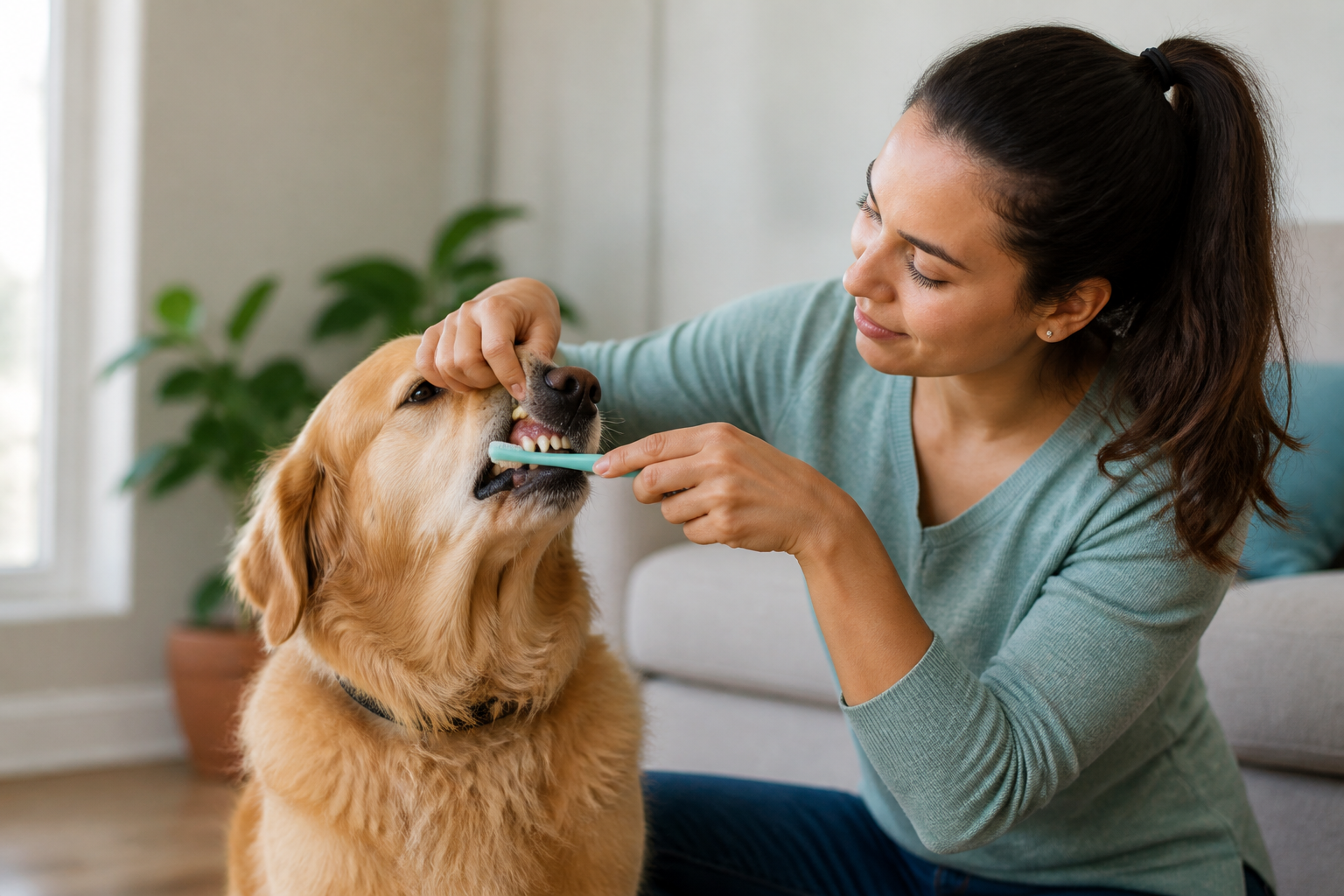
Brushing is the single most effective way to prevent dental disease. It might feel intimidating at first, but most dogs can learn to accept it. The key is to start slowly and keep the experience positive.
Key Takeaway: Consistency is more important than duration. Brushing for thirty seconds every day is better than a five minute session once a month.
Step-by-Step Brushing Guide
Step 1: Choose the right time. / Pick a moment when your dog is calm and relaxed. After a long walk or a play session is often best.
Step 2: Introduce the taste. / Put a small amount of dog-specific toothpaste on your finger. Let your dog lick it off. Most brands we carry come in flavors like poultry or beef to make this easier. A product such as Virbac C.E.T. Enzymatic Pet Toothpaste for Dogs and Cats - Poultry is formulated specifically for pets.
Step 3: Handle the mouth. / Gently lift your dog's lip to expose the teeth. Rub your finger along the gums and teeth. This gets them used to the sensation of something in their mouth.
Step 4: Introduce the brush. / Use a finger brush or a long-handled dog toothbrush. Apply a bit of paste and brush the large canine teeth first. These are the easiest to reach.
Step 5: Move to the back. / Work your way toward the molars in the back. This is where most plaque and tartar accumulate. Do not worry about the inside surfaces of the teeth. Most dogs will not tolerate it, and the tongue does a decent job of cleaning those areas naturally.
Step 6: Reward your dog. / Give them praise or a healthy treat afterward. You want them to associate the toothbrush with something good.
Selecting the Best Tools
Never use human toothpaste for your dog. It often contains Xylitol, which is a sweetener that is toxic to dogs. Human toothpaste also contains foaming agents that can upset a dog’s stomach when swallowed.
At BaxterBoo, we offer a variety of enzymatic toothpastes. These formulas contain enzymes that help break down plaque chemically even after you finish brushing. For the brush itself, you have two main options. A finger brush fits over your fingertip and offers better control and feel. A traditional dog toothbrush has a long handle and angled head to reach the very back of the mouth. You can explore our dog dental care category for toothpaste, brushes, wipes, and other oral-care supplies.
Bottom line: Start with a flavored enzymatic toothpaste and a finger brush to build trust before moving to a full-sized toothbrush.
Dental Chews and Treats
Not every dog will sit still for a brushing session. While chews should not replace brushing entirely, they are an excellent supplement. These products work through mechanical action. As your dog chews, the texture of the treat scrapes against the tooth surface to rub away plaque.
What to Look for in a Dental Treat
A good dental treat should be firm but not rock hard. If you cannot indent the treat with your thumbnail, it might be too hard and could fracture a tooth. Look for products with the VOHC (Veterinary Oral Health Council) seal of approval. This seal means the product has been tested and proven to reduce plaque or tartar.
Brands like Greenies or RedBarn offer various shapes designed to get into the gaps between teeth. Some chews also include ingredients that freshen breath or help support gum health. Browse our dental dog treats to compare different textures, shapes, and formulas.
Using Chews Safely
Always supervise your dog when they are working on a chew. Some dogs are "gulpers" and might try to swallow large chunks. This can lead to choking or digestive blockages. Make sure you choose the correct size for your dog's weight. A chew that is too small for a large dog is a choking hazard. One that is too large for a small dog can add too many calories to their diet.
Greenies Original Dental Dog Chews - Regular Dog Size are available in a size intended for dogs weighing 25 to 50 pounds, making size selection an important part of safe use.
Vet Tip: If your dog has a history of broken teeth or sensitive gums, consult your veterinarian before introducing hard dental chews. They can recommend softer options that still provide cleaning benefits.
The Role of Diet and Water Additives
What your dog eats every day affects their oral health. While most people believe dry kibble cleans teeth, this is only partially true. Most standard kibble is small and brittle. It shatters as soon as the tooth touches it, providing very little cleaning action.
Specialized Dental Diets
There are specific prescription and over-the-counter dental diets designed to stay intact longer. These kibbles are larger and have a fibrous texture. Instead of shattering, the tooth sinks into the kibble, which wipes the surface of the tooth clean. If your dog is prone to rapid tartar buildup, we can help you find a dental-specific formula through our pharmacy or regular food categories.
Water Additives and Sprays
Water additives are a low-effort way to fight bacteria. You simply add a capful to your dog's water bowl. These solutions often contain enzymes or ingredients like chlorhexidine that reduce the bacterial load in the mouth. Dental sprays work similarly but are applied directly to the teeth and gums. These are great for dogs that are very sensitive to having their mouths handled.
For more ideas about brushing, dental treats, and water additives, read our pet dental care tips.
Bottom line: Dental diets and water additives provide a passive way to manage oral bacteria, making them great additions to a multi-layered cleaning routine.
Toys for Teeth Cleaning
Playtime can be productive for oral hygiene. Many toys are designed specifically to clean teeth while your dog entertains themselves. You can find additional options in our dog toys category.
Textured Rubber Toys
Rubber toys with nubs, ridges, or bristles are highly effective. As your dog bites down and shifts the toy in their mouth, the rubber massagers the gums and scrapes the teeth. Brands like Kong offer durable rubber toys that can be stuffed with pet-safe spreads. You can even find "dental" versions of these toys that have specific grooves meant to hold dog toothpaste.
Rope Toys
Rope toys act like dental floss. As the dog chews on the cotton or hemp strands, the fibers slide between the teeth. This helps remove food particles that a brush might miss. However, keep an eye on the condition of rope toys. If they start to fray, your dog might swallow the strings, which can cause serious intestinal issues. Always discard damaged rope toys immediately.
Professional Veterinary Cleanings
Even with the best home care, most dogs will eventually need a professional cleaning. A veterinarian can reach areas that you simply cannot.
The Importance of Anesthesia
Many owners are nervous about anesthesia. However, a proper dental cleaning requires it. Anesthesia allows the vet to perform a thorough examination of every tooth. They use a probe to check for "pockets" under the gum line where bacteria hide. They also take X-rays to see the roots and the bone structure.
Without anesthesia, it is impossible to clean under the gum line safely. Anesthesia-free cleanings might make the teeth look white, but they leave the most dangerous bacteria behind. Our pharmacy offers FDA-approved medications that your vet might prescribe before or after a professional dental procedure, such as antibiotics or pain relief.
When to Schedule a Cleaning
Most veterinarians recommend a professional dental exam once a year. Some breeds may need them every six months. If you notice persistent bad breath, bleeding gums, or your dog dropping food, it is time for a checkup.
For additional guidance on warning signs, read how to recognize hidden dental problems in dogs.
Vet Tip: Before any procedure involving anesthesia, your vet should perform blood work. This ensures your dog's liver and kidneys are healthy enough to process the medication. This is especially important for senior dogs.
Recognizing Signs of Dental Disease
You do not have to be an expert to know when your dog's mouth is in trouble. Regularly checking your dog's mouth helps you catch problems before they become painful or expensive.
- Foul Breath: While no dog has minty breath, a truly stinky, rotten smell is a sign of infection.
- Discolored Teeth: Look for yellow or brown crust along the gum line.
- Inflamed Gums: Healthy gums are pink. Red, swollen, or bleeding gums indicate gingivitis.
- Difficulty Eating: If your dog turns away from dry food or only eats on one side of their mouth, they may have a painful tooth.
- Excessive Drooling: Sudden drooling or pawing at the face can signal oral discomfort.
Key Takeaway: Early detection of gum disease can save your dog from pain and prevent the need for multiple tooth extractions during professional cleanings.
Creating a Sustainable Routine
The best dental plan is one you can actually stick to. You do not have to do everything at once. Start by introducing one new habit and build from there.
Sample Weekly Schedule
- Daily: Brush teeth for at least thirty seconds. Use a water additive in their main water bowl.
- Three times a week: Provide a VOHC-approved dental chew.
- Twice a week: Spend time playing with textured rubber or rope toys.
- Monthly: Do a quick visual "lip flip" to check for redness or new tartar.
Patience and Positive Reinforcement
If your dog is older and has never had their teeth brushed, it will take time. Be patient. If they only let you brush one tooth today, that is a win. Use lots of praise. You want your dog to feel like dental care is just another way you show them love.
If you find that your dog needs a specific prescription diet for dental health or ongoing medication for gum infections, our pharmacy carries a wide range of options through our partnership with Pet's Choice. We make it easy to get the supplies you need delivered to your door so you never miss a day of care.
Maintaining Long-Term Oral Health
Cleaning your dog's teeth is about more than just a bright smile. It is a fundamental part of their healthcare. By combining regular brushing with the right treats, toys, and professional guidance, you can prevent the most common dental issues.
We are here to support you with a curated selection of products at BaxterBoo. Whether you are looking for your first finger brush or a recurring order of dental chews through our Autoship program, we have the expertise to help you choose wisely.
Bottom line: A multi-modal approach combining brushing, chews, and professional care is the best way to ensure your dog’s long-term dental health.
FAQ
Can I use baking soda to clean my dog's teeth?
No, you should avoid using baking soda to clean your dog’s teeth. Baking soda has a high alkaline content that can upset your dog's stomach and digestive tract if swallowed. It also lacks the appealing flavors of dog-specific enzymatic toothpaste, making the brushing process much more difficult for both you and your pet.
How often should I brush my dog's teeth?
Ideally, you should brush your dog's teeth every single day to prevent plaque from hardening into tartar. If a daily schedule is not possible, aim for at least three to four times per week. Brushing less than once a week provides very little benefit because tartar forms so quickly on the tooth surface.
Are dental chews as effective as brushing?
Dental chews are a helpful supplement but are not as effective as manual brushing. Chews mostly clean the chewing surfaces of the teeth and may miss the gum line where periodontal disease typically starts. Brushing allows you to target specific areas and ensure the enzymatic paste reaches all parts of the mouth.
My dog's gums bleed when I brush. Should I stop?
Small amounts of bleeding can occur if your dog has mild gingivitis, similar to when humans start flossing again after a break. However, if the bleeding is heavy or if your dog seems to be in significant pain, you should stop and consult your veterinarian. Persistent bleeding is a sign that your dog may need a professional cleaning to address underlying inflammation.






