
 Save 15% on your 1st Autoship learn more

 Email us
 Live Chat
 FAQs
FAQs





Introduction
You might be standing in the pet food aisle or browsing online, looking at a bag of food that looks more like jerky than standard kibble. It smells richer and the price point is often higher, leading many owners to wonder what actually happens during production. At BaxterBoo, we see these questions often from pet parents who want the benefits of raw feeding without the mess or the freezer space requirements.
This article explains the mechanical and thermal processes used to create air-dried diets. We will cover the specific stages of evaporation, how nutrients are protected, and why this method differs from freeze-drying or traditional baking. Understanding how this food is crafted helps you decide if it is the right choice for your dog's specific nutritional needs.
Quick Answer: Air-dried dog food is made by placing raw ingredients into a drying chamber where warm air circulates for several hours. This gentle process evaporates moisture at low temperatures, which preserves natural enzymes and proteins while making the food shelf-stable.
The Basic Science of Air Drying
Air-drying is a preservation method that relies on the movement of air to remove water. Most bacteria and molds require a certain level of moisture to grow. In the food industry, this is known as water activity. By lowering the water activity through evaporation, manufacturers create a product that can sit on your shelf for months without spoiling.
The process is fundamentally different from the high-heat extrusion used for kibble. Extrusion involves high pressure and temperatures that can reach over 300 degrees Fahrenheit. Air-drying typically stays between 140 and 180 degrees Fahrenheit. This lower temperature range is high enough to kill many common pathogens but low enough to keep the molecular structure of proteins and vitamins intact.
Step 1: Sourcing and Selection of Raw Ingredients
The quality of air-dried food starts long before the drying chamber. Because the process does not involve heavy processing or fillers, the quality of the raw meat is very apparent in the final product. Most premium brands focus on specific parts of the animal to ensure a balanced profile.
Muscle Meat and Organs
Manufacturers select lean muscle meats like beef, lamb, or poultry. They also include organ meats such as heart, liver, and kidney. These organs are natural powerhouses of vitamins and minerals. In a standard kibble, these nutrients might be lost during high-heat cooking and then added back in as synthetic sprays. In air-dried food, the nutrients remain trapped within the meat.
Functional Additions
Many recipes we carry at BaxterBoo also include ingredients like green-lipped mussels for joint support or kelp for iodine. These are mixed with the raw meat in a large vat. Because the food is not being forced through a small extruder die, manufacturers can use more delicate ingredients that would otherwise break down under pressure.
Step 2: Grinding and Formulation
Once the raw ingredients are selected, they are ground into a consistent texture. This is not a fine slurry like you might find in canned food. Instead, it is a coarse grind that allows the different components to be evenly distributed.
Achieving Nutritional Balance
At this stage, the manufacturer ensures the batch meets AAFCO standards. Even though the food looks like a treat, it is formulated to be a complete and balanced meal. This means the ratios of calcium to phosphorus must be exact. If the meat alone does not provide enough of a specific mineral, a small amount of a vitamin-mineral premix is integrated into the grind.
The Mixing Phase
The ingredients are blended thoroughly. This ensures that every scoop of food your dog eats has the same nutritional value. If the mixing is not consistent, one piece might be mostly liver while another is mostly muscle. For a dog with a sensitive stomach, consistency is the most important factor in preventing digestive upset.
Step 3: Shaping the Food
After mixing, the raw blend is shaped. Unlike kibble, which is popped out like cereal, air-dried food is often spread onto large trays or mats. Some manufacturers use an "extruding" process at this stage, but it is a cold extrusion. This simply means the meat is pushed through a shape without using heat or steam to cook it.
Flat Sheets and Strips
Most often, the food is shaped into flat sheets or long, thin strips. This shape is intentional. A flat, thin surface area allows the air to circulate more effectively. If the pieces were too thick, the outside would dry while the center remained moist, which could lead to mold growth.
Maintaining Texture
The goal is to create a texture that is firm but not rock-hard. By controlling the thickness of the meat before it enters the drying chamber, the manufacturer can predict exactly how long the drying cycle will take. This precision is what makes the jerky-like texture possible.
Step 4: The Drying Chamber
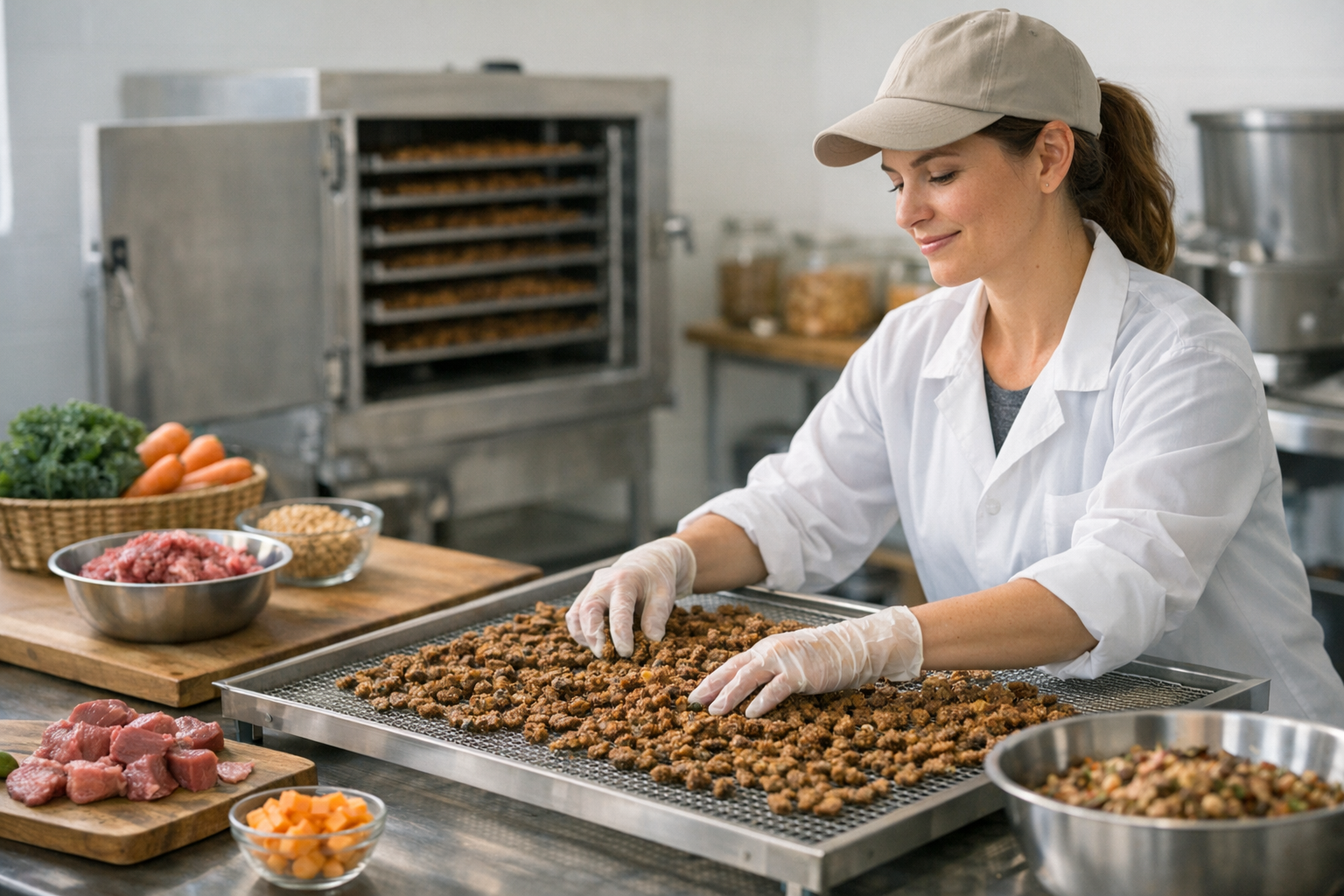
This is the heart of the "how it is made" story. The prepared meat enters a specialized chamber where the environment is strictly controlled. This is not a standard oven. It is a sophisticated piece of equipment that manages temperature, humidity, and airflow simultaneously.
Gentle Heat and Airflow
Large fans circulate warm air over the trays of meat. As the air moves, it picks up moisture from the surface of the food. The chamber then vents that moist air out and brings in fresh, dry air. This constant exchange of air is what pulls the moisture from the center of the piece to the surface.
Time Frames
The drying process is slow. While kibble might be produced in minutes, air-dried food can take anywhere from 10 to 24 hours to reach the correct moisture level. This slow pace is the reason the enzymes and proteins do not denature. It is a patient way of cooking that respects the integrity of the ingredients.
Key Takeaway: Air-drying uses low temperatures and constant airflow over many hours to remove moisture. This method prevents the nutrient loss commonly associated with high-heat cooking methods.
Step 5: Monitoring and Testing
Safety is the biggest concern for any pet owner switching from a cooked diet to a raw or minimally processed diet. During the drying process, the food is monitored constantly. Technicians check the internal temperature of the meat to ensure it has reached a point where pathogens like Salmonella or Listeria are neutralized.
Water Activity Testing
Once the drying cycle is finished, the food undergoes a water activity test. This is a scientific measurement of how much "free" water is available in the food. If the water activity level is below a specific threshold (usually around 0.6), bacteria cannot reproduce.
Batch Testing
Most premium brands perform "hold and release" testing. This means the food stays in the warehouse until a lab confirms it is free of pathogens. We prioritize brands that maintain these high safety standards so you can feed your pet with confidence.
Step 6: Cooling and Packaging
When the food leaves the drying chamber, it is still warm. It must be cooled down completely before it is bagged. If warm food is put into a sealed plastic bag, it will create condensation. That moisture would immediately ruin the shelf-stability of the product.
Slicing and Cubing
The large sheets of dried meat are sliced into the small squares or rectangles you see in the bag. Because the meat has lost its moisture, it is now light and somewhat brittle. It snaps easily, which is why many owners also use these pieces as high-value training treats.
Nitrogen Flushing
To keep the fats in the meat from going rancid, many manufacturers use nitrogen flushing. They replace the oxygen in the bag with nitrogen before sealing it. This prevents oxidation, which is the process that makes old food smell "off." This is why a bag of air-dried food can stay fresh for several weeks after opening, provided you seal it back up.
Air-Dried vs. Other Methods
To truly understand how air-dried food is made, it helps to see how it stacks up against other popular processing methods. Each method changes the raw ingredients in different ways.
| Feature | Air-Dried | Freeze-Dried | Kibble (Extruded) |
|---|---|---|---|
| Heat Level | Low (140-180°F) | None (Sub-zero) | High (300°F+) |
| Processing Time | 10 to 24 hours | 24 to 48 hours | Minutes |
| Texture | Jerky-like, chewy | Light, porous, dry | Hard, crunchy |
| Rehydration | Not required | Usually required | Not required |
| Nutrient Loss | Minimal | Very minimal | Significant |
The Difference from Freeze-Drying
Freeze-drying involves freezing the food and then using a vacuum to turn the ice directly into vapor. This removes almost all moisture and leaves a very light, airy piece. Air-drying leaves a little more moisture behind, which gives the food its chewy, jerky texture. You do not need to add water to air-dried food, whereas many freeze-dried foods need to be rehydrated to be palatable.
The Difference from Dehydrating
While the terms are often used interchangeably, "dehydrated" dog food often uses higher temperatures than "air-dried" food. Dehydration is sometimes a faster process that can result in more nutrient loss than the very slow, gentle air-drying method. Air-drying is generally considered the more premium of the two because of the lower temperatures involved.
Why the Process Matters for Health
The way food is made directly impacts how your dog's body uses the nutrients. When proteins are cooked at high heat, they can become harder to digest. The chemical bonds change, and the body has to work harder to break them down.
Better Bioavailability
Because air-dried food is minimally processed, the amino acids and vitamins are more "bioavailable." This means your dog's digestive tract can absorb them more easily. Many owners notice smaller, firmer stools when they switch to an air-dried diet. This is a sign that the dog is absorbing more of the food and passing less as waste.
Managing Special Conditions
For dogs with allergies or sensitive skin, the simple ingredient lists in air-dried foods are a major benefit. There are no hidden dyes or complex preservatives that might trigger a reaction. If your dog has a chronic health condition that requires a specific diet, we can help. Our pet pharmacy offers prescription pet foods and medications for dogs and cats that may require a veterinarian's oversight.
Vet Tip: If you are moving your dog from a standard kibble to an air-dried diet, do it slowly over 10 days. The high nutrient density and different protein structure can cause temporary digestive upset if the change happens overnight. Always consult your veterinarian before making major changes to your dog's primary food source.
Practical Steps for Transitioning
If you have decided that the air-drying process provides the nutrition your dog needs, the next step is introducing it correctly. Because the food is so concentrated, you feed much less of it by volume than you would with kibble.
Step 1: Check the feeding guide. Look at the back of the bag. You will likely notice that the recommended scoop size is smaller than what you are used to. Do not eyeball it. Use a standard measuring cup.
Step 2: Mix the old and new. For the first three days, use 75 percent of the old food and 25 percent of the air-dried food. If your dog's stool remains firm, you can move to a 50/50 mix. If you want a more detailed guide, our guide to switching from dry to wet dog food covers a similar gradual approach.
Step 3: Watch for weight changes. Air-dried food is calorie-dense. It is very easy to overfeed because the portions look small to a human eye. Monitor your dog's body condition score. You should be able to feel their ribs but not see them.
Step 4: Store it properly. Keep the food in its original bag. Most brands use high-quality, resealable pouches designed to keep light and air out. Store it in a cool, dry pantry rather than a garage or a damp basement.
The Cost and Value Equation
It is no secret that air-dried dog food costs more per bag than most kibble. This is a direct result of the manufacturing process we have described. Using 100 percent real meat instead of corn or soy fillers is expensive. The slow drying time also means the manufacturer can produce less food per day than a high-speed kibble plant.
Feeding Less
However, the value comes in the density. A two-pound bag of air-dried food might contain the same amount of calories and nutrition as a five-pound bag of kibble. When you calculate the cost per meal rather than the cost per pound, the price difference is often much smaller than it first appears.
Long-Term Health
Many owners view the higher cost of premium food as an investment in long-term health. Better nutrition can lead to a shinier coat, more energy, and fewer visits to the vet for skin or digestive issues. At BaxterBoo, we offer programs like the MVP Rewards programme and our Autoship programme to help make these premium choices more affordable over time.
Bottom line: The higher price of air-dried food reflects the quality of the raw ingredients and the slow, energy-intensive process required to preserve them safely.
Common Ingredients in Air-Dried Diets
When you look at a label for a brand like Stella & Chewy's products or Real Meat products, you will see a list that looks very different from a standard bag of food. Here is a checklist of what you should typically find:
- Whole Muscle Meat: Listed as the first ingredient (Beef, Lamb, Venison).
- Organ Meats: Liver or heart should appear near the top.
- Natural Fats: Often from the meat itself or added fish oils.
- Fiber Sources: Small amounts of pumpkin, chicory root, or air-dried vegetables.
- Minerals: Naturally sourced or added to meet AAFCO requirements.
If you see words like "meat meal" or "animal by-products," the food might not be a true air-dried premium diet. Those ingredients are usually pre-processed at high heat before they even reach the dog food factory.
Is Air-Dried Food Right for Every Dog?
While the air-drying process creates a high-quality product, it is not a one-size-fits-all solution. Different life stages and health conditions require different approaches.
Senior Dogs
Senior dogs often struggle with dental issues. The chewy texture of air-dried food is much easier for them to manage than hard, crunchy kibble. It also smells much stronger, which can help stimulate the appetite of a senior dog who has lost some of their sense of smell.
Picky Eaters
If you have a dog that turns their nose up at dinner, air-dried food is often the solution. The low-heat process preserves the natural aroma of the meat. To a dog, it smells like a bag of treats. You can also use it as a topper, sprinkling a few pieces over their regular kibble to encourage them to eat. If that sounds like your routine, our food topper collection is worth browsing.
Dogs with Health Needs
Some dogs need very specific ratios of fat or protein due to conditions like pancreatitis or kidney disease. In these cases, a standard over-the-counter air-dried food might be too rich. This is where a conversation with your vet is vital. Our pharmacy carries prescription diets that are formulated for these specific medical needs.
The Environmental Impact of Air-Drying
For owners concerned about their carbon footprint, air-drying has some interesting benefits. Because the moisture is removed, the food is much lighter to ship. This means fewer trucks on the road and a lower transportation-related carbon footprint compared to heavy canned food.
Many of the brands we stock, such as Ziwi Peak products or Stella & Chewy's products, also focus on sustainable sourcing. They use grass-fed meats or wild-caught fish, which are processed in facilities that prioritize reduced energy waste. The slow-cooking method is an old-fashioned technique that aligns well with modern desires for simpler, more transparent food production.
Summary of the Process
Making air-dried dog food is a blend of traditional preservation and modern food safety technology. It starts with high-quality raw ingredients, moves through a meticulous grinding and mixing phase, and ends with a long, slow session in a drying chamber.
By avoiding the high temperatures of the extruder, manufacturers can deliver a product that is as close to a raw diet as possible while still being safe and convenient for the owner. You get the benefits of live enzymes, intact proteins, and natural vitamins without the need for a second freezer or a raw-food prep area in your kitchen.
Key Takeaway: The value of air-dried food lies in its simplicity. By using air and time instead of heat and pressure, manufacturers preserve the natural nutrition of raw meat in a shelf-stable form.
Conclusion
Understanding how air-dried dog food is made helps you see past the marketing and focus on the science of nutrition. The slow evaporation process is a deliberate choice to prioritize quality over speed. Whether you use it as a full meal, a nutrient-dense topper, or a high-value treat, air-dried food offers a practical way to boost your dog's health through better ingredients.
If you are ready to try this for your pup, browse our air-dried dog food category and compare options across our premium selections. We carry many brands that specialize in the gentle air-drying method. If your dog has specific health concerns that require a more tailored approach, visit our pet pharmacy to see how we can help with prescription options.
FAQ
Does air-dried dog food have a high risk of salmonella?
While air-drying uses lower temperatures than kibble, the meat still reaches a temperature high enough to kill most common pathogens. Reputable manufacturers also conduct extensive batch testing and monitor water activity levels to ensure the environment is too dry for bacteria to grow. This makes it significantly safer than a completely raw diet while maintaining similar nutritional benefits.
Can I mix air-dried food with regular kibble?
Yes, many pet owners use air-dried food as a "topper" to add a nutritional boost and extra flavor to standard kibble. This is an excellent way to improve your dog's diet if a 100 percent air-dried regimen is outside your budget. Just remember to adjust the total calorie count to prevent overfeeding, as air-dried pieces are much more calorie-dense than kibble. If you want to compare formats, our freeze-dried dog food category is a helpful next step.
Do I need to add water to air-dried dog food?
You do not have to add water, as air-dried food is designed to be fed as-is. However, adding a little warm water or low-sodium broth can enhance the aroma and help with hydration, especially for dogs that do not drink much water on their own. Unlike freeze-dried food, it will not significantly change its shape or expand when water is added.
How long does a bag of air-dried food stay fresh?
Because the moisture has been removed, an unopened bag can last for a year or more when stored in a cool, dry place. Once opened, most brands recommend using the food within four to eight weeks for maximum freshness. Always keep the bag tightly sealed to prevent the fats from oxidizing and the food from absorbing moisture from the air. If you are trying to stretch value further, our guide to mixing wet and dry dog food can help you plan a balanced feeding routine.






