
 Save 15% on your 1st Autoship learn more

 Email us
 Live Chat
 FAQs
FAQs





Introduction
You might notice your dog standing over their bowl with a look of pure disinterest. Maybe they are a senior dog struggling with crunchy kibble due to dental sensitivity. Perhaps your veterinarian suggested more moisture to help with kidney health or weight management. Whatever the reason, moving from dry kibble to canned or pouch food is a common step for many pet owners. At BaxterBoo, we see this transition often, and our dog food category makes it easy to compare options. This guide covers the safest ways to introduce wet food while keeping your dog's digestion on track. We will explain the benefits of canned diets and provide a clear timeline for the switch. Making the move to wet food can be simple if you follow a gradual plan.
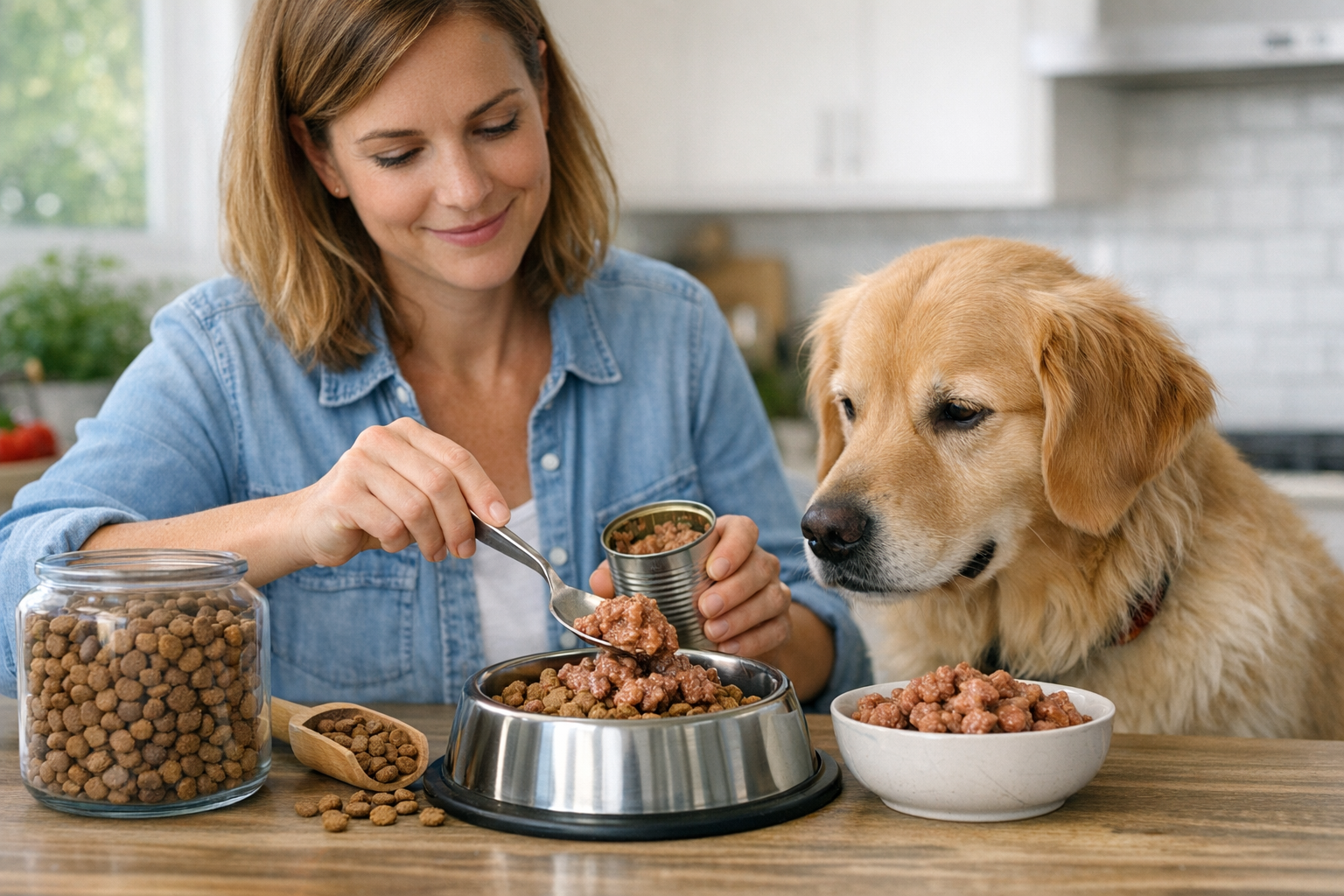
Quick Answer: The best way to switch is a gradual 7 to 10 day transition. Start by mixing 25 percent wet food with 75 percent of their current dry kibble. Slowly increase the amount of wet food every few days until the old dry food is completely replaced.
Why You Might Switch to Wet Dog Food
There are several practical reasons to move away from a strictly dry diet. Wet food typically contains 70 to 80 percent water. This is a massive jump from the 10 percent moisture found in most kibble. For dogs that do not drink enough from their water bowl, this extra hydration supports kidney function and urinary tract health.
The aroma and texture of wet food are also much stronger than dry kibble. This makes it a great choice for picky eaters or senior dogs whose sense of smell has faded. Since wet food is soft, it is also the standard choice for dogs recovering from dental surgery or those with missing teeth. If you want to compare formulas, our wet dog food category is a helpful place to start.
Comparing Wet and Dry Options
| Feature | Dry Dog Food (Kibble) | Wet Dog Food (Canned/Pouch) |
|---|---|---|
| Moisture Content | Low (Approx. 10%) | High (Approx. 75-80%) |
| Shelf Life | Long (once opened) | Short (requires refrigeration) |
| Dental Impact | Helps scrape away plaque | Easier on sensitive gums |
| Scent/Flavor | Mild | Intense and appealing |
| Caloric Density | High | Lower (better for weight loss) |
Key Takeaway: Wet food provides essential hydration and higher palatability. It is often the best choice for seniors, picky eaters, or dogs needing weight management.
The Step by Step Transition Plan
A sudden diet change is the fastest way to cause diarrhea or gas. Your dog's digestive system needs time to adjust to the new proteins and moisture levels. We recommend a transition period of at least one week. If your dog has a very sensitive stomach, extend this to two weeks.
Step 1: Days 1 to 2. / Mix 25 percent wet food with 75 percent dry food. Watch for any signs of loose stool or excessive gas.
Step 2: Days 3 to 5. / Increase the ratio to 50 percent wet food and 50 percent dry food. Continue monitoring their energy and digestion.
Step 3: Days 6 to 8. / Move to 75 percent wet food and only 25 percent dry food. At this stage, your dog is mostly eating the new diet.
Step 4: Day 9 and beyond. / Offer 100 percent wet food. If they have handled the previous steps well, they are ready for the full switch.
Vet Tip: If your dog experiences vomiting or persistent diarrhea during the switch, stop the new food and consult your veterinarian. These symptoms could indicate a food intolerance or an underlying digestive issue that needs professional diagnosis. Our guide to Can You Mix Dry Dog Food With Wet? is a useful next step if you want to keep both textures in the bowl.
Managing Dental Health During the Switch
One concern with wet food is that it does not provide the mechanical scraping action of crunchy kibble. Over time, a soft diet can lead to more plaque and tartar buildup on the teeth and gums. This does not mean wet food is bad for teeth, but it does mean you need a proactive dental plan.
We suggest incorporating dental chews or regular tooth brushing into your routine. Brands like Greenies or WHIMZEES offer textures that help clean the gum line. Since wet food can get stuck between teeth more easily than kibble, checking your dog's mouth regularly is important. Our dog dental care collection is a practical place to look for support.
Dental Care Checklist
- Brush your dog's teeth at least three times a week.
- Provide a daily dental chew approved by the VOHC.
- Schedule annual professional cleanings with your vet.
- Use a water additive to help break down oral bacteria.
Accessing Prescription Wet Diets
Sometimes a switch to wet food is a medical necessity rather than a preference. For dogs managing chronic conditions like kidney disease, urinary crystals, or severe food allergies, a standard over the counter wet food might not be enough. These pets often require specialized prescription diets.
Our pet pharmacy provides a wide range of prescription dog medicines and pet foods. If your vet has prescribed a specific therapeutic diet, we can help you manage your orders and ensure you never run out. These diets are formulated to treat specific health markers and should only be used under veterinary supervision.
Key Takeaway: Prescription wet foods are available through the BaxterBoo pharmacy for dogs with specific medical needs. Always verify your prescription with your vet before starting a therapeutic diet.
Tips for the Picky Eater
Some dogs are skeptical of new textures. If your dog refuses the wet food even though it smells better than kibble, you can try a few tricks to make it more enticing. Texture is a major factor in how dogs perceive their meals.
Try warming the wet food in the microwave for a few seconds. Do not make it hot, just aim for body temperature. This releases the fats and aromas, making it smell much more like a fresh meal. You can also try hand feeding a small amount of the wet food to your dog as if it were a treat. This helps them build a positive association with the new flavor. For more ideas, see our post on How to Wet Dry Dog Food for Better Digestion and Hydration.
Bottom line: Warming the food and using hand feeding can help a skeptical dog accept a new wet diet.
Storage and Hygiene Best Practices
Unlike dry kibble, wet food is highly perishable. Once you open a can or pouch, the clock starts ticking. You cannot leave wet food in a bowl all day for a grazer. If your dog does not eat it within 30 minutes, you should pick it up and discard the leftovers.
Keep unopened cans in a cool, dry place. Once opened, cover the can with a tight fitting silicone lid or transfer the food to an airtight container. Store it in the refrigerator and use it within two to three days. Feeding cold food straight from the fridge might upset some dogs' stomachs, so let it sit out for a few minutes first. Our dog food storage solutions can help keep meals fresher at home.
Safe Handling Steps
- Wash your dog's bowl with warm, soapy water after every wet meal.
- Use a dedicated spoon for scooping wet food to avoid cross contamination.
- Check the expiration date on the bottom of every can before opening.
- Never freeze canned food in the original metal container.
Transitioning Puppies and Seniors
Puppies often start on wet food or softened kibble during weaning. If you are moving a puppy to a full wet diet, ensure the food is specifically labeled for growth. Puppies need different calcium and phosphorus ratios than adult dogs. Wet food is excellent for puppies because it is easy to chew while their adult teeth are coming in.
For seniors, the transition is often about comfort. Many older dogs suffer from gum disease or tooth loss. Wet food allows them to eat without pain. However, senior dogs can have more sensitive stomachs. You should take the transition even slower for a senior, perhaps over a full 14 days. If you are feeding an older dog, our post on Should Senior Dogs Eat Wet or Dry Food? offers a useful comparison.
Vet Tip: Senior dogs often have underlying health issues like heart or kidney disease. Before switching their primary protein source or increasing moisture significantly, check with your vet to ensure the new brand aligns with their health goals.
The Soaked Kibble Alternative
If you want the benefits of wet food but are on a strict budget, you can create a similar consistency using dry food. This is a great middle ground for owners of large dogs who would need to buy several cans per day. It also keeps the diet consistent for dogs with extreme sensitivities.
Place the normal amount of kibble in the bowl and add an equal amount of warm water. Let it sit for at least 30 minutes. The kibble will absorb the water and expand. You can then mash it with a fork until it reaches a pate consistency. This provides the extra hydration and soft texture without the higher price point of canned food.
Conclusion
Switching your dog from dry to wet food is a great way to boost their hydration and make mealtime more enjoyable. Whether you are helping a senior dog eat more comfortably or enticing a picky puppy, a slow transition is the secret to success. Always remember to monitor your dog's digestion and keep their water bowl full. If you find that your dog needs a specific prescription diet for their health, remember that our pharmacy is here to help through our partnership with Pet's Choice. We carry a wide range of wet food options from brands like our selection of Stella & Chewy's products, our selection of Open Farm products, and our selection of Wellness products. To save on your regular orders, consider setting up our Autoship programme so you never run out of your dog's new favorite food. You can also explore the MVP Rewards programme for another way to save over time.
FAQ
Can I mix wet and dry dog food permanently?
Yes, many owners choose to feed a combination of both indefinitely. This is often called topper feeding or mixed feeding. It provides the dental benefits of kibble with the hydration and flavor of wet food. Just be sure to calculate the total calories of both to avoid overfeeding and weight gain.
Does wet food cause diarrhea in dogs?
Wet food itself does not cause diarrhea, but a sudden switch to it can. The higher fat and moisture content can be a shock to the digestive system if it is not introduced gradually. If your dog has loose stools that last more than 24 hours, you should slow down the transition or talk to your vet. For more on oral care while changing diets, see 10 Best Dental Chews for Dogs.
How long can wet food sit out in the bowl?
You should never leave wet food out for more than four hours. In warmer climates or during the summer, it should be picked up after 30 to 60 minutes. Bacteria grow very quickly in moist environments, which can lead to food poisoning or attract pests like flies. If you are looking for broader pet dental guidance, our Top 10 Pet Dental Care Tips is a helpful follow-up.
Why is my dog drinking less water after switching to wet food?
It is completely normal for a dog to drink less from their water bowl once they start eating wet food. Canned food is mostly water, so they are getting a large portion of their daily hydration directly from their meals. As long as their energy is good and they are urinating normally, there is no cause for concern.






