
 Save 15% on your 1st Autoship learn more

 Email us
 Live Chat
 FAQs
FAQs





Introduction
You just pulled a heavy bag of kibble from the shipping box. You pour a bowl for your dog, and they dive in with their usual excitement. Then you look at the size of the bag and wonder how long those last few scoops at the bottom will stay fresh. It is a common question for anyone trying to balance the value of a large bag with the need for high-quality nutrition. At BaxterBoo, we know that keeping your dog healthy starts with what goes into their bowl every single day, and our dry dog food category is a great place to start. This guide will help you understand the lifespan of dry dog food. We will cover how to spot spoilage, the best ways to store kibble, and why the "Best By" date is only part of the story. Proper storage ensures your dog gets the vitamins and minerals they need for a long, active life.
The Difference Between Best By Dates and Expiration
Every bag of dog food comes with a date printed on the packaging. You might see it near the bottom of the bag or tucked into the gusset. This is usually a "Best By" date rather than a hard expiration date. Understanding this distinction is the first step in managing your dog's pantry.
A "Best By" date is an estimate from the manufacturer. It tells you how long the food will maintain its peak nutritional profile and flavor. Manufacturers like NutriSource or Orijen use this date to help ensure that the vitamins and antioxidants are still at the levels promised on the label. Once this date passes, the food does not necessarily become toxic overnight. However, the nutritional value begins to drop.
An expiration date is more about safety. While dry dog food rarely uses this specific term, you should treat the "Best By" date as an expiration once it has passed by more than a month or two. Over time, the preservatives in the food break down. These preservatives are there to keep the fats from going rancid. Once they stop working, the food can become a health risk.
Key Takeaway: The "Best By" date refers to unopened food. Once you open the bag, the environmental factors like air and moisture become much more important than the date on the label.
How Long Does Dry Dog Food Last Once Opened?
The moment you break the seal on a new bag of kibble, the clock starts ticking. Most experts and manufacturers agree that opened dry dog food should be used within four to six weeks. This timeframe ensures the food stays crunchy, flavorful, and nutritionally dense.
Why does it change so quickly? The primary culprit is oxidation. Dry dog food is often coated with fats and oils to make it smell and taste great to your dog. When these fats meet oxygen, they begin to break down. This process is called oxidation. It leads to rancidity, which changes the taste and can eventually make your dog sick.
If you have a small dog but prefer buying large bags to save money, you might be pushing past that six-week window. In these cases, the food at the bottom of the bag may be stale. It might even be losing the essential fatty acids that support your dog's skin and coat health.
Quick Answer: For the best freshness and safety, try to finish a bag of dry dog food within six weeks of opening it. If the bag is still half-full after two months, it is time to consider buying smaller bags.
The Science of Spoilage: Air, Heat, and Moisture
Three main enemies attack your dog's food: air, heat, and moisture. Understanding how these elements work will help you choose the best spot in your home for storage.
The Role of Oxygen
Air is the most constant threat. Every time you open the bag, fresh oxygen enters. This speeds up the breakdown of fats. This is why keeping the bag tightly sealed is non-negotiable. If you leave the top of the bag rolled down loosely, you are inviting oxidation to happen much faster.
The Impact of Heat
Heat is a silent destroyer of nutrients. Many people store dog food in a garage or a laundry room. However, these areas can get very warm. If the temperature where you store the food rises above 80 degrees Fahrenheit, the degradation process accelerates. High heat can destroy sensitive vitamins and make the fats turn rancid in a matter of days. Always look for a cool, climate-controlled area like a kitchen pantry or a closet.
The Danger of Moisture
Moisture leads to the most dangerous type of spoilage: mold. If your storage area is humid, or if the food gets damp, mold spores can grow. Some molds produce mycotoxins, which are highly toxic to dogs. Even a small amount of moisture trapped in a plastic bin can ruin an entire bag of food.
Vet Tip: If you notice your dog suddenly refusing to eat or if they develop an upset stomach, check the food for signs of moisture or a "dusty" appearance. This could indicate mold growth. If your dog shows signs of illness after eating, contact your veterinarian immediately.
Signs Your Dry Dog Food Has Gone Bad
You cannot always rely on your eyes to tell if kibble is bad. Sometimes the food looks perfectly normal but has reached a point where it should not be eaten. You need to use all your senses to check the quality.
The Sniff Test
Your nose is your best tool. Fresh dry dog food has a mild, grain-like, or meaty scent. Rancid food smells different. It might smell sour, metallic, or even like old paint or window cleaner. If the bag hits you with a sharp, unpleasant odor when you open it, trust your instincts and throw it away.
Changes in Texture
Fresh kibble is hard and has a distinct "snap" when broken. If the food feels soft, rubbery, or crumbly, it has likely absorbed too much moisture. This change in texture often happens before visible mold appears.
Visible Mold or Insects
Visible signs are the most obvious. Look for fuzzy growth on the kibble, which may be white, green, or black. You should also check for "webbing" or small moving specks. Storage mites and grain weevils love poorly sealed dog food. These pests can cause allergic reactions in some dogs, leading to itchy skin and ear infections.
Bottom line: If the food smells off, feels damp, or shows any signs of life, do not risk it. It is better to replace the bag than to deal with a sick pet.
The Best Way to Store Dry Dog Food
Many pet owners make the mistake of pouring the kibble out of the bag and into a large plastic bin. While this looks neat, it is actually one of the worst things you can do for food freshness.
Keep It in the Original Bag
The bags used by premium brands like Stella and Chewy's or Orijen are high-tech. They are designed to act as a barrier against oxygen and moisture. Many have foil linings or specialized seals. When you pour the food into a plastic container, you lose that protection.
Furthermore, plastic bins can develop "fatty film" over time. The oils from the kibble soak into the plastic. These oils then go rancid. If you do not scrub the bin with hot, soapy water between every single bag, the old rancid oil will contaminate the new fresh food.
Use a Secondary Container
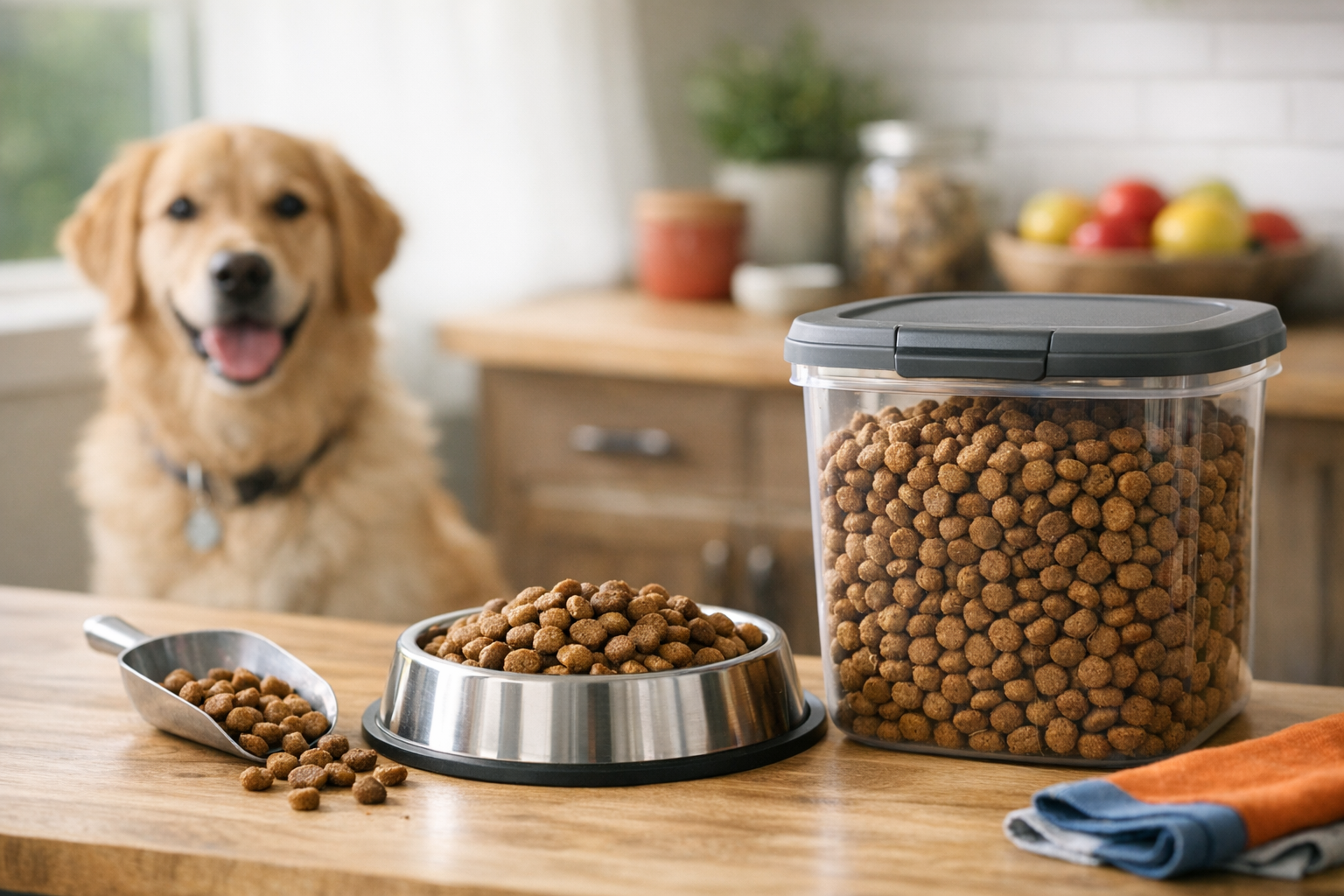
The best setup is a "bag-in-bin" approach. Keep the food inside its original bag. Fold the top down tightly and use a heavy-duty clip to seal it. Then, place that entire bag inside an airtight container like a Vittles Vault. This gives you two layers of protection against air, moisture, and pests, and our dog food storage collection can help you find the right setup.
Storage Checklist
- Store the bag off the floor to prevent temperature transfers.
- Keep the storage area under 80 degrees Fahrenheit.
- Ensure the location is dark, as light can also degrade nutrients.
- Always keep the original bag for the lot number and "Best By" date.
Common Mistakes That Ruin Freshness
Even with the best intentions, small habits can lead to stale food. Avoiding these common pitfalls will help your dog's meals stay tasty until the very last scoop.
Mixing Old and New Food
When the bag gets low, it is tempting to pour the new bag on top of the old scraps. Do not do this. The old food is already closer to oxidation. By mixing them, you are introducing those older, breaking-down fats to your fresh kibble. Always finish the old bag completely. If you use a bin, wash and dry it thoroughly before adding the next bag. For more portion-planning guidance, see our blog post on how much dry food to feed a dog.
Leaving the Scoop in the Bag
Your hands and even the scoop can carry moisture and bacteria. If you leave the scoop inside the bag, any moisture on it stays trapped with the food. It is better to store the scoop in a separate drawer or a clean container next to the food.
Not Cleaning the Bowl
Saliva contains bacteria. If your dog does not finish their meal and you leave the dry food in the bowl all day, it can become contaminated. This is especially true if the bowl is kept near a water dish where splashes can occur. Aim to wash your dog's food bowl daily with hot water and soap.
Key Takeaway: Cleanliness is just as important for your dog’s food as it is for your own. Treat their storage area and bowls with the same hygiene standards you use in your kitchen.
The Health Impact of Feeding Spoiled Kibble
Feeding your dog food that is past its prime is more than just a matter of taste. It can lead to real health consequences. While a single meal of slightly stale food might not cause a problem, long-term exposure to rancid fats or bacteria is dangerous.
Gastrointestinal Distress
The most common result of bad food is an upset stomach. This can manifest as vomiting, diarrhea, or a loss of appetite. In more severe cases, bacteria like Salmonella or E. coli can take hold. These require veterinary intervention and can be dangerous for puppies or senior dogs.
Nutrient Deficiencies
When vitamins like Vitamin E and Vitamin A break down, your dog stops getting what they need. Over months, this can lead to a dull coat, dry skin, and a weakened immune system. You might think you are feeding a premium diet, but if the food is stale, the nutritional profile is no longer premium.
Allergic Reactions
Storage mites are microscopic pests that thrive in old or damp grain-based foods. If your dog has unexplained itching, hair loss, or red skin, they might be reacting to these mites. Keeping food fresh is a key part of managing environmental allergies.
Managing Your Dog's Food Supply
If you find yourself throwing away food because it went bad, you may need to adjust your shopping habits. Our Autoship programme is a great way to manage this. Instead of buying a 40-pound bag that lasts three months, you can set up smaller bags to arrive every four weeks.
This ensures you always have a fresh supply on hand without the risk of spoilage. It also saves you from heavy lifting and ensures you never run out. Many of our customers at BaxterBoo find that this "just-in-time" delivery keeps their dogs more interested in their meals. Fresh food simply smells and tastes better to them.
Vet Tip: For dogs with chronic health issues or severe allergies, freshness is even more critical. Our pet pharmacy can help with prescription diets and related support through our pharmacy information page. These specialized foods, like Farmina Vet Life, are formulated for specific medical needs and should be handled with extra care regarding storage.
Using Technology and Tools for Freshness
There are several tools available to help you keep track of food quality. You do not have to guess when the bag was opened or if the environment is too humid.
Labeling
Use a permanent marker or a piece of masking tape to write the date you opened the bag. This takes the guesswork out of the six-week rule. If you see that the bag was opened two months ago and there is still a quarter left, you know it is time to discard it.
Hygrometers
If you store food in a basement or a pantry, a small, inexpensive hygrometer can tell you the humidity levels. Ideally, you want to keep the humidity below 15 percent in the immediate storage area. If it is consistently higher, you may need a dehumidifier to protect your pet's food investment.
Choosing the Right Bag Size
Take a moment to calculate how much your dog eats. If the bag says it contains 40 cups of food and your dog eats one cup a day, that bag will last 40 days. This fits perfectly within the six-week freshness window. If the bag contains 80 cups, it will last nearly three months. In that case, you are better off buying a smaller size, even if the price per pound is slightly higher.
Summary of Best Practices
Caring for your dog involves more than just picking the right brand. It requires diligence in how you handle that food once it enters your home. By following these steps, you can be confident that every bowl you serve is safe and nutritious.
- Always check the "Best By" date before purchasing.
- Aim to use all dry food within six weeks of opening the bag.
- Store the food in its original bag inside an airtight container.
- Keep the storage area cool and dry, away from direct sunlight.
- Watch for changes in smell, texture, or your dog's interest in the food.
If you want to save on repeat purchases, our MVP Rewards programme can add extra value while you keep your pantry stocked. The health of your pet is a journey. We are here to support you with the best gear, food, and pharmacy needs. By keeping your kibble fresh, you are giving your dog the best foundation for health. For more money-saving tips, take a look at our blog post on discounted dog food.
Bottom line: Freshness equals nutrition. Protect your dog's health by respecting the lifespan of their dry food and storing it with care.
FAQ
Can I store dry dog food in the garage?
It is generally not recommended to store dog food in a garage. Garages often experience extreme temperature swings and high humidity, which can cause the fats in the food to go rancid quickly. Additionally, garages are more prone to pests like rodents and insects that can chew through bags.
Is it safe to feed dog food a few days past the Best By date?
If the bag is unopened and has been stored in a cool, dry place, it is likely safe to feed for a short period after the "Best By" date. However, the nutritional quality may be slightly lower than what is listed on the label. Always perform a sniff test and check for mold before feeding any food near its date.
Why does my dog stop eating when the bag is almost empty?
Your dog may be sensing that the food has gone stale or rancid. The food at the bottom of the bag has been exposed to the most oxygen and has had the longest time to oxidize. If your dog is usually a good eater but refuses the last few scoops, it is a strong sign the food is no longer fresh.
Do I really need to keep the original bag?
Yes, keeping the original bag is very important for safety reasons. The bag contains the lot number, the UPC, and the specific manufacturing information. If there is ever a product recall or if your dog gets sick, you will need that information to report the issue and get help from the manufacturer.






