
 Save 15% on your 1st Autoship learn more

 Email us
 Live Chat
 FAQs
FAQs





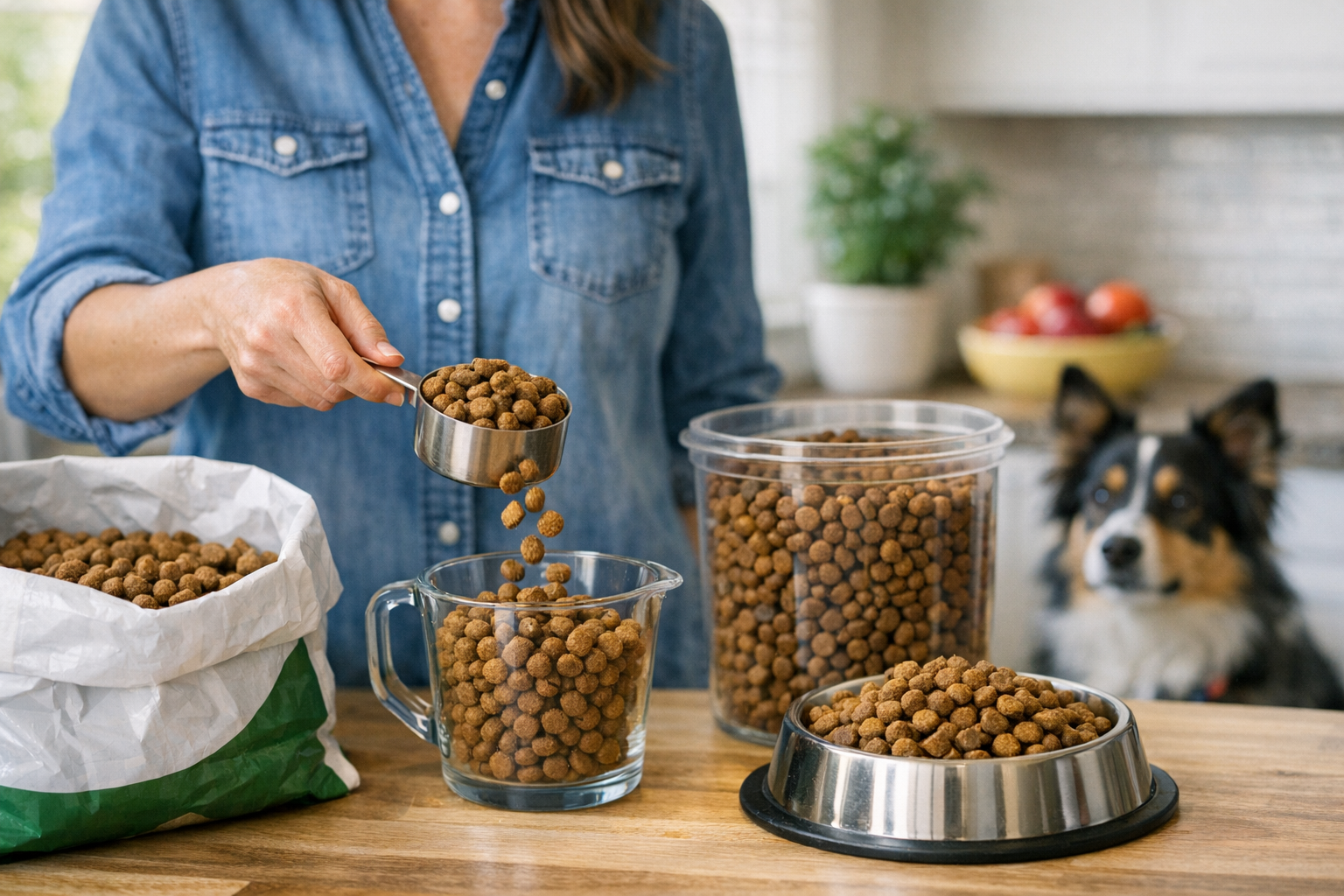
Introduction
You just hauled a heavy 24-pound bag of kibble from your car to the kitchen pantry. It is a significant weight to lift and a big investment in your dog’s health. Now you need to know how many meals are actually inside that bag. Knowing the volume helps you plan your budget and determine when your next order is due. At BaxterBoo, we help pet owners navigate these practical details every day. This guide will help you understand the conversion from pounds to cups for dry dog food. We will cover why kibble density matters and how to measure portions accurately for your dog’s specific needs. Understanding these numbers ensures your dog stays at a healthy weight while you manage your household effectively.
If you are comparing options while you read, our dry dog food category is a good place to start.
Quick Answer: A 24-pound bag of dry dog food contains approximately 96 cups of kibble. This estimate is based on the industry standard of 4 cups per pound for medium-sized dry food.
The Basic Math of Kibble Weight
Most standard dry dog food brands follow a general rule for volume. One pound of kibble typically equals about 4 cups of food. This is the most reliable starting point for your calculations. When you apply this rule to a 24-pound bag, the math is simple. You multiply 24 pounds by 4 cups per pound. This gives you a total of 96 cups of food.
If you want a deeper breakdown of serving sizes, our guide to daily portions can help you connect cup counts to actual feeding needs.
This number is incredibly useful for planning. If you know your dog eats exactly 2 cups of food per day, you can predict exactly when the bag will be empty. In this scenario, a 24-pound bag would last you 48 days. This allows you to set up your delivery schedule with precision.
Weight vs Volume
It is important to remember that pounds measure weight while cups measure volume. A cup of lead weighs much more than a cup of feathers. The same logic applies to dog food. Some kibble is heavy and dense. Other types are light and airy. While 4 cups per pound is the average, your specific brand might differ slightly.
Common Bag Size Conversions
To help you compare different bag sizes, here is a quick reference list. These numbers assume the standard 4 cups per pound ratio.
- 5-pound bag: 20 cups
- 10-pound bag: 40 cups
- 15-pound bag: 60 cups
- 20-pound bag: 80 cups
- 24-pound bag: 96 cups
- 30-pound bag: 120 cups
Key Takeaway: Use the 4 cups per pound rule as your baseline for 24-pound bags. This results in 96 cups of food for planning purposes.
Why the Cup Count Varies by Brand
Not every bag of dog food is created equal. The physical characteristics of the kibble change how much space it takes up in a measuring cup. This is why some owners find their 24-pound bag lasts longer or shorter than expected.
Kibble Size and Shape
Small-breed kibble consists of tiny pieces. These small bits pack together tightly in a cup with very little air between them. Because there is less empty space, a pound of small-breed food might only be 3.5 cups. Conversely, large-breed kibble often comes in big chunks or donut shapes. These shapes create large air pockets in your measuring cup. You might find that a pound of large-bite food takes up 4.5 or 5 cups of space.
Density and Ingredients
The ingredients in the food also affect weight. Foods with high moisture content or high fat levels can be heavier and denser. Air-dried or freeze-dried foods are much lighter. If you feed a brand like The Honest Kitchen or Stella & Chewy's, the volume to weight ratio will be different than standard baked kibble. These nutrient-dense foods often require smaller serving sizes by volume because they pack more calories into every ounce.
Manufacturing Processes
Different cooking methods like extrusion or cold-pressing change the structure of the kibble. Extruded kibble is often puffier and lighter. Cold-pressed food is usually much denser and heavier. If you switch from a standard brand to a premium brand like Orijen or Farmina, do not assume the cup count will be identical. Always check the weight of a single cup on the new bag's label.
Bottom line: Kibble size and density can shift your total cup count by 10 percent or more in either direction.
How to Measure Your Dog Food Accurately
Using the wrong tool to measure food is one of the most common mistakes pet owners make. A coffee mug or a plastic scoop from the garden center is not a precision tool. Inaccurate measuring can lead to unintended weight gain or nutritional deficiencies.
The Right Measuring Cup
Always use a standard dry measuring cup meant for baking. These are designed for level measurements. Do not use liquid measuring glass pitchers. Liquid cups are designed to be filled to a line, which is difficult to do accurately with dry kibble. A standard 8-ounce dry measuring cup is the industry gold standard for "one cup" of dog food.
The Leveling Technique
When you scoop food, do not leave a "heaping" mound on top. This extra bit of food can add up to 20 percent more calories per meal. Over a week, this adds several hundred extra calories to your dog's diet. Scoop the food and use a flat edge to level it off. This ensures your dog gets exactly what the feeding chart recommends.
Using a Kitchen Scale
The most accurate way to measure food is by weight in grams. Most high-quality dog food bags list the weight of one serving in grams next to the cup measurement. For example, a bag might say "1 cup or 113 grams." Using a digital kitchen scale eliminates the guesswork caused by kibble size and air pockets. This is especially helpful for small dogs where even a few extra pieces of kibble can cause weight issues.
Vet Tip: If your dog is struggling with weight management, switch from volume measurements to weighing food on a scale. This provides the most consistent caloric intake and makes it easier for your veterinarian to adjust their diet.
Calculating How Long a 24-Pound Bag Lasts
Once you know there are approximately 96 cups in your bag, you can determine your shopping frequency. This helps you take full advantage of programs like our Autoship programme.
For Small Dogs
Small dogs usually eat between 0.5 and 1.5 cups per day. If your dog eats 1 cup per day, a 24-pound bag will last about 96 days. That is over three months of food. In this case, you might want to consider a smaller bag to ensure the food stays fresh.
For Medium Dogs
Medium dogs typically consume 2 to 3 cups of food daily. At 2 cups per day, your bag lasts 48 days. At 3 cups per day, it lasts 32 days. This is the ideal timeframe for a 24-pound bag. It ensures the food is used within a month or so of opening.
For Large Dogs
Large and giant breeds can eat 4 to 6 cups per day or more. If your dog eats 4 cups per day, the 24-pound bag only lasts 24 days. If you have multiple large dogs, you will likely need to buy several bags at once or look for larger bulk sizes like 40-pound bags.
The Daily Serving Checklist
To find your specific timeline, follow these steps:
- Check the feeding chart on the back of your specific bag.
- Find your dog's ideal weight on the chart.
- Note the total daily cups recommended.
- Divide 96 by that daily cup number.
- The result is the number of days the bag will last.
Health and Prescription Diets
Sometimes a standard kibble is not enough for a dog with specific health needs. If your dog has chronic conditions like kidney disease, severe allergies, or joint issues, your veterinarian might recommend a prescription diet. These specialty foods, like Farmina Vet Life, often have different densities than standard grocery store kibble.
Our pet pharmacy provides access to these prescription foods and medicines. Prescription diets are formulated with very specific caloric densities. It is even more critical to measure these foods accurately to ensure the therapeutic benefits are realized.
Vet Tip: Always consult your veterinarian before switching to a prescription diet or a weight-loss formula. They can provide a precise daily calorie target based on your dog's body condition score.
Proper Storage for Large Bags
A 24-pound bag is a lot of food to keep fresh. If the food sits for too long or is stored improperly, the fats can go rancid. This can lead to stomach upset or a refusal to eat.
Keep the Original Bag
Many owners pour the kibble directly into a plastic bin. We recommend keeping the food inside the original bag and then placing that bag inside a sealed container. The original bags are designed with special liners to keep oils from seeping out. Additionally, keeping the bag ensures you have the lot code and expiration date in case of a product recall.
If you need storage solutions, our dog food storage collection is worth browsing.
Airtight Containers
If you use a storage bin, make sure it has a high-quality rubber seal. This prevents pests like ants or storage mites from getting into the food. It also limits exposure to oxygen, which is the primary cause of food spoilage.
Location Matters
Store your dog food in a cool, dry place. Avoid the garage or a damp basement. High heat can cause the nutrients in the food to break down faster. Keep the bag off the floor if possible to prevent moisture from wicking up through the bottom of the bag.
Bottom line: Freshness counts just as much as quantity. Only buy a 24-pound bag if your dog can finish it within 6 to 8 weeks.
Transitioning to a New Bag or Brand
When you reach the bottom of your 24-pound bag, you might be tempted to just pour the new food on top. However, if you are changing brands or even just starting a new bag of the same brand, a careful transition is better for your dog's digestion.
Step 1: Save at least four days worth of food from your old bag. / This allows for a gradual mix.
Step 2: Mix 25 percent of the new food with 75 percent of the old food for two days. / Watch for any signs of loose stool or gas.
Step 3: Move to a 50/50 mix for another two days. / This gives the gut bacteria time to adjust to new ingredients or different protein levels.
Step 4: Provide 75 percent new food and 25 percent old food for the final two days. / After this, your dog should be ready for 100 percent of the new bag.
If you are switching to a different specialty formula, our Stella & Chewy's selection can be a helpful place to compare options.
Maximizing Value at BaxterBoo
Managing the cost of a 24-pound bag is easier when you use our loyalty programs. Since 2006, we have focused on providing high-quality brands at competitive prices.
Our MVP Rewards programme allows you to earn up to 5 percent back on every purchase. If you are buying large bags of premium food like Acana, Orijen, or NutriSource, those rewards add up quickly. We also offer a Frequent Buyer Program on many of the 500 plus brands we carry. This often means your 11th or 13th bag of food is free.
If you want to save even more, consider our Autoship programme. Not only do you get a discount on your first order, but you also receive free MVP Gold membership. This ensures you never run out of food and always have your 96 cups ready when the pantry gets low.
The Importance of Calorie Counting
Measuring by the cup is a great start, but calories are what truly matter for your dog's health. Two different brands of food might both recommend "2 cups per day" for a 50-pound dog. However, one brand might have 350 calories per cup while the other has 450 calories per cup.
If you switch brands without checking the calories, you could accidentally increase your dog's intake by 200 calories a day. Over time, this leads to obesity. Obesity in dogs is linked to heart disease, joint pain, and a shorter lifespan. Always check the "kcal/kg" or "kcal/cup" listing on the back of your 24-pound bag.
For more ways to stretch your budget, our discounted dog food guide is a helpful companion read.
Key Takeaway: Portions should be based on your dog's specific energy needs. Use the cup count as a logistical tool, but use calories as your nutritional guide.
Summary of Feeding Logistics
Managing a 24-pound bag of dog food is all about understanding the numbers. By knowing that you have 96 cups to work with, you can manage your pantry space and your budget with confidence.
- Standard 24-pound bags contain about 96 cups.
- Kibble density, size, and shape can change this volume.
- Accurate measurement with a dry cup or scale is essential for health.
- Proper storage in the original bag keeps the kibble fresh and safe.
- Prescription diets may require even more precise measurement.
If you ever find that your dog is losing weight or gaining weight while eating the recommended amount, it is time for a checkup. Your veterinarian can help rule out underlying health issues and provide a tailored feeding plan. For any medical needs, including prescription diets and medications, our BaxterBoo pharmacy is here to support you.
Bottom line: A 24-pound bag is a practical choice for medium and large dogs, offering a balance between bulk value and freshness.
FAQ
How many cups are in 24 pounds of small breed dog food?
Small breed kibble is typically more dense and takes up less space in a measuring cup. While the average is 4 cups per pound, small breed food may yield closer to 84 to 90 cups for a 24-pound bag. Always check the specific weight per cup listed on the brand's packaging for the most accurate count.
Will a 24-pound bag of dog food fit in a 5-gallon bucket?
A standard 5-gallon bucket holds about 15 to 20 pounds of dry dog food depending on the kibble density. A 24-pound bag usually requires about a 7 or 8-gallon container to fit the entire contents. We recommend keeping the food in the bag even when using a storage bin to maintain freshness.
How many days will 24 pounds of food last for a 60-pound dog?
A typical 60-pound dog eats approximately 3 cups of dry food per day. Based on the 96-cup estimate in a 24-pound bag, the food should last about 32 days. This is an ideal bag size for a dog of this weight because it ensures the food stays fresh for the duration of the bag.
Is it cheaper to buy a 24-pound bag than a 10-pound bag?
Generally, buying larger bags like the 24-pound size offers a lower price per pound than smaller bags. At BaxterBoo, you can further increase this value by using our Frequent Buyer Program or MVP Rewards programme. Just ensure your dog can finish the larger bag within two months so the food does not spoil.






