
 Save 15% on your 1st Autoship learn more

 Email us
 Live Chat
 FAQs
FAQs





Introduction
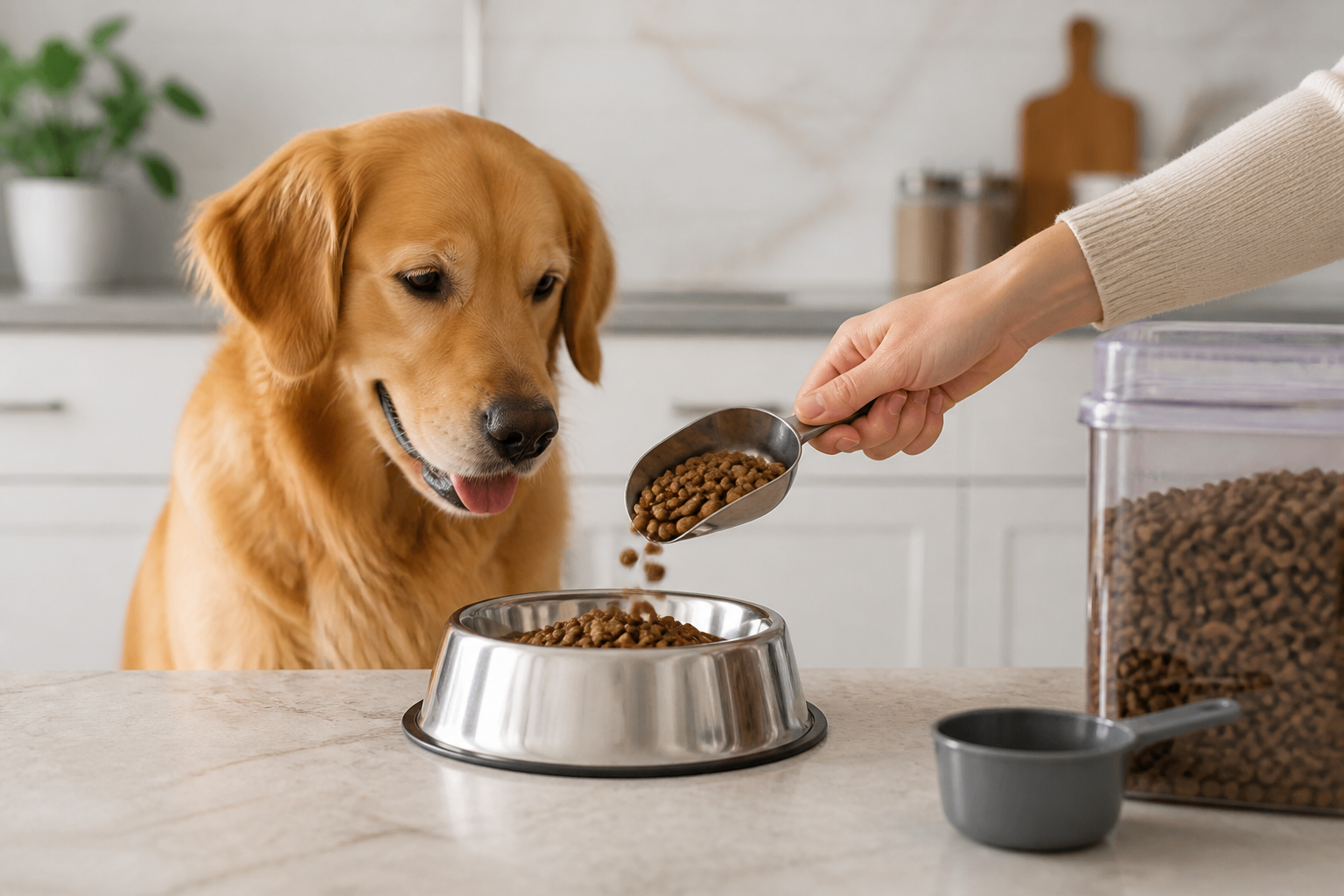
It is dinner time and your dog is already performing the "kibble dance" near the pantry door. You reach for a plastic cup or a coffee mug to scoop out a meal. You might wonder if that scoop is actually the amount your dog needs to stay healthy. At BaxterBoo, we know that getting the portion size right is one of the most important parts of daily pet care. This post covers the difference between volume and weight, how to read your food label, and why your choice of measuring tool matters. Understanding how many ounces are in a cup of dry dog food can help you prevent weight gain and ensure your dog gets the right nutrients.
Quick Answer: On average, one standard measuring cup holds about 3.5 to 5 ounces of dry dog food by weight. However, because kibble size and density vary between brands, the only way to be 100 percent accurate is to weigh the food on a digital scale.
The Confusion Between Volume and Weight
The most common mistake pet owners make is confusing fluid ounces with dry weight. A standard measuring cup is designed to hold 8 fluid ounces of liquid. This is a measure of volume. When you fill that same cup with dry dog food, you are not measuring 8 ounces of weight. You are measuring the amount of space the kibble occupies.
Dry ingredients like kibble have air gaps between the pieces. Large, heart shaped kibble will leave more air in the cup than small, round pellets. This means that a cup of one brand might weigh 3 ounces while a cup of another brand weighs 5 ounces. If you switch brands but keep using the same scoop, you could accidentally increase or decrease your dog's caloric intake by 20 percent or more. Comparing formulas in our dog food category can help you see how food options vary.
Why Kibble Density Matters
Kibble density refers to how heavy the food is for its size. High protein, grain free formulas often have a higher density than "lite" or weight management formulas that include more fiber and air. The manufacturing process also plays a role. Extruded kibble is cooked and puffed, making it lighter. Air dried or freeze dried foods, like those from Stella and Chewy's or Ziwi Peak, are often much denser and contain more calories per scoop.
For example, a cup of air dried food might be twice as heavy as a cup of standard baked kibble. If you use a standard 8 ounce volume cup for these calorie dense foods, it is very easy to overfeed. Most high quality brands provide a weight in grams or ounces per cup on the back of the bag. We recommend looking for this specific number rather than just following the cup guidelines.
Key Takeaway: One cup of dog food does not equal 8 ounces of weight. The weight usually falls between 3 and 5 ounces depending on the size and density of the kibble.
Reading the Pet Food Label Like a Pro
The Association of American Feed Control Officials (AAFCO) requires manufacturers to list calorie content on the packaging. You will usually see this written in two ways. The first is kilocalories per kilogram (kcal/kg). The second is kilocalories per cup (kcal/cup).
The kcal/kg measurement is the most accurate because it is based on weight. The kcal/cup measurement is an estimate based on a standard measuring cup. If your dog needs 500 calories a day and their food has 400 calories per cup, you would feed 1.25 cups. However, if your "cup" is actually a large coffee mug, you might be feeding 600 or 700 calories without realizing it.
Common Brand Measurements
Different brands have different standards for what they consider a "cup." Here are some general examples based on popular brands we carry:
- The Honest Kitchen: Often defines a cup as roughly 4.0 ounces.
- Orijen: Typically measures around 4.2 ounces per cup.
- Ziwi Peak: Uses a specific scoop that measures by weight because their air dried food is so dense.
Always check the side of your specific bag for these details. If the bag only lists cups, you can contact the manufacturer to ask for the weight of one cup in grams or ounces. You can also compare our selection of The Honest Kitchen products with other food options.
The Risks of Inaccurate Measuring
The worldwide epidemic of pet obesity is often linked to the way we measure food. Even a small surplus of calories every day adds up. If you overfeed by just 10 percent every morning and night, your dog could gain several pounds over a year. This extra weight puts stress on joints and can lead to issues like diabetes or heart disease.
Using a non standard tool like a "Big Gulp" cup, a plastic bowl, or a coffee mug is the fastest way to cause weight gain. These items are rarely calibrated for accuracy. Even "heaping" a standard measuring cup instead of leveling it off can add an extra half ounce of food per meal.
Vet Tip: If your dog is struggling with weight management, your veterinarian may recommend a prescription diet. Our pet pharmacy carries prescription pet foods, such as the Farmina Vet Life range. Always consult your vet before switching to a prescription weight management plan.
Why You Should Use a Digital Scale
If you want to be truly precise, a digital kitchen scale is the best tool you can buy. Measuring by weight removes the guesswork caused by kibble shape and air pockets. It is the gold standard for pet nutrition.
To use a scale, look at the feeding guide on the bag for the weight in grams or ounces. Place your dog's bowl on the scale and hit the "tare" button to zero it out. Pour the food until you reach the exact weight required. This ensures your dog gets the same amount of nutrition every single time.
Benefits of Weighing Food
- Consistent calorie intake every day.
- Easier to track exactly how much your dog is eating.
- Helps you identify if a lack of appetite is a real health concern.
- Saves money by preventing food waste from overfeeding.
Tools for Better Portion Control
If you are not ready to use a scale, you can improve your accuracy with better volume tools. Do not use random household items. Instead, use a set of dry ingredient measuring cups. These are the flat topped cups used for flour or sugar.
Step 1: Get a dedicated set of dry measuring cups for your pet.
Step 2: Use the cup size that matches your dog's meal size exactly.
Step 3: Scoop the food and level it off with a flat edge.
Step 4: Do not "heap" the food above the rim.
We carry a variety of specifically designed pet food scoops that have graduated markings. These are better than a coffee mug but still require a steady hand and a level surface.
Bottom line: A digital scale is the only way to ensure 100 percent accuracy, but a leveled dry measuring cup is the next best option.
Calculating Calories per Ounce
If your bag only lists calories per kilogram, you can do a little math to find the calories per ounce. This is helpful if you want to use a scale.
There are 35.27 ounces in one kilogram. To find the calories per ounce, divide the kcal/kg number by 35.27. For example, if a bag of Stella and Chewy's says it has 3,500 kcal/kg:
3,500 / 35.27 = 99.23 calories per ounce.
If your dog needs 300 calories per meal, you would divide 300 by 99.23. This tells you to feed almost exactly 3 ounces of food.
Special Considerations for Life Stages
Puppies, active adults, and seniors all have different caloric needs. A growing puppy might need twice the calories of a senior dog of the same weight. This makes accurate measuring even more critical.
Puppies
Puppies need consistent energy to grow. Underfeeding can stunt growth, while overfeeding can cause them to grow too fast. This is especially dangerous for large breed puppies as it can lead to bone and joint issues later in life.
Senior Dogs
Seniors often have slower metabolisms. They may also be less active due to joint stiffness. We carry a wide range of senior specific formulas from brands like NutriSource and Open Farm. Measuring accurately for a senior dog helps keep them at a healthy weight to reduce the load on their aging joints.
Active or Working Dogs
Dogs that hike, run, or work need more fuel. If you are using a high calorie performance food like those from Acana or Orijen, the density is usually high. Small measuring errors in high calorie foods can result in much larger calorie swings than in standard kibble. For more guidance, read how much dry dog food to feed a puppy.
How to Manage Multiple Caregivers
If multiple people in your house feed the dog, the risk of measurement error increases. One person might "heap" the scoop while another might only fill it three quarters of the way. This inconsistency can make it hard to tell why a dog is gaining or losing weight.
We recommend picking one dedicated measuring tool and one specific method. If you use a scale, write the target weight on a sticky note near the food bin. If you use a scoop, show everyone where the "fill line" is. Consistency across the whole family is the key to a healthy pet.
Key Takeaway: Consistency is just as important as the amount. Ensure everyone in the household uses the same measuring tool and technique.
Transitioning to a New Food
When you switch between brands, the "cup" size almost always changes. Never assume that one cup of your old food is the same as one cup of the new food. Always look at the new bag's feeding guidelines and calorie counts.
Step 1: Compare the kcal/cup of the old food to the new food.
Step 2: Calculate the weight of the new portion if possible.
Step 3: Gradually mix the foods over 7 to 10 days.
Step 4: Monitor your dog's body condition during the transition.
If the new food is much denser, the volume might look smaller in the bowl. Your dog might act hungry because they are used to a fuller stomach from the previous, less dense food. In these cases, you can talk to your vet about adding low calorie "bulkers" like green beans to the bowl. For another perspective on food changes, see how much wet dog food equals one cup of dry.
Maintaining a Healthy Weight
Feeding the right amount is about more than just numbers. It is about how your dog looks and feels. You should be able to feel your dog's ribs easily without a thick layer of fat over them. When looking from above, your dog should have a visible waist.
If your dog starts to lose their waistline, it is time to reassess your measurements. Small adjustments of 5 to 10 percent can make a big difference over time. If you find it difficult to keep your dog at a healthy weight despite careful measuring, there may be an underlying health issue.
Vet Tip: Sudden weight gain or loss can be a sign of metabolic or hormonal issues. If your dog's weight changes significantly despite consistent feeding, schedule a check up with your veterinarian to rule out medical conditions.
The Role of Treats in the Daily Total
Treats should never make up more than 10 percent of your dog's total daily calories. If you are training heavily and giving many treats, you must reduce the amount of kibble at mealtime.
Many people forget to factor treats into the "ounces per day" calculation. If you give a large dental chew or several high calorie biscuits, that could be the equivalent of a half cup of food. Keep a tally of treats and adjust the dinner bowl accordingly to maintain a healthy balance. Our dog treats category is a helpful place to compare options.
Conclusion
Understanding how many ounces are in a cup of dry dog food is the first step toward better pet health. While a standard volume cup usually holds 3 to 5 ounces of weight, every brand is different. To keep your dog fit and happy, we recommend using a digital scale or a dedicated dry measuring cup.
At BaxterBoo, we want to help you provide the best possible care for your pets. We carry over 500 trusted brands to ensure you find the perfect match for your dog's nutritional needs. For even more convenience, our Autoship programme offers savings on your first order and a free MVP Gold membership. This ensures you never run out of the food your dog loves. If your dog needs specialized support, our pharmacy partnership is here to provide prescription medications and diets.
Bottom line: Weighing your dog's food in ounces or grams is the best way to prevent obesity and ensure long term health.
FAQ
Is a cup of dog food exactly 8 ounces?
No, a cup of dog food measures volume, not weight. While 1 cup of water weighs 8 ounces, 1 cup of dry dog food usually weighs between 3.5 and 5 ounces. The weight depends entirely on the size, shape, and density of the kibble.
How can I find out how many calories are in an ounce of my dog's food?
Look for the kcal/kg number on the back of the bag. Divide that number by 35.27 to find the calories per ounce. For example, if a food has 3,500 kcal/kg, it has approximately 99 calories per ounce.
Why does my dog look hungry after I switched to a more expensive food?
Premium foods are often more calorie dense, meaning the portion size is smaller by volume. Even though your dog is getting the same amount of calories and better nutrition, their stomach might not feel as "full" as it did with a lower quality, airy kibble.
Should I use a liquid measuring cup for dry dog food?
You should avoid using liquid measuring cups (like the glass ones with a spout) because they are designed for fluids. It is difficult to get a level, accurate measurement of dry kibble in these containers. A flat topped dry measuring cup or a digital scale is much more accurate.






