
 Save 15% on your 1st Autoship learn more

 Email us
 Live Chat
 FAQs
FAQs





Introduction
You are standing in your kitchen with a measuring scoop in one hand and a can of wet food in the other. Perhaps you ran out of your usual kibble, or maybe you want to give your dog a special treat by mixing things up. Getting the ratio right is more than just a guess. If you feed too little, your dog lacks energy. If you feed too much, those extra calories quickly lead to weight gain. At BaxterBoo, we know that every meal is an opportunity to support your pet's health. This guide will help you navigate the math of converting wet food to dry portions without the headache. If you want to compare options while you read, start with our dog food category. We will cover caloric density, hydration benefits, and how to safely transition your dog to a new feeding routine. Understanding these proportions ensures your dog stays at a healthy weight while enjoying a variety of textures.
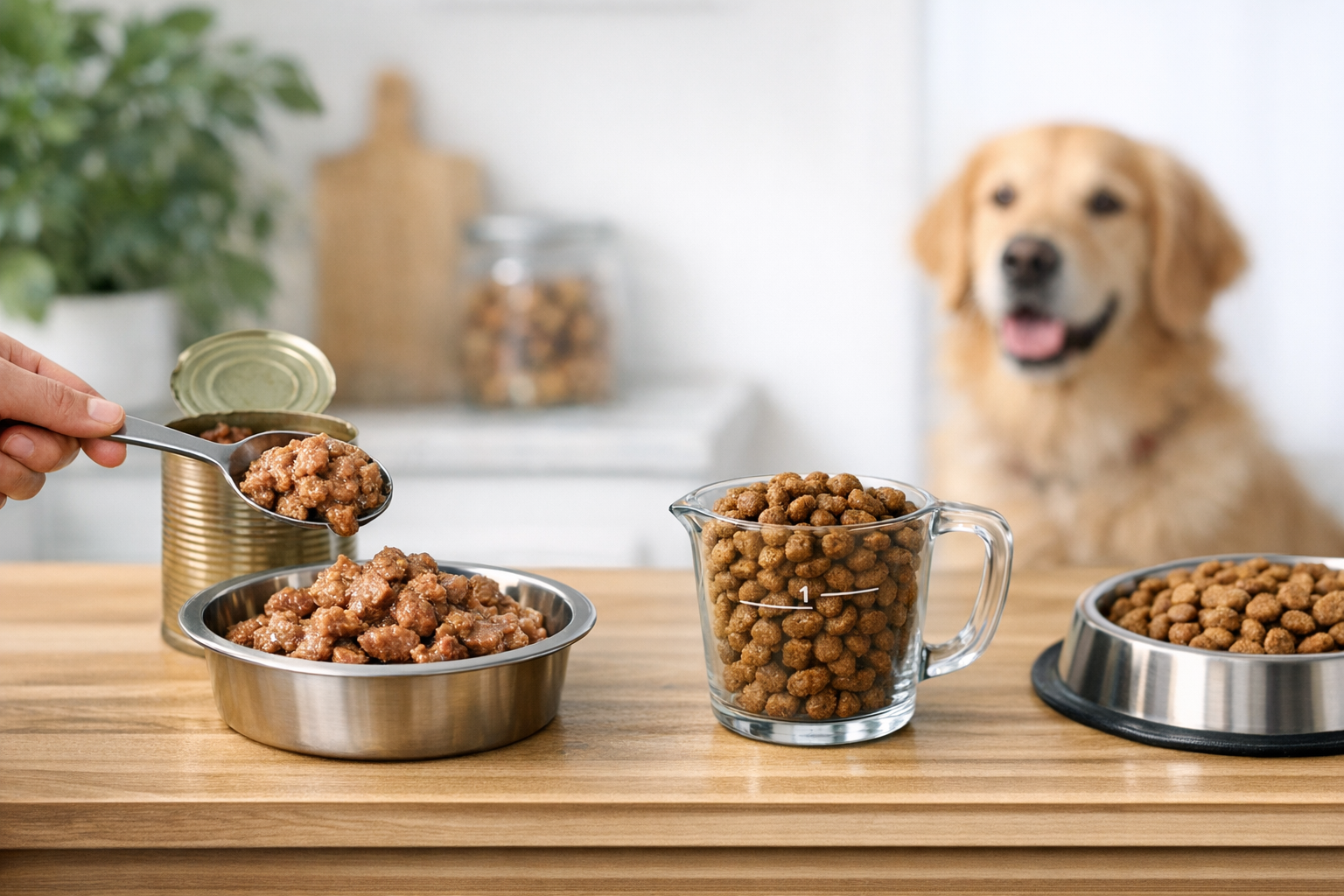
Quick Answer: On average, one standard 13.2-ounce can of wet dog food is equal to approximately 1 cup of dry kibble. This is a caloric equivalent rather than a volume equivalent. For smaller portions, 3 ounces of wet food typically replaces about 1/4 cup of dry food.
The Moisture Difference: Why Volume Is Not Equal
The biggest reason you cannot simply swap a cup of dry food for a cup of wet food is moisture. Dry dog food is incredibly dense. It typically contains only about 10 percent moisture. The rest of the bag is packed with concentrated proteins, fats, and carbohydrates. This density means a small amount of kibble provides a large amount of energy.
Wet dog food is the opposite. It is often 75 to 85 percent water. While this is fantastic for hydration, it means the calories are much more diluted. If you filled a bowl with one cup of wet food, your dog would get significantly fewer calories than if you filled that same bowl with dry kibble. This is why our canned dog food selection often looks much larger to the human eye. Your dog needs to eat a higher volume of wet food to get the same fuel they get from a smaller scoop of dry food.
Calculating the Conversion by Calories
To be truly accurate, you must look at calories rather than weight or volume. Most pet food brands list this as "kcal" on the packaging. You will find kcal per cup for dry food and kcal per can for wet food. This is the gold standard for measurement.
The General Rule of Thumb
While every brand varies, most high-quality foods follow a similar pattern. You can use these general estimates if you do not have the packaging handy:
- 1 cup of dry kibble (approx. 400 calories) = One 13.2 oz can of wet food.
- 1/2 cup of dry kibble (approx. 200 calories) = Half of a 13.2 oz can.
- 1/4 cup of dry kibble (approx. 100 calories) = About 3.3 oz of wet food.
Reading the Label
Check the back of your can and your bag. If your dry food says it has 450 calories per cup and your wet food has 150 calories per 5.5-ounce can, the math changes. In this specific case, you would need exactly three of those small cans to replace just one cup of kibble. Always verify the numbers for brands like NutriSource, Stella and Chewy's, or Royal Canin, as their caloric densities can vary significantly between formulas. For a real example of a calorie-dense dry formula, see Acana Singles Limited Ingredient Beef & Pumpkin Recipe Grain-Free Dry Dog Food.
Key Takeaway: Always match calories, not volume. Substituting based on the size of the bowl often leads to underfeeding when switching to wet food.
Using a Digital Scale for Precision
Many dog owners use kitchen measuring cups for dry kibble. However, a "cup" is not a standard unit of weight in the pet food industry. A cup of large-breed kibble has more air gaps than a cup of small-breed kibble. This means the weight can vary by several ounces.
The most precise way to handle a conversion is to weigh the food in grams or ounces.
- Place your dog's empty bowl on a digital scale and tare it to zero.
- Add the usual amount of dry food and note the weight.
- Check the caloric content per ounce on the bag.
- Calculate the total calories for that meal.
- Add the equivalent amount of wet food based on its caloric weight.
Using a scale removes the guesswork. This is especially important for small dogs where even an extra half-ounce of food can lead to obesity over time.
Mixing Wet and Dry Food Safely
You do not have to choose just one type of food. Many owners at BaxterBoo prefer a hybrid approach. This is often called "mixed feeding." It gives your dog the dental benefits of crunchy kibble and the hydration of wet food. It also makes meals more exciting for picky eaters.
If you add a wet topper, you must subtract a corresponding amount of dry food. Do not just put the wet food on top of a full portion of kibble. This is a common mistake that leads to weight gain. If you want to add a 3.3-ounce pouch of wet food to the bowl, you should remove about 1/4 cup of dry kibble. A good topper to compare is Stella & Chewy's Savory Salmon & Cod Meal Mixers Dog Food Topper.
Step-by-Step Transition
Step 1: Determine total daily calories. / Use the feeding guide on your primary food bag or consult your vet to find the target number. Step 2: Decide on the split. / Many owners find a 75 percent dry and 25 percent wet split works well for most dogs. Step 3: Calculate the reduction. / If the wet food portion is 100 calories, remove 100 calories worth of dry food. Step 4: Combine and mix. / Stir the wet food into the kibble so your dog cannot just lick the topper off and leave the dry bits. Step 5: Watch the scale. / Monitor your dog's body condition for two weeks and adjust the portions if they seem to be gaining or losing weight.
Benefits for Different Life Stages
The amount of wet food you substitute might change as your dog ages. Different life stages have different nutritional priorities.
Puppies
Puppies need a high concentration of calories to support their rapid growth. If you are substituting wet food for a puppy, ensure the wet food is specifically formulated for growth. Puppy wet foods are often more calorie-dense than adult versions.
Senior Dogs
As dogs age, their sense of smell may dull. This can lead to a loss of appetite. Wet food is much more aromatic than dry kibble. Adding it to the bowl can encourage a senior dog to eat. Seniors also often struggle with dental issues or missing teeth. In these cases, you might transition entirely to wet food or a very soft mixture. If this is your situation, Should Senior Dogs Eat Wet or Dry Food? is a helpful next read.
Managing Health Conditions
Some dogs require prescription diets for kidney issues, urinary stones, or weight management. Our pet pharmacy information page explains how prescription medicines and foods are handled through BaxterBoo. If your veterinarian recommends a specific ratio of wet to dry prescription food, it is vital to follow those instructions exactly. Prescription wet foods are formulated with precise mineral balances that are easily thrown off if the conversion is done incorrectly.
Vet Tip: If your dog has a chronic health condition like kidney disease or diabetes, always consult your veterinarian before changing the ratio of wet to dry food. The moisture content and mineral levels in wet food can significantly impact their condition.
The Role of Hydration and Health
Wet food is an excellent tool for increasing water intake. Many dogs do not drink enough standing water from a bowl. This can lead to urinary tract issues or kidney strain over time. By substituting even 25 percent of their dry food with wet food, you are significantly boosting their daily fluid intake.
For dogs with food sensitivities or allergies, wet food often has fewer synthetic binders than kibble. This can make it easier on a sensitive stomach. If you are using wet food to help manage allergies, look for single-protein recipes from brands like Acana, Zesty Paws, or Farmina. If symptoms persist, a trip to the vet is necessary to rule out environmental factors or more serious underlying issues. For a wet option that fits a limited-ingredient approach, take a look at NutriSource PureVita Limited Ingredient Wet Dog Food - Chicken Stew.
Storage and Freshness for Both Food Types
One of the trade-offs of wet food is its shelf life. Dry kibble is shelf-stable and can stay in a bowl for the day. Wet food is a perishable product. Once you open a can, the clock starts ticking.
- Never leave wet food in a bowl for more than 30 to 60 minutes. Bacteria grow quickly in the high-moisture environment.
- Cover opened cans with a tight-fitting silicone lid and refrigerate them immediately.
- Use refrigerated wet food within two to three days.
- If you buy wet food in pouches, ensure they are sealed properly after each use.
Dry food also needs proper care. Even though it is shelf-stable, the fats in kibble can go rancid if exposed to too much air. Keep your dry food in its original bag inside a sealed container to maintain freshness. Our Autoship programme is a convenient way to keep essentials coming on schedule while you manage storage at home.
Summary: Your Conversion Checklist
Substituting wet food for dry food is a simple process once you stop thinking about volume and start thinking about energy. Keeping a consistent caloric intake is the best way to ensure your dog lives a long and healthy life.
- Check the kcal count on both the wet and dry labels.
- Use the 13.2 oz can to 1 cup dry ratio as a starting point.
- Subtract dry food when adding wet toppers to prevent weight gain.
- Use a digital scale for the most accurate measurements.
- Store opened wet food in the refrigerator and use it quickly.
- Consult your vet for specific needs related to senior health or chronic conditions.
Bottom line: One standard can of wet food usually equals one cup of dry kibble, but always check the label for the most accurate calorie count.
Why Quality Ingredients Matter in the Mix
Whether you are feeding a grain-free diet or a traditional kibble, the quality of the ingredients determines how well those calories are used. Fillers like corn and soy provide calories but may not offer the same nutritional value as whole meats and vegetables. When you look for wet food at BaxterBoo, you will find brands that prioritize real protein sources. This makes the conversion more effective because your dog is getting high-quality fuel rather than empty calories.
Feeding a mix of wet and dry food can also help with weight management. Because wet food is mostly water, it can help a dog feel full while consuming fewer calories. This is a great strategy for dogs that are always "hungry" or beg for food between meals. A larger volume of wet food can satisfy their stomach without adding to their waistline. You can also browse our selection of NutriSource products if you want to compare more formulas for mixed feeding.
Common Mistakes to Avoid
Many well-meaning owners make simple errors when switching between food types. Avoid these pitfalls to keep your dog's digestion on track.
Switching Too Fast
A sudden change from 100 percent dry to 100 percent wet can cause a major upset stomach. This often results in diarrhea or vomiting. Always transition over 7 to 10 days by slowly increasing the amount of wet food while decreasing the dry food. For a detailed walkthrough, read How to Switch From Dry to Wet Dog Food.
Forgetting the Toppers
If you use a small amount of wet food just to hide a pill, you might think those calories do not count. However, if you do this three times a day, it adds up. For dogs on medication, our pharmacy through Pet's Choice provides various options, and we always recommend checking if a specific wet food might interfere with medication absorption.
Ignoring the Water Bowl
Just because wet food has more moisture does not mean you should remove the water bowl. Always provide fresh, clean water regardless of what type of food you are serving.
Using Wet Food for Enrichment
Beyond just a meal, wet food is a great tool for mental stimulation. You can smear wet food inside a Kong toy or on a lick mat. This keeps your dog occupied and provides a calming activity. If you do this, remember to count that wet food as part of their daily caloric intake. It is not an "extra" treat. It is part of their meal.
By managing these portions carefully, you can provide a varied and exciting diet that supports your dog's health at every stage of life. Whether you are visiting us in Vernon Hills or ordering online for home delivery, we are here to help you find the best options for your furry family members. To keep shopping affordable, explore the MVP Rewards programme and see how it can help on future orders.
FAQ
How many 5.5 oz cans of wet food equal one cup of dry?
Generally, it takes about two and a half small 5.5-ounce cans to equal one cup of dry kibble. This assumes the dry food is around 400 calories per cup and the wet food is about 150 calories per can. Always check the specific caloric density on the labels to be sure.
Can I feed my dog only wet food?
Yes, most wet dog foods are formulated to be nutritionally complete and balanced. However, feeding only wet food can be more expensive and does not provide the dental scraping benefits of dry kibble. If you switch to an all-wet diet, be sure to pay extra attention to your dog's dental hygiene through regular brushing or dental treats.
Is it okay to mix different brands of wet and dry food?
It is generally safe to mix brands as long as both foods are high-quality and meet AAFCO nutritional standards. However, if your dog has a sensitive stomach, sticking to the same brand for both wet and dry options may reduce the risk of digestive upset. Some brands design their wet and dry formulas to complement each other specifically.
How do I store leftover wet dog food?
Leftover wet food must be refrigerated in a sealed container or with a tight-fitting lid. It should be used within two to three days to ensure it does not spoil. If your dog does not eat the food within an hour of it being served, you should throw it away rather than putting it back in the refrigerator.






