
 Save 15% on your 1st Autoship learn more

 Email us
 Live Chat
 FAQs
FAQs





Introduction
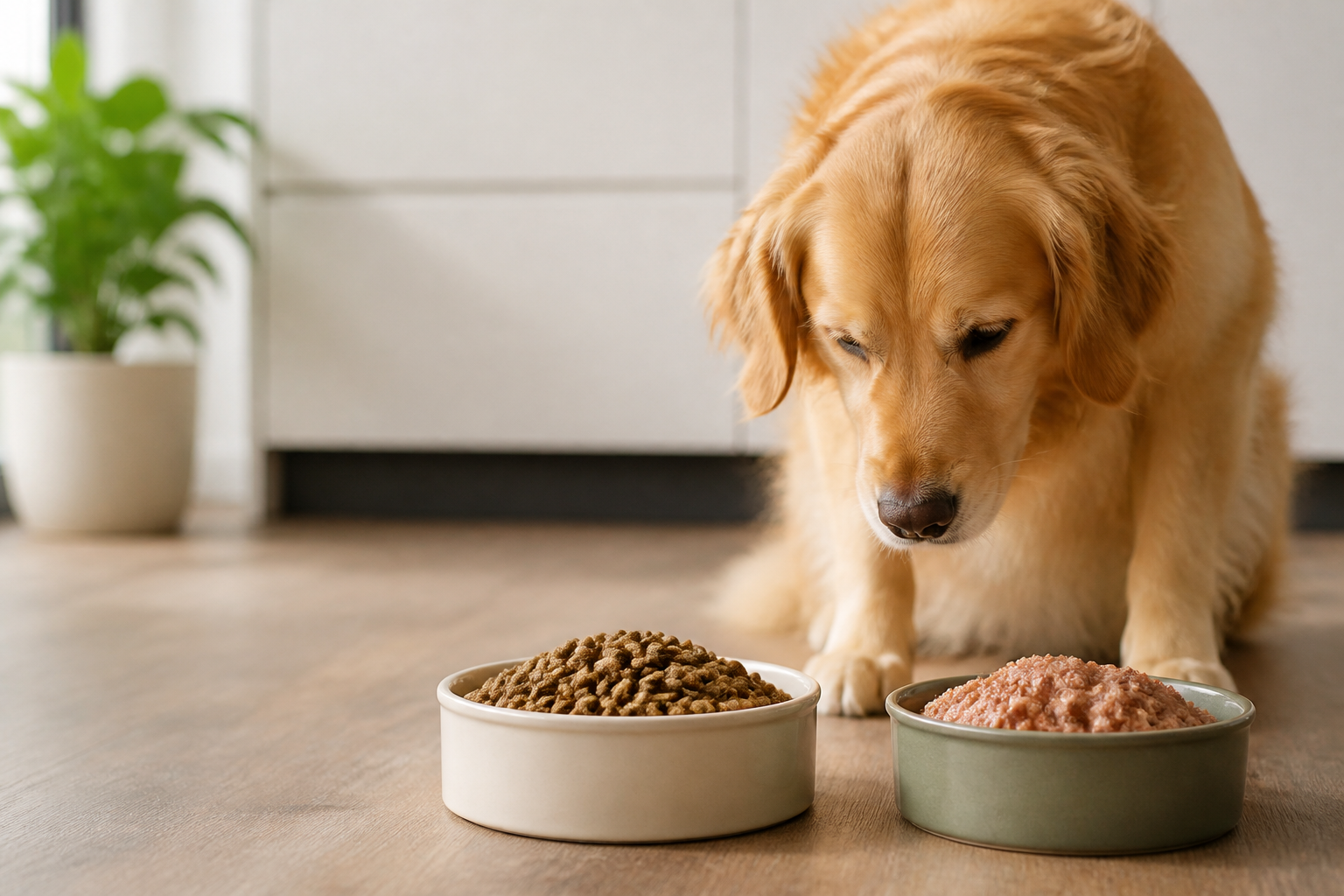
You are standing in your kitchen with a half-empty bag of kibble in one hand and a stray can of wet food in the other. Perhaps you are trying to stretch your dog's meals until your next delivery arrives. You might also want to add a flavorful topper to their dinner to entice a picky eater. Getting the math right is crucial to avoid unwanted weight gain or an upset stomach. At BaxterBoo, we know that pet nutrition can feel like a complicated science project when you are switching formats. This article explains how to swap canned food for dry kibble accurately using calories rather than volume. We will explore caloric density, moisture levels, and how to mix both for a balanced diet. Finding the correct ratio ensures your dog stays satisfied and healthy.
Quick Answer: Generally, one standard 13.2-ounce can of wet dog food is nutritionally equivalent to about 1 cup of dry kibble. This conversion is based on calorie counts rather than volume or weight. Always check the specific labels of your chosen brands for the most accurate calculation.
Understanding the Difference Between Wet and Dry Food
The biggest difference between canned and dry dog food is the water content. This single factor changes everything about how you measure a meal. Dry kibble is highly concentrated. It usually contains only about 10 percent moisture. The rest of the bag is packed with proteins, fats, and carbohydrates.
Canned food is very different. It is often 75 percent to 80 percent water. While this high moisture content is excellent for hydration, it means the nutrients are much more diluted. If you filled a bowl with one cup of wet food, your dog would receive far less nutrition than if you filled that same bowl with one cup of dry kibble. You cannot swap them cup-for-cup because the volume does not represent the energy provided.
Nutrient Density and Energy
Because kibble is so condensed, a small amount provides a lot of fuel. When you switch to wet food, you must increase the volume of food significantly to reach the same calorie count. It is a common surprise for owners when their dog finishes a large bowl of wet food and still looks around for more. The stomach might feel full from the water, but the body is looking for the energy it is used to getting from dense kibble.
Comparing Labels
When comparing the two, you might notice that the protein percentage on a can looks much lower than on a bag of dry food. For example, a bag might list 26 percent protein, while a can lists only 8 percent. This does not mean the wet food is low in protein. It simply means the protein is measured as part of the total weight, which includes all that water. To compare them fairly, you have to look at the "dry matter basis." This is a calculation that removes the water content to show the true nutrient levels.
The Caloric Conversion Formula
To calculate how much canned food equals dry food, you must look at the calories. This is usually listed on the packaging as "kcal/cup" for dry food and "kcal/can" or "kcal/kg" for wet food. Most high-quality brands provide these numbers clearly on the back of the label or their website.
The Standard Rule of Thumb
While every brand is different, there is a helpful baseline you can use for most premium dog foods. This applies to many of the 500 plus brands we carry, including Royal Canin and NutriSource.
- 1 cup of dry kibble is roughly equal to one standard 13.2 oz can of wet food.
- 1/4 cup of dry kibble is roughly equal to about 3.3 ounces of wet food.
- 1/2 cup of dry kibble is roughly equal to about 6.6 ounces of wet food.
This 1-to-1 ratio (one cup to one can) is a safe starting point for most standard formulations. However, if you are using smaller 5.5-ounce cans or pouches, the math changes. You would likely need two and a half of those smaller cans to equal a single cup of dry food.
Conversion Table by Volume and Weight
| Dry Food Amount | Equivalent Wet Food (by Weight) | Equivalent Standard Cans (13.2 oz) |
|---|---|---|
| 1/4 Cup | ~3.3 oz | 1/4 Can |
| 1/2 Cup | ~6.6 oz | 1/2 Can |
| 1 Cup | ~13.2 oz | 1 Full Can |
| 1.5 Cups | ~19.8 oz | 1.5 Cans |
| 2 Cups | ~26.4 oz | 2 Full Cans |
Key Takeaway: Never swap wet and dry food based on volume alone. Always check the calorie count on the label to ensure your dog receives the same amount of daily energy.
The Benefits of Mixing Wet and Dry Food
Many dog owners choose a "mixed feeding" approach rather than picking just one type. This offers several advantages for your dog's health and your own convenience. You get the dental benefits of crunchy kibble combined with the hydration of canned food. For more ideas, read our guide to mixing wet and dry dog food.
Improved Hydration
Many dogs do not drink enough water on their own. This is especially true for certain breeds or older dogs. Adding wet food is an easy way to sneak extra moisture into their diet. Better hydration supports kidney function and urinary tract health. It can also help dogs who are prone to urinary stones or infections.
Appeal for Picky Eaters
If your dog has started to ignore their plain kibble, a small amount of wet food can make a big difference. The fats and proteins in canned food are more aromatic than those in dry food. The strong scent is often enough to entice a dog who is feeling bored with their routine. Brands like Stella and Chewy's or Open Farm offer highly palatable wet options that work perfectly as mixers. You can compare options in our wet dog food category.
Weight Management
Wet food can be a secret weapon for weight loss. Because it is high in water and lower in calorie density, a dog can eat a larger volume of food while consuming fewer calories. This helps them feel fuller for longer. It can prevent the begging behavior that often leads to over-feeding.
Bottom line: Mixing food types provides variety in texture and flavor while ensuring your dog stays hydrated and satisfied.
How to Mix Safely: A Step-by-Step Guide
If you decide to start mixing wet food into your dog's kibble, do not just add it on top of their current portion. Adding wet food without reducing the dry food will lead to weight gain. You need to adjust the ratios carefully. Our guide on switching from dry to wet dog food offers another gradual transition approach.
Step 1: Find the total daily calorie needs. / Check the feeding guide on your dog's primary food bag or consult your vet to find their total daily requirement.
Step 2: Decide on your mixing ratio. / A common approach is 75 percent dry and 25 percent wet. You can also do a 50/50 split if your dog prefers more variety.
Step 3: Calculate the dry food reduction. / If you are adding a quarter can of wet food (roughly 100 calories), you must remove about a quarter cup of dry kibble (roughly 100 calories) from the bowl.
Step 4: Mix the food thoroughly. / Some dogs will "sort" through the bowl to eat only the wet food. Stirring the two together coats the kibble in the savory juices from the can.
Step 5: Monitor your dog's weight. / Watch your dog's energy levels and body condition over the first two weeks. Adjust the portions slightly if you notice them gaining or losing weight.
Managing Health Conditions with Mixed Feeding
Sometimes a change in food is not just about preference. It is about managing a health condition. Many dogs require specific diets for allergies, kidney issues, or weight management. Brands like Farmina Vet Life and Royal Canin offer specialized formulas in both wet and dry versions.
If your dog is on a therapeutic or prescription diet, it is vital to stay within that specific product line. Mixing a prescription dry food with a standard grocery store wet food can cancel out the benefits of the medical diet. For example, if a dog is on a urinary care diet, the food is formulated to maintain a specific pH level in the urine. Adding a different type of food can change that pH and lead to the formation of crystals or stones.
Our pet pharmacy provides access to FDA-approved prescription pet foods and medications through our partnership with Pet's Choice. This is a practical resource for managing chronic conditions like skin allergies or digestive sensitivities. We carry a wide range of prescription options that can be delivered directly to your door.
Vet Tip: Always consult your veterinarian before switching to a prescription diet or mixing different brands of therapeutic food. They can help you calculate the exact calorie needs for your dog's specific health condition.
Storage and Freshness Tips
When you move to a mixed diet, you have to manage two different storage requirements. Dry kibble is shelf-stable but can still go stale. Once opened, a bag of kibble should be used within about six weeks. Keep it in its original bag and place it inside an airtight container to keep the fats from becoming rancid. Our dry dog food collection includes options for everyday feeding.
Wet food is much more perishable. Once a can is opened, it must be covered and refrigerated immediately. It generally needs to be used within two to three days. Never leave wet food sitting in a bowl for more than 30 to 60 minutes. If your dog does not finish their meal, discard the leftovers to prevent bacteria growth. For additional guidance, see our article on storing dog food safely.
To make regular feeding easier, consider our Autoship programme. This service ensures you never run out of your dog's favorite wet or dry food. You can set a recurring delivery schedule and save on your orders. It also includes a free MVP Gold membership, which gives you even more ways to save on your pet's essentials.
Common Mistakes to Avoid
Many pet owners make simple errors when transitioning between food types. One common mistake is "eye-balling" the portions. A "scoop" or a "handful" is not a precise measurement. One person's scoop might be a level cup, while another's is a heaping mound. This inconsistency is one of the leading causes of pet obesity. Always use a standard measuring cup for the dry portion of the meal.
Another mistake is ignoring the "as fed" versus "dry matter" percentages. If you are trying to manage a specific nutrient, like low fat for pancreatitis, the numbers on a can can be misleading. Always ask your vet or a knowledgeable professional for help if you are making the switch for medical reasons.
Finally, do not forget to account for treats. If you are adding wet food as a "bonus" to the dry food, you are adding significant calories. If your dog also gets several treats throughout the day, they will likely start putting on weight. Treat calories should never exceed 10 percent of your dog's total daily intake.
Conclusion
Converting canned dog food to dry food does not have to be a guessing game. By focusing on calories rather than volume, you can ensure your dog gets the right amount of energy every day. Remember that one standard can usually equals one cup of kibble. This simple ratio helps you mix and match formats to keep your dog hydrated and happy. We are here to help you navigate these choices with a curated selection of over 500 trusted brands.
- Calculate based on calories (kcal), not volume (cups).
- Use the 1-can-to-1-cup rule as a general guide.
- Transition slowly over 7 to 10 days to avoid upset stomachs.
- Store open wet food in the fridge and discard leftovers quickly.
- Consult your vet for prescription or therapeutic diet needs.
A great next step is to explore our wide selection of wet dog food and dry dog food to find the perfect pairing for your pet. You can also sign up for our MVP Rewards programme to earn points on every purchase you make.
FAQ
Is it okay to feed my dog only wet food?
Yes, it is perfectly fine to feed a dog only wet food as long as it is labeled as "complete and balanced." Canned food provides excellent hydration and is often more palatable for picky eaters. However, keep in mind that feeding only wet food can be more expensive than kibble. It also does not provide the mechanical scraping action that crunchy kibble offers for dental health.
How do I calculate the calories if the label is missing?
If the calorie count is not on the label, you can usually find it on the manufacturer's website. Most reputable brands list the "kcal per cup" or "kcal per can" in their product specifications. If you still cannot find it, you can contact the brand's customer service or ask your veterinarian for a general estimate based on the ingredients and weight.
Can I mix different brands of wet and dry food?
You can mix different brands as long as both foods are high-quality and appropriate for your dog's life stage. However, for dogs with extreme food sensitivities or those on prescription diets, it is best to stick to the same brand and product line. Mixing different brands can sometimes make it harder to identify the cause of an allergic reaction or digestive issue.
How much wet food should I add to kibble as a topper?
If you are using wet food as a topper rather than a full meal replacement, a common amount is two to three tablespoons. When you add this topper, remember to remove a small portion of the dry kibble to balance the calories. For a small dog, even a few tablespoons of wet food can represent a significant portion of their daily calorie needs.






