
 Save 15% on your 1st Autoship learn more

 Email us
 Live Chat
 FAQs
FAQs





Introduction
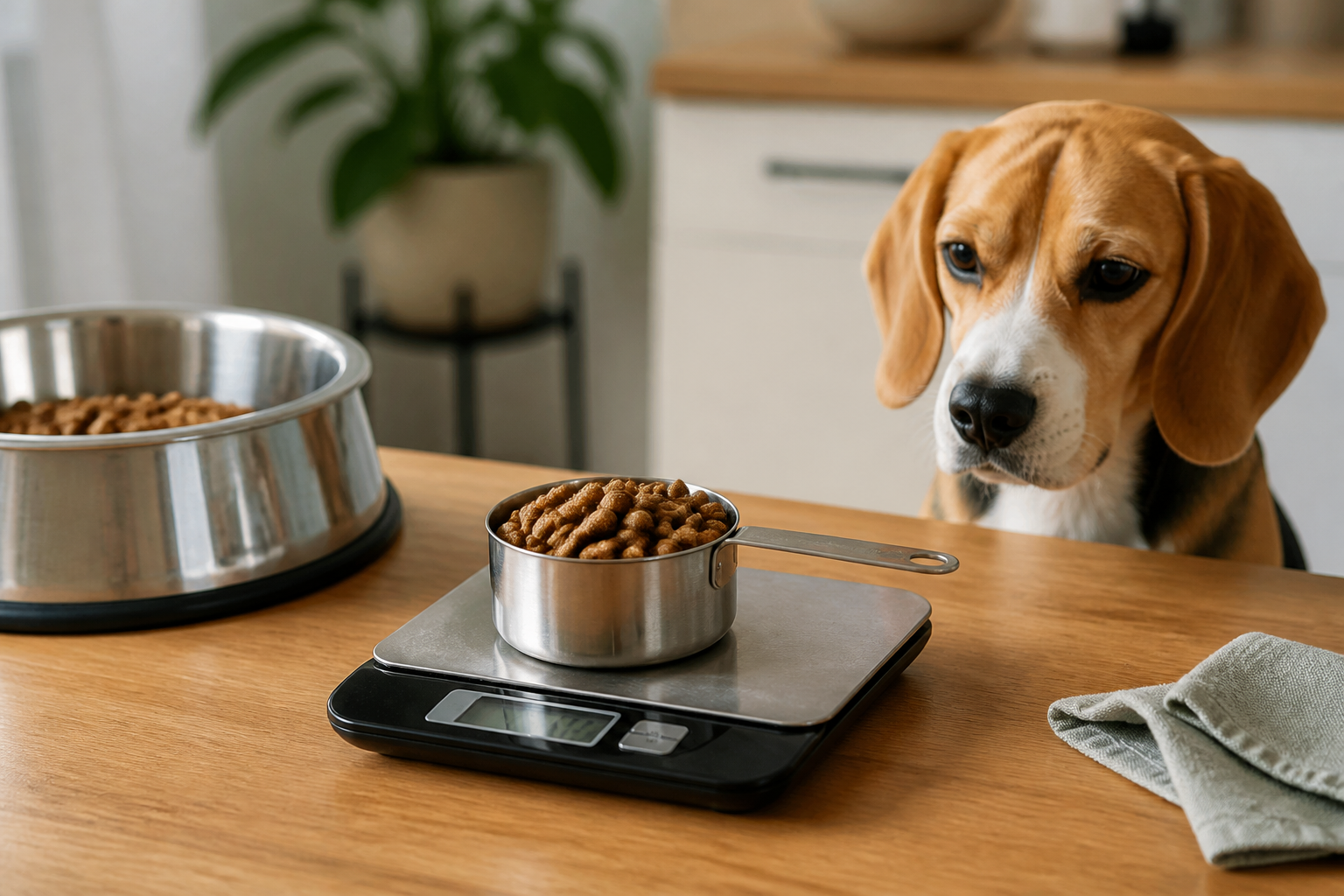
You are standing in the kitchen with a measuring scoop in one hand while your dog watches every move. You follow the feeding guide on the back of the bag. It says to provide "one cup" of food twice a day. However, you might wonder if that volume is actually providing the correct nutrition. At BaxterBoo, we help pet owners navigate these daily details to ensure pets stay healthy and fit.
This article explains why "one cup" is a misleading measurement and how density affects your dog's diet. We will cover how to convert volume to weight and why your choice of measuring tool matters. You will learn how to calculate the exact amount of food your dog needs to maintain an ideal weight. Correcting your feeding habits is a simple way to prevent long term health issues like obesity.
Quick Answer: Most dry dog food weighs between 3.2 and 4.2 ounces per cup. This weight varies significantly based on the kibble size, shape, and the specific density of the ingredients used in the formula.
The Difference Between Volume and Weight
Most people use a standard measuring cup to portion out meals. In the world of cooking, a cup is a measure of volume. It represents 8 fluid ounces of space. However, dry dog food is not a liquid. Because kibble comes in different sizes and shapes, it does not fill that space in a uniform way.
A cup of small, round kibble will pack together tightly. This leaves very little air between the pieces. A cup of large, triangular kibble will have many air pockets. Even though both fill the same 8 ounce scoop, the small kibble will weigh much more. This means your dog gets more calories in a cup of small kibble than a cup of large kibble.
Weight is a measurement of mass. It tells you exactly how much physical matter is in the bowl. This is why professional bakers weigh their flour instead of using measuring cups. For your dog, weighing food ensures they get the exact number of calories they need every single day.
Why Kibble Density Varies by Brand
Every pet food manufacturer uses a different recipe and cooking process. These choices affect the density of the final product. Brands like Orijen or Acana often produce calorie dense kibble that is quite heavy. Other brands may use more fiber or "air" in their extrusion process to make the kibble feel lighter.
The ingredients also play a role. Formulas high in heavy meat meals will weigh more than those high in lightweight grains or plant fibers. Air-dried foods like Ziwi Peak are extremely dense. A small scoop of air-dried food can weigh as much as a large bowl of standard kibble. If you switch brands without weighing the food, you might accidentally double your dog's caloric intake.
Key Takeaway: Never assume a new bag of food has the same weight per cup as your previous brand. Always check the weight when switching formulas or brands to avoid overfeeding.
The Impact of Kibble Shape and Size
The geometry of the food changes how much fits into a cup. Manufacturers create specific shapes for different purposes. Some shapes are designed to encourage chewing for dental health. Others are designed for small mouths to pick up easily.
Consider these common shapes and their impact:
- Small Round Pellets: These settle into the bottom of the cup and leave minimal gaps. They are usually the heaviest per cup.
- Large X-Shapes or Triangles: These "bridge" against each other. They create large air gaps in the scoop. You might get 20 percent less food by weight in a cup of these shapes.
- Heart or Star Shapes: These decorative shapes often create the most air space. They are frequently less dense than standard round kibble.
If your dog is eating a shape with a lot of air gaps, they might feel like they are getting a large meal. In reality, they are consuming less mass. This can be helpful for weight management but confusing for owners trying to track nutrition.
How to Calculate Calories per Ounce
Most dog food bags list calories in "kcal per kilogram." This metric measurement is the gold standard for accuracy. However, most US pet owners think in cups or ounces. To find the exact weight you should feed, you need to do a little math.
There are 35.27 ounces in one kilogram. To find the calories per ounce, divide the kcal/kg number by 35.27. For example, if your food bag says it contains 3,600 kcal/kg, the math looks like this:
3,600 / 35.27 = 102.07 calories per ounce.
Once you know the calories per ounce, you can determine how many ounces your dog needs based on their daily energy requirement. This removes the "cup" from the equation entirely. It allows you to feed with precision regardless of the kibble size or shape. For another approach, see this guide to calculating how many cups of dry dog food your dog needs per day.
Using a Digital Scale for Precision
The best tool for your kitchen is a digital food scale. These are inexpensive and much more accurate than any plastic scoop. A scale allows you to "tare" the weight of the bowl. This means you put the empty bowl on the scale, press a button to reset it to zero, and then add food until you hit the target weight.
BaxterBoo carries various scales and high precision measuring tools in our gear section. Using a scale eliminates the "heaping cup" vs. "level cup" debate. Research shows that most pet owners overfill their scoops by 10 to 20 percent when they are in a hurry. Over a year, that extra 20 percent can lead to significant weight gain.
Steps to Weigh Your Dog's Food
Step 1: Determine the daily caloric needs. / Consult your veterinarian or use a reputable online calculator to find out how many calories your dog needs daily.
Step 2: Find the calories per ounce. / Use the math mentioned above to convert the kcal/kg on the bag to kcal per ounce.
Step 3: Calculate the target weight. / Divide the daily calories by the calories per ounce to find the total ounces of food needed per day.
Step 4: Use the scale at every meal. / Divide the total daily ounces by the number of meals you feed to get your target weight per serving.
Managing Health Through Precise Feeding
Obesity is a leading health crisis for dogs in the United States. It puts extra strain on joints and can lead to diabetes or heart disease. Many owners do not realize their dog is overweight because the weight gain happens slowly. Precise feeding is the most effective way to prevent or reverse this trend.
If your veterinarian determines your dog needs to lose weight, they may suggest a prescription diet. These diets are formulated to keep dogs feeling full while providing fewer calories. Our dog pharmacy provides access to prescription pet medications and specialized pet-care options. These specialized diets work best when they are weighed out to the gram rather than measured by the cup.
Vet Tip: If your dog is struggling with weight, ask your vet for a Body Condition Score. They can help you determine the exact calorie count needed for a safe weight loss plan.
The Role of Life Stages in Food Density
Puppy food is generally denser and more calorie rich than adult food. Puppies have small stomachs but high energy needs for growth. This means a cup of puppy food is often "heavier" in terms of nutrition than the same volume of adult food.
Senior dogs often have the opposite need. They may have slower metabolisms and lower activity levels. Senior formulas might be less dense or include more fiber to help them feel satisfied. If you transition a senior dog back to an adult or "all life stages" food without adjusting the weight, they may quickly become overweight. For more guidance, explore our puppy shop when choosing food for a growing dog.
How Moisture Content Affects Weight
Dry kibble typically has a moisture content of around 10 percent. Semi-moist foods or air-dried options like Ziwi Peak have different profiles. Air-dried food is extremely concentrated because almost all the water has been removed without the high heat of extrusion.
One cup of air-dried food can weigh as much as 5 or 6 ounces. It is incredibly nutrient dense. Conversely, if you add water to your dog's kibble to make a "gravy," you are increasing the volume and weight without increasing the calories. This is a great trick for dogs who are always hungry, as it fills the stomach more effectively.
Common Measuring Mistakes to Avoid
Even well-meaning pet owners make mistakes when measuring food. These errors usually lead to overfeeding. Recognizing these habits can help you get your dog's diet back on track.
- Using a Coffee Mug: A standard coffee mug is rarely exactly 8 ounces. Some hold 12 or 16 ounces. Using a mug instead of a measuring cup can double the meal size.
- The "Heaping" Scoop: A cup measurement should be level. If you have a mound of food on top of the scoop, you are adding a significant amount of extra calories.
- Guesswork: Scooping by "eye" is never accurate. Your perception of a full bowl changes depending on how hungry you are or how much of a hurry you are in.
- Treats Not Included: If you give your dog treats, you must subtract those calories from their daily food weight. Treats should only make up 10 percent of the total diet.
Key Takeaway: Consistency is the key to weight management. Choose one method, preferably weighing by grams or ounces, and stick to it every single day.
How to Read the Guaranteed Analysis
The back of the dog food bag is your best resource. The "Guaranteed Analysis" tells you the minimum protein and fat levels. Below that, you will find the "Calorie Content" statement. This is where you will find the kcal/kg and usually the kcal/cup numbers.
Keep in mind that the "kcal per cup" listed on the bag is an average. The manufacturer calculates this based on their own internal standard cup. If your cup at home is slightly different, or if the kibble has settled and broken into smaller pieces at the bottom of the bag, that "kcal per cup" number will be wrong. This is why the "kcal per kg" is the only number you should trust for perfect accuracy.
Financial Benefits of Accurate Feeding
Measuring food accurately does more than just help your dog's health. It also helps your wallet. When you overfeed by even 10 percent, you are essentially throwing away one out of every ten bags of food you buy.
By weighing your food, you know exactly how many days a bag will last. This makes budgeting easier. It also makes programs like our Autoship programme more effective. You can calculate the exact frequency for your deliveries so you never run out and never have too much food cluttering your pantry. We offer savings on your first Autoship order and a free MVP Gold membership to help you save on every bag.
Adjusting for Activity and Environment
The amount of food your dog needs can change based on the season. In the winter, dogs may burn more calories just to stay warm if they spend time outside. In the summer, they might be more active with walks and swimming.
Monitoring your dog's weight monthly is essential. If you notice they are losing a little definition in their waist, reduce the daily food weight by 5 or 10 percent. If they seem too thin, increase it slightly. These small adjustments are much easier to make when you are working with ounces or grams rather than trying to eyeball "three quarters of a cup."
Transitioning to a New Food
When you switch to a new brand, such as Farmina or Royal Canin, you must do a gradual transition. This usually takes 7 to 10 days. During this time, you mix the old food with the new food.
This is where weighing becomes very helpful. You can calculate the total weight of the meal and then use a scale to get the exact ratio. For example, on day three, you might want 60 percent old food and 40 percent new food. A scale makes this transition perfectly smooth for your dog's digestive system. You can compare options in our dog food category as you plan the change.
Transition Schedule
Step 1: Days 1-2. / Feed 75 percent old food and 25 percent new food by weight.
Step 2: Days 3-4. / Feed 50 percent old food and 50 percent new food by weight.
Step 3: Days 5-7. / Feed 25 percent old food and 75 percent new food by weight.
Step 4: Day 8 and beyond. / Feed 100 percent new food and monitor for any digestive changes.
Understanding Prescription Diets
Sometimes a dog has a health condition that requires more than just standard kibble. This might include kidney issues, urinary stones, or severe allergies. These conditions often require prescription diets that have very specific nutrient balances.
Our partnership with Pet's Choice allows you to order these specialized foods directly through the BaxterBoo pharmacy. These diets are scientifically formulated to manage specific conditions. Because they are often more expensive than standard kibble, weighing the food ensures you are not wasting money by overfeeding while also providing the exact therapeutic dose of nutrients your dog needs.
Bottom line: Weighing your dog's food is the only way to ensure they receive the exact nutrition required for their specific life stage and health needs.
Summary of Feeding Best Practices
Feeding your dog should be a simple, stress free part of your day. By moving away from volume measurements and embracing weight, you provide better care for your pet.
- Buy a digital kitchen scale and use it for every meal.
- Calculate calories per ounce using the kcal/kg on the bag.
- Adjust portions based on activity levels and seasonal changes.
- Include treats in the total daily calorie count.
- Consult your vet for a target weight and daily calorie goal.
Accurate feeding is an act of love. It prevents the health complications of obesity and ensures your dog feels their best. Whether you are feeding a high energy puppy or a slow moving senior, the scale is your best friend in the kitchen.
If you are looking for specific weight management foods or high quality brands like Stella and Chewy's, explore our full collection of dog food. For pets with specific health needs, visit our pet pharmacy to see how we can help you manage your dog's wellness through professional, prescription nutrition.
FAQ
How many cups are in a 30 pound bag of dog food?
A 30 pound bag of dog food generally contains about 120 cups of kibble. This estimate is based on the average weight of 4 ounces per cup. However, if your kibble is very dense or very large, this number could range anywhere from 100 to 140 cups.
Why does the feeding guide on the bag seem like too much food?
Feeding guides on dog food bags are developed for active, un-neutered adult dogs. Most household pets are spayed or neutered and have lower activity levels, which means they require about 20 to 30 percent less than the bag recommends. Always use the guide as a starting point and adjust based on your dog's body condition.
Can I use a regular 8 ounce measuring cup for dog food?
You can use a standard measuring cup, but it will only measure volume, not weight. Because kibble density varies so much, one cup of one brand might have 300 calories while a cup of another brand has 500 calories. Using a scale is the only way to ensure you are feeding the same amount of nutrition every time.
Does the weight of the food change if I add water?
Adding water increases the weight and the volume of the meal, but it does not change the calorie count. This is a helpful strategy for weight loss because it helps your dog feel full without adding extra calories. Just be sure to weigh the dry kibble before you add any liquid to keep your measurements accurate.






