
 Save 15% on your 1st Autoship learn more

 Email us
 Live Chat
 FAQs
FAQs





Introduction
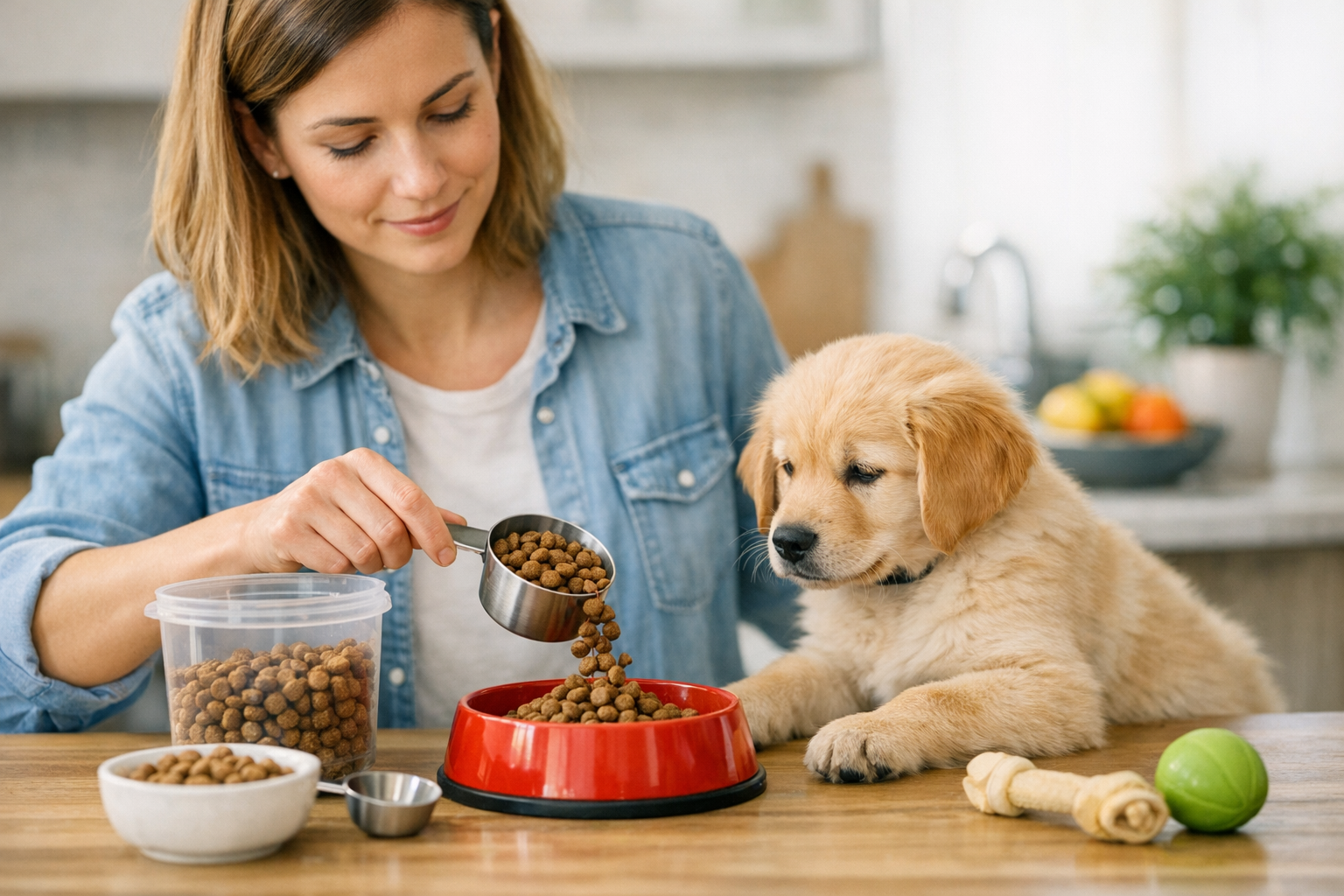
You finally brought that new ball of fluff home. You have the bed, the crate, and a dozen squeaky toys ready to go. Then you stand in the kitchen staring at a bag of dry kibble and realize you aren't quite sure how much to put in the bowl. It is a common moment of doubt for every new pet owner. Feeding a puppy is much more than just filling a dish. It is about providing the specific building blocks for their bones, brain, and immune system during their most rapid stage of growth.
At BaxterBoo, we have helped thousands of pet parents navigate these early stages since 2006. We know that every puppy is different, and a tiny Chihuahua has vastly different needs than a Great Dane. If you are comparing options, our puppy food category is a helpful place to start. This guide covers how to determine the right portion sizes, how often to feed your pup, and how to adjust those amounts as they grow. Our goal is to give you the confidence to fuel your puppy's development properly.
Quick Answer: Most puppies need between one half cup and three cups of dry food daily, divided into three or four meals. The exact amount depends on their age and projected adult weight, so always check the specific feeding chart on your puppy food bag.
Why Puppy Food Matters
Puppies are not just small dogs. Their bodies are working overtime to develop skeletal structures and vital organs. Because of this, they require a much higher concentration of specific nutrients than an adult dog. If you look at the premium formulas from Royal Canin, you will notice they focus heavily on a few key ingredients.
Protein is the primary building block for muscles and tissues. Puppies generally need a higher percentage of protein than adults to support this rapid expansion. Fats provide the concentrated energy required for all that puppy play and growth. You will also see DHA (Docosahexaenoic Acid) mentioned often. This is an omega 3 fatty acid found in mother's milk that is vital for healthy brain and vision development.
Calcium and phosphorus are also critical. These minerals must be precisely balanced. This is especially true for large breed puppies. If they get too much calcium or grow too fast, it can lead to serious joint and bone issues later in life.
Key Takeaway: Puppy food is more calorie-dense and nutrient-heavy than adult food to support rapid growth, brain development, and bone health.
Factors That Determine Serving Sizes
You cannot determine how much to feed based on your puppy's current weight alone. A ten pound puppy that will eventually weigh eighty pounds needs much more food than a ten pound puppy that is already almost full grown.
Projected Adult Weight
This is the most important factor. Most puppy feeding charts are organized by what the dog is expected to weigh at maturity. If you have a purebred dog, this is easy to estimate based on the parents. For mixed breeds, you may need to look at paw size or consult your veterinarian for an educated guess.
Current Age
Puppies need the most calories relative to their body weight when they are very young. As they get older and their growth rate slows down, the amount of food per pound of body weight actually decreases. This is why you will see the recommended amounts on the bag change as the months go by.
Activity Level
Just like humans, a puppy that spends all day running in a yard will burn more fuel than one that spends most of the day napping. If your puppy is exceptionally active, you may need to lean toward the higher end of the feeding recommendations.
Breed Size
Small breeds have faster metabolisms and reach maturity quickly, often by ten to twelve months. Large and giant breeds grow much more slowly and may not reach full maturity until they are two years old. Their feeding plans must reflect these different timelines.
How to Read a Puppy Feeding Chart
Every bag of dry food has a feeding guide. It is usually a grid that looks a bit like a spreadsheet. While every brand varies slightly in calorie density, most follow a similar logic. You find your puppy’s projected adult weight on one axis and their current age on the other.
For a deeper transition read, our guide on when puppies can have dry kibble is a helpful companion post.
| Adult Weight (lbs) | 1.5 - 3 Months | 4 - 5 Months | 6 - 8 Months | 9 - 11 Months |
|---|---|---|---|---|
| 3 to 12 lbs | 1/2 to 1 cup | 2/3 to 1 1/3 cups | 1/2 to 1 1/2 cups | Adult Food |
| 13 to 20 lbs | 1/2 to 1 1/4 cups | 1 1/8 to 2 cups | 3/4 to 1 1/3 cups | 1 to 1 1/2 cups |
| 21 to 50 lbs | 1/2 to 1 1/2 cups | 1 1/2 to 2 3/4 cups | 1 1/8 to 2 1/3 cups | 2 to 3 cups |
| 51 to 75 lbs | 5/8 to 2 1/3 cups | 1 1/2 to 4 cups | 1 1/2 to 3 3/4 cups | 2 1/2 to 4 3/4 cups |
| 76 to 100 lbs | 1 to 2 2/3 cups | 2 7/8 to 3 3/4 cups | 2 7/8 to 6 1/3 cups | 3 7/8 to 7 cups |
Note that these are total daily amounts. You must divide the number of cups by the number of meals you plan to give your puppy each day. If the chart says one cup and you feed three times a day, each meal is one third of a cup.
Vet Tip: Feeding charts are starting points, not absolute rules. If your puppy is gaining too much weight or seems constantly lethargic, consult your veterinarian to adjust their caloric intake based on their specific body condition.
Creating a Feeding Schedule
Puppies thrive on routine. A consistent schedule helps with digestion and makes house training much easier. When a puppy eats at the same time every day, they will usually need to go outside at the same time every day.
Under 3 Months Old
At this stage, puppies have tiny stomachs but massive energy needs. Most experts recommend four meals a day. Spacing these out helps maintain steady blood sugar levels throughout the day.
3 to 6 Months Old
Most puppies can transition to three meals a day during this window. You might feed them at breakfast, lunch, and dinner. This is a good time to monitor if they are finishing every meal or leaving a little behind.
6 Months to Maturity
By six months, most breeds are ready for two meals a day. This will likely be their lifelong schedule. However, keep an eye on toy breeds. Smaller dogs can sometimes struggle with low blood sugar if they go too long between meals.
Setting the Routine
Try to feed your puppy in the same quiet spot every day. This helps them feel secure and reduces the urge to "guard" their food. Avoid vigorous exercise for about thirty minutes before and after eating to prevent digestive upset.
The Importance of Precision
When you are dealing with a small puppy, an extra quarter cup of food is a massive percentage of their daily intake. Using a standard measuring cup is essential. Do not just use a random coffee mug or a scoop you found in the garage.
Overfeeding is a major concern for growing dogs. It puts unnecessary stress on developing joints. It can also lead to obesity early in life, which sets the stage for chronic health issues. Underfeeding is just as risky, as it can lead to developmental delays or a weakened immune system.
If you are unsure if your puppy is the right weight, use the "rib test." You should be able to feel your puppy's ribs easily under a thin layer of fat. You should not see the ribs sticking out prominently. When looking down at your puppy from above, they should have a visible waistline.
Special Considerations for Large Breeds
Large and giant breed puppies like Great Danes, Mastiffs, or Labradors require very careful management. Their bones and joints are under immense pressure because they grow so fast. If they grow too quickly, the bones can become less dense or develop structural abnormalities.
This is where prescription diets or specialized formulas come into play. We carry brands like Farmina and Royal Canin that offer specific formulas for these needs. These foods are designed to keep growth steady rather than explosive.
Note: Our dog healthcare category offers a broad range of wellness items that can support your puppy's changing needs. If your veterinarian recommends a specific therapeutic diet for growth management or a health condition, we can fulfill those needs directly.
Weaning and Softening Food
If you have a very young puppy that is just starting on dry food, the transition should be gradual. You cannot just switch from milk to hard kibble overnight.
Step 1: Mix a small amount of puppy kibble with warm water or a puppy-safe broth.
Step 2: Let the mixture sit for about ten minutes until it reaches a mushy, oatmeal-like consistency.
Step 3: Gradually reduce the amount of liquid over one to two weeks.
Step 4: Once the puppy is chewing comfortably, you can serve the kibble completely dry.
If you want to try a ready-made formula, The Honest Kitchen Grain Free Whole Food Clusters Puppy Dog Food - Chicken is one option to explore.
This process helps their digestive system adapt to processing solid proteins and fibers. It also makes it easier for their small baby teeth to handle the food.
Using Treats Wisely
Training starts the moment your puppy walks through the door. Treats are an invaluable tool for teaching commands and rewarding good behavior. However, those calories count toward the daily total.
We recommend following the 90/10 rule. At least 90 percent of your puppy's daily calories should come from their balanced dry food. Only 10 percent should come from treats. If you have a big training session planned, you might want to use a portion of their regular kibble as rewards to avoid overfeeding.
If you need reward options, our dog treats collection is a good place to browse. Avoid "people food" and table scraps. Many human foods are toxic to dogs, and the extra salt and fat can cause upset stomachs in young puppies.
Signs Your Puppy Needs a Change
Puppies can be sensitive. Sometimes the food that worked for the breeder or the shelter might not agree with your pup's stomach. You should monitor their behavior and "output" closely.
- Steady Weight Gain: They should be getting heavier and larger every week without becoming "round" or sluggish.
- Energy Levels: A healthy puppy should have bursts of high energy followed by solid naps. Extreme lethargy is a red flag.
- Stool Quality: Their stool should be firm and consistent. Frequent diarrhea or very soft stools can indicate the food is too rich or contains an allergen.
- Coat and Skin: Their fur should be soft and shiny. Excessive itching, red skin, or a dull, brittle coat often points to a nutritional gap.
If you notice persistent digestive issues, it is time to talk to your vet. They may suggest a limited ingredient diet or a food specifically formulated for sensitive stomachs.
Transitioning to Adult Food
Knowing when to stop feeding puppy food is just as important as knowing how much to start with. Puppy food is too high in calories for most adult dogs. Staying on it too long almost always leads to unwanted weight gain.
Most small and medium dogs can switch to adult food around twelve months of age. Large and giant breeds may need to stay on puppy formulas for eighteen to twenty four months. This ensures their skeletal system is fully set before the calorie intake drops.
Always make the transition slowly. Over the course of seven to ten days, gradually mix increasing amounts of adult food with decreasing amounts of puppy food. This prevents the sudden change from shocking their digestive system.
Supporting Ongoing Health
Feeding is only one part of the puppy puzzle. As your pup grows, their needs will shift from basic growth support to preventative care. This might include flea and tick prevention, heartworm medication, or supplements for skin and coat health.
Our pet pharmacy for dogs is there when your veterinarian recommends prescription or preventative care. We also carry trusted brands like Frontline and NexGard to keep your new family member protected from parasites as they start exploring the world.
Key Takeaway: Consistent feeding portions and a reliable healthcare routine are the two pillars of a long, healthy life for your dog.
Bottom Line on Puppy Feeding
Feeding a puppy feels like a big responsibility because it is. You are literally building a dog from the ground up. By using a proper measuring cup, following a breed-specific feeding chart, and maintaining a consistent schedule, you are giving your puppy the best possible start.
Stay observant. Your puppy will tell you if the food is working through their energy, their coat, and their growth. Don't be afraid to adjust the portions as they hit growth spurts or become more active. And always remember that your veterinarian is your best partner in fine-tuning your puppy’s nutrition.
Summary Checklist for Puppy Feeding
- Confirm your puppy’s projected adult weight to use the feeding chart accurately.
- Use a standard measuring cup for every single meal.
- Divide the daily total into three or four meals for younger puppies.
- Follow the 90/10 rule for treats and training rewards.
- Monitor body condition monthly to adjust portions for growth spurts.
- Schedule a vet visit if you notice persistent lethargy or digestive upset.
If you are ready to stock up on premium kibble or need to set up a recurring delivery, our Autoship programme is a great way to save. You will get savings on your first order and a free MVP Gold membership. This ensures you never run out of food right when your puppy is hit with a growth spurt.
FAQ
How do I know if I am overfeeding my puppy?
If your puppy loses their visible waistline or you cannot easily feel their ribs, you are likely overfeeding. Puppies should look lean and fit, not soft and round. Overfeeding can lead to rapid growth that damages developing joints, especially in larger breeds.
Can I just leave food out all day for my puppy?
Free-feeding is generally not recommended for puppies. It makes house training much harder because you cannot predict when they will need to go outside. It also makes it difficult to notice if your puppy has lost their appetite, which is often the first sign of illness.
Why does my puppy seem hungry even after eating?
Puppies are naturally opportunistic eaters and will often act hungry even when they have had enough calories. This is especially true for certain breeds like Labradors. As long as they are hitting their growth milestones and have a healthy body condition, stick to the recommended amounts on the bag.
Is it okay to mix wet food with dry puppy kibble?
Yes, you can mix wet and dry food, but you must adjust the portions of both to avoid overfeeding. Wet food is often very palatable and can help with hydration. Just be sure both products are specifically formulated for puppies to maintain a proper nutritional balance.
If you want to keep building value on every order, the MVP Rewards programme is worth a look for ongoing savings and perks.
bottom line: Proper puppy feeding requires a balance of high-quality dry food, a consistent schedule, and regular weight checks to ensure healthy development.






