
 Save 15% on your 1st Autoship learn more

 Email us
 Live Chat
 FAQs
FAQs





Introduction
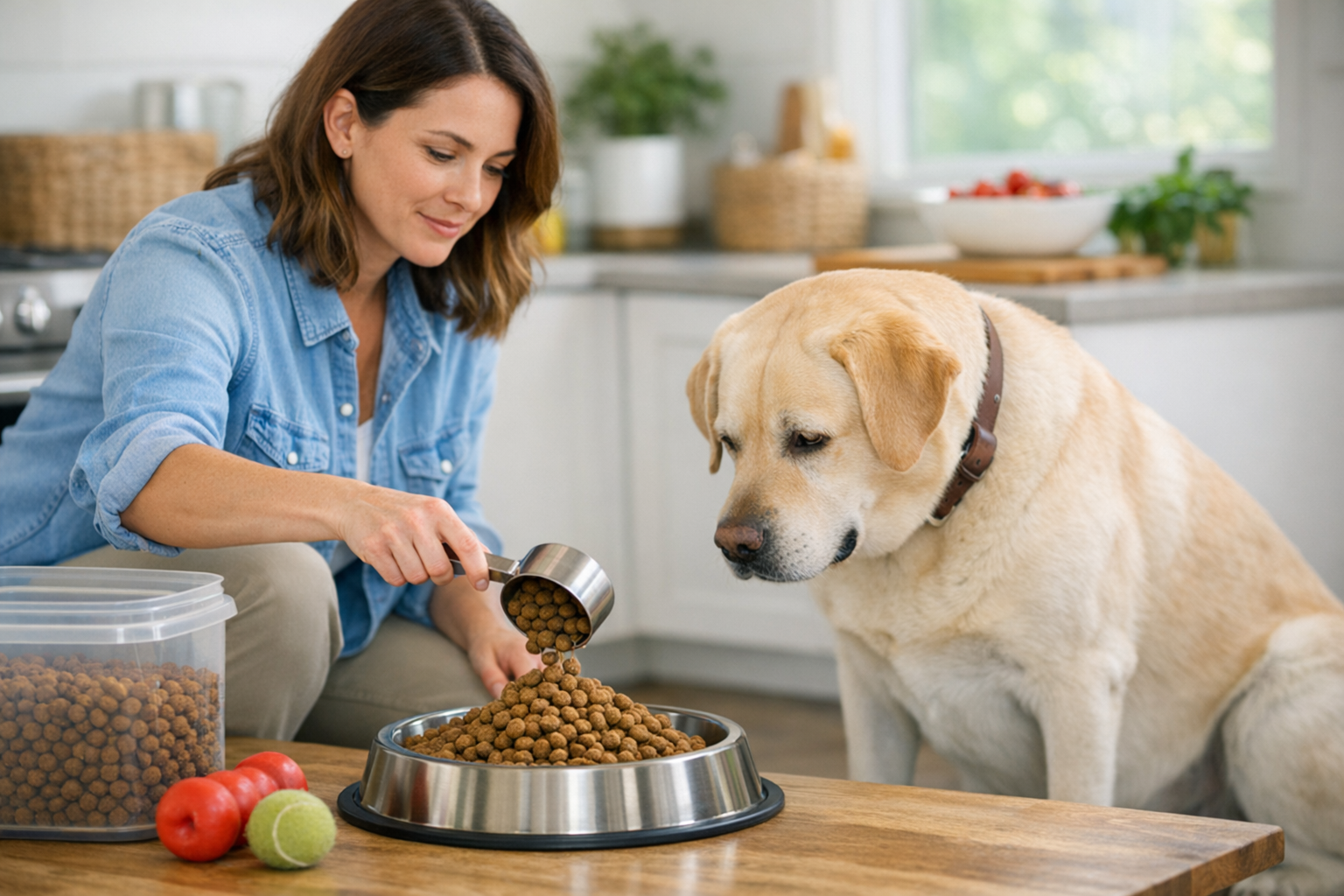
Standing in the kitchen with a measuring scoop in hand is a familiar scene for many large dog owners. You want to ensure your big friend has enough energy for the day without packing on unhealthy weight. At BaxterBoo, we know that feeding an 80 pound dog requires more than just following a generic chart on the back of a bag. This guide will help you determine the exact amount of dry food your dog needs based on their age, lifestyle, and unique metabolism. We will also cover how the quality of the kibble changes the daily portion size and when to seek specialized nutritional support. Understanding these variables ensures your dog maintains a healthy body condition for years to come.
Quick Answer: An average 80 pound adult dog typically requires 3 to 4.5 cups of dry dog food per day. This amount can vary significantly based on the calorie density of the specific food and the dog's daily activity level.
Factors That Determine Daily Feeding Amounts
Every 80 pound dog is an individual with different caloric requirements. A sedentary dog lounging on the sofa has vastly different needs than a working dog or an active hiking companion. Age and life stage also play a critical role in how the body processes nutrients.
Activity Level and Energy Output
Activity is the biggest variable when calculating portions. A highly active 80 pound Labrador who spends hours swimming or fetching will burn through calories quickly. These dogs may need closer to 4.5 or 5 cups of food to maintain their muscle mass. Conversely, a senior dog who only takes short walks around the block might only need 2.5 to 3 cups. If you want a broader breakdown of everyday feeding math, our dry food feeding guide can help you compare portion sizes by routine.
Metabolism also varies by breed. Some large breeds like Boxers tend to have higher resting energy requirements. Others like Basset Hounds or Mastiffs may have slower metabolisms. You must observe your dog's energy and weight trends rather than sticking to a static number.
Age and Life Stage
Puppies that are expected to reach 80 pounds need a different nutritional profile than adults. Large breed puppies grow rapidly. They require specific ratios of calcium and phosphorus to ensure their bones and joints develop correctly. Feeding too many calories too quickly can lead to skeletal issues.
Senior dogs usually experience a slowing metabolism. As they age, they may also become less active due to joint stiffness. Many owners find that they need to reduce the total cup count or switch to a senior formula with fewer calories per cup. This helps prevent obesity, which is particularly hard on the joints of a large 80 pound dog.
Reproductive Status
Spaying or neutering can slightly lower a dog's metabolic rate. Intact dogs often require more calories to maintain their weight. If your dog was recently fixed, keep a close eye on their waistline. You might need to reduce their daily intake by about 10 percent to compensate for the metabolic shift.
Key Takeaway: The "correct" amount of food is a moving target that changes as your dog grows, ages, and changes their activity habits.
Understanding Calorie Density in Dry Food
Not all dry dog food is created equal. The number of cups you feed depends heavily on how many calories are packed into each cup. This is known as calorie density. It is expressed on the bag as kilocalories per cup (kcal/cup).
Premium vs. Standard Kibble
Higher quality brands often use more concentrated ingredients. This means they are more calorie dense and more digestible. You might find that a premium brand like Orijen or Stella & Chewy's requires you to feed fewer cups than a grocery store brand filled with corn and wheat fillers.
When a food is highly digestible, your dog absorbs more nutrients. This often leads to smaller, firmer stools and better overall health. If you switch from a low calorie food to a high calorie one without adjusting the portion, your dog will likely gain weight quickly.
Reading the Calorie Label
Always check the calorie count per cup. Most standard adult maintenance foods range from 330 to 400 kcal per cup. If your dog's food has 450 kcal per cup, you will feed significantly less than if it has 310 kcal per cup.
Calorie Comparison for an 80 Pound Dog
- Low Calorie Food (300 kcal/cup): Approximately 5 to 5.5 cups daily.
- Standard Food (375 kcal/cup): Approximately 4 to 4.5 cups daily.
- High Density Food (450 kcal/cup): Approximately 3.5 cups daily.
Bottom line: Feeding a higher quality, more calorie-dense food often means you buy less food over time because you are serving smaller portions.
Assessing Your Dog's Body Condition
The most accurate way to tell if you are feeding the right amount is to look at your dog. Weight is just a number, but body condition tells the real story. An 80 pound dog might be at their ideal weight, or they might be significantly overweight depending on their frame and height.
The Rib Test
You should be able to feel your dog's ribs easily without pressing hard. There should be a thin layer of fat over them, but each rib should be palpable. If you have to dig your fingers in to find a rib, your dog is likely carrying too much weight. If the ribs are visible from a distance, your dog may be underweight.
The Waist and Tuck
Look at your dog from above. They should have a visible waist behind the ribcage. It should look like an hourglass shape. From the side, the abdomen should tuck up behind the ribs rather than hanging low or staying level with the chest.
Body Condition Checklist:
- Ribs are easily felt but not sticking out.
- A clear waist is visible when viewed from above.
- The belly tucks up when viewed from the side.
- No heavy fat deposits at the base of the tail or over the hips.
Vet Tip: Obesity is a leading cause of joint pain and shortened lifespans in large dogs. If you cannot feel your dog's ribs, consult your veterinarian to rule out underlying health issues and create a safe weight loss plan.
Specialized Nutrition for Large Dogs
Large dogs like those weighing 80 pounds have specific health risks that smaller dogs do not face as often. Their diet should address these concerns to keep them mobile and healthy.
Joint Health and Support
Carrying 80 pounds puts a lot of stress on the hips, knees, and elbows. Many large breed formulas include added glucosamine and chondroitin. You can also supplement with brands like Cosequin or Zesty Paws. These ingredients support cartilage health and may help manage the symptoms of arthritis as your dog ages.
Managing Chronic Conditions
Some dogs require a specific diet due to allergies, kidney issues, or diabetes. If your veterinarian recommends a prescription diet, our pharmacy is a great resource. These specialized diets are formulated to manage specific medical needs while ensuring your large dog gets the right balance of calories.
Bloat Prevention
Large, deep-chested dogs are at a higher risk for Gastric Dilatation-Volvulus (GDV), commonly known as bloat. This is a life-threatening condition where the stomach twists. To help prevent this, many owners of 80 pound dogs use a slow-feed bowl. These bowls have ridges that prevent the dog from inhaling their food too quickly.
Key Takeaway: Proper feeding for a large dog involves more than just volume. It includes managing speed, joint support, and specific medical requirements.
Establishing a Feeding Schedule
Consistency is key for digestion and metabolism. Most adult 80 pound dogs do best with two meals per day. This helps keep their blood sugar stable and prevents them from becoming overly hungry and searching for scraps.
Why Twice a Day?
Feeding one large meal can be hard on the digestive system. It can also increase the risk of bloat in large breeds. Dividing the daily total into two equal portions is much safer. For example, if your dog needs 4 cups a day, give 2 cups in the morning and 2 cups in the evening.
Using Proper Measuring Tools
Do not use a coffee mug or a random scoop to measure your dog's food. These are often much larger than a standard 8-ounce measuring cup. Overestimating by just a small amount at each meal can lead to significant weight gain over a year. Use a dedicated plastic or metal measuring cup for every meal.
Steps to Transition to a New Amount or Brand:
Step 1: Determine the new daily total / Divide the total by two for morning and evening meals.
Step 2: Mix the new food with the old / Start with 25 percent new food and 75 percent old food for three days.
Step 3: Increase the ratio / Move to a 50/50 mix for the next three days.
Step 4: Complete the switch / Move to 75 percent new food for three days before feeding only the new food.
Treats and Enrichment Calories
Treats are an important part of the bond with your dog, but they contain calories. For an 80 pound dog, treats should not make up more than 10 percent of their daily caloric intake. If you want to keep treats in the rotation without overfeeding, our dog treats collection is a useful place to compare options.
Choosing Healthy Treats
If you are training heavily, use small, low-calorie treats or even a portion of your dog's regular kibble. Many owners forget to subtract treat calories from the dinner bowl. If you give a large dental chew or several biscuits throughout the day, you must reduce the amount of dry food you serve at mealtime.
Enrichment and Mental Work
Large dogs need mental stimulation. Using puzzle toys like those from Kong can make mealtime last longer and keep your dog engaged. You can stuff these toys with a portion of their dry food mixed with a little bit of wet food or plain pumpkin. This provides mental exercise without necessarily adding hundreds of extra calories. For more enrichment ideas, our dog toys selection can help you mix feeding time with playtime.
Bottom line: Every calorie counts, including the ones that come from treats, table scraps, and training rewards.
Monitoring and Adjusting Over Time
You should re-evaluate your dog's feeding amount every few months. Seasonal changes can impact how much they eat. For instance, many dogs are less active during very hot summers or extremely cold winters. Our dog healthcare category is a good next stop when you're thinking about long-term wellness support.
Tracking Weight Changes
Most local pet stores or vet offices have a scale you can use for free. Weighing your 80 pound dog once a month helps you catch weight gain before it becomes a major problem. It is much easier to lose two pounds than it is to lose ten.
Signs You Should Consult a Vet
If your dog is losing weight despite eating the recommended amount, or if they are gaining weight while eating very little, see a veterinarian. Unexpected weight changes can be a sign of thyroid issues, parasites, or other metabolic conditions. Your vet can provide a precise caloric target based on a professional body condition score.
Feeding Guidelines by Activity Level
| Activity Level | Description | Estimated Cups Per Day |
|---|---|---|
| Sedentary | Couch potato, short walks only, senior dogs. | 2.5 – 3 cups |
| Moderate | Daily 30-60 minute walks, backyard play. | 3 – 4 cups |
| Active | Long hikes, running, agility training. | 4 – 5 cups |
| Working | Service dogs, herding dogs, daily intense labor. | 5+ cups |
Conclusion
Feeding your 80 pound dog the right amount of dry food is an essential part of responsible pet ownership. By considering their activity level, the calorie density of the kibble, and their overall body condition, you can prevent obesity and support their long-term health. Remember to use a standard measuring cup and split meals into at least two servings per day. If your dog has specific health concerns or requires a prescription diet, our pharmacy is ready to help you get the exact nutrition they need. We are committed to helping you provide the best care for your large breed companion through expert guidance and quality products.
Key Takeaway: Monitor your dog's waistline more than the measuring cup. Adjust portions based on the individual dog's needs to ensure a long, healthy life.
For your next bag of premium kibble or a new slow-feeder bowl, explore our full collection of dog food and supplies. You can also save on every order by joining our MVP Rewards programme.
FAQ
How many calories does an 80 pound dog need daily?
An average, moderately active adult dog weighing 80 pounds requires approximately 1,600 to 1,700 calories per day. This number will be lower for seniors or sedentary dogs and higher for those with active working roles. Always check the calorie count on your specific bag of food to determine how many cups meet this requirement. If you're comparing ways to stretch your budget, our dog food savings guide is a helpful companion read.
Is it better to feed my large dog once or twice a day?
It is much better to feed an 80 pound dog at least twice a day. Large breeds are susceptible to bloat, a dangerous condition where the stomach twists, which can be triggered by eating one large meal too quickly. Dividing the food into two or more smaller meals supports better digestion and more stable energy levels. If you are trying to make regular feeding easier, our Autoship programme can keep kibble coming on schedule.
Should I feed a specialized large breed formula to my 80 pound dog?
Large breed formulas are often beneficial because they are designed with the specific needs of big dogs in mind. These foods typically contain joint-supporting ingredients like glucosamine and may have a different calorie density to prevent unnecessary weight gain. They also often feature larger kibble pieces that encourage chewing rather than gulping.
What should I do if my 80 pound dog is always hungry?
If your dog seems constantly hungry but is at a healthy weight, try adding low-calorie bulk to their meals, such as plain canned pumpkin or green beans. You can also use puzzle toys or slow feeders to make mealtime last longer, which helps your dog feel more satisfied. Ensure you are feeding a high-quality, nutrient-dense food that keeps them fuller for longer. For more ideas on calorie-smart feeding, our freeze-dried feeding guide offers another useful angle.






