
 Save 15% on your 1st Autoship learn more

 Email us
 Live Chat
 FAQs
FAQs





Introduction
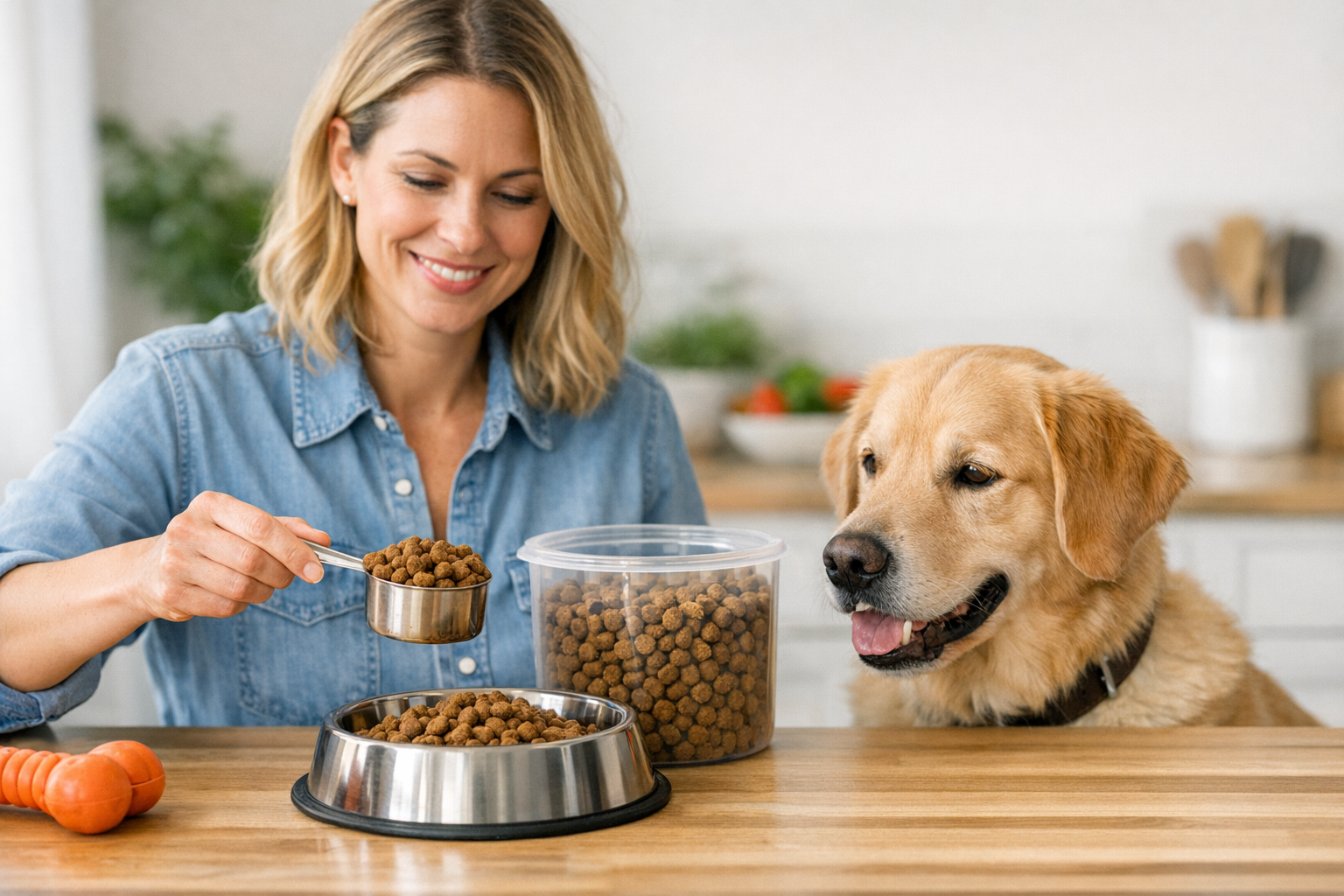
Standing in the pet food aisle or looking at a fresh bag of kibble can feel surprisingly complicated. You want to ensure your dog is getting enough energy to thrive without overfilling the bowl and risking weight gain. Most owners find themselves second guessing the scoop size at least once a month. Here at BaxterBoo, we talk to pet owners every day who are trying to balance the numbers on the back of the bag with the reality of their dog’s unique lifestyle. This guide explains how to read feeding charts, adjust for your dog's activity level, and recognize the physical signs that your pup is eating the right amount. Finding the perfect portion is a blend of following expert guidelines and observing your dog’s specific needs over time. If you want a wider starting point, our dog food category is a helpful place to browse.
The Starting Point: Understanding the Feeding Chart
The first place most people look is the printed chart on the side of the bag. These charts are required by law on all pet food packaging and provide a daily recommendation based on weight. However, it is vital to remember that these numbers represent a starting point for an average dog. Most manufacturers calculate these figures based on an intact, moderately active dog. If your dog is spayed, neutered, or spends most of the day on the couch, these "average" numbers might be too high for them.
When you look at the chart, find your dog’s current weight. Most brands list a range, such as two to three cups per day. This range exists because even dogs of the same weight have different metabolic speeds. If your dog is currently at an ideal weight, use their actual weight to find the starting point. If they are significantly overweight, you should use their "target" weight as the guide, but only after consulting with your veterinarian to ensure a safe reduction in calories. For more support with portion planning, our dog healthcare category can help you explore related wellness items.
Quick Answer: Start with the daily recommended amount on the food bag based on your dog’s ideal weight. Divide this total number by the number of meals you serve per day. Monitor your dog's body condition for two weeks and adjust the portion up or down by ten percent if you notice weight changes.
Why Calorie Density Matters
Not all dry dog foods are created equal. One cup of a high performance puppy food might contain 500 calories, while a cup of senior weight management food might only have 300. This is why you cannot simply use the same measuring cup for every brand you buy. If you switch from a budget brand to a premium, nutrient dense food like those we carry at BaxterBoo, you will likely need to feed a smaller volume. Always check the calories per cup, often listed as "kcal/cup," whenever you change formulas. If you are comparing formulas, our selection of NutriSource products is one example of a brand page that can help you browse by recipe.
Core Factors That Change Your Dog’s Calorie Needs
Several factors influence how much fuel your dog needs to stay healthy. A dog is not a static machine, and their requirements will shift throughout their life. Understanding these variables helps you move away from the "one scoop fits all" mentality.
Age and Life Stage
Puppies are growing machines. They require significantly more calories per pound of body weight than adults because they are building bone, muscle, and organ tissue. Puppy food is formulated to be more calorie dense to accommodate their small stomachs. Most puppies need to be fed three to four times a day to maintain steady blood sugar and energy levels. If your dog is still in that early stage, our puppy food category is a natural next stop.
As dogs reach adulthood, their metabolism stabilizes. Once they hit their senior years, usually between seven and ten years old depending on the breed size, their metabolism slows down. Senior dogs often become less active and lose muscle mass. If you continue feeding the same amount you did during their prime, they will likely put on excess weight.
Activity Level and Lifestyle
A dog that goes for a three mile run every morning has vastly different needs than a dog whose primary exercise is a walk to the mailbox. Working breeds, such as Border Collies or German Shepherds, often have higher metabolic rates even at rest. If your dog is a "weekend warrior" who is active on Saturdays but quiet during the week, you might find that an average daily portion works best rather than changing amounts day to day.
Spay and Neuter Status
It is a well documented fact in veterinary medicine that spaying or neutering a dog changes their hormonal balance and can slow their metabolism. Research suggests that fixed dogs may require up to twenty percent fewer calories than intact dogs of the same age and breed. If your dog was recently fixed and you notice them gaining weight on their usual portion, a small reduction is usually necessary.
Key Takeaway: Feeding amounts are not permanent. You must adjust the bowl based on your dog's age, whether they have been fixed, and how much they actually move each day.
How to Tell if You Are Feeding the Right Amount
Since charts are only estimates, you need a way to measure success. The best way to do this is by looking at and feeling your dog. Scales are helpful, but they do not tell the whole story of body composition.
The Rib Test and Body Condition Scoring
Veterinarians use a Body Condition Score (BCS) on a scale of one to nine to evaluate a dog's weight. You can perform a version of this at home using the "rib test." If you want to keep tabs on overall wellness, our dog healthcare category is a useful place to look.
- Underweight: If the ribs, spine, and hip bones are clearly visible from a distance, the dog likely needs more calories.
- Ideal Weight: You should not be able to see the ribs, but you should be able to feel them easily with light pressure, like the back of your hand. When looking from above, the dog should have a visible waistline. From the side, the abdomen should tuck up behind the ribcage.
- Overweight: If you have to press hard to find the ribs, or if the dog looks like a solid cylinder from above with no waist, they are likely being overfed.
Monitoring Energy and Coat Quality
Your dog’s physical appearance reflects their internal health. A dog getting the right amount of high quality food will have a shiny coat, clear eyes, and consistent energy levels. If your dog seems lethargic or their coat is becoming dull and flaky, it could be a sign of nutritional deficiency or underfeeding. Conversely, if they are energetic but the "tuck" in their waist is disappearing, it is time to trim the portions. If your feeding plan changes often, our Autoship programme can help keep the same food coming on schedule.
Vet Tip: Always consult your veterinarian before starting a significant weight loss plan for your dog. Rapid weight loss can lead to health complications. A vet can help rule out underlying issues like thyroid problems or diabetes that might be affecting your dog's weight.
Precision Matters: Measuring the Right Way
One of the most common mistakes owners make is "eyeballing" the food. A handful here or a "mostly full" coffee mug there can lead to huge variations in daily intake. A half cup extra per day might not seem like much, but for a twenty pound dog, that can represent a twenty five percent increase in total calories. Over a month, this leads to significant weight gain.
Step 1: Use a standard dry measuring cup. Do not use a liquid measuring cup or a generic plastic scoop that hasn't been calibrated.
Step 2: Level off the scoop. A "heaping" cup can contain twenty percent more food than a level cup.
Step 3: Consider a kitchen scale. Weighing the food in grams is the most accurate way to ensure consistency, especially for small dogs where every kibble counts.
Step 4: Account for treats. Treats should never make up more than ten percent of your dog's total daily calories. If you do a lot of training with treats, you must reduce the amount of dry food in the bowl to compensate. For lower-calorie reward options, our dog treats category is worth a look.
When Weight Becomes a Health Concern
Maintaining a healthy weight is about more than just looks. Obesity is one of the leading causes of shortened lifespans in dogs. It puts immense strain on the joints, leading to early onset arthritis and mobility issues. It also increases the risk of heart disease, respiratory issues, and certain types of cancer.
Managing Obesity and Underweight Pets
If your dog is struggling to lose weight despite portion control, they may need a specialized diet. These foods are designed to be high in fiber to help the dog feel full while remaining low in calories. At BaxterBoo, we handpick brands that prioritize high quality protein even in weight management formulas to ensure your dog maintains muscle while losing fat. If you are comparing weight-focused recipes, our weight management selection is a strong place to start.
In some cases, your veterinarian may prescribe a therapeutic diet for weight loss or other chronic conditions like kidney disease or allergies. Our pet pharmacy carries a wide range of FDA approved prescription pet foods and medications through our partnership with Pet's Choice. If your vet provides a prescription, you can easily fulfill it through our system to have your dog's specialized food delivered to your door. For more background on the nutrition side of transitions, our guide to switching from dry to wet dog food is a useful next read.
Key Takeaway: Precision in measuring is the easiest way to prevent accidental overfeeding. Use a dedicated measuring cup and remember that treats are part of the daily calorie total.
The Importance of Feeding Frequency
How often you feed is almost as important as how much. While some owners "free feed" by leaving a bowl out all day, this is generally discouraged by experts. Free feeding makes it impossible to track exactly how much your dog is eating and often leads to overconsumption. It also removes a key diagnostic tool: if a dog that usually loves mealtime suddenly stops eating, you know immediately that something is wrong.
Feeding Schedules for Different Ages
- Puppies (under 6 months): Need three to four meals per day to maintain energy.
- Adult Dogs: Usually do best with two meals per day, roughly twelve hours apart. This keeps their metabolism steady and prevents the stomach from becoming too acidic.
- Large Breeds: For dogs prone to bloat, smaller and more frequent meals may be recommended by your vet to prevent the stomach from over-expanding.
- Senior Dogs: Often thrive on two smaller meals, though some may prefer three if they have digestive sensitivities.
Bottom line: Stick to a consistent schedule and avoid free feeding to keep your dog’s weight and digestion on track.
Transitioning to a New Food
When you find a new brand at a specialty retailer or through our warehouse, you cannot simply swap the old food for the new one at the same volume. Every formula has a different caloric density. Even if the bags are the same weight, the calories per cup will differ.
When transitioning, do it over a period of seven to ten days. Start by mixing twenty five percent of the new food with seventy five percent of the old food. Gradually increase the ratio of new food every few days. During this time, watch your dog’s stool. If it becomes loose, slow down the transition. Once you are fully on the new food, re-evaluate the portion size based on the new bag's instructions and your dog's body condition. If you want another practical step-by-step resource, our discounted dog food guide can help you compare value and nutrition.
Practical Steps for Success
To keep your dog at their ideal weight, follow this simple checklist:
- Confirm your dog’s current weight at the vet or using a home scale.
- Read the kcal/cup on your specific bag of dry food.
- Use a level, standard measuring cup for every single meal.
- Perform the "rib test" once a week to check for weight changes.
- Limit table scraps and high calorie treats.
- Adjust portions seasonally if your dog is less active in the winter.
If you find that your dog is constantly hungry despite being at a healthy weight, look for foods with higher fiber content or add "bulk" to the bowl with vet approved, low calorie toppers like plain canned pumpkin or green beans.
Conclusion
Feeding your dog the right amount of dry food is a dynamic process that changes as they grow and age. By starting with the guidelines on the bag and adjusting for their specific activity level and life stage, you can prevent the health risks associated with obesity and malnutrition. Always keep an eye on their body condition and energy levels, as these are the truest indicators of health. If you are ever in doubt, your veterinarian is your best resource for a personalized nutritional plan.
For all your dog's nutritional needs, we offer over 500 trusted brands including names like NutriSource, Acana, and Orijen. You can also simplify your routine by using our Autoship programme, which ensures you never run out of your dog's favorite kibble and provides extra savings. Whether you need standard maintenance food or a specialized prescription diet from our pet pharmacy, we are here to support your dog’s health through every stage of life. You can also explore our selection of Acana products, our selection of Orijen products, and the MVP Rewards programme when you are ready to make every order go further.
FAQ
How many cups of dry food should I feed my 50 pound dog?
A 50 pound dog typically needs between 2 and 2 2/3 cups of dry food per day, but this varies wildly depending on the food’s calorie count. A highly active hunting dog might need more, while a senior dog might need significantly less. Always check the specific kcal/cup listed on your food bag and use the chart as a starting point.
Is it better to feed a dog once or twice a day?
Most veterinarians recommend feeding adult dogs twice a day, usually once in the morning and once in the evening. This helps regulate blood sugar, prevents hunger related behaviors, and can be better for digestion than one large meal. Puppies and certain small breeds may require even more frequent feedings to prevent energy crashes.
Why is my dog always hungry even though I feed the recommended amount?
Some dogs are naturally highly food motivated, or they may be eating a food that lacks sufficient fiber to make them feel full. If your dog is at an ideal weight but seems starving, you can try a food with higher fiber or add low calorie "fillers" like green beans. However, if a dog is suddenly and intensely hungry, consult your vet to rule out medical issues like parasites or malabsorption.
Do I need to change how much I feed if I give my dog treats?
Yes, treats must be factored into your dog's daily calorie budget. Treats and toppers should make up no more than ten percent of their total daily intake. If you give a large treat or several training rewards, you should reduce the amount of dry food you put in the bowl for their next meal to prevent overfeeding.






