
 Save 15% on your 1st Autoship learn more

 Email us
 Live Chat
 FAQs
FAQs





Introduction
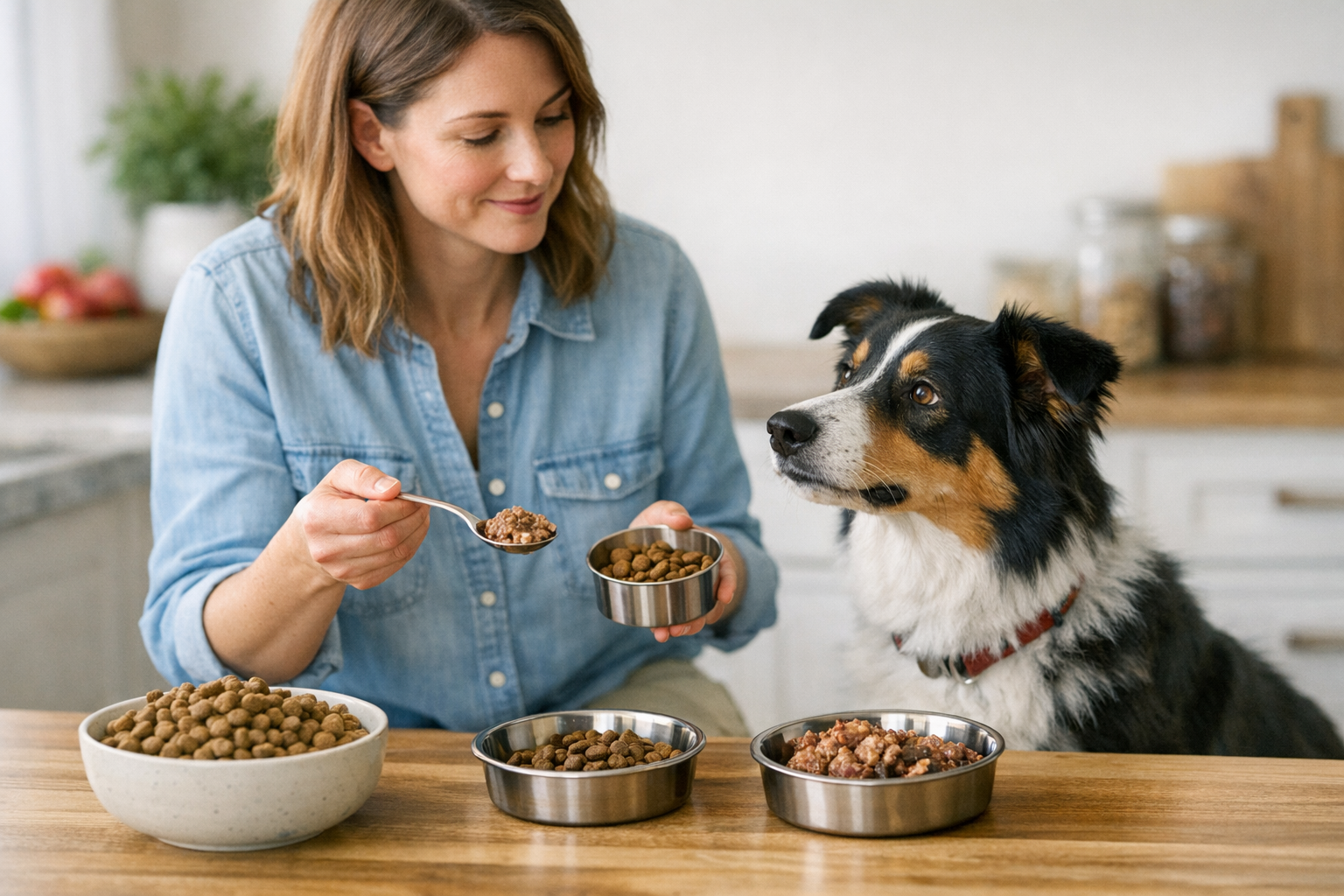
You are standing in the kitchen with a scoop in one hand and a can opener in the other. Your dog is watching your every move with an intensity usually reserved for squirrels in the backyard. You want to give them the crunch of kibble for their teeth and the rich flavor of wet food for a treat. But how do you combine them without causing unwanted weight gain? This is a question we hear constantly at BaxterBoo.
Getting the balance right is about more than just filling the bowl. It requires understanding calories, activity levels, and life stages. In this guide, we will break down the math of mixed feeding and help you determine the exact portions your dog needs. Our goal is to move past the guesswork so you can feel confident that your dog is getting the right nutrition for a long and healthy life.
Why Mixing Wet and Dry Food Is a Popular Choice
Many pet owners choose to offer a combination of textures. Dry food is convenient and helps keep teeth clean through mechanical scraping. Wet food provides much higher moisture levels, which is great for hydration and kidney health. If you want to explore options while you read, start with our dog food category. Mixing them can make meals more exciting for picky eaters or senior dogs with a declining sense of smell.
However, wet food and dry food are not equal in terms of energy. Kibble is very concentrated. A small cup of dry food might have the same calories as three or four cans of wet food. If you simply add wet food on top of a full serving of kibble, you are essentially giving your dog two dinners. This leads to obesity, which puts extra strain on joints and organs.
Quick Answer: To feed a mix of wet and dry food, start by determining the total daily calories your dog needs. If you want to feed 50 percent of each, take half of the recommended daily dry amount and half of the recommended wet amount. Always adjust these portions based on your dog's body condition and weight trends.
The Factors That Determine Portion Size
Every dog is an individual. The feeding chart on the back of the bag is a helpful starting point, but it is only an estimate. Several factors will change how much your dog actually needs to eat each day.
Current Weight and Body Goal
Your dog's current weight is the most obvious factor. However, you should feed based on their target weight. If your dog is currently 60 pounds but your veterinarian says they should be 50 pounds, you must feed for a 50 pound dog.
Activity Level
A dog that runs five miles with you every morning has vastly different caloric needs than a dog that spends the day napping on the sofa. Working breeds or high energy dogs often have a higher metabolism. They may need significantly more food than the standard chart suggests.
Age and Life Stage
Puppies are growing rapidly and need calorie dense food to support bone and muscle development. Adult dogs need maintenance levels. Seniors often have slower metabolisms and may be less active. They usually require fewer calories but higher quality protein.
Vet Tip: If your dog is struggling with weight management or has a chronic condition like kidney disease, ask your vet about prescription diets. Our pet pharmacy offers a wide range of FDA approved prescription foods and medications through our partnership with Pet's Choice to help manage these specific health needs.
How to Calculate the Mixed Feeding Ratio
The easiest way to calculate a mixed diet is to use percentages. You do not need to be a math expert to get this right. You just need the feeding guidelines from both the dry food bag and the wet food can.
The 50/50 Split
If you want to feed half dry and half wet, follow these steps:
- Look at the dry food bag and find the total daily amount for your dog's weight. Divide that number by two.
- Look at the wet food label and find the total daily amount. Divide that number by two.
- Feed those two half portions throughout the day.
The 75/25 Split
Many owners prefer to use wet food as a topper. In this case, you might feed 75 percent dry food and 25 percent wet food.
- Take the total daily dry food recommendation and multiply it by 0.75.
- Take the total daily wet food recommendation and multiply it by 0.25.
- Combine these amounts for the total daily intake.
If you want another breakdown of portion logic, our guide to mixing wet and dry dog food is a helpful next step.
Key Takeaway: Never just add wet food to a full portion of kibble. Always subtract a portion of the dry food to make room for the calories in the wet food.
Understanding Caloric Density
Dry food is calorie dense because the water has been removed. Wet food is mostly water, often up to 80 percent. This means your dog can eat a larger volume of wet food without consuming as many calories as they would in kibble.
This volume difference is helpful for dogs that always seem hungry. Adding a bit of wet food can help them feel full while keeping their calorie count low. Brands like Royal Canin or Purina Pro Plan often provide specific charts for mixed feeding on their packaging. If you use brands like NutriSource or Open Farm, check their websites for specific calorie counts per cup or per can.
Monitoring Your Dog's Body Condition
Since every dog's metabolism is different, you must monitor them visually. We recommend checking your dog's body condition score once a month. This is a more accurate way to tell if you are feeding the right amount than just using a scale.
- Underweight: Ribs, spine, and pelvic bones are easily visible. There is no palpable fat.
- Ideal Weight: You can feel the ribs but not see them. There is a visible waistline when viewed from above. The abdomen is tucked up when viewed from the side.
- Overweight: Ribs are difficult to feel under a layer of fat. The waistline is absent or bulging. The abdomen does not tuck up.
How to Weigh Your Dog at Home
If your dog is small enough to lift, you can get an accurate weight using a standard bathroom scale.
- Step on the scale alone and record your weight.
- Pick up your dog and step on the scale again.
- Subtract your weight from the total.
For larger dogs, we recommend a visit to the vet for a professional scale reading. Most clinics will let you use their scale in the lobby for free.
Feeding Schedules for Different Ages
How often you feed is just as important as how much. Splitting the total daily amount into multiple meals helps with digestion and keeps energy levels stable.
Puppies
Puppies under four months old usually need three to four meals per day. Their small stomachs cannot hold a full day's worth of food at once. Frequent feeding also prevents blood sugar drops in small breeds.
Adult Dogs
Most adult dogs thrive on two meals per day. This usually happens once in the morning and once in the evening. Some owners of large breeds prefer three smaller meals to reduce the risk of bloat, though you should discuss this with your vet.
Senior Dogs
Seniors can stay on a twice daily schedule. However, if they develop certain health issues, your vet might recommend more frequent, smaller portions. If your senior dog is taking medications for joints or heart health, our Autoship programme can help keep recurring prescriptions and food deliveries on schedule.
Bottom line: Consistency is key for digestive health, so try to feed your dog at the same times every day.
Transitioning to a New Feeding Routine
If you are just starting to add wet food to a dry diet, do not do it all at once. A sudden change in protein or fat levels can cause an upset stomach. This is especially true for dogs with sensitive digestion.
Step 1: Start with a small spoonful of wet food. / Mix it with 90 percent of their usual dry food. Step 2: Observe for any signs of gas or loose stools. / Do this for two to three days. Step 3: Gradually increase the wet food portion. / Decrease the dry food portion proportionally over the next week. Step 4: Reach your desired ratio. / Ensure the total calories remain consistent with your dog's needs.
If you are moving from kibble to a softer diet, our guide to switching from dry to wet dog food offers a simple transition plan.
The Role of Treats in the Daily Total
It is easy to forget that treats have calories too. If you are training a new puppy or giving a senior dog a dental chew every night, those calories add up.
A good rule is the 10 percent rule. Treats should never make up more than 10 percent of your dog's total daily caloric intake. If you give a lot of treats one day, you should slightly reduce their dinner portion. High quality treats from brands like Stella and Chewy's or Zuke's are great, but they still count toward the daily total.
Specialized Diets and Health Concerns
Some dogs have medical needs that dictate exactly how much and what they should eat. Dogs with allergies might need limited ingredient diets like those from PureVita or Natural Balance. Dogs with joint issues may benefit from foods with added glucosamine, such as certain formulas from Farmina.
For chronic health issues, a veterinarian may prescribe a therapeutic diet. These are formulated to manage specific conditions like urinary stones or liver disease. We carry many of these prescription brands through our BaxterBoo pharmacy partnership. Since these foods are technically medical treatments, the portions must be strictly controlled according to your vet's instructions.
Vet Tip: Sudden changes in appetite or weight can be symptoms of underlying health issues. If your dog stops eating or starts losing weight despite eating the same amount, schedule a veterinary exam immediately.
Hydration and the Wet Food Advantage
One of the biggest reasons we recommend adding wet food is hydration. Many dogs do not drink enough water, especially during hot Illinois summers. Dry food only contains about 10 percent water. Wet food can help support kidney function and urinary tract health by naturally increasing fluid intake.
If your dog is prone to urinary crystals or infections, a higher moisture diet is often part of the treatment plan. You can even add a little warm water to the wet and dry mix to create a gravy. This further increases hydration and helps release the aromas of the food, making it more enticing.
Choosing the Right Brands
When selecting food for a mixed diet, look for high quality ingredients. We carry over 500 trusted brands at BaxterBoo to ensure you have access to the best nutrition.
- For High Protein Needs: Look at our selection of Orijen products, which focus on biologically appropriate ratios.
- For Sensitive Stomachs: Consider our selection of The Honest Kitchen products or limited ingredient wet foods.
- For Value and Quality: Our selection of NutriSource products offers great gut health support through their Good 4 Life system.
- For a Balanced Everyday Option: Our selection of Acana products can be a strong fit for dogs at different life stages.
Remember that calories vary significantly between brands. A cup of a high protein "grain free" food might have 450 calories, while a "healthy weight" formula might only have 300. Always check the kcal/cup or kcal/can measurement on the label.
If cost is a concern, our discounted dog food guide is a useful companion piece.
Summary of Mixed Feeding Steps
- Identify your dog's target weight.
- Calculate the total daily calories needed based on activity level.
- Choose your ratio (e.g., 50/50 or 75/25).
- Divide the portions of dry and wet food accordingly.
- Slowly transition over 7 to 10 days.
- Monitor body condition and adjust as needed.
Key Takeaway: Feeding is an ongoing process of observation and adjustment rather than a set-it-and-forget-it task.
Conclusion
Finding the perfect balance of wet and dry food is one of the best ways to support your dog's health and happiness. By understanding the caloric differences between kibble and canned food, you can provide a variety of textures without the risk of overfeeding. Always remember to use your dog's body condition as your ultimate guide and consult your veterinarian for specific health concerns.
If you need specialized nutrition or prescription diets, we are here to help. Our MVP Rewards programme and Autoship programme offer convenient ways to get the food and medications your dog needs to thrive.
- Check the feeding labels on every new bag or can.
- Adjust portions for age and activity changes.
- Use treats sparingly within the 10 percent rule.
- Consult your vet for personalized nutrition plans.
Bottom line: A mixed diet of high quality wet and dry food provides the benefits of both worlds, supporting hydration and dental health simultaneously.
FAQ
Can I mix any brand of wet food with any brand of dry food?
Yes, you can generally mix different brands, provided both are high quality and complete and balanced. However, some dogs with sensitive stomachs may do better if you stay within the same brand or use similar protein sources. Always check that both foods are formulated for your dog's specific life stage.
Does wet food cause more dental problems than dry food?
Wet food does not have the crunchy texture that helps scrape plaque off teeth, but dry food alone is not a substitute for dental care. Even if you feed 100 percent kibble, your dog still needs regular teeth brushing and professional cleanings. Mixing in wet food is fine for dental health as long as you maintain a good oral hygiene routine.
How do I store leftover wet food once the can is open?
Leftover wet food should be covered with a tight fitting lid and stored in the refrigerator immediately. Most canned food stays fresh for two to three days after opening. If your dog does not like cold food, you can let it sit at room temperature for a few minutes or add a splash of warm water before serving.
Why is my dog still hungry even though I am feeding the recommended amount?
Feeding guidelines are based on averages, and your dog might have a higher metabolism or activity level. If your dog is at an ideal weight but seems hungry, you can try adding low calorie "fillers" like green beans. Alternatively, look for a food with higher fiber content to help them feel full longer. Always rule out medical issues like parasites or thyroid problems with your vet if hunger seems excessive.






