
 Save 15% on your 1st Autoship learn more

 Email us
 Live Chat
 FAQs
FAQs





Introduction
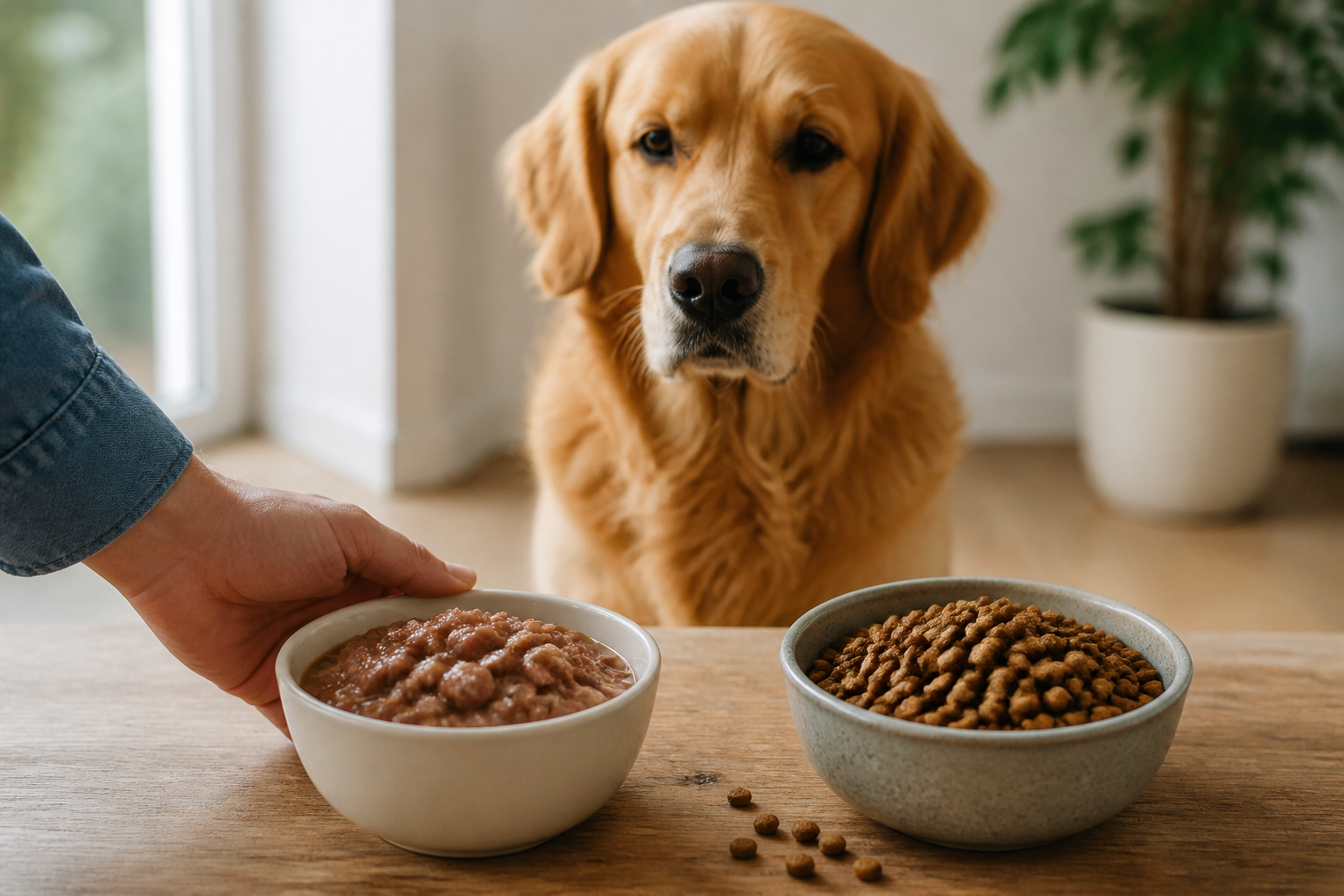
You are standing in your kitchen with a half-empty bag of kibble in one hand and a single can of wet food in the other. Perhaps you ran out of your usual dry food and need to fill the bowl. Maybe you want to add a savory topper to entice a picky eater. Whatever the reason, you are likely staring at the measuring scoop and wondering how to make the math work. At BaxterBoo, we understand that feeding your dog should be the easiest part of your day. It should not feel like a high school chemistry exam. Getting the ratio wrong can lead to an upset stomach or unintended weight gain. This guide will help you understand the caloric differences between food types. We will explain why moisture matters and how to maintain a healthy routine. Understanding caloric density is the secret to a balanced diet.
The Moisture Gap: Why Volume Is Deceiving
The biggest difference between wet and dry dog food is water content. This single factor is why you cannot swap them cup for cup. Dry kibble usually contains about 10 percent moisture. The rest of the bag is packed with concentrated proteins, fats, and carbohydrates. This makes kibble very calorie dense. A small amount of dry food provides a lot of energy.
Wet dog food is much different. It often consists of 75 percent to 80 percent water. This high moisture content is excellent for hydration. It also makes the food smell and taste more appealing to dogs. However, it means the nutrients are much more diluted. If you filled a bowl with one cup of wet food, your dog would receive far less nutrition than from one cup of kibble.
Because the nutrients in kibble are so condensed, a small volume goes a long way. When you switch to wet food, you must increase the volume significantly to reach the same calorie count. This often surprises owners. They see their dog finish a large bowl of wet food and still look for more. It simply does not have the same "staying power" in the stomach as dense kibble.
Quick Answer: Generally, one standard 13.2-ounce can of wet dog food equals about 1 cup of dry kibble. If you are measuring by weight, it takes roughly 3 to 4 ounces of wet food to equal the calories in 1 ounce of dry food.
Calculating the Conversion Ratio
To find the exact conversion for your specific brand, you must look past the weight and volume. You need to look at the calories. This information is usually listed on the label as kcal per cup for dry food. Wet food will list it as kcal per can or kcal per ounce.
The General Rule of Thumb
While every brand is different, there is a standard baseline you can use. Most high-quality dog foods follow a predictable calorie range.
- 1 cup of dry kibble is roughly equal to one standard 13.2 oz can of wet food.
- 1/2 cup of dry kibble is roughly equal to about 6.5 ounces of wet food.
- 1/4 cup of dry kibble is roughly equal to about 3.3 ounces of wet food.
This 3-to-1 or 4-to-1 ratio by weight is a helpful starting point. If your dog usually eats two cups of dry kibble a day, they would need two full cans of wet food to maintain the same energy.
Using Caloric Density
If you want to be precise, check the back of the packaging. A standard cup of dry kibble usually contains between 350 and 450 calories. A standard 13.2-ounce can of wet food typically falls in that same range. If you use smaller 5.5-ounce cans or pouches, the math changes. You would likely need two and a half of those smaller cans to equal a single cup of kibble. Always verify the kcal count before making a full swap. This ensures your dog gets enough fuel for their daily activities.
| Dry Food Amount | Equivalent Wet Food (by Weight) | Equivalent Standard Cans (13.2 oz) |
|---|---|---|
| 1/4 Cup | ~3.3 oz | 1/4 Can |
| 1/2 Cup | ~6.6 oz | 1/2 Can |
| 1 Cup | ~13.2 oz | 1 Full Can |
| 2 Cups | ~26.4 oz | 2 Full Cans |
Why Calories Matter More Than Volume
It is tempting to feed your dog based on how the bowl looks. We want our pets to feel full and satisfied. However, feeling full and being nutritiously fed are not the same. Because wet food is heavy with water, it takes up space in the stomach without providing dense energy.
If you feed based on volume alone, you run two risks. First, if you swap a cup of dry for a cup of wet, your dog will face a calorie deficit. Over time, this leads to weight loss and low energy. Second, if you overfeed wet food to make the bowl look full, you might provide too much fat or protein. This can cause digestive upset.
Consistency is the foundation of good health. We recommend using a consistent measuring cup for every meal. When you know exactly how many calories are in your dry food, adding wet food becomes much easier. It turns a caloric mystery into a simple addition.
Key Takeaway: Never swap wet and dry food based on volume alone. Always check the calorie count on the label to ensure your dog receives the same amount of energy.
Benefits of a Mixed Feeding Routine
Many dog owners choose a hybrid approach. This offers the best of both worlds. You get the convenience of kibble and the hydration of wet food. You can compare options in our wet dog food collection.
Improved Hydration
Many dogs do not drink enough water on their own. This is especially true for certain breeds or older dogs. Wet food is an excellent way to add moisture to their diet. This supports kidney health. It also helps keep the urinary tract functioning properly.
Palatability for Picky Eaters
If your dog turns their nose up at plain kibble, a small amount of wet food can help. The fats and proteins in wet food are very aromatic. The scent is often enough to entice a dog who is bored with their routine. It is also helpful for dogs feeling under the weather.
Dental Health and Texture
Dry kibble provides a crunch that can help scrape away some plaque. Wet food is soft and easy to chew. Mixing them provides a variety of textures. This keeps mealtime interesting for your pet. It also allows you to provide dental benefits while ensuring the meal is appetizing.
How to Mix Wet and Dry Food Safely
If you decide to start mixing, you should not just add wet food on top of a full portion of kibble. Adding wet food without reducing dry food leads to weight gain. You must adjust the ratios carefully.
Step 1: Determine total calorie needs. / Consult the feeding guide on your dog's primary food bag or talk to your vet.
Step 2: Decide on your ratio. / A common mix is 75 percent dry and 25 percent wet.
Step 3: Calculate the dry reduction. / If you add 100 calories of wet food, you must remove 100 calories of dry kibble.
Step 4: Mix thoroughly. / Stir the foods together so your dog does not just pick out the wet chunks.
Step 5: Monitor weight. / Watch your dog’s body condition for two weeks and adjust if they seem too heavy or too thin.
Vet Tip: If your dog has a chronic health condition like kidney disease or diabetes, consult your veterinarian before changing their food ratio. They can help you calculate the exact balance needed for their specific medical requirements.
Reading the Label: The Dry Matter Basis
The labels on dog food can be confusing. The Guaranteed Analysis lists protein and fat percentages as fed. Because wet food is 80 percent water, the protein percentage will look very low. It might say 8 percent protein while the dry food says 25 percent.
To compare them fairly, you must look at the dry matter basis. This calculation removes the water from the equation. When you remove the water, you often find that wet food has a higher protein and fat content than kibble. This is why wet food is often so palatable. It is also why portion control is vital.
Considerations for Different Life Stages
The amount of wet food a dog needs depends heavily on their age and activity level. Puppies and seniors have very different requirements.
Puppies
Puppies need a lot of energy for growth. They have small stomachs, so they cannot eat huge volumes at once. A mix of calorie-dense kibble and puppy-specific wet food is often ideal. This ensures they get the nutrients they need without overfilling their bellies.
Senior Dogs
Older dogs often face dental issues or a decreased appetite. Soft wet food is much easier for them to chew. It also helps with hydration, which is vital for aging kidneys. However, seniors are often less active. You must be careful not to overfeed them when using wet food toppers.
Working and Active Dogs
Dogs that hike or work need high-calorie diets. Dry food is usually the primary source of energy here because it is so concentrated. Wet food can be used as a high-value reward or a way to ensure they stay hydrated during a long day of activity.
Health and Pharmacy Needs
Some dogs require more than just standard retail food. If your dog has severe allergies, urinary issues, or weight management needs, your vet might recommend a prescription diet. These diets are formulated to treat specific medical conditions.
Our BaxterBoo pharmacy partnership with Pet's Choice provides access to these specialized foods. We carry FDA-approved prescription diets from brands like Farmina Vet Life and Royal Canin. These options come in both wet and dry formulas. You can explore our selection of Farmina products or our Royal Canin products. When your vet prescribes a specific food, you can manage the conversion using the same caloric principles mentioned above.
Key Takeaway: Prescription diets require a valid veterinary authorization. Our pharmacy team works directly with your vet to ensure your dog gets the exact nutrition required for their health condition.
Storage and Freshness
How you store food affects its nutritional value. Dry kibble is shelf-stable but can still go stale. It should be kept in its original bag inside a sealed container. This protects the fats from oxidizing and becoming rancid.
Wet food is much more delicate. Once a can is opened, it must be refrigerated. It should be used within two to three days. Never leave wet food out in a bowl for more than an hour. It can attract pests or grow bacteria quickly in room temperature conditions. If your dog does not finish their wet food, pick it up and discard it or refrigerate it immediately.
For more mealtime guidance, read how to switch from dry to wet dog food.
Common Mistakes to Avoid
Many well-meaning owners fall into simple traps when mixing foods. Awareness of these errors can save your dog from digestive trouble.
Eye-Balling the Portion
A scoop is not a universal measurement. One person might use a level cup while another uses a heaping mound. This inconsistency is a leading cause of pet obesity. Use a standard measuring cup or a kitchen scale for the most accuracy.
Ignoring the Topper Calories
It is easy to think a small spoonful of wet food does not count. However, those calories add up over a week. If you add a topper, you must reduce the base meal. Even a few extra calories a day can lead to a pound of weight gain over a year for a small dog.
Switching Too Fast
A sudden change from 100 percent dry to 50 percent wet can cause diarrhea. The digestive system needs time to adjust to the higher fat and moisture content of wet food. Always transition over a period of seven to ten days.
- Days 1-3: 25 percent new food, 75 percent old food.
- Days 4-6: 50 percent new food, 50 percent old food.
- Days 7-9: 75 percent new food, 25 percent old food.
- Day 10: 100 percent new food.
Managing the Cost
Wet food is generally more expensive than dry food per calorie. This is because you are paying for the packaging and the water content. Feeding a large dog exclusively wet food can become very costly.
A hybrid diet is a great way to manage your budget. By using kibble as the primary calorie source and wet food as a topper, you provide the variety your dog loves without the high price tag of an all-can diet. Using programs like our Autoship programme can also help. You save on recurring deliveries of both your favorite kibble and canned cases. Plus, you never have to worry about running out of food at the last minute.
Bottom line: Focus on the calories per serving rather than the size of the container to get the best value for your dog’s nutrition.
Summary: Your Feeding Checklist
Maintaining a healthy weight for your dog requires a bit of planning. Use this checklist to ensure your conversion is accurate.
- Check the kcal count for both the dry bag and the wet can.
- Calculate how many cans equal one cup of your specific dry food.
- Use a dedicated measuring cup for the kibble.
- Adjust the total volume if you are adding toppers or treats.
- Keep opened cans refrigerated and covered.
- Schedule regular weight checks with your veterinarian.
The team at BaxterBoo is here to help you find the right balance for your pet. Whether you need a premium kibble, a savory canned stew, or a prescription diet from our pharmacy, we have the selection to keep your dog thriving. You can begin comparing formulas in our dog food category. By focusing on calories and moisture, you can take the guesswork out of mealtime. This ensures your dog stays happy, healthy, and perfectly fed.
FAQ
How many cans of wet food equal 2 cups of dry dog food?
For most standard 13.2-ounce cans, two cans are roughly equal to 2 cups of dry kibble. This assumes a standard caloric density of about 350 to 450 calories per unit for both the can and the cup. Always check your specific brand's label as some high-protein kibbles may be much more calorie-dense than others.
Is it okay to feed my dog only wet food?
Yes, it is perfectly fine to feed a 100 percent wet food diet as long as the food is labeled as "complete and balanced." Wet food provides excellent hydration and is often easier for senior dogs to digest. However, it can be more expensive and does not provide the mechanical teeth-cleaning benefits of crunchy kibble.
Will switching to wet food cause my dog to gain weight?
Wet food itself does not cause weight gain, but overfeeding does. Because wet food is often more palatable, dogs may be more likely to beg for more. If you accurately convert the calories from your dry food to the wet food equivalent, your dog's weight should remain stable.
How do I calculate the amount of wet food for a small breed?
Small breeds have very fast metabolisms and need more calories per pound than large dogs. You should still follow the caloric conversion of 1 cup dry to 1 can wet. However, since small dogs eat smaller portions, you will likely be working with 3-ounce or 5.5-ounce cans. For these smaller sizes, roughly three 3-ounce cans or two 5.5-ounce cans equal 1 cup of dry kibble.






