
 Save 15% on your 1st Autoship learn more

 Email us
 Live Chat
 FAQs
FAQs





Introduction
Finding clumps of fur on your favorite rug or noticing a sudden funky smell when your dog gives you a lick is a common reality for many pet owners. These moments often serve as a gentle reminder that a grooming routine is about more than just looks. At BaxterBoo, we know that regular brushing is a cornerstone of preventative health. This post covers the specific tools and techniques you need for every coat type and provides a clear plan for starting a dental care routine. We want to help you turn these necessary chores into a positive bonding experience for you and your pet. Learning the proper way to brush your dog can prevent painful mats and catch hidden health issues before they become serious problems.
Understanding Your Dog's Coat Type
Before you pick up a brush, you must identify what kind of coat your dog actually has. Not every tool works for every dog. Using a brush designed for a thick double coat on a thin-skinned breed can cause discomfort or even skin irritation.
Short and Smooth Coats
Dogs like Boxers, Great Danes, and smooth-coated Dachshunds have hair that lies close to the skin. They do not get mats, but they do shed. For these breeds, a rubber brush is the most effective tool. Brands like Kong make rubber grooming tools that act like a magnet for loose hair while giving the dog a gentle massage.
Double Coats
Breeds like Labrador Retrievers, Huskies, and Corgis have a soft undercoat and a tougher outer layer. This coat type requires a two-step approach. You need a slicker brush for the surface and an undercoat rake to reach the shedding hair trapped underneath. If you ignore the undercoat, it can become compacted and trap heat against the skin.
Curly and Wavy Coats
Poodles and Doodles have hair that keeps growing rather than shedding out. This hair traps loose fur, leading to tight mats very quickly. These dogs require daily attention. A high-quality slicker brush and a metal comb are the standard tools here. You must be able to run a comb all the way to the skin to ensure no tangles are hiding at the base of the hair. For more guidance, review these tips for grooming a dog with curly hair.
Long and Straight Coats
Yorkshire Terriers and Shih Tzus often have hair that is more similar to human hair. It can tangle easily. A pin brush is usually the best choice for these breeds because the long pins can move through the hair without causing as much breakage as a dense slicker brush.
Quick Answer: The best way to brush a dog is to work in the direction of hair growth using tools specific to their coat type. For short hair, use a rubber brush. For long or curly hair, use a slicker brush and a metal comb to prevent mats.
Essential Tools for Coat Care
Having the right equipment makes the job faster and more comfortable for your pet. We carry many of the brands professional groomers trust, such as Safari and Andis. Browse our dog brushes and combs to compare options for different coat types.
- Slicker Brushes: These have fine wire bristles that are slightly angled. They are the workhorses of the grooming world.
- Rubber Brushes: These are ideal for short-haired breeds and for use during bath time to soap up the skin.
- Undercoat Rakes: These tools have long, wide-set teeth designed to pull out the "dead" undercoat without damaging the top layer.
- Metal Combs: These are essential for checking your work. If the comb catches, there is still a tangle that needs attention.
- Dematting Tools: These should be used with caution. They have sharp edges designed to cut through stubborn knots.
Vet Tip: If you find a mat that is tight against the skin, do not try to cut it out with scissors. It is very easy to accidentally cut the skin. Consult a professional groomer who can safely shave the area.
The Correct Technique for Coat Brushing
The way you move the brush matters as much as the tool itself. Always brush in the direction the hair grows. Going against the grain can be painful and may cause your dog to dislike the process.
For dogs with longer hair, use the "line brushing" technique. This involves lifting a section of hair with one hand and brushing the hair underneath it. You work your way from the bottom of the dog to the top. This ensures you are reaching the skin and not just smoothing over the very top layer of fur.
Pay close attention to "friction areas." These are spots where the hair rubs together, such as behind the ears, in the armpits, and where the collar sits. These are the most common places for mats to form. If your dog wears a harness frequently, check the chest and belly area after every walk.
Key Takeaway: Brushing down to the skin is vital for long-haired and curly breeds. Surface brushing leaves mats behind that can cause skin infections and discomfort.
Managing Shedding Season
Most dogs "blow" their coats twice a year, usually in the spring and the fall. During these times, you may feel like you are losing the battle against the fur in your home. Increasing your brushing frequency to once a day can make a massive difference. For additional ideas, see these tips for managing seasonal dog shedding.
Using a deshedding tool like the FURminator can be very helpful during these peaks. However, use these tools with a light hand. They are very efficient at removing hair, and if you go over the same spot too many times, you can cause "brush burn" or thinning of the coat. Limit the use of intensive deshedding tools to once a week.
Dental Health: Why Brushing Teeth is Non-Negotiable
While coat care is about comfort and cleanliness, dental care is a medical necessity. It is estimated that a high percentage of dogs show signs of periodontal disease by the time they are three years old. This is not just about bad breath. Bacteria from the mouth can enter the bloodstream and affect the heart, liver, and kidneys. Read more about warning signs of dental problems in dogs.
Brushing your dog's teeth is the single most effective thing you can do at home to prevent this. While dental chews and water additives help, they do not replace the mechanical action of a toothbrush. You can also explore our dog healthcare category for dental-support products.
Choosing the Right Dental Supplies
Never use human toothpaste on a dog. Many human pastes contain xylitol, which is highly toxic to dogs. They also contain foaming agents that can upset a dog's stomach since they cannot rinse and spit.
Pet-safe toothpastes come in flavors like poultry, beef, and peanut butter. These are designed to be swallowed and usually contain enzymes that help break down plaque. You can use a standard dog toothbrush with an angled handle or a finger brush if your dog is small or nervous. For more ideas, review these pet dental care tips.
Introducing the Toothbrush
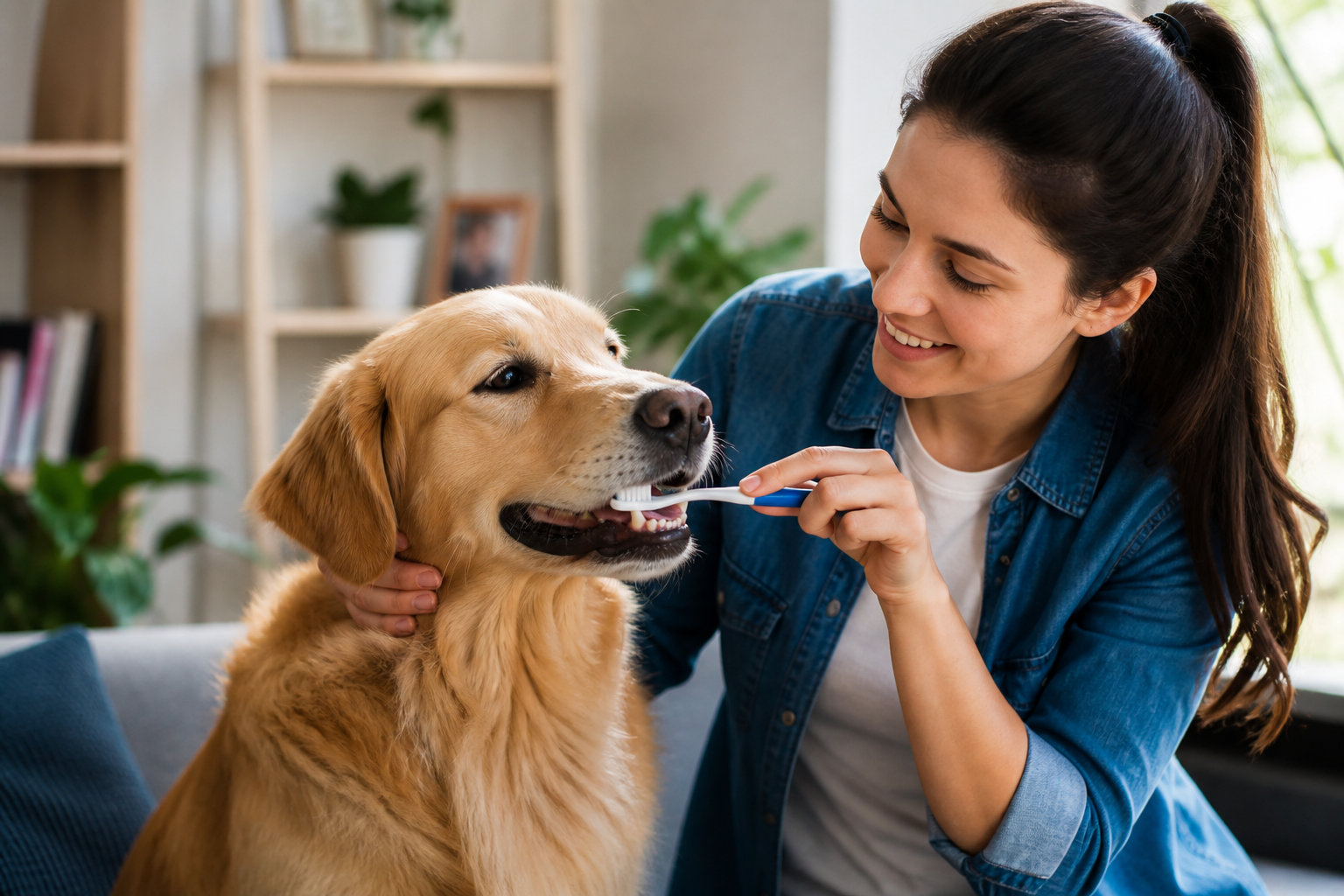
If your dog has never had their teeth brushed, do not expect to do the whole mouth on day one. Start by letting them lick the toothpaste off your finger. Once they like the taste, try rubbing your finger along their gums.
Slowly introduce the brush. Lift the lip and do just one or two teeth. Praise them heavily and give a high-value treat afterward. It may take several weeks before your dog is comfortable with a full cleaning.
Vet Tip: If your dog already has heavy brown tartar or red, bleeding gums, brushing may be painful. Schedule a visit with your veterinarian for a professional cleaning. Our pharmacy carries prescription dental diets and medications through our partnership with Pet's Choice if your vet recommends them after an exam.
Creating a Stress-Free Routine
Many dogs view grooming as a scary or annoying event. Your goal is to change that perception. Start grooming sessions when your dog is tired, perhaps after a long walk or a play session.
Keep the sessions short. Five minutes of successful brushing is better than twenty minutes of struggling. If your dog starts to get stressed, stop and try again later. You want to end every session on a positive note.
Using high-value rewards is essential. If your dog only gets a specific, delicious treat during grooming, they will start to look forward to the brush coming out. Bully sticks or lick mats spread with peanut butter can keep a dog distracted while you work on difficult areas like the paws or the tail.
Handling Sensitive Areas
Most dogs are protective of their paws, ears, and rear ends. These areas require a gentle touch. For paws, try to handle them daily even when you aren't brushing. This desensitizes the dog to having their feet touched.
When brushing the tail, be mindful that the skin there is often very sensitive. Hold the base of the hair near the skin so you aren't pulling directly on the tail bone when you encounter a tangle. For the ears, check for any redness or discharge before you begin. If the ears seem painful or have a strong odor, it is time for a vet visit rather than a grooming session.
Key Takeaway: Consistent, short sessions are more effective for training a dog to accept grooming than occasional, long sessions that cause stress.
Brushing Before and After the Bath
A common mistake is putting a matted dog into the bathtub. Water acts like a glue for tangles. When a mat gets wet and then air-dries, it often tightens significantly, making it much harder to remove.
Always perform a thorough brushing before the bath. Remove as much loose fur and as many tangles as possible. After the bath, once the dog is completely dry, brush them again. This helps fluff the coat and ensures that no new tangles formed during the scrubbing process. You can find more advice in this guide to bathing your dog.
Senior Dog Considerations
As dogs age, their skin becomes thinner and less elastic. They may also develop arthritis, making it uncomfortable for them to stand for long periods or have their limbs moved in certain directions.
Be extra gentle with senior pets. You may need to brush them while they are lying down on a soft orthopedic bed. Check for new lumps, bumps, or skin tags that can appear as dogs age. Being aware of these growths will help you avoid hitting them with the brush, which could cause bleeding or pain.
Professional Help and the BaxterBoo Pharmacy
Even with the best at-home routine, some dogs require professional intervention. This is especially true for breeds that need specialized haircuts or for dogs with severe dental issues.
If your veterinarian discovers dental disease or skin conditions during a check-up, they may prescribe specific treatments. Through our partnership with Pet's Choice, our pet pharmacy offers FDA-approved medications and prescription diets. This includes items like medicated shampoos for skin infections or specialized kibble designed to scrub teeth as the dog eats. Having these items delivered to your door makes managing your pet's health much simpler.
Conclusion
Brushing your dog is a fundamental part of responsible pet ownership. Whether you are managing a heavy-shedding Labrador or a curly-coated Poodle, the right tools and a patient approach make all the difference. Remember that dental care is just as important as coat care for your dog's long-term well-being. By staying consistent, you can prevent painful mats, reduce the fur in your home, and keep your pet's smile healthy.
- Identify your dog's coat type before buying tools.
- Brush in the direction of hair growth to ensure comfort.
- Use pet-safe toothpaste for daily dental care.
- Make grooming a positive experience with treats and praise.
Bottom line: Regular brushing is the best way to monitor your dog's skin and dental health while keeping their coat in top condition.
Visit our grooming collection to find the right brushes for your dog's coat type, or check out our pharmacy for professional dental care solutions.
FAQ
How often should I brush my dog's coat?
The frequency depends on the coat type, but most dogs benefit from brushing at least two to three times a week. Long-haired or curly breeds often need daily brushing to prevent mats from forming. Short-haired breeds can usually go a week between sessions, though more frequent brushing will help reduce shedding in your home.
Can I use human toothpaste to brush my dog's teeth?
No, you should never use human toothpaste for dogs because it can be dangerous. Many human toothpastes contain xylitol, which is a sweetener that is highly toxic to dogs even in small amounts. Additionally, dogs cannot spit out the paste, and the ingredients in human formulas can cause significant stomach upset.
What should I do if my dog has a very tight mat?
If you find a mat that is tight against the skin, avoid using scissors to cut it out. It is very easy to pull the skin into the mat and cause a serious injury. Use a dedicated dematting tool with extreme care, or better yet, take your dog to a professional groomer who can safely remove it with electric clippers.
At what age should I start brushing my dog's teeth?
It is best to start a dental routine as early as possible, ideally when they are a puppy. While puppies will eventually lose their deciduous teeth, starting early gets them used to the sensation of having their mouth handled. This makes it much easier to maintain a daily brushing habit once their permanent adult teeth come in.






