
 Save 15% on your 1st Autoship learn more

 Email us
 Live Chat
 FAQs
FAQs





Introduction
You lean in for a happy morning nuzzle only to be met with a cloud of breath so strong it makes you recoil. It is a common moment for many pet owners, but stinky dog breath is more than just a social hurdle. It is often the first sign that bacteria are making themselves at home in your dog’s mouth. At BaxterBoo, we know that staying on top of oral hygiene can feel like a chore, but it is one of the most effective ways to extend your dog’s life. This post covers everything from the basics of brushing to the best dental chews and professional care options. Our goal is to give you a clear, actionable plan to keep those pearly whites clean and that breath fresh.
Why Dog Dental Care is a Health Priority
Dental health is not just about a pretty smile or better-smelling kisses. It is a fundamental part of your dog’s systemic health. When plaque builds up on the teeth, it hardens into tartar within about 48 hours. This tartar provides a porous surface where even more bacteria can thrive. Eventually, these bacteria can migrate under the gumline, leading to inflammation and infection known as periodontal disease.
The real danger lies in what happens next. The mouth is highly vascular, meaning bacteria from an infected gumline can easily enter the bloodstream. Once there, these bacteria can travel to major organs. Studies have shown a strong link between chronic dental disease and damage to the heart, kidneys, and liver. Keeping the mouth clean is a direct way to protect your dog’s internal organs.
Key Takeaway: Oral health is whole-body health. Preventing tartar buildup protects your dog from systemic issues like heart and kidney disease later in life.
How to Brush Your Dog’s Teeth at Home
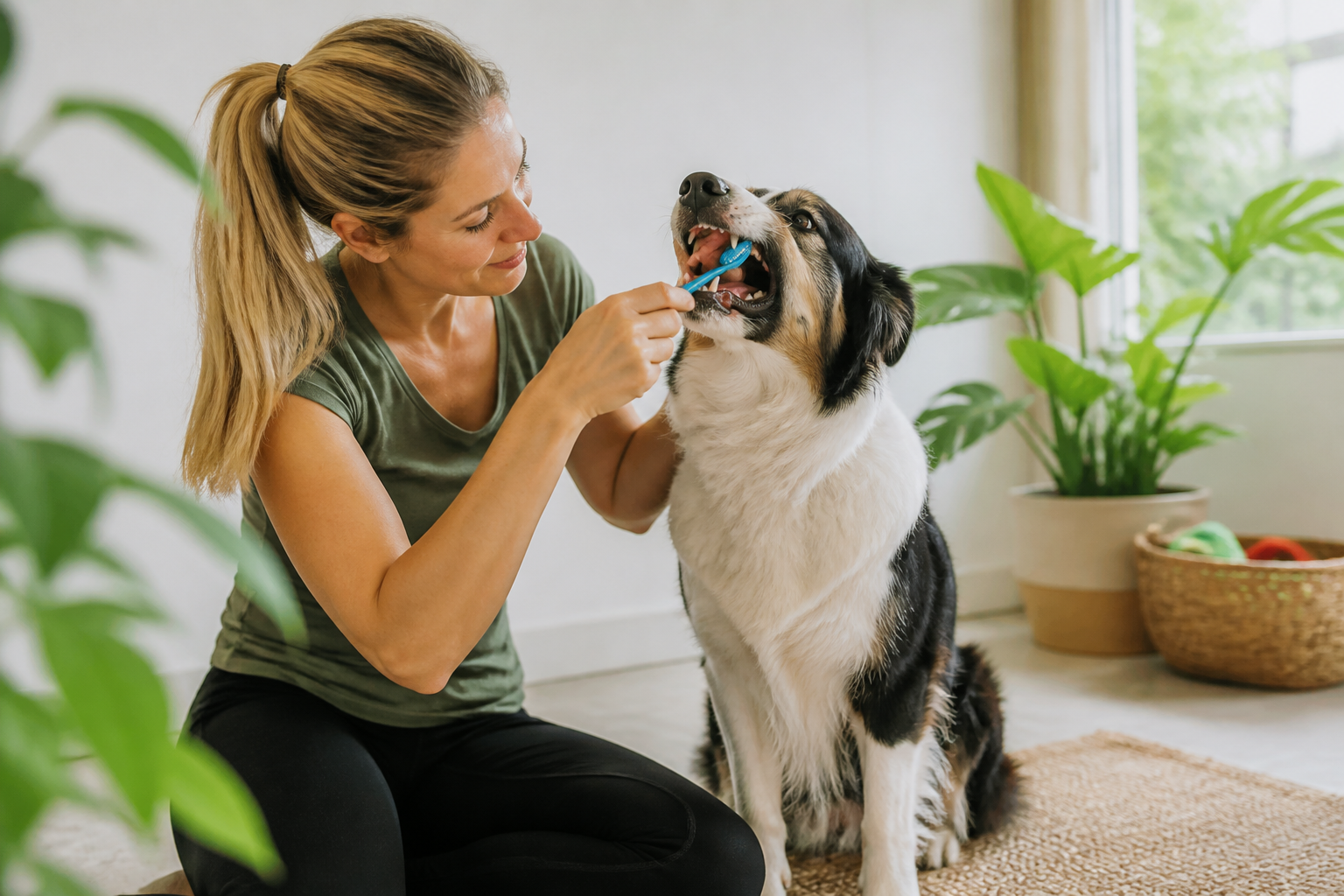
Brushing is the gold standard for pet dental care. While it might seem daunting if your dog is not used to it, most pets can learn to accept or even enjoy the process with the right approach. For additional guidance, read our top pet dental care tips.
Choosing the Right Supplies
Never use human toothpaste for your dog. Our toothpaste often contains fluoride and xylitol, both of which are toxic to pets. Instead, choose a dog-specific enzymatic toothpaste. These come in flavors like poultry, beef, or peanut butter to make the experience more like a treat.
For the brush, you have options. A standard long-handled pet toothbrush allows you to reach the back molars easily. If your dog is small or nervous, a finger brush that slips over your pointer finger can provide more control and a gentler touch. You can find brushes, toothpaste, and other essentials in our dog dental care collection.
The Brushing Process
Step 1: Introduce the taste. Let your dog lick a small amount of toothpaste off your finger. Do this for a few days without even showing them the brush.
Step 2: Get them used to mouth handling. Gently lift their lips and rub your finger along their gums. Reward them with praise or a small, healthy treat.
Step 3: Introduce the brush. Put a bit of toothpaste on the bristles and let them lick it off. Gradually transition to a few gentle circular strokes on the front teeth.
Step 4: Focus on the outside. You do not usually need to brush the inside surfaces of the teeth. A dog’s tongue does a decent job of cleaning those. Focus your energy on the cheek side of the upper and lower teeth where tartar is most likely to accumulate.
Vet Tip: Aim to brush your dog's teeth at least three times a week. Daily is ideal, but consistency matters more than perfection. If you notice bleeding gums or loose teeth, stop brushing and schedule a veterinary exam immediately.
Using Dental Water Additives and Powders
If your dog absolutely refuses a toothbrush, you are not out of luck. There are several supplemental products that work behind the scenes to reduce bacteria. Browse our dental supplements for options that can complement your routine.
Water Additives
Dental water additives are essentially mouthwash for dogs, but they are designed to be swallowed. You simply add a capful to their water bowl each time you refill it. These solutions typically contain enzymes or gentle antiseptic agents that break down plaque-causing bacteria. Because they are tasteless and odorless, most dogs never even notice they are there.
Dental Powders
Powders are an excellent choice for food-motivated dogs. You sprinkle the recommended dose over their kibble or wet food. These powders often contain probiotics or specific types of seaweed that change the chemistry of the saliva, making it harder for plaque to stick to the teeth. Some formulas also include ingredients that help freshen breath from the inside out by supporting healthy digestion.
Quick Answer: Yes, water additives and powders are effective at reducing plaque, but they work best when used alongside mechanical cleaning like brushing or dental chews.
The Role of Dental Chews and Toys
Dogs have a natural urge to chew, and you can use this to your advantage. Mechanical scraping is one of the most effective ways to remove soft plaque before it hardens into tartar. Our guide to the best dental chews for dogs can help you compare options.
Selecting Dental Treats
Not all treats labeled for dental health are created equal. When shopping at BaxterBoo, look for the Veterinary Oral Health Council (VOHC) seal of approval. This seal means the product has been through rigorous testing and is proven to reduce plaque or tartar by a significant percentage. Brands like Greenies and certain dental chews from Kong are designed with specific textures that act like a squeegee against the tooth surface. Explore our dental food and treats for choices suited to different dogs.
Interactive Dental Toys
Rubber toys with nubs or ridges can also help. As your dog gnaws on the toy, the ridges slide between the teeth and massage the gums. To make these toys even more effective, you can smear a bit of dog-safe dental gel or enzymatic toothpaste inside the grooves. This encourages longer chewing sessions and ensures the active cleaning ingredients reach the teeth.
Bottom line: Dental chews provide a mechanical cleaning action that mimics brushing, making them a great daily supplement for oral hygiene.
Natural Remedies for Fresher Breath
Sometimes, stinky breath is a result of what is happening in the gut or simple surface bacteria. While these natural tips do not replace medical care, they can provide a nice boost to your dog's daily routine.
- Fresh Mint or Parsley: Chopping a small amount of fresh, pet-safe herbs like parsley or mint into their food can help neutralize odors. These plants contain chlorophyll, a natural deodorizer.
- Carrots and Apple Slices: Crunchy, fiber-rich vegetables and fruits act as natural toothbrushes. As your dog crunches through a cold carrot, the texture helps scrub the teeth. Just be sure to remove apple seeds and cores.
- Coconut Oil: This oil has natural antimicrobial properties. You can add a small spoonful to their food or even use it as a base for homemade toothpaste. It helps kill odor-causing bacteria in the mouth and supports a shiny coat.
Prescription Diets and the BaxterBoo Pharmacy
In some cases, a standard diet is not enough to keep a dog's mouth healthy. This is especially true for small breeds like Chihuahuas or Yorkies, who are genetically prone to rapid dental decay.
Specialized Dental Kibble
Veterinary dental diets, such as those from Royal Canin or Hill’s, use a specific kibble structure. Unlike regular kibble that shatters when a dog bites it, dental kibble is designed to stay together longer. This forces the tooth to sink into the nugget, scraping the entire surface before it breaks. These diets also contain minerals that bind calcium in the saliva, preventing it from hardening into tartar.
Accessing the Pharmacy
Because many of the most effective dental diets and treatments require a veterinarian's oversight, we provide easy access to these through our pet pharmacy. Our partnership with Pet's Choice allows us to fulfill prescriptions for FDA-approved medications and therapeutic diets. If your vet recommends a specific dental food or a prescription-strength oral rinse, you can manage those orders directly through our site. This ensures your pet gets the exact formulation they need to manage chronic dental issues.
Vet Tip: If your dog's breath smells like ammonia, fruit, or something sweet, it could indicate an underlying issue like kidney disease or diabetes rather than simple dental hygiene. Consult your veterinarian for a full diagnostic checkup if breath odors change suddenly.
Recognizing the Signs of Dental Disease
It is important to know when home care is no longer enough. If tartar has already hardened into thick brown or orange crusts, no amount of brushing will remove it. At that point, your dog needs professional help. Keep an eye out for these red flags:
- Red or Bleeding Gums: Healthy gums should be a soft pink. Bright red or bleeding edges along the teeth indicate gingivitis.
- Excessive Drooling: While some breeds are naturally drooly, a sudden increase can signal mouth pain or an abscess.
- Difficulty Eating: If your dog drops food, chews only on one side, or hesitates to eat hard kibble, they may have a loose or painful tooth.
- Pawing at the Face: This is a common sign of discomfort or something being stuck between the teeth.
- Bumps or Lumps: Regularly check your dog's mouth for any unusual growths or swellings on the gums or under the tongue.
The Importance of Professional Cleanings
Even with the best at-home routine, most dogs will eventually need a professional dental cleaning. This procedure is very similar to what you experience at the dentist, but for dogs, it requires general anesthesia. For more warning signs to discuss with your veterinarian, review how to recognize hidden dental problems in dogs.
Some owners feel nervous about anesthesia, but it is necessary for a thorough job. It allows the veterinarian to scale away tartar from below the gumline, where the most damage occurs. It also allows for full-mouth X-rays to check for bone loss or infected roots that are not visible to the naked eye. A professional cleaning usually involves:
- A physical exam and bloodwork to ensure the dog is healthy enough for anesthesia.
- Ultrasonic scaling to remove tartar above and below the gumline.
- Polishing the teeth to smooth out microscopic scratches where bacteria like to hide.
- Probing each tooth for "pockets" that indicate gum recession.
Key Takeaway: At-home care is about prevention, while professional cleanings are about treatment. You need both to maintain a truly healthy mouth.
Creating a Sustainable Dental Routine
The best way to ensure your dog’s teeth stay clean is to make it part of your daily life. It does not have to take long. Five minutes a day can save you thousands of dollars in veterinary dental surgeries later on.
Step 1: Set a specific time for dental care, like right after your evening walk.
Step 2: Start with a dental chew or a quick session with the toothbrush.
Step 3: Check their mouth once a week for any new redness or tartar.
Step 4: Use our Autoship program to ensure you never run out of toothpaste, chews, or prescription dental diets. This also earns you a free MVP Gold membership for extra savings.
Conclusion
Cleaning your dog’s teeth and freshening their breath is a long-term commitment that pays off in a happier, healthier pet. By combining regular brushing with the right dental chews and additives, you can keep plaque at bay and enjoy those close-up snuggles again. Remember that home care is a partnership with your veterinarian. If you see signs of pain or heavy tartar, reach out for professional help.
- Daily brushing is the most effective home tool.
- VOHC-approved chews and toys provide essential mechanical cleaning.
- Prescription diets and medications can be ordered through our pharmacy.
- Regular vet checkups are vital for catching issues early.
Our team at BaxterBoo is here to help you find the right tools for your dog's specific needs. Whether you need a starter brushing kit or a recurring order of dental treats, we have the expert-curated selection to support your pet's wellness journey. You can also explore the MVP Rewards programme for additional value while shopping.
FAQ
How often should I realistically clean my dog's teeth?
You should aim to brush your dog's teeth every day, but doing it three times a week still provides significant health benefits. Consistency is key because plaque can turn into hard tartar in as little as 48 hours. If you cannot brush daily, supplement with dental chews or water additives on the off days to keep bacteria levels low.
Can I use human mouthwash or toothpaste for my dog's breath?
No, you should never use human dental products for your dog. Human toothpaste often contains xylitol, which is a sweetener that is highly toxic to dogs and can cause life-threatening liver failure. Additionally, fluoride in human products can be harmful when swallowed. Always use products specifically formulated for pets, which are safe to ingest.
What if my dog's breath still smells bad after brushing?
If persistent bad breath remains despite regular brushing, it may be a sign of advanced periodontal disease or an underlying health issue. Tartar hidden deep under the gumline cannot be reached by a toothbrush and will continue to produce odors. In this case, you should consult your veterinarian for a professional cleaning and a health screening to rule out kidney or digestive problems.
Are dental chews enough to keep teeth clean without brushing?
While dental chews are a great tool, they are usually not enough on their own for complete oral hygiene. Chews mostly clean the chewing surfaces and the tips of the teeth, often missing the gumline where most disease starts. Think of dental chews as a helpful supplement, similar to how humans use sugar-free gum between brushings, rather than a total replacement for mechanical brushing.






