
 Save 15% on your 1st Autoship learn more

 Email us
 Live Chat
 FAQs
FAQs





Introduction
You lean in for a happy morning nuzzle from your dog, but instead of sweetness, you get a face full of "dog breath." That pungent, fishy odor is more than just a minor social problem. It is often the first sign that bacteria are taking over your dog's mouth. At BaxterBoo, we know that dental health is one of the most overlooked parts of pet care. Many owners think that smelly breath is just part of owning a dog, but it is actually a red flag for periodontal disease. This article covers the best ways to keep your dog's mouth fresh. We will look at brushing techniques, the best tools for the job, and how to use treats and toys to support oral hygiene. Taking care of your dog's teeth today can prevent expensive vet bills and serious health issues later.
Quick Answer: The most effective way to clean a dog's teeth is through daily brushing with pet-safe toothpaste. You can also use dental chews, water additives, and professional veterinary cleanings to manage plaque and tartar buildup.
Why Dental Care Is Not Optional
Most dogs show signs of dental disease by the time they are three years old. It starts with plaque, which is a sticky film of bacteria that forms on the teeth after eating. If you do not remove this film, it hardens into tartar within about 48 hours. Tartar is like concrete. You cannot brush it away at home. Once it forms, it provides a rough surface where even more bacteria can grow.
This bacteria does not stay in the mouth. It can enter the bloodstream through inflamed gums. From there, it can travel to the heart, liver, and kidneys. This leads to systemic infections that can shorten a dog's life. Keeping the mouth clean is about more than just white teeth. It is about protecting their internal organs.
Watch for these common signs of dental trouble:
- Red or swollen gums that bleed easily.
- Yellow or brown crust near the gum line.
- Excessive drooling or dropping food while eating.
- Pawing at the mouth or face.
- One-sided chewing.
Key Takeaway: Dental disease is a progressive condition that impacts a dog's entire body. Prevention through daily cleaning is much easier and safer than treating advanced infections.
How to Brush Your Dog's Teeth
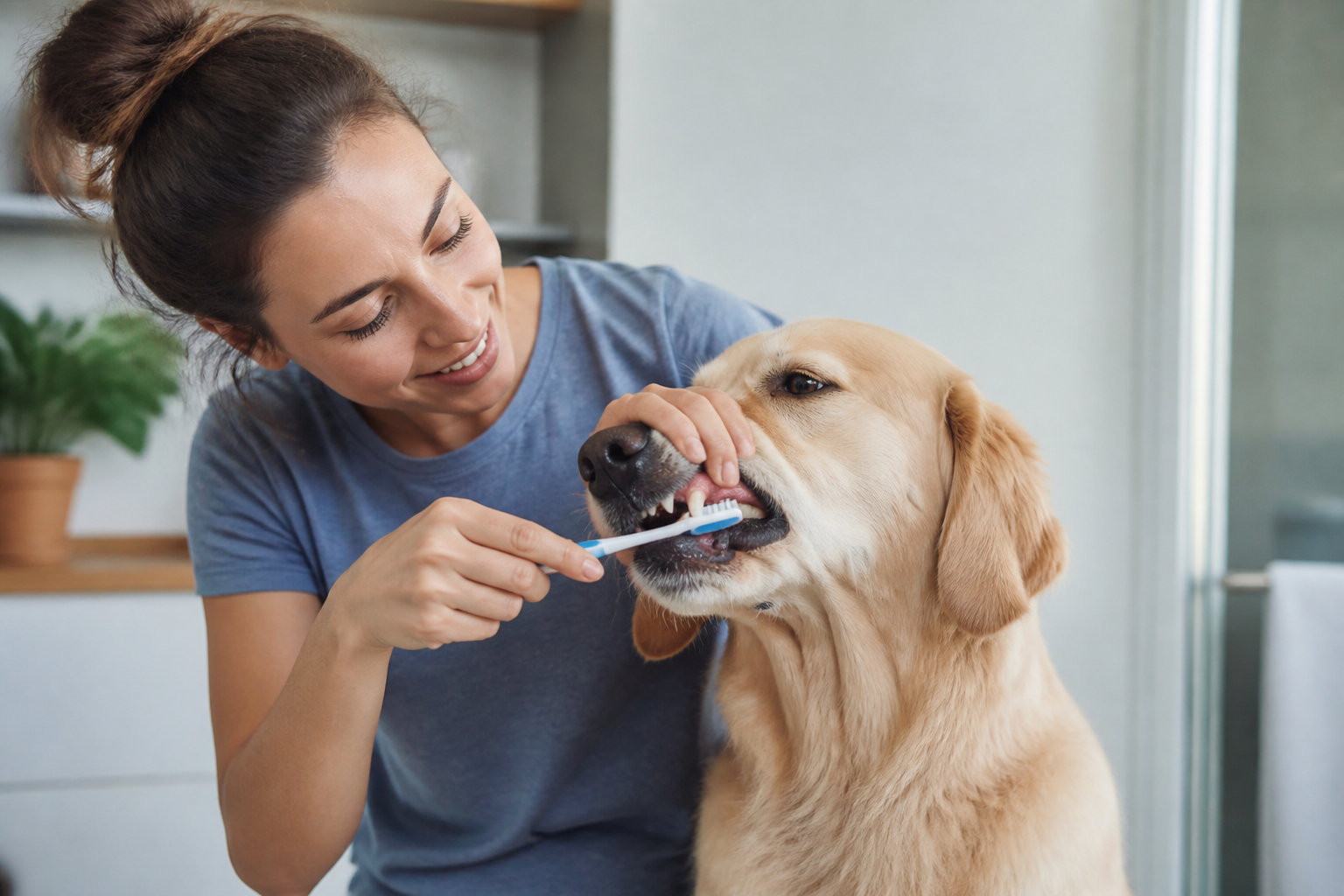
Brushing is the gold standard for pet oral health. It is the only way to physically scrub away the plaque before it turns into tartar. You do not need to clean the inside surfaces of the teeth. A dog's tongue usually keeps those areas relatively clean. Focus your energy on the outside surfaces where the lips touch the teeth.
Step 1: Choose the right time. / Pick a moment when your dog is calm and tired. A post-walk session is often best.
Step 2: Introduce the toothpaste. / Let your dog lick a small amount of pet-safe toothpaste off your finger. These are usually flavored like poultry or beef to make the experience a treat.
Step 3: Get them used to touch. / Rub your bare finger along their gums and teeth in a circular motion. This gets them comfortable with the feeling of your hand in their mouth.
Step 4: Introduce the brush. / Use a finger brush or a long-handled pet toothbrush. Apply a small amount of paste and gently brush the front canine teeth. You can find brushes and paste in our dental and breath care collection.
Step 5: Move to the back. / Lift the upper lip to reach the large premolars and molars in the back. This is where most tartar accumulates.
Step 6: Reward and praise. / Give them a small healthy treat or plenty of verbal praise immediately after you finish.
Vet Tip: Never use human toothpaste for your dog. Most human brands contain xylitol, which is a sweetener that is highly toxic to dogs. They also contain foaming agents that can upset a dog's stomach since they cannot spit the paste out.
Selecting the Right Dental Tools
The tools you use make a big difference in how your dog reacts to brushing. At BaxterBoo, we see many owners find success with different styles of brushes depending on the size of their dog. For small dogs or puppies, a finger brush is often less intimidating. It allows you to feel exactly where you are cleaning. For larger dogs with more "real estate" to cover, a long-handled brush with angled heads is more efficient.
You should also look for brushes with soft bristles. Dog gums can be sensitive, especially if they already have some inflammation. If your dog absolutely refuses a brush, dental wipes are a good middle ground. These are textured pads that you wrap around your finger. They are not as effective as a brush for getting into the crevices, but they are much better than doing nothing at all.
We carry brands like Kong and RC Pets that offer durable toys designed to help with this process. Some toys have rubber nubs or ridges. As your dog chews, these ridges scrape against the teeth to help rub away soft plaque. This is a great way to let your dog do some of the work themselves during playtime. For additional ideas, read our pet dental care tips.
The Role of Dental Chews and Treats
Not every dog will sit still for a brushing session. This is where dental chews come into play. These treats are designed to be long-lasting. The mechanical action of your dog's teeth sinking into the chew helps scrub the tooth surface. Many of these products also contain ingredients that help break down plaque chemically.
When shopping for chews, look for the VOHC seal. The Veterinary Oral Health Council only gives this seal to products that have been scientifically proven to reduce plaque or tartar. Greenies dental dog chews are a classic example of a VOHC-approved treat that dogs love.
It is important to match the size of the chew to your dog. If the chew is too small, your dog might swallow it whole, which is a choking hazard. If it is too large, they might not be able to get their teeth around it to get the cleaning benefits. Always supervise your dog when they are working on a chew.
Bottom line: Dental chews are a fantastic supplement to brushing, but they should not be the only thing you do for your dog's teeth.
Water Additives and Oral Rinses
For dogs that are very difficult to handle, water additives offer a "hands-off" approach. These are liquid solutions that you pour into your dog's water bowl. They usually contain enzymes or mild antiseptics that help kill the bacteria that cause bad breath and plaque.
Water additives are not a "fix-all" solution. They work best when used in combination with other methods. Think of them like a mouthwash for pets. They help keep the environment of the mouth cleaner, but they cannot remove hardened tartar or heavy plaque. For more guidance, see how water additives fit into dog dental care.
If your dog is picky about their water, start with a very small dose. Gradually increase it to the recommended amount on the bottle. Most high-quality additives are tasteless and odorless, so most dogs will not even notice they are there.
Dietary Choices for Better Teeth
What your dog eats affects their oral health. There is a common myth that all dry kibble cleans teeth simply because it is crunchy. In reality, most kibble is too small and brittle to provide much cleaning. It often shatters as soon as the tooth hits it. However, specific dental diets are formulated differently.
These prescription or specialty diets use larger kibble sizes and a specific fiber matrix. The kibble does not shatter. Instead, the tooth sinks into the piece, and the fibers scrub the tooth as the dog chews. Our dog pharmacy carries prescription pet foods designed specifically for dental health. We can help you find the FDA-approved diets your vet recommends for managing chronic dental issues.
Brands like Farmina Vet Life offer specialized options for various health needs. You can browse our selection of Farmina Vet Life products if your veterinarian recommends this brand. If your dog has a history of rapid tartar buildup, ask your vet if a dental-specific diet is right for them. These diets are often part of a long-term plan for dogs who have recently had a professional cleaning.
Key Takeaway: Diet alone rarely keeps teeth perfectly clean, but specialized dental formulas can significantly slow down the return of plaque and tartar.
When to Seek Professional Veterinary Cleaning
Home care is about prevention. Professional care is about treatment. No matter how well you brush, most dogs will eventually need a professional cleaning. This is a medical procedure performed under general anesthesia. It is the only way to clean deep under the gum line where the most damage occurs.
During a professional cleaning, your vet will:
- Perform a full physical exam and blood work to ensure anesthesia safety.
- Take dental X-rays to check for abscesses or bone loss.
- Use ultrasonic scalers to remove tartar from every surface of the tooth.
- Polish the enamel to smooth out tiny scratches.
- Extract teeth that are too diseased or painful to save.
Some owners are nervous about anesthesia. However, "anesthesia-free" dental cleanings are usually not recommended by veterinary experts. These procedures only clean the visible parts of the tooth. They do not address the bacteria under the gums, and they can be very stressful or painful for the dog.
Vet Tip: If you notice your dog has loose teeth, extremely red gums, or a sudden change in eating habits, skip the toothbrush and call your vet immediately. These are signs of infection that require medical intervention, not just a cleaning.
Creating a Dental Care Routine
Consistency is the secret to success. Brushing your dog's teeth once a month does very little. To see real results, you should aim for at least three times a week. Daily is even better. It takes about two minutes to do a thorough job once your dog is used to the process.
To make it a habit, tie it to something else you already do. Maybe you brush their teeth right after you brush your own at night. Or perhaps you do it right before they get their favorite evening toy. Once it becomes a routine, your dog will stop fighting it and might even start looking forward to the tasty toothpaste.
Step 1: Set a schedule. / Pick three days a week to start. Mark them on your calendar.
Step 2: Prepare your station. / Keep the brush and paste in an easy-to-reach spot near where your dog rests.
Step 3: Keep it short. / Do not feel like you have to clean every tooth perfectly every time. Start with 30 seconds and build up.
Step 4: Monitor progress. / Take a "before" photo of your dog's teeth and check back in a month. You will likely see a noticeable difference in gum redness and breath quality.
Managing Senior Dog Dental Needs
As dogs age, their dental needs change. Senior dogs are more likely to have gum recession and fragile teeth. They may also have underlying health conditions like heart disease or kidney issues that make dental infections more dangerous.
If you have an older dog, be extra gentle with brushing. You may need to switch to a softer brush or a cloth. Senior dogs also benefit significantly from supplements like Cosequin or Zesty Paws, which support overall health. While these are not dental products, a healthy body is better at fighting off oral infections. You can explore our selection of Cosequin products for your senior dog's broader wellness needs.
Our pharmacy is a great resource for managing senior pet health. We offer medications for chronic conditions that often go hand-in-hand with aging. If your senior dog needs prescription dental rinses or antibiotics for a mouth infection, visit our pet pharmacy to learn more.
The Cost of Neglect vs. The Cost of Care
It is much cheaper to buy a tube of toothpaste and some dental chews than it is to pay for a major oral surgery. A professional cleaning with multiple extractions can cost hundreds or even thousands of dollars. Beyond the money, dental disease causes real pain. Dogs are masters at hiding discomfort. They will often continue to eat even if they have an abscessed tooth.
By investing a few minutes each day into cleaning your dog's teeth, you are improving their quality of life. You are also earning rewards through the MVP Rewards programme. When you buy your supplies through us, you can earn up to 5% back on eligible purchases. This helps make the cost of preventive care even more manageable.
You can also sign up for our Autoship programme to ensure you never run out of toothpaste or chews. This program gives you a discount on your first order and helps you maintain that vital consistency. Keeping your dog's mouth clean is one of the kindest things you can do for them.
Bottom line: Preventive dental care saves you money and saves your dog from unnecessary pain.
Common Mistakes to Avoid
One of the biggest mistakes owners make is starting too fast. If you force a toothbrush into a nervous dog's mouth, you might create a lifelong fear of the process. Always move at your dog's pace. If they pull away, stop and try again tomorrow.
Another mistake is assuming that "natural" bones are always safe for teeth. While some raw bones can help clean teeth, hard bones like marrow bones or antlers can actually cause tooth fractures. These fractures are very painful and almost always require the tooth to be removed. Stick to toys and chews that have some "give" to them. A good rule of thumb is that if you cannot dent the item with your fingernail, it might be too hard for your dog's teeth.
Finally, do not ignore the gums. People focus on the white part of the tooth, but the gum line is where the real battle happens. If the gums are bright red or receding, the tooth is in trouble. Always aim your brushing at the 45-degree angle where the tooth meets the gum.
Summary of Best Practices
Maintaining a clean mouth for your dog requires a multi-pronged approach. No single product can do it all. By combining physical brushing with environmental controls like water additives and mechanical tools like dental chews, you create a robust defense against bacteria.
- Brush at least three times a week with pet-specific paste.
- Use VOHC-approved dental chews for daily maintenance.
- Provide rubber chewing toys to help scrape away plaque during play.
- Schedule an annual dental exam with your veterinarian.
- Watch for changes in breath, gum color, or eating habits.
Taking care of your dog's teeth is a journey, not a one-time task. At BaxterBoo, we have been helping pet owners navigate these challenges since 2006. Whether you are just starting with a new puppy or managing the health of a senior dog, we have the expert-curated supplies you need. Our hybrid model of a physical warehouse in Vernon Hills and an easy online store means you get the best of both worlds: expert knowledge and convenient delivery.
Key Takeaway: A healthy mouth is a gateway to a healthy life. Use a combination of brushing, chews, and professional care to keep your dog thriving.
Taking the Next Step
Ready to start your dog's dental routine? Explore our full collection of dental care products including toothbrushes, pastes, and VOHC-approved chews. If your vet has prescribed a specific dental diet or medication, visit our pharmacy section to see how we can help. Do not forget to sign up for our MVP Rewards programme to earn points on eligible dental supply purchases. Your dog's breath will thank you.
FAQ
How often should I actually clean my dog's teeth?
You should aim to brush your dog's teeth every day, just like you brush your own. If daily is not possible, three times a week is the minimum needed to prevent plaque from hardening into tartar. Consistency is more important than the length of each session.
Can I use baking soda to clean my dog's teeth?
It is not recommended to use baking soda because it has a very high alkaline content. If your dog swallows too much of it, it can upset the acid balance in their stomach and cause digestive distress. It also has a salty taste that most dogs find unpleasant, making them resist brushing.
My dog's gums bleed a little when I brush. Should I stop?
Minor bleeding can be a sign of early gingivitis, which means the gums are inflamed. You should continue to brush gently to remove the bacteria causing the inflammation. However, if the bleeding is heavy or persistent, you should stop and consult your veterinarian to rule out more serious gum disease.
Do dental water additives really work as well as brushing?
No, water additives are a supplement and cannot replace the physical scrubbing action of a toothbrush. They are helpful for reducing the overall bacterial load in the mouth and freshening breath. They work best when used alongside brushing and dental chews.






