
 Save 15% on your 1st Autoship learn more

 Email us
 Live Chat
 FAQs
FAQs





Introduction
You lean in for a happy morning nuzzle only to be met with a puff of breath that smells like a dumpster in mid-July. Most dog owners have experienced that "stinky kiss" moment. While we often joke about dog breath, persistent odors usually signal a buildup of plaque and bacteria that can lead to serious health issues. Taking oral hygiene into your own hands is one of the most effective ways to extend your pet's life and save on expensive veterinary dental surgeries. At BaxterBoo, we see thousands of pet parents looking for ways to manage tartar at home without the stress of frequent clinic visits. This guide will walk you through the exact tools, techniques, and alternatives you need to maintain those pearly whites. Mastering home dental care is a journey of patience and consistency.
Quick Answer: To clean your dog's teeth yourself, use a dog-specific toothbrush and enzymatic toothpaste. Brush in small circular motions at a 45-degree angle to the gumline, focusing on the outside of the teeth for about two minutes daily.
Why Home Dental Care is Essential for Longevity
Many owners assume that a crunchy kibble diet is enough to keep teeth clean. While dry food provides some mechanical scraping, it rarely reaches the gumline where the real trouble starts. Plaque is a sticky film of bacteria that forms on the teeth within hours of eating. If it is not brushed away, it reacts with minerals in the saliva to harden into tartar, also known as calculus. Once tartar forms, it provides a rough surface for even more bacteria to cling to, leading to gingivitis and periodontal disease.
The danger of dental disease is not just limited to the mouth. Bacteria from infected gums can enter the bloodstream and travel to vital organs. This puts a significant strain on the heart, liver, and kidneys. By learning how to clean dog's teeth yourself, you are protecting your dog's systemic health. Regular home care also allows you to spot oral tumors, cracked teeth, or sores early when they are much easier to treat. For more warning signs, read our guide to recognizing dental problems in dogs.
Key Takeaway: Oral health is a full body issue. Preventing tartar buildup at home protects your dog's heart and kidneys from bacterial infection.
Choosing the Right Supplies
Before you begin, you must have the correct tools. You should never use human toothpaste on a dog. Most human pastes contain fluoride and Xylitol, both of which are toxic to dogs. Dogs do not know how to spit, so they swallow everything you put in their mouth. Enzymatic dog toothpaste is designed to be swallowed and contains proteins that help break down plaque chemically. These pastes often come in flavors like poultry, beef, or peanut butter to make the experience more enjoyable for your pet.
You also need a brush that fits your dog's mouth. A standard human toothbrush is often too stiff and the head is too large for most breeds. Finger brushes are excellent for beginners or small dogs because they give you better control and feel. For larger dogs, a double-headed brush can clean the top and sides of the teeth simultaneously, which cuts your brushing time in half. We carry a wide variety of these supplies in our dog dental and breath care category to help you find the perfect fit for your dog's size and comfort level.
Essential Supply Checklist
- Enzymatic dog toothpaste (Poultry or Beef flavors are usually best)
- A soft-bristled dog toothbrush or a silicone finger brush
- Dental wipes for quick touch-ups on the go
- Small, high-value treats to reward a successful session
A Step-by-Step Guide to Brushing
Success depends on how you introduce the process. If you shove a brush into your dog's mouth on the first day, they will likely fight you every time they see the brush. You want to make this a bonding experience rather than a chore.
Step 1: The taste test.
Put a small dab of enzymatic toothpaste on your finger and let your dog lick it off. Do this for a few days until they get excited when they see the tube. This creates a positive association with the flavor.
Step 2: Finger desensitization.
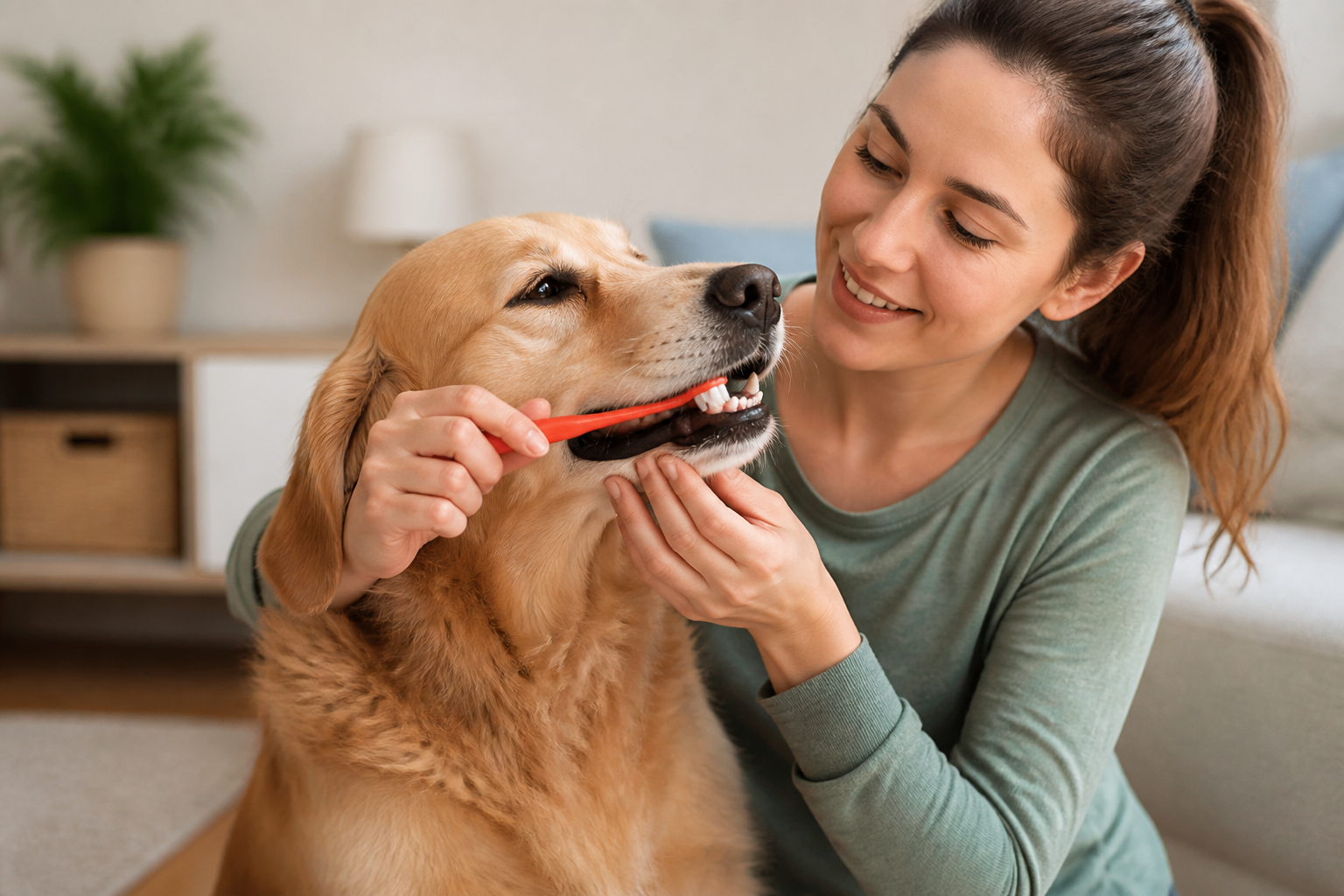
Once they like the paste, start rubbing your finger along their gums and teeth while they lick the paste. Lift their lips gently to expose the molars. Most plaque builds up on the outside of the teeth, so focus your efforts there.
Step 3: Introduce the brush.
Apply the paste to the toothbrush or finger brush. Let them lick it off the bristles first. Then, gently brush just one or two teeth in a circular motion. Stop immediately and give them a treat or a belly rub.
Step 4: The full cleaning.
Gradually increase the number of teeth you brush each session. Focus on the 45-degree angle where the tooth meets the gum. You do not need to worry about the inside surfaces of the teeth as much, as a dog's tongue does a decent job of cleaning those areas. Aim for two minutes of total brushing time once your dog is fully comfortable. For additional guidance, review these pet dental care tips.
Vet Tip: If your dog becomes highly stressed or tries to bite, stop immediately. Forcing the issue can lead to injury for both of you. Consult a veterinarian or a professional trainer to discuss behavioral modification or alternative dental products if your dog refuses to allow brushing.
Brushing Alternatives for Difficult Dogs
Not every dog will tolerate a toothbrush, especially if they are older or have sensitive gums. If brushing is a battle you cannot win, there are several effective alternatives that still help reduce plaque buildup. While brushing remains the gold standard, these tools provide a meaningful layer of protection.
Dental chews like Greenies are popular for a reason. They are designed with a specific texture that mimics the scraping action of a toothbrush. As the dog chews, the treat wraps around the tooth to scrub away debris. You can also look for dental toys from brands like Kong. These toys often have ridges or nubs that massage the gums and scrape the teeth during playtime. Explore our selection of Greenies products when you are looking for chew-based dental support.
Water additives and dental rinses are another low-effort option. You simply add a capful to your dog's water bowl. These additives contain enzymes or safe antimicrobial agents that kill bad breath bacteria and prevent plaque from sticking to the enamel. They are particularly helpful for dogs that are prone to rapid tartar buildup despite regular brushing. You can also browse our dental food and treat options for additional choices.
Dietary Support and Prescription Options
What your dog eats plays a massive role in their oral health. Some dogs have a genetic predisposition to dental issues, particularly small breeds with crowded mouths like Pugs or Chihuahuas. For these pets, a standard diet might not be enough. Therapeutic dental diets are formulated with larger, air-puffed kibble that does not shatter immediately when bitten. Instead, the tooth sinks into the kibble, allowing the fibers to scrub the surface like a squeegee.
Through our partnership with Pet's Choice, the BaxterBoo pharmacy offers access to prescription pet foods and medications. If your veterinarian recommends a specific dental diet like Farmina Vet Life or Royal Canin Dental, you can fulfill those orders through us. These diets often require a prescription because they are formulated to manage specific health conditions alongside oral hygiene. Our pharmacy also carries FDA-approved treatments for pets recovering from dental surgery or managing chronic gum infections.
Bottom line: Combining a mechanical cleaning tool with a supportive diet provides the most comprehensive protection against dental disease.
Identifying Signs of Dental Distress
Even with the best home care routine, you need to know when it is time to put down the brush and call the veterinarian. Home cleaning is a preventative measure, not a cure for existing disease. If your dog already has heavy brown tartar or loose teeth, brushing can actually be painful and may cause more harm than good.
Watch for these red flags:
- Bleeding gums during or after brushing
- Dropping food or "chattering" the jaw while eating
- Excessive drooling that smells foul
- Pawing at the mouth or rubbing the face on the carpet
- Lumps or bumps on the gums or under the tongue
- Loose, cracked, or missing teeth
If you notice any of these symptoms, schedule a professional dental exam. A veterinarian can perform X-rays to see what is happening beneath the gumline, which is where 60% of dental disease is hidden. Once the vet performs a professional cleaning and resolves any infections, you can go back to your home maintenance routine with a clean slate. Our dog healthcare products can help you maintain your dog's routine between veterinary visits.
The Role of Professional Cleanings
Many owners worry about the risks of anesthesia during professional cleanings. While anesthesia-free cleanings exist, they are primarily cosmetic. They can remove the visible tartar from the crown of the tooth, but they cannot reach the bacteria hiding deep in the pockets of the gums. They also do not allow for a full oral exam or X-rays.
For a senior dog or a pet with underlying health issues, we recommend discussing Figo Pet Insurance. Having a solid insurance plan can help cover the costs of these essential professional cleanings and any necessary extractions. Regular vet visits paired with your home cleaning efforts will ensure your dog stays comfortable and pain-free well into their senior years.
Summary of Best Practices
Maintaining your dog's teeth does not have to be an overwhelming task. By starting slowly and using the right products, you can make oral care a natural part of your daily routine.
- Consistency is key. Brushing three times a week is the minimum for effectiveness, but daily is ideal.
- Use the right stuff. Never use human dental products; stick to enzymatic pastes and pet-specific brushes.
- Layer your approach. Use brushing as the primary method, then supplement with dental chews and water additives.
- Monitor and adjust. Keep a close eye on your dog's gums and breath, and do not hesitate to seek professional help if things look or smell wrong.
Key Takeaway: Home dental care is a partnership between you and your pet. Patience during the training phase leads to a lifetime of healthier smiles and fewer vet bills.
Conclusion
Cleaning your dog's teeth yourself is one of the kindest things you can do for your furry friend. It prevents the pain of tooth loss and protects your vital organs from harmful bacteria. Whether you choose a soft finger brush, a tasty dental chew, or a specialized dental diet, the effort you put in today will pay off in the years to come. At BaxterBoo, we are committed to providing the expert-curated supplies you need to make this process as easy as possible. Check out our dog dental care category to stock up on toothpaste, brushes, and VOHC-approved treats. Consider signing up for our Autoship programme to ensure you never run out of your favorite dental supplies while saving on every order.
FAQ
How often should I clean my dog's teeth at home?
Ideally, you should brush your dog's teeth every single day to prevent plaque from hardening into tartar. Plaque can begin to mineralize in as little as 24 to 48 hours. If daily brushing is not realistic for your schedule, aim for at least three times per week to maintain a basic level of oral hygiene.
Can I use baking soda to clean my dog's teeth?
While baking soda is not immediately toxic, it is generally not recommended for regular use in dogs. It has a high alkaline content that can upset a dog's stomach if swallowed in large amounts, and the taste is often unpleasant for pets. Enzymatic dog toothpaste is a much safer and more effective option because it is designed for ingestion and helps break down plaque chemically.
My dog's gums bleed a little when I brush. Is this normal?
Minor bleeding can be a sign of early-stage gingivitis, meaning the gums are slightly inflamed from plaque buildup. If you notice a small amount of blood, continue brushing gently to help reverse the inflammation. However, if the bleeding is heavy, persistent, or accompanied by foul breath, you should stop and consult your veterinarian as your dog may have more advanced periodontal disease.
Do dental chews really work as well as brushing?
Dental chews are an excellent supplement, but they are not a total replacement for brushing. They primarily clean the chewing surfaces of the teeth and may miss the gumline where bacteria thrive. For the best results, use dental chews on days when you cannot brush, or as a reward after a successful brushing session.






