
 Save 15% on your 1st Autoship learn more

 Email us
 Live Chat
 FAQs
FAQs





Introduction
You lean in for a "puppy kiss" and realize your dog’s breath is less than fresh. Upon closer inspection, you notice a sticky film or yellowing along the gumline. At BaxterBoo, we know that dental health is often the most overlooked part of pet care. This post explains how to identify plaque, the best tools for removal, and when you need professional help. We want to help you build a routine that keeps your dog comfortable and their breath smelling better. Brushing is the gold standard, but a multi-layered approach is the best way to keep those pearly whites healthy for years to come. Maintaining a clean mouth is one of the best ways to extend your dog’s life.
Quick Answer: Clean plaque by brushing your dog's teeth daily with dog-safe toothpaste. You can also use dental chews, water additives, and specialized toys to scrape away film. Once plaque hardens into tartar, it usually requires a professional veterinary cleaning.
Understanding the Difference Between Plaque and Tartar
Plaque is a sticky, colorless film of bacteria. It starts forming on your dog’s teeth just a few hours after a meal. When saliva, food particles, and bacteria mix, they cling to the tooth surface. At this stage, the material is soft. You can easily wipe it away with a brush or a cloth.
If plaque stays on the teeth, it reacts with minerals in your dog’s saliva. This process causes the plaque to harden into tartar, which is also called calculus. Tartar is usually yellow or brown. It is very hard and bonds strongly to the tooth enamel. You cannot brush tartar away at home.
Tartar provides a rough surface where even more plaque can grow. This cycle leads to inflammation of the gums. This condition is known as gingivitis. If it continues, it can lead to periodontal disease. This can cause tooth loss and even damage to the heart and kidneys.
Key Takeaway: Plaque is soft and can be removed at home, but tartar is a hard mineral deposit that requires professional veterinary tools for removal.
The Gold Standard: Brushing at Home
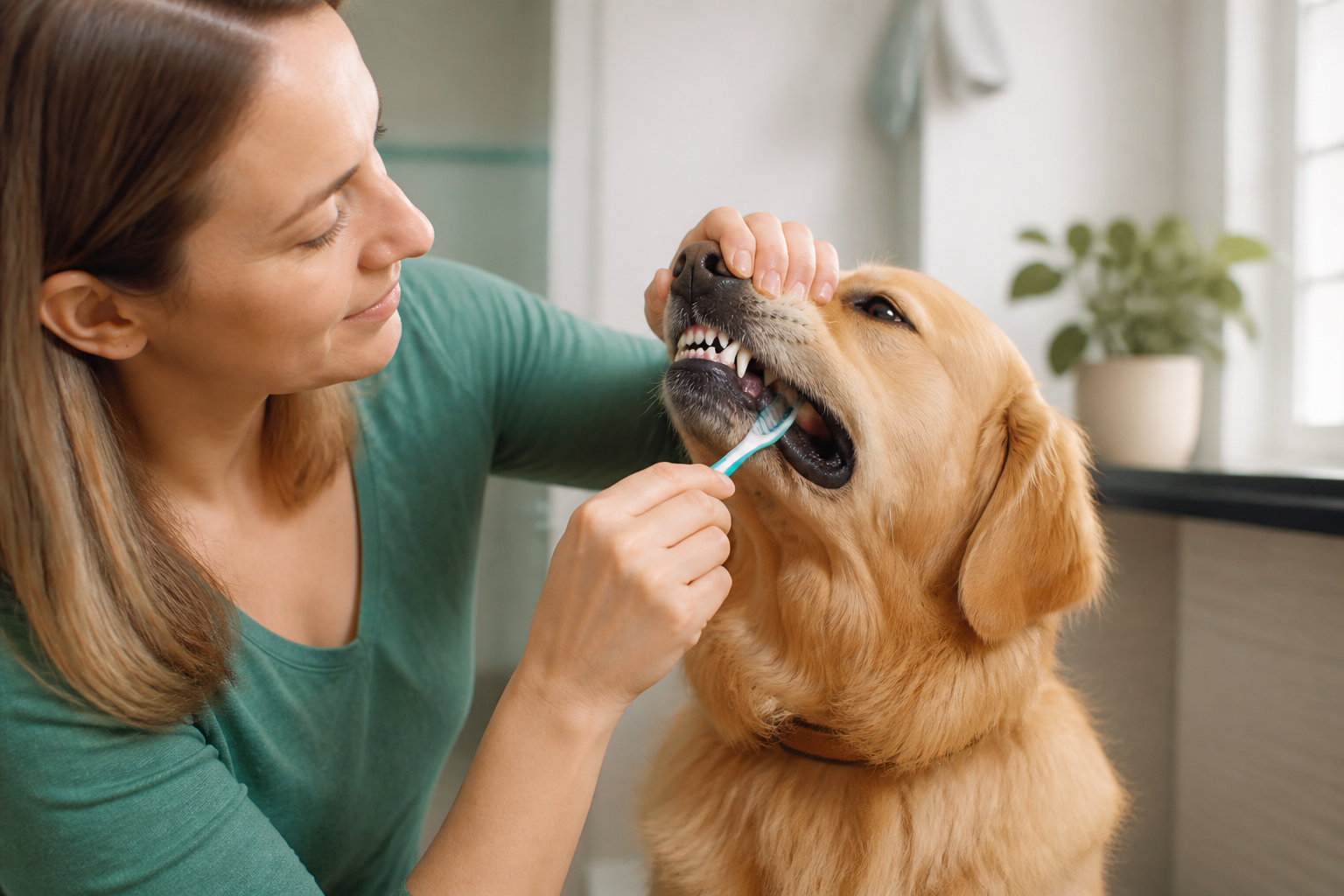
Brushing is the most effective way to clean plaque off your dog’s teeth. It mechanically rubs the film away before it has a chance to harden. You should aim to brush your dog’s teeth every day. If that is not possible, three times a week is the minimum for seeing real results. For additional guidance, review these pet dental care tips.
You must use a toothpaste specifically made for dogs. Human toothpaste often contains fluoride or xylitol. Both of these ingredients are toxic to dogs. Dog toothpaste comes in flavors like poultry, beef, or peanut butter to make the experience more pleasant.
Choosing the Right Tools
A standard human toothbrush is often too hard for a dog's gums. Look for a soft-bristled brush designed for pets. Smaller dogs often do better with a finger brush. This is a small rubber cap that fits over your fingertip. It allows you to feel exactly where you are cleaning. For larger dogs, a long-handled brush helps you reach the back molars. You can find brushes, toothpaste, and other options in our dog dental care collection.
Step-by-Step Brushing Guide
Step 1: Introduce the taste. / Let your dog lick a small amount of pet toothpaste off your finger for several days.
Step 2: Touch the teeth. / Gently rub your finger along their gums and teeth to get them used to the sensation.
Step 3: Introduce the brush. / Put a small amount of paste on the brush and let them lick it.
Step 4: Start brushing. / Lift the lip and brush the outside surfaces of the teeth in a circular motion.
Step 5: Focus on the gumline. / Most plaque accumulates where the tooth meets the gum.
Vet Tip: If your dog's gums bleed significantly or look very red, stop brushing and consult your veterinarian. This can be a sign of advanced gum disease that requires medical attention.
Dental Chews and Scouring Treats
Not every dog is a fan of the toothbrush. While brushing is best, dental chews are an excellent secondary tool. These treats are designed with a specific texture. As your dog chews, the treat scrapes against the surface of the tooth. This action helps "scrub" away plaque. Browse our dog dental health products for chews, treats, and other oral-care options.
Many dental treats also contain active ingredients. Some use enzymes to break down bacteria. Others use hexametaphosphate to prevent minerals in saliva from turning plaque into tartar. We carry several brands, like Greenies and Royal Canin, that offer these specialized dental options.
Look for the VOHC seal on the packaging. This stands for the Veterinary Oral Health Council. This seal means the product has been tested and proven to reduce plaque or tartar by a certain percentage.
What to Look for in a Chew
- The right size for your dog's mouth
- A firm texture that does not splinter
- Low-calorie counts to avoid weight gain
- The VOHC seal of approval
Water Additives and Oral Sprays
Water additives are a "hands-off" way to support dental health. You simply add a capful of the liquid to your dog’s water bowl. These products usually contain enzymes or minerals. They work by altering the chemistry of the mouth to make it harder for bacteria to stick to the teeth.
Oral sprays work in a similar way. You spray the solution directly onto the teeth and gums. These are great for dogs that are sensitive to having their mouths touched. Most sprays have a pleasant scent. This helps provide an immediate fix for bad breath while the active ingredients work on the plaque.
These products are supplements to a routine. They do not replace the physical action of brushing. Think of them as a "mouthwash" for dogs. They help keep the environment clean between more thorough sessions. You can explore our dental supplements for water additives and other oral-care products.
Bottom line: Water additives and sprays are excellent tools for maintaining a healthy oral environment, especially for dogs that resist brushing.
The Benefits of Dental Toys
Playing can also be a form of cleaning. Certain toys are designed with ridges, nubs, or rope fibers. As your dog gnaws on a Kong toy or a textured rubber bone, the toy rubs against their teeth. This friction is great for removing soft plaque.
Cotton rope toys can act like dental floss. As the fibers pass between the teeth, they can pull away trapped food and debris. Always supervise your dog with these toys. Ensure they are not swallowing large pieces of rope or rubber.
Interactive toys also stimulate saliva production. Saliva is a natural defense against bacteria. It helps wash away loose particles and neutralizes some of the acids produced by plaque-forming germs. For more ideas, read about warning signs of dental problems in dogs.
Natural Solutions and Dietary Support
Diet plays a significant role in how quickly plaque builds up. Some pet owners believe that dry kibble cleans teeth better than wet food. While the crunch helps a little, most kibble is too small to provide significant scrubbing. It often crumbles before it can scrape the tooth.
Specialized dental diets are different. These kibbles are larger and have a fibrous structure. The tooth sinks into the kibble rather than breaking it. This provides a scouring action all the way to the gumline. Our pet pharmacy can help you fulfill prescriptions for these specific dental diets if your vet recommends them.
Natural Ingredients to Consider
- Sea Kelp: Some powders made from kelp change the composition of the saliva to prevent plaque from sticking.
- Parsley and Mint: These can be added to food to help freshen breath naturally.
- Coconut Oil: It has antimicrobial properties and can be used as a safe, tasty "toothpaste" for home rubbing.
Key Takeaway: Diet and specialized supplements can change the environment of the mouth to slow down the formation of tartar.
Training Your Dog to Accept Dental Care
Training is the bridge between a struggle and a success. Many dogs are naturally protective of their mouths. You must move slowly to build trust. Use high-value treats and plenty of praise after every successful session.
Keep your sessions short. A thirty-second session that ends happily is better than a five-minute session that ends in stress. If your dog walks away, let them go. Try again later with a more positive tone. Consistency is more important than duration.
If you have a puppy, start now. Even though they will lose their baby teeth, the habit is what matters. Getting a puppy used to the brush makes adult dental care much easier. Senior dogs can also learn, but you must be gentler with their aging gums.
Recognizing the Signs of Gum Disease
Even with the best home care, problems can arise. You should check your dog's mouth once a week for any changes. Catching issues early can prevent pain and expensive surgeries later.
Watch for persistent bad breath. While "dog breath" is a common phrase, it should not be foul or rotting. This is often the first sign of an infection or heavy tartar buildup.
Common Warning Signs
- Red, swollen, or bleeding gums
- Yellow or brown crust near the gumline
- Loose or missing teeth
- Excessive drooling
- Pawing at the mouth or face
- Loss of interest in hard food or chew toys
If you see any of these signs, it is time for a veterinary visit. Home cleaning cannot fix a deep infection or a loose tooth. Your vet can provide a diagnosis and a plan for treatment.
The Role of Professional Cleanings
There is a limit to what we can do at home. Just like humans go to the dentist, dogs often need a professional cleaning. A vet will perform this procedure while your dog is under general anesthesia. This is the only way to safely clean under the gumline where the most damage occurs.
During a professional cleaning, the vet uses an ultrasonic scaler. This vibrates at a high frequency to break apart hard tartar without damaging the enamel. They also polish the teeth. Polishing smooths out the microscopic scratches left by scaling. This makes it harder for new plaque to attach.
Veterinarians can also take dental X-rays. This is crucial because a large portion of the tooth is hidden under the bone. X-rays can reveal abscesses, bone loss, or hidden decay that is causing your dog pain.
Maintaining the Results
After a professional cleaning, your dog's teeth are a blank slate. This is the perfect time to start a new routine. Plaque will begin to form again within hours. By starting your brushing and chew routine immediately, you can extend the time between professional visits.
We recommend keeping a dental kit near your dog's leash or food. This reminds you to make it part of the daily schedule. At BaxterBoo, we see how much a clean mouth improves a dog's quality of life. They are more energetic, they eat better, and they are more comfortable.
The cost of prevention is always lower than the cost of a dental emergency. Investing a few minutes a day in your dog's oral health pays off in the long run. Your dog will thank you with plenty of fresh-smelling kisses.
A Quick Checklist for Success
- Brush daily with pet-safe toothpaste.
- Provide one VOHC-approved dental chew each day.
- Use a water additive to keep the mouth fresh.
- Schedule a yearly dental exam with your vet.
- Check for red gums or bad breath weekly.
Conclusion
Cleaning plaque off your dog's teeth is a commitment that yields huge rewards. By combining daily brushing, textured chews, and regular vet checkups, you can prevent the pain and health risks of periodontal disease. Remember to start slow, stay consistent, and always use products designed specifically for pets. We are here to help you find the right tools to make this process easy for you and your dog. Visit our dental care collection to find the perfect brush, paste, or chew for your pup's needs. You can also sign up for our Autoship programme to ensure you never run out of the dental treats that keep your dog's smile bright.
Bottom line: A multi-layered approach using brushing, chews, and professional care is the best way to keep your dog's teeth plaque-free.
FAQ
Can I use human toothpaste on my dog?
No, you should never use human toothpaste on a dog. Many human pastes contain xylitol, which is a sweetener that is highly toxic to dogs even in small amounts. They also often contain fluoride, which can be harmful if swallowed. Dog-specific toothpastes are safe to swallow and come in flavors dogs enjoy.
How often should I brush my dog's teeth?
Ideally, you should brush your dog's teeth every single day to remove plaque before it hardens into tartar. If a daily schedule is not possible, aim for at least three times per week. Consistent brushing is the most effective way to prevent gum disease and expensive veterinary dental procedures.
Are dental chews as effective as brushing?
Dental chews are a helpful supplement, but they are not a total replacement for brushing. Chews work well on the flat surfaces of the teeth but often miss the crevices and the area just under the gumline. For the best results, use dental chews on the days you are unable to brush.
What should I do if my dog's teeth already have brown buildup?
Brown or yellow buildup that feels hard is likely tartar, which cannot be removed with a toothbrush. At this stage, you should schedule a visit with your veterinarian for a professional cleaning. They have the specialized tools needed to remove the calculus safely while your dog is under anesthesia.






