
 Save 15% on your 1st Autoship learn more

 Email us
 Live Chat
 FAQs
FAQs





Introduction
You lean in for a happy morning nuzzle only to be met with a scent that stops you in your tracks. When you lift your dog's lip to investigate, you see a hard, brownish-yellow crust cemented along the gumline. This is not just a cosmetic issue. It is a sign that plaque has mineralized into tartar. At BaxterBoo, we have helped thousands of pet owners navigate dental care since 2006. We know that seeing that heavy buildup can be worrying. This guide will explain the difference between plaque and tartar. We will cover why you cannot simply brush away hardened buildup at home. You will learn the safest ways to manage dental health through professional care and daily habits. Our goal is to help you build a routine that keeps those pearly whites clean and your dog comfortable.
Quick Answer: Hardened tartar cannot be safely removed at home with a toothbrush. It requires professional scaling by a veterinarian under anesthesia to prevent damage to the enamel and gums. Once the vet removes the tartar, you can prevent its return through daily brushing and dental chews.
Understanding the Difference Between Plaque and Tartar
Many owners use the terms plaque and tartar as if they are the same thing. They are actually two different stages of dental decay. Plaque is a soft, sticky film that begins to form on the teeth just hours after your dog eats. It is a mixture of bacteria, saliva proteins, and tiny food particles. Because it is soft, you can easily remove plaque with a standard dog toothbrush or a simple dental wipe. For additional guidance, review these top pet dental care tips.
If plaque stays on the tooth for more than 48 to 72 hours, it begins to change. It reacts with the minerals found naturally in your dog's saliva. This chemical reaction causes the plaque to harden into a substance called tartar or dental calculus. Once it reaches this stage, it is as hard as concrete. It creates a rough surface that allows even more plaque to stick to the tooth. This creates a cycle of buildup that eventually moves beneath the gumline.
Key Takeaway: Plaque is a soft film you can brush away, but tartar is a mineralized deposit that bonds to the tooth surface. Brushing only works on plaque.
Why Home Tartar Removal Is Dangerous
It is tempting to try and scrape tartar off with a metal tool or even a fingernail. We strongly advise against this. Tartar bonds incredibly tightly to the tooth enamel. If you try to chip it off, you risk scratching the enamel. These tiny scratches create the perfect hiding place for more bacteria to grow. You could also accidentally slip and gouge the sensitive gum tissue. This leads to pain and potential infections.
Another major risk of home scraping is that you only see the tartar on the visible part of the tooth. The most dangerous bacteria live in the "pocket" between the tooth and the gum. A handheld scraper cannot reach this area safely while your dog is awake. If you only clean the visible part, you are leaving the source of gum disease behind. This gives owners a false sense of security while the disease continues to progress under the surface. More warning signs are covered in this guide to bad teeth in dogs.
Vet Tip: Never use metal "scaler" tools at home. Dogs do not sit still enough for precise scraping. One small slip can cause a deep puncture wound in the mouth or permanent damage to the tooth enamel.
The Role of Professional Veterinary Cleaning
A professional cleaning is the only way to truly clean tartar from your dog's teeth. This procedure is done at a veterinary clinic while your dog is under general anesthesia. We understand that anesthesia can be a concern for some owners. However, it is the only way to ensure a thorough and pain-free cleaning. It allows the vet to clean deep under the gumline where the real damage happens.
During a professional cleaning, the vet uses ultrasonic scalers. These tools use high-frequency vibrations to shatter the bond between the tartar and the tooth. After the tartar is gone, the vet will polish the teeth. Polishing smooths out the surface of the enamel. This makes it much harder for new plaque to find a foothold. Many vets also take X-rays during this time to check for bone loss or abscesses that are not visible to the naked eye.
Our Pharmacy and Prescription Dental Care
Sometimes, a simple cleaning is not enough if your dog has an active infection or severe periodontal disease. In these cases, your veterinarian may prescribe specific medications or therapeutic diets. We offer a full pet pharmacy through our partnership with Pet's Choice. This allows us to provide FDA-approved medications and prescription dental foods that are formulated to break down plaque and support gum health.
If your dog needs a specialized diet like Royal Canin Dental or Farmina Vet Life, our pharmacy can help fulfill those needs. These foods are designed with a specific kibble shape and texture. They act like a mechanical toothbrush as the dog chews. Having access to these prescription options is a vital part of managing long-term dental health. This is especially true for dogs who are genetically prone to heavy tartar buildup.
Key Takeaway: Our pharmacy carries prescription diets and medications that support dental recovery after a professional cleaning. These products help manage bacteria levels and slow down future tartar formation.
Establishing a Daily Brushing Routine
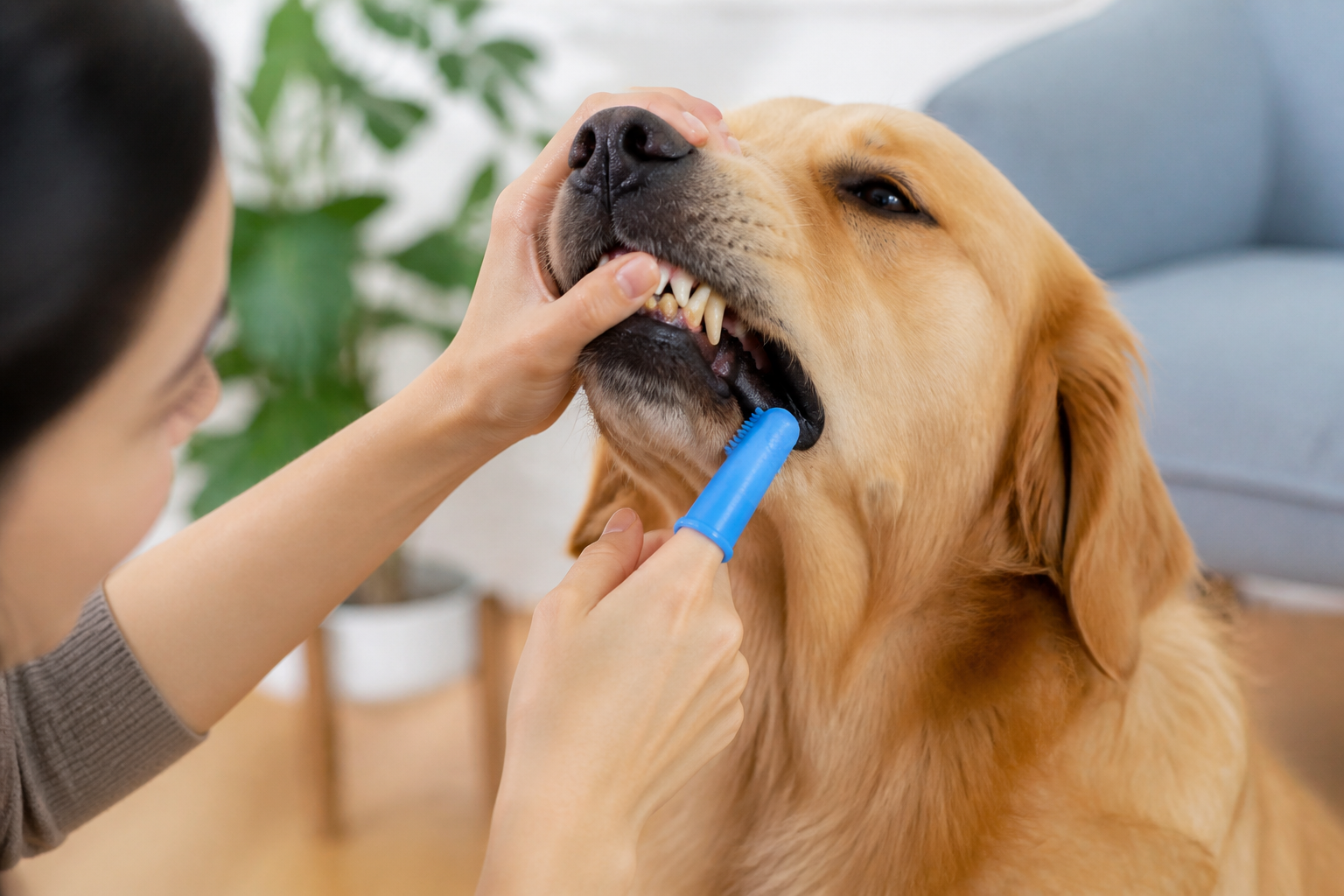
Once your vet has cleared away the existing tartar, your job is to keep it from coming back. Daily brushing is the gold standard of pet dental care. It is the only way to disrupt the plaque film before it turns into stone. If you have never brushed your dog's teeth before, the key is to go slowly. Most dogs can learn to enjoy the process if it involves a tasty toothpaste. You can find toothbrushes, toothpaste, and other options in our dog dental care collection.
Step 1: Introduce the paste. / Let your dog lick a small amount of poultry or beef-flavored dog toothpaste off your finger. Do not use human toothpaste because it contains ingredients like xylitol or fluoride that are toxic to pets.
Step 2: Touch the teeth. / Gently lift your dog's lip and rub your finger along the gums and teeth. This gets them used to the sensation of someone working in their mouth.
Step 3: Introduce the brush. / Use a soft-bristled brush or a silicone finger brush. Let them sniff it and lick more paste off the bristles.
Step 4: Start brushing. / Aim for a 45-degree angle toward the gumline. Use small, circular motions. You only need to focus on the outside of the teeth, as the tongue usually helps keep the inside surfaces cleaner.
Step 5: Reward. / Always follow a brushing session with praise or a dental-safe treat. This builds a positive association with the routine.
Selecting the Right Dental Chews and Toys
Not every dog will tolerate a toothbrush every single day. While brushing is best, dental chews and toys can be a helpful secondary defense. These products work through mechanical action. As your dog bites down, the texture of the chew scrapes against the tooth surface. This helps wipe away soft plaque before it can mineralize into tartar. For more ideas, browse our dental chews for dogs.
When you are looking for dental chews, look for the VOHC seal. The Veterinary Oral Health Council only gives this seal to products that have been scientifically proven to reduce plaque or tartar. We carry several brands with this distinction, including our selection of Greenies products. Be sure to pick a size that is appropriate for your dog. A chew that is too small can be a choking hazard. A chew that is too large might be too hard for a small dog's jaw to break down.
Bottom line: Dental chews are a great supplement to brushing, but they should be VOHC-certified to ensure they actually work.
The Impact of Diet on Tartar Accumulation
What your dog eats plays a role in how fast tartar builds up. Many people believe that all dry kibble cleans teeth, but this is a common myth. Most standard kibble is too small and brittle. It simply shatters when a dog bites it. This provides almost no scraping action. In some cases, starchy bits of kibble can actually get stuck in the gumline and contribute to plaque.
Prescription dental diets are different. The kibbles are much larger and have a fibrous matrix. This prevents the kibble from shattering. Instead, the tooth sinks into the piece, and the fibers scrub the tooth as the dog chews. If your dog is a "gulper" who swallows food whole, these diets may be less effective. For those dogs, water additives or daily brushing become even more important. You can also read about the best dental chews for dogs when considering options for your routine.
Water Additives and Dental Rinses
For dogs who are very resistant to handling, water additives can be a helpful tool. These are liquid solutions that you add to your dog's daily drinking water. They often contain enzymes or ingredients like chlorhexidine that help kill the bacteria that cause plaque. They do not remove existing tartar, but they change the chemistry of the mouth to make it a less friendly environment for bacteria.
Dental rinses work in a similar way but are applied directly to the gums. These are often used after a professional cleaning to help the gums heal. If your vet recommends a medicated rinse, check our dental and breath care options. These products are often part of a larger plan to manage chronic gingivitis or prevent the recurrence of heavy tartar.
Signs Your Dog Needs an Urgent Vet Visit
Tartar is often just the visible part of a larger problem. You should monitor your dog for signs that dental disease has progressed beyond simple buildup. If you notice any of the following, schedule a visit with your veterinarian right away:
- Bleeding gums when eating or playing with toys
- Loose or missing teeth
- Excessive drooling or dropping food from the mouth
- A "root beer" colored discharge near the gumline
- Pawing at the face or rubbing the mouth on the floor
- A sudden change in appetite or a refusal to eat hard food
- Extreme bad breath that smells like rot or garbage
These symptoms often indicate an abscess or deep infection. Left untreated, the bacteria from a mouth infection can enter the bloodstream. This can eventually lead to damage in the heart, liver, and kidneys. Taking care of tartar is about much more than just a pretty smile. It is about protecting your dog's vital organs.
Vet Tip: If you see a swelling under your dog's eye, it could be a tooth root abscess. This is a painful emergency that requires immediate veterinary care and likely an extraction.
Dental Care for Small Breeds and Seniors
Small breed dogs, like Chihuahuas and Yorkies, are much more likely to develop heavy tartar. They have the same number of teeth as large dogs but much smaller mouths. This leads to crowding. Crowded teeth trap food and bacteria much more easily. If you have a small dog, you may need to start a brushing routine much earlier in their life and schedule professional cleanings more frequently.
Senior dogs also face unique challenges. As dogs age, their immune systems may not fight off oral bacteria as effectively. However, many owners fear putting a senior dog under anesthesia for a cleaning. Modern veterinary medicine has made anesthesia much safer for seniors through pre-anesthetic blood work and careful monitoring. Keeping a senior dog's mouth clean can actually extend their life by reducing the strain on their heart and kidneys.
Checklist for a Healthier Mouth
Maintaining a clean mouth is an ongoing process. Use this checklist to stay on track with your dog's dental health:
- Inspect the mouth once a week for new redness or buildup
- Brush at least three times a week (daily is better)
- Provide a VOHC-approved dental chew every day
- Add a dental rinse or water additive if brushing is difficult
- Schedule a professional veterinary exam every year
- Watch for changes in eating habits or breath odor
Conclusion
Cleaning tartar from your dog's teeth is a partnership between you and your veterinarian. While you cannot safely scrape away hardened buildup at home, your daily efforts are what prevent that buildup from returning. By combining professional cleanings with a solid home routine of brushing and dental chews, you can save your dog from the pain of periodontal disease. We are here to support you with the right tools, from specialty toothbrushes to prescription diets in our pharmacy. Our MVP Rewards programme also helps you earn back on every dental care purchase. Start with one small step today, like letting your dog taste a pet-safe toothpaste, and you will be on your way to a healthier, happier pet.
Bottom line: Professional cleaning removes the tartar, while daily at-home care keeps the plaque from coming back.
FAQ
Can I use a human dental scaler to remove my dog's tartar?
No, you should never use human dental tools on your dog. These tools are very sharp and require a perfectly still patient to be used safely. Dogs can suddenly move or jerk their heads, which could lead to severe injuries to their gums, tongue, or the roof of their mouth. Furthermore, scraping the teeth at home often leaves behind microscopic scratches that actually speed up future tartar formation.
Does dry food really keep a dog's teeth clean?
Most standard dry kibble does not provide enough mechanical scraping to keep teeth clean. The pieces are usually small and crumble easily upon contact. For a diet to effectively clean teeth, it needs to be a specific prescription dental diet. These kibbles are larger and specially textured to scrub the tooth surface as the dog bites down.
How often should my dog get a professional dental cleaning?
The frequency depends on your dog's breed, age, and home care routine. Many dogs require a professional cleaning once a year starting around age three or four. Smaller breeds or dogs with crowded teeth may need cleanings as often as every six months. Your veterinarian will check your dog's teeth during their annual wellness exam and let you know when it is time for a professional procedure.
Is there a natural way to dissolve tartar on dogs teeth?
There is no proven "natural" way to dissolve hardened tartar once it has mineralized on the teeth. Some people suggest using vinegar or certain fruits, but these are acidic and can damage the protective tooth enamel. The only safe and effective way to remove mineralized tartar is through professional mechanical scaling by a veterinarian. Home remedies are best used for preventing plaque, not removing established tartar.






