
 Save 15% on your 1st Autoship learn more

 Email us
 Live Chat
 FAQs
FAQs





Introduction
You lean in for a happy pup kiss and a sharp, fishy odor hits you. That distinctive smell is more than just a nuisance. It is often the first sign of plaque buildup or early gum disease. Many owners ignore dental care until a pet stops eating or loses a tooth. However, proactive cleaning can prevent pain and expensive veterinary surgeries. At BaxterBoo, we have spent years helping pet parents find the right tools to maintain healthy smiles from puppyhood through the senior years. This guide covers the specific steps to brush your dog's teeth and how to use alternatives like dental chews and water additives. You can keep your dog healthy by making oral hygiene a regular part of your routine.
Quick Answer: Clean your dog's teeth by using a dog-specific toothbrush and enzymatic toothpaste at a 45 degree angle. For the best results, brush daily to remove plaque before it hardens into tartar.
Why Dental Hygiene Is Vital for Dogs
Dental health is one of the most overlooked aspects of pet care. By age three, most dogs show some signs of periodontal disease. This starts when bacteria and food particles form plaque on the teeth. If it is not removed within a few days, minerals in the saliva harden that plaque into tartar. Tartar is much harder to remove and usually requires professional scaling.
Poor oral health does not just stay in the mouth. Bacteria from infected gums can enter the bloodstream. This can eventually lead to issues with the heart, liver, and kidneys. Regular cleaning helps prevent these systemic problems. It also keeps your dog's breath fresh and their mouth free of chronic pain. For additional guidance, read our tips for recognizing warning signs of bad teeth in dogs.
The Essential Toolkit for Dog Dental Care
You cannot use your own bathroom supplies to clean a dog's mouth. Human toothpaste often contains xylitol, which is a sweetener that is highly toxic to dogs. It also contains fluoride and foaming agents that can upset a dog's stomach. You can find pet-safe options in our dog dental care collection.
Dog-Safe Toothpaste
Look for enzymatic toothpaste. These formulas contain enzymes that help break down plaque even if you do not get a perfect scrub every time. Most come in flavors dogs actually like, such as poultry, beef, or peanut butter. This makes the experience feel more like a treat than a chore.
Choosing the Right Brush
The type of brush you choose depends on your dog's size and comfort level.
- Finger Brushes: These are small silicone caps that fit over your pointer finger. They are excellent for puppies or small dogs. They give you more control and allow you to feel exactly where you are brushing.
- Double-Headed Brushes: These have long handles and two sets of bristles. They allow you to clean the inside and outside of the teeth at the same time.
- Small-Head Brushes: For tiny breeds or flat-faced dogs, a brush with a very small head is necessary to reach the back molars.
Supplemental Tools
While brushing is the gold standard, other tools can help. Dental wipes are great for dogs that will not tolerate a brush. They allow you to wipe away surface slime and bacteria. Water additives and oral gels can also reduce the bacterial load in the mouth between brushings. Explore our dental and breath care options for additional tools.
Key Takeaway: Always use enzymatic toothpaste made specifically for pets. Human toothpaste is toxic to dogs and should never be used.
A Step-by-Step Guide to Brushing
Do not expect to complete a full brushing on the first day. It takes time for a dog to get used to the sensation of something in their mouth. Patience is the most important part of this process.
Step 1: Let them taste the paste
Put a small amount of dog toothpaste on your finger. Let your dog sniff and lick it. You want them to associate the paste with a positive experience. Do this for a few days without even trying to touch their teeth.
Step 2: Test the touch
Gently lift your dog's lip and rub your finger over their teeth and gums. Only do this for a few seconds. If they stay calm, give them praise or a small treat. This gets them used to having their mouth handled.
Step 3: Introduce the brush
Put some toothpaste on the brush. Let your dog lick it off the bristles. This helps them get used to the texture of the brush without the pressure of scrubbing.
Step 4: The brushing motion
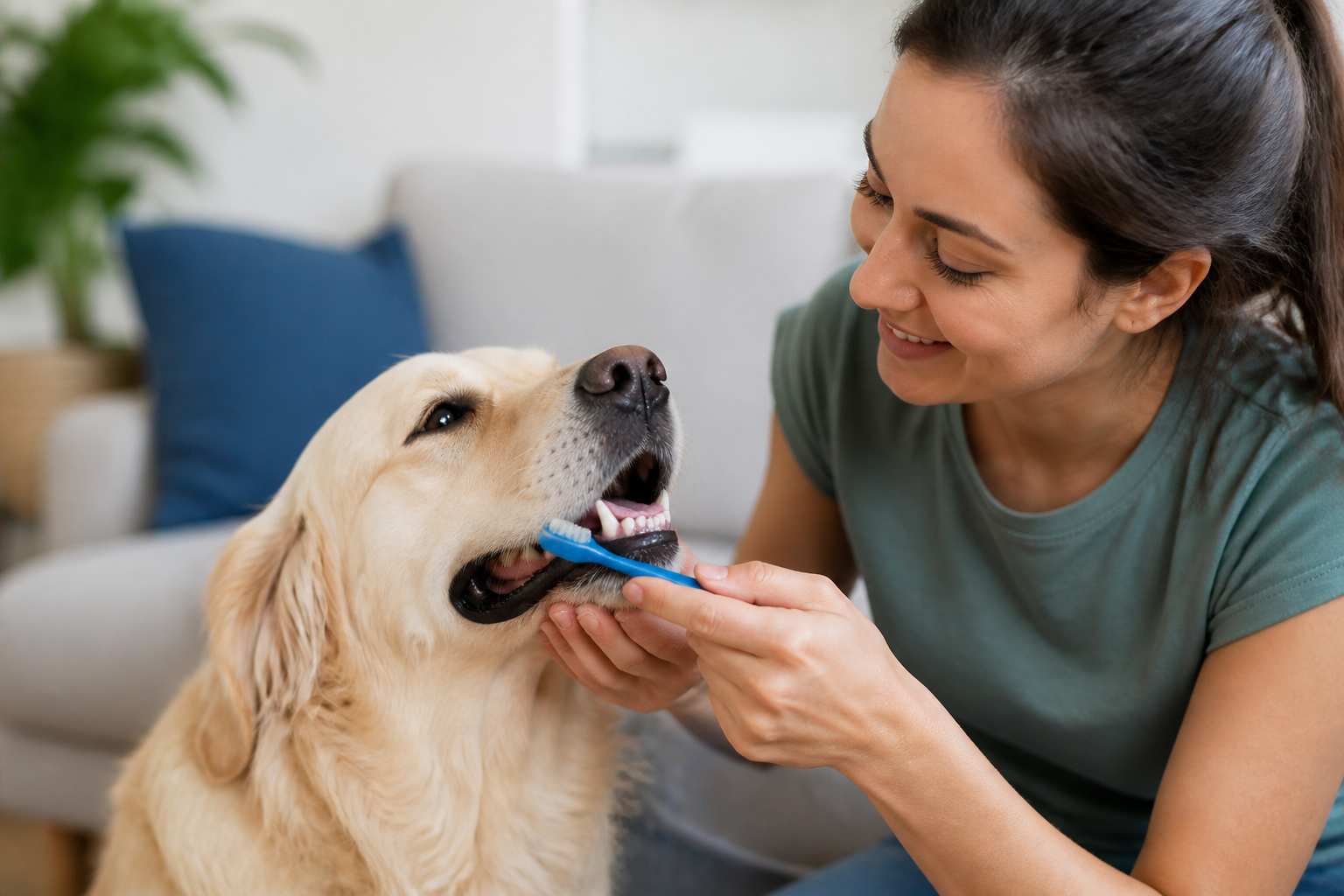
Angle the bristles at a 45 degree angle toward the gumline. Move the brush in small circular motions. Focus on the outside of the teeth. This is where most plaque accumulates. The tongue usually does a decent job of keeping the inside surfaces cleaner.
Step 5: Increase the duration
Start with just the front canines. Gradually work your way back to the molars. Aim for about 30 seconds per side. If your dog gets stressed, stop and try again tomorrow. You want this to be a low-stress activity. For more brushing guidance, review our pet dental care tips.
Vet Tip: If you notice your dog's gums bleeding heavily or if they pull away in pain during brushing, schedule a veterinary exam. This can be a sign of advanced gingivitis or a fractured tooth that needs professional treatment.
Breed-Specific Dental Challenges
Not all mouths are the same. Certain breeds require more frequent attention due to their jaw structure. Flat-faced breeds, such as Pugs, French Bulldogs, and Chihuahuas, often have crowded teeth. Their jaws are shorter, but they still have the same number of teeth as a large dog. This crowding creates many small crevices where food and bacteria get trapped.
Small and toy breeds are also more prone to dental disease. They often have smaller roots and less bone density in their jaws. For these dogs, daily brushing is almost mandatory to prevent early tooth loss. Large breeds may have fewer crowding issues, but they are more likely to fracture teeth by chewing on hard objects like stones or thick bones.
Alternatives to Brushing
If your dog simply will not allow a toothbrush in their mouth, you have other options. These methods are not as effective as brushing, but they are better than doing nothing. Browse our dental food and treat selection for alternatives.
- Dental Chews: These are designed to scrape the teeth mechanically as the dog chews. Brands like Greenies or specialized Kong toys can help reduce plaque.
- Dental Wipes: These are textured pads soaked in cleaning solution. They are easier to use than a brush for some owners.
- Water Additives: You simply add a capful of the solution to your dog's water bowl. It helps kill bacteria and freshen breath throughout the day.
- Prescription Diets: Some dry foods are formulated with a specific kibble structure that scrubs the teeth. Our pharmacy carries several prescription dental diets. These often require a veterinary authorization.
Using Chews and Bones Safely
Many owners believe that giving a dog a bone is the best way to clean teeth. While chewing is a natural way for dogs to scale their own teeth, it comes with risks. Cooked bones are dangerous because they can splinter and cause internal damage.
Raw, meaty bones are softer and can be effective for cleaning. However, you must supervise your dog at all times. Very hard items like elk antlers or nylon bones can actually cause tooth fractures. If a dog chews too aggressively, they can snap a premolar. Always choose chews that have some give to them. Learn more about selecting safe rawhide-free dog chews.
Key Takeaway: Chews and toys should complement brushing, not replace it. Mechanical scraping is most effective when the dog spends at least five to ten minutes chewing.
Recognizing the Signs of Dental Disease
You should check your dog's mouth at least once a week. Catching problems early can prevent the need for extractions. Watch for these red flags:
- Red, swollen, or bleeding gums.
- Persistent bad breath that does not go away after brushing.
- Yellow or brown crust (tartar) near the gumline.
- Difficulty eating or dropping food.
- Pawing at the face or mouth.
- Loose or missing teeth.
If you see these symptoms, a professional cleaning is likely necessary. At BaxterBoo, we carry a variety of supplements that support gum health, but they cannot fix an existing infection. An infection in the mouth requires a visit to your veterinarian for a thorough exam. You can also browse our dental supplements for supportive at-home care options.
The Role of Professional Cleanings
Even with perfect at-home care, most dogs will eventually need a professional dental cleaning. A veterinarian can clean under the gumline where a toothbrush cannot reach. This procedure usually requires general anesthesia. This allows the vet to take X-rays and check for problems hidden beneath the surface of the bone.
Some facilities offer anesthesia-free cleanings. While these can remove surface tartar and make teeth look pretty, they cannot address deep-seated periodontal disease. They also do not allow for a full inspection of the mouth. Talk to your vet about which option is safest for your dog's age and health status.
Dietary Habits for Better Teeth
What your dog eats affects their oral health. While dry food is often touted as better for teeth than wet food, the reality is more complex. Most kibble is small enough that dogs swallow it whole or it crumbles easily. This provides very little cleaning benefit.
Specific dental diets use larger kibble with a fibrous texture. Instead of crumbling, the tooth sinks into the kibble, which wipes the surface. If you are concerned about your dog's oral health, consider a mix of textures. Avoid sugary treats or human scraps, which can fuel bacterial growth in the mouth.
Managing Dental Health in Senior Dogs
Senior dogs often face more significant dental challenges. Their immune systems are less efficient at fighting off gum infections. If your senior dog has underlying health issues like heart disease, dental care becomes even more critical.
We often see older dogs with "senile" breath, but this is usually just a sign of untreated decay. If your dog is a senior, prioritize low-stress cleaning methods. Our pharmacy provides medications for chronic mouth inflammation if your vet determines they are necessary. Keeping the mouth clean can significantly improve a senior dog's quality of life and appetite. For another perspective on senior care and nutrition, read our guide to wet and dry food for senior dogs.
Vet Tip: For older dogs, consider using an oral gel that you can simply smear on the gums. This is often less stressful than a full brushing session and still provides antibacterial benefits.
Integrating Oral Care Into Your Routine
Consistency is the only way to see results. Try to link brushing your dog's teeth to an activity you already do. You might brush their teeth right after you brush your own at night. Or, make it part of their weekly grooming session.
Training Checklist
- Buy enzymatic toothpaste and a soft-bristled brush.
- Start with short "tasting" sessions for the first week.
- Touch the gums and teeth with your fingers daily.
- Aim for 30 seconds of brushing on each side.
- Reward your dog with praise or a dental-safe treat afterward.
Support Through Supplements and Medications
In some cases, brushing and chews are not enough. Some dogs are genetically prone to heavy plaque buildup. Your veterinarian might recommend specific supplements that change the chemistry of the saliva to prevent tartar from sticking.
Our pharmacy offers access to medications and prescription foods that manage severe dental conditions. These are especially helpful for dogs recovering from dental surgery or those with chronic gingivitis. Always consult with your vet before starting a new medication or a highly specialized dental diet.
Bottom line: A combination of daily brushing, safe chewing, and regular veterinary checkups is the most effective way to manage your dog's oral health.
Conclusion
Caring for your dog's teeth is an investment in their long-term health. By starting slowly and using the right tools, you can turn a potentially stressful task into a bonding moment. Remember that any amount of cleaning is better than none. If you can only brush three times a week, that still makes a massive difference in plaque levels. We are committed to helping you find the best supplies to keep your pet healthy. From high-quality toothbrushes to specialized dental treats, we have everything you need to get started.
- Brushing daily is the best way to prevent tartar.
- Never use human toothpaste on your dog.
- Monitor your dog's mouth for redness or bleeding gums.
- Schedule annual dental exams with your veterinarian.
Key Takeaway: Effective dental care requires both at-home maintenance and professional veterinary oversight to ensure your dog stays pain-free and healthy.
For more information on dental supplies or to set up a recurring order for your favorite dental treats, check out our Autoship programme for extra savings and convenience.
FAQ
How often should I realistically brush my dog's teeth?
Ideally, you should brush your dog's teeth every day to remove plaque before it mineralizes into tartar. If a daily routine is not possible, aiming for three times a week can still significantly reduce the risk of gum disease. Consistency is more important than duration, so even a quick 30-second scrub is helpful.
Can I use a regular human toothbrush for my dog?
A soft-bristled child's toothbrush can work for some dogs, but pet-specific brushes are usually better. Dog brushes are angled to reach the back molars and have softer bristles that are gentler on canine gums. Never use a medium or hard-bristled human brush, as these can cause irritation and bleeding.
My dog hates the toothbrush; what should I do?
Start by using dental wipes or your finger wrapped in gauze to get them used to the sensation of cleaning. You can also use dental water additives and high-quality chews to help manage plaque while you slowly work on desensitizing them to the brush. Always use a flavored toothpaste they enjoy to make it a positive experience.
Do dental treats actually work to clean teeth?
High-quality dental treats can help reduce plaque and tartar buildup through mechanical scraping as the dog chews. However, they are not a complete substitute for brushing because they often do not reach the gumline where disease starts. Look for treats that have the Veterinary Oral Health Council (VOHC) seal for proven effectiveness.






