
 Save 15% on your 1st Autoship learn more

 Email us
 Live Chat
 FAQs
FAQs





Introduction
You lean in for a happy morning greeting, but your dog's breath tells a different story. Foul odor and a bit of yellowing along the gumline are more than just cosmetic issues for your pet. They are often the first signs of plaque and tartar buildup that can lead to serious health concerns. At BaxterBoo, we know that dental hygiene is one of the most overlooked parts of pet ownership, yet it is vital for longevity. This guide covers the practical steps to clean your dog’s teeth at home, the tools you need for success, and how to handle a pet that is a little bit shy about the toothbrush. Maintaining your dog's oral health does not have to be a struggle when you have the right approach and a bit of patience.
Quick Answer: To clean your dog's teeth effectively, use a pet-safe enzymatic toothpaste and a soft-bristled brush. Aim for a 45-degree angle against the gumline and use gentle circular motions. If your dog resists, start with dental wipes or finger brushes to build comfort over several days.
Why Dental Care Is Critical for Your Dog
Many owners think bad breath is just a natural part of being a dog. In reality, persistent "dog breath" is frequently caused by bacteria. When food particles and saliva mix, they form plaque. If this is not brushed away, it hardens into tartar within about 48 hours. Tartar is much harder to remove and provides a home for bacteria that can cause gingivitis.
Beyond the mouth, oral health impacts the whole body. Bacteria from the gums can enter the bloodstream. This has been linked to issues in the heart, liver, and kidneys. By the time a dog reaches three years of age, roughly 80 percent of them show some sign of dental disease. Regular cleaning is the best way to prevent pain, tooth loss, and expensive veterinary procedures later in life. For additional warning signs, read our guide to recognizing hidden dental problems in dogs.
Key Takeaway: Oral hygiene is a full-body health priority. Regular cleaning prevents bacteria from entering the bloodstream and protects vital organs.
Gathering Your Dental Cleaning Supplies
Before you begin, you need the right tools. Never use human toothpaste for a dog. Human formulas often contain xylitol, which is a sweetener that is highly toxic to dogs. They also contain foaming agents meant to be spit out. Since dogs swallow everything, these ingredients can cause severe upset stomachs. You can find brushes, toothpaste, wipes, and other supplies in our dog dental and breath care collection.
Choosing the Right Toothbrush
The size of your dog determines the best brush. A tiny Chihuahua needs a different tool than a Great Pyrenees.
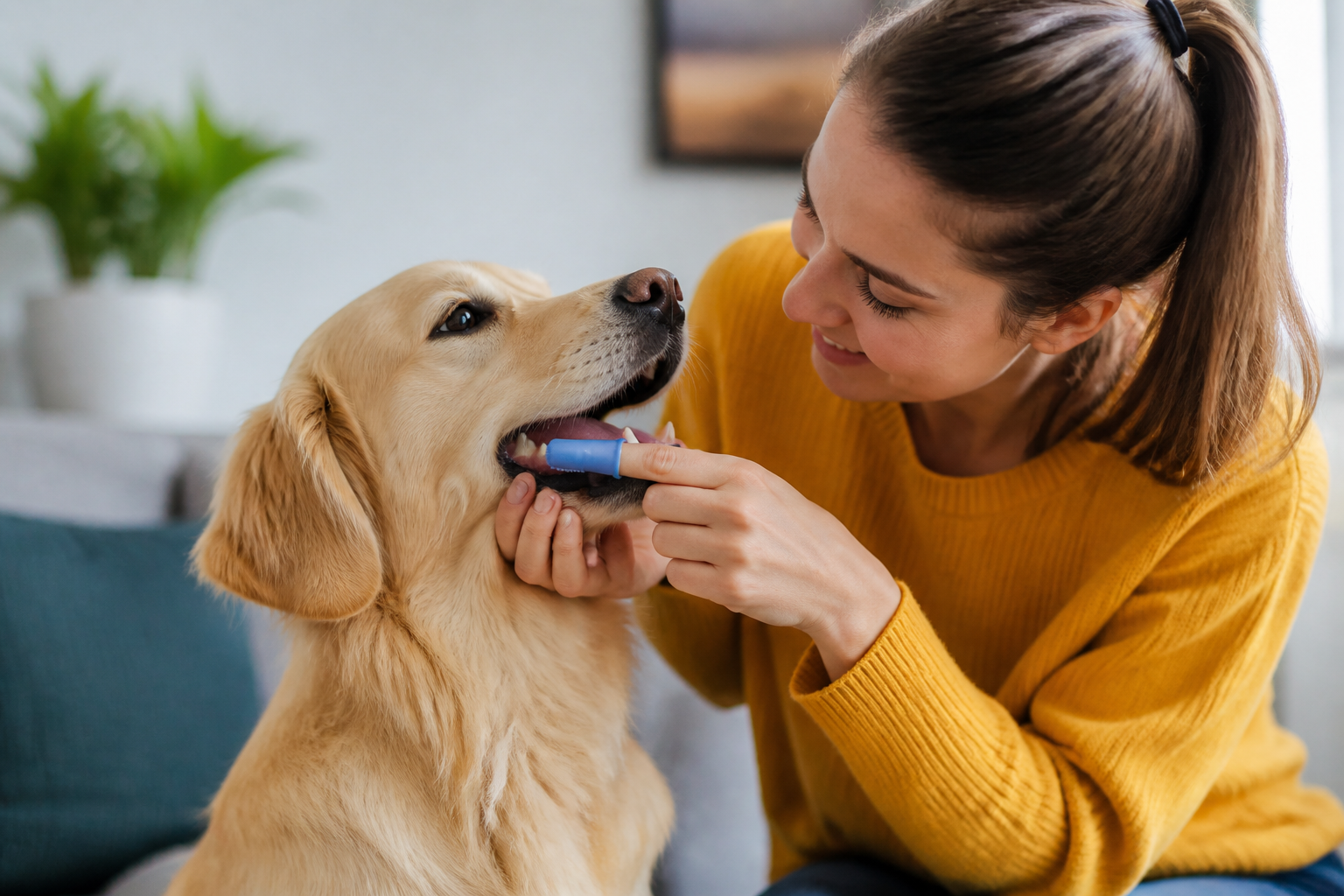
- Finger Brushes: These are small rubber caps that fit over your pointer finger. They are excellent for puppies or dogs that are nervous about a long-handled brush.
- Double-Headed Brushes: These have long handles and two brush heads angled to clean the inside and outside of the teeth at the same time.
- Soft-Bristled Human Brushes: A soft-bristled child’s toothbrush is a fine substitute if you are in a pinch, provided the head is small enough for your dog’s mouth.
Enzymatic Toothpaste
Pet toothpaste comes in flavors dogs actually enjoy, such as poultry, beef, or peanut butter. Most are enzymatic. This means the paste continues to work even after you stop brushing by breaking down food particles chemically. We carry a wide variety of these supplies at BaxterBoo to help make the process easier for you and your pet. One option is Virbac C.E.T. Enzymatic Pet Toothpaste for Dogs and Cats - Poultry.
Vet Tip: If you notice your dog has significantly red gums, loose teeth, or is bleeding during a gentle cleaning, stop and consult your veterinarian. These can be signs of advanced periodontal disease that require professional intervention before you continue a home routine.
The 7-Day Introduction Plan
You cannot expect a dog to sit still for a full two-minute cleaning on the first try. It is better to move slowly and build trust. This desensitization process helps ensure your dog does not develop a fear of the toothbrush. Our pet dental care tips offer additional ideas for gradually introducing oral care.
Step 1: The Taste Test. / For the first two days, simply let your dog lick a small amount of pet-safe toothpaste off your finger. This builds a positive association with the flavor.
Step 2: Mouth Handling. / On days three and four, lift your dog's lips gently. Rub your finger along their gums and teeth without any tools. Reward them with praise or a small treat immediately after.
Step 3: The Brush Introduction. / On days five and six, let your dog lick the toothpaste off the brush itself. Move the brush around slightly so they get used to the feeling of the bristles.
Step 4: The First Real Session. / On day seven, try a brief brushing session. Focus only on the front teeth for 10 to 20 seconds. If they stay calm, give them a high-value reward.
How to Clean Teeth of Dogs: A Step-by-Step Guide
Once your dog is comfortable with the tools, you can move into a full routine. Consistency is more important than perfection. Brushing three times a week is good, but daily is the gold standard for preventing tartar.
- Pick the Right Time: Choose a moment when your dog is relaxed, perhaps after a long walk or a play session.
- Positioning: For small dogs, keep them in your lap. For larger dogs, sit on the floor next to them so you are not looming over them, which can be intimidating.
- The 45-Degree Angle: Aim the bristles at a 45-degree angle toward the gumline. This is where most plaque hides.
- Circular Motions: Use small, gentle circles. You do not need to scrub hard. The enzymatic paste does much of the work.
- Focus on the Outside: Most plaque and tartar accumulate on the cheek side of the teeth. Your dog’s tongue actually does a decent job of keeping the inner surfaces slightly cleaner.
- The Back Molars: Do not forget the very back teeth. These are the "heavy lifters" for chewing and are often the first places where heavy tartar develops.
Bottom line: Start slow and focus on the gumline with gentle circular motions to effectively remove plaque.
Managing Uncooperative Dogs
Some dogs are naturally more sensitive about their mouths. If your dog is a "brush biter" or tries to hide, do not force the issue. Forcing a dog can lead to accidental nips or a complete breakdown in trust.
If brushing is not an option right now, start with dental wipes. These are textured pads pre-soaked in cleaning solution. You simply wrap one around your finger and wipe the surfaces of the teeth. It is less intrusive than a brush but still provides the mechanical action needed to disturb plaque. You can also try water additives. These are tasteless liquids added to the water bowl that help kill oral bacteria and freshen breath.
| Method | Effort Level | Effectiveness | Best For |
|---|---|---|---|
| Brushing | High | Excellent | Most dogs, best results |
| Dental Wipes | Medium | Good | Nervous dogs, beginners |
| Water Additives | Low | Fair | Maintenance between brushes |
| Dental Chews | Low | Fair/Good | Supplemental cleaning |
The Role of Dental Chews and Toys
Dental chews and toys are helpful supplements, but they are not a total replacement for brushing. Think of them like a piece of sugar-free gum for a human: they help, but you still need to brush your teeth at night. Browse our selection of dog dental care products when you are building a routine.
Look for products with the VOHC (Veterinary Oral Health Council) seal. This indicates the product has been tested and proven to reduce plaque or tartar by a certain percentage. Brands like Greenies or specialized Kong dental toys use textures to scrape the teeth as the dog chews. This mechanical action is very effective for the molars.
Rubber toys with "nubs" or rope toys can also help. As the dog’s teeth sink into the material, the fibers or rubber nubs wipe away soft plaque. Just be sure to supervise your dog with any chew to prevent choking or broken teeth from overly hard materials like bones or stones.
Breed-Specific Dental Considerations
Not all dogs have the same dental risks. Genetics play a huge role in how quickly a dog develops oral health problems.
Small and Toy Breeds
Dogs like Yorkies, Chihuahuas, and Pugs have very small mouths, but their teeth are often relatively large for their jaw size. This leads to crowding. When teeth are crowded, food particles get trapped easily, and it is harder for the tongue to clean the area naturally. These breeds often require more frequent professional cleanings and very diligent home care.
Brachycephalic Dogs
Flat-faced breeds often have misaligned jaws. This means their teeth do not meet correctly when they chew, which reduces the natural cleaning effect of eating. If you own a Bulldog or a Boxer, pay extra attention to their front incisors and the areas where teeth may overlap.
Senior Dogs
As dogs age, their immune systems change, and years of plaque can take a toll. Senior dogs are more prone to "receding gums," which exposes the sensitive root of the tooth. If your senior dog suddenly stops eating hard kibble or starts dropping food, they might have a painful tooth.
When Home Care Is Not Enough
There is a limit to what we can do at home. Brushing removes plaque, which is soft and sticky. Once plaque hardens into tartar (calculus), it is like concrete. You cannot brush it off. At this stage, your dog needs a professional cleaning by a veterinarian.
During a professional cleaning, the dog is usually placed under general anesthesia. This allows the vet to clean under the gumline, which is where the most dangerous bacteria live. They can also take X-rays to check for abscesses or bone loss that are invisible to the naked eye.
Prescription Diets and Medications
In some cases, a vet might recommend a prescription dental diet. These kibbles are specifically engineered to not crumble immediately when bitten. Instead, the tooth sinks into the kibble, which scrubs the surface. We carry prescription brands like Farmina Vet Life and Royal Canin for various health needs.
For ongoing management of chronic dental infections or post-surgery care, our pet pharmacy provides access to FDA-approved medications through our partnership with Pet's Choice. Whether your dog needs antibiotics for a gum infection or a specific prescription diet, having a valid prescription from your vet allows you to order these essentials easily through us.
Vet Tip: Schedule a dental checkup at least once a year. Even if you brush daily, your vet can spot early signs of resorptive lesions or oral growths that are easily missed during a home cleaning.
Signs of Dental Trouble to Watch For
Because dogs are instinctively programmed to hide pain, they often suffer in silence with dental issues. You have to be a detective to spot the signs of discomfort.
- Excessive Drooling: If your dog is suddenly drooling more than usual, it could be a sign of mouth pain or an inability to swallow comfortably.
- Pawing at the Face: This is a classic sign that something in the mouth is bothering them.
- Unilateral Chewing: If your dog only chews on one side of their mouth, the other side is likely painful.
- Blood in the Water Bowl: You might see pink-tinged water or blood on a chew toy.
- Changes in Eating Habits: Refusing hard food or acting hungry but walking away from the bowl is a major red flag.
Creating a Sustainable Routine
The hardest part of cleaning your dog's teeth is making it a habit. To make it easier, keep your supplies in a visible spot. If the toothbrush is tucked away in a drawer, you are likely to forget it. Keep it near their leash or their food bin so you see it every day.
You can also use our Autoship program to ensure you never run out of toothpaste or dental chews. This not only saves you money on your orders but also keeps your home care routine on track. Consistency is the primary factor in avoiding high-cost dental surgeries.
Conclusion
Learning how to clean teeth of dogs is a skill that pays off for years to come. While it takes a little bit of time to get your pet comfortable with the process, the result is a happier dog with fresher breath and a lower risk of systemic health issues. Remember to use only pet-safe supplies and move at a pace that keeps your dog feeling safe. By combining regular brushing with the right dental toys and professional veterinary checkups, you are giving your companion the best chance at a long, pain-free life.
- Start with a 7-day introduction to build trust.
- Use enzymatic toothpaste designed for pets only.
- Focus on the gumline where plaque buildup is heaviest.
- Supplement with VOHC-approved chews and toys.
For all your dental care needs, from finger brushes to enzymatic pastes and prescription diets, visit our dental care category. You can also join the MVP Rewards program to earn points on every toothbrush and treat purchase, helping you save while you keep your pet healthy.
FAQ
How often should I realistically brush my dog's teeth?
Ideally, you should brush your dog's teeth every day to prevent plaque from hardening into tartar. However, if your schedule is busy, aiming for three times a week can still make a significant difference in their oral health. Consistency is more important than a single long session once a month.
Can I use baking soda instead of dog toothpaste?
It is not recommended to use baking soda to clean a dog's teeth. Baking soda has a high alkaline content and a salty taste that can upset a dog’s stomach if swallowed in large amounts. Pet-specific toothpastes are much safer and contain enzymes that break down plaque more effectively than baking soda.
My dog’s gums bleed a little when I brush. Should I stop?
A small amount of bleeding can be a sign of mild gingivitis, similar to what happens when humans start flossing after a long break. You should be very gentle and continue brushing to help the gums heal. However, if the bleeding is heavy or persistent, you should stop and have your veterinarian check for more serious gum disease.
Is it too late to start brushing my senior dog's teeth?
It is never too late to start, but you should have a vet examine your senior dog's mouth first. If there is already heavy tartar or loose teeth, brushing could be painful. Once a vet has performed a professional cleaning and addressed any issues, starting a home routine can help preserve their remaining teeth.






