
 Save 15% on your 1st Autoship learn more

 Email us
 Live Chat
 FAQs
FAQs





Introduction
You are standing in your kitchen with a bag of lightweight, crunchy nuggets, wondering how these dry pieces turn into a nutritious meal for your dog. Feeding freeze-dried food is a popular choice for those who want the benefits of a raw diet without the mess of thawing frozen meat. At BaxterBoo, we see many pet owners making the switch because they want high-quality protein and minimal processing, and our freeze-dried dog food collection is a great place to start. This post covers everything from the correct water-to-food ratio to safe handling practices for your family. We will explain how to transition your pup slowly and how to use these products as toppers or full meals. By the end, you will feel confident serving this nutrient-dense food to support your dog’s energy and wellness.
Quick Answer: To feed freeze-dried dog food, you typically crumble the nuggets or patties and mix them with warm water using a one-to-one ratio. Let the food sit for three to five minutes to fully rehydrate before serving to ensure your dog stays hydrated and can digest the meal easily.
Understanding the Basics of Freeze-Dried Food
Freeze-drying is a unique preservation method that removes moisture through a process called sublimation. The food is frozen and then placed in a vacuum chamber. This turns the ice directly into vapor without it ever becoming liquid. This method is different from traditional dehydration because it does not use high heat. High heat can damage sensitive vitamins and change the natural structure of proteins. If you want to compare raw-style options, our holistic puppy food guide is a helpful related read.
Because no heat is involved, the food keeps about 97 percent of its original nutritional value. It stays shelf-stable for months or even years without the need for synthetic preservatives. This makes it a great option for owners who want the quality of raw food but do not have extra freezer space. It is lightweight and easy to store in a pantry, which also makes it the perfect choice for traveling or camping with your dog.
Key Takeaway: Freeze-drying preserves nearly all the nutrients found in raw ingredients by removing moisture without using high heat, resulting in a shelf-stable and nutrient-dense meal.
How to Rehydrate Freeze-Dried Dog Food
Most manufacturers recommend rehydrating freeze-dried food before you put the bowl down. This is because the moisture content in these products is extremely low, usually around 2 percent. For comparison, traditional dry kibble has about 10 percent moisture, and fresh raw food has around 70 percent. Adding water back into the food helps with digestion and keeps your dog’s kidneys and bladder healthy.
To rehydrate the food, follow these steps:
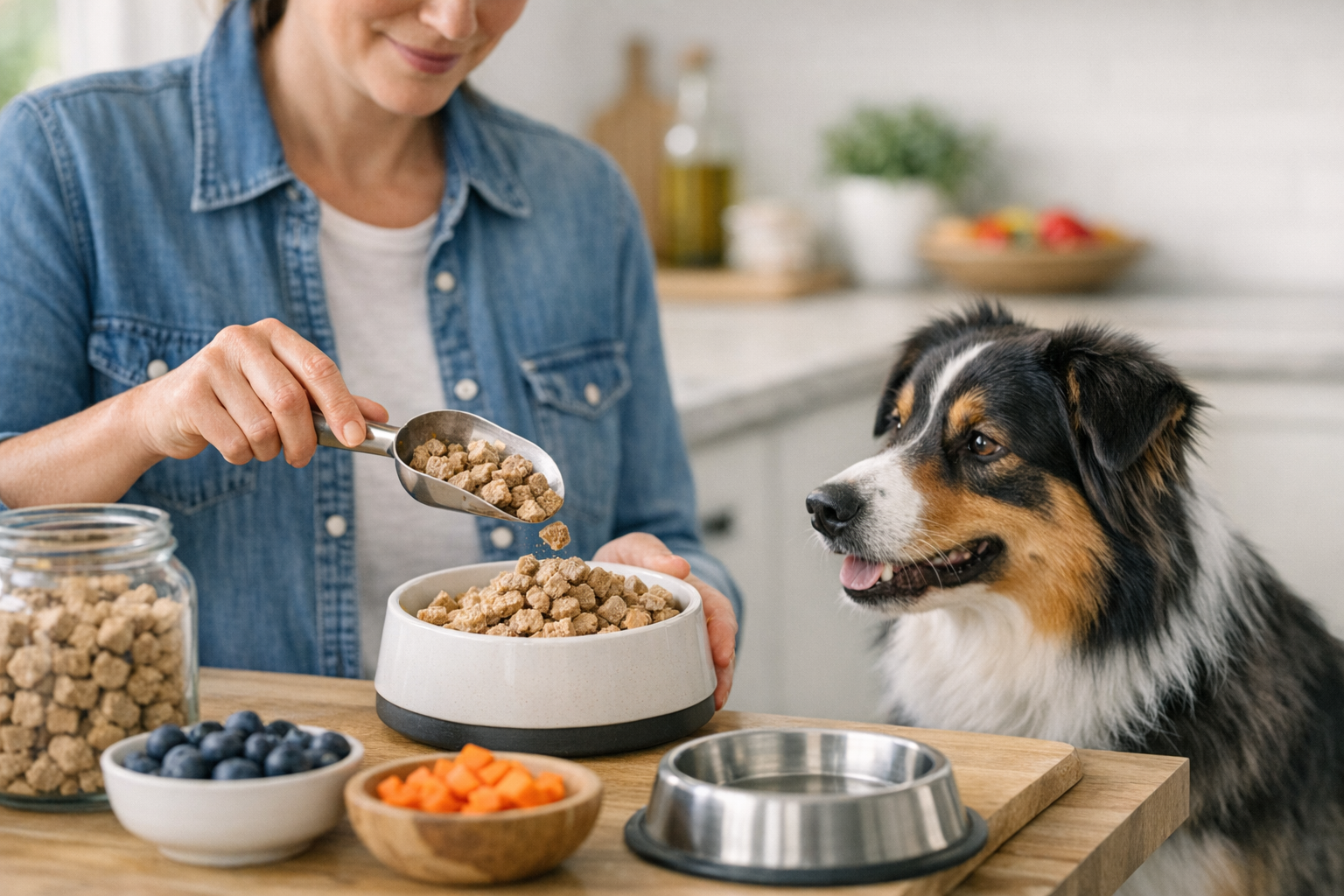
Step 1: Measure the correct amount of food based on your dog’s weight and activity level. Step 2: Crumble the nuggets or patties into smaller pieces to increase the surface area. Step 3: Add warm water or a pet-safe broth. Use a one-to-one ratio, such as one cup of water for every one cup of food. Step 4: Stir the mixture and let it sit for three to five minutes until the water is absorbed.
You can adjust the amount of liquid based on your dog’s preference. Some dogs like a thick, chunky texture, while others prefer a soupier meal. Using warm water helps release the natural aromas of the meat, which can entice a picky eater to start their meal.
Vet Tip: Always use filtered water or a low-sodium broth specifically made for pets when rehydrating food. Avoid human-grade canned broths, as they often contain high levels of salt, onions, or garlic, which are toxic to dogs.
The Importance of a Slow Transition
Switching your dog to a new type of food too quickly can lead to an upset stomach or diarrhea. This is especially true with freeze-dried food because it is often much higher in protein and fat than standard kibble. A gradual transition allows your dog’s digestive enzymes and gut bacteria to adjust to the richer ingredients. If you want a simple refresher on the process, our guide to transitioning a dog to a new food covers a similar step-by-step approach.
We recommend a transition period of at least seven to ten days:
- Days 1-3: Serve 25 percent freeze-dried food mixed with 75 percent of the old food.
- Days 4-6: Serve 50 percent freeze-dried food mixed with 50 percent of the old food.
- Days 7-9: Serve 75 percent freeze-dried food mixed with 25 percent of the old food.
- Day 10: Serve 100 percent freeze-dried food.
Watch your dog’s stool during this time. If you notice any loose stools, stay at the current percentage for a few extra days until things return to normal. Some dogs with very sensitive stomachs may need up to two weeks to make the full switch.
Using Freeze-Dried Food as a Topper
You do not have to feed freeze-dried food as a complete meal to see the benefits. Many pet owners use it as a topper to enhance the nutritional value of standard kibble. This is an excellent way to provide high-quality animal protein and organs without significantly increasing your monthly food budget.
If you are using it as a topper, you can crumble a small amount over the top of the bowl. You can serve it dry if your dog is already eating a moisture-rich canned food. If you are adding it to dry kibble, adding a splash of water is still a good idea. This creates a savory gravy that coats the kibble and makes the entire meal more appealing. For more add-on ideas, visit our food topper collection.
When using toppers, remember to reduce the amount of the main food you are feeding. Even a small handful of freeze-dried nuggets can be calorie-dense. If you do not adjust the portions, your dog might start gaining unnecessary weight.
Portion Control and Nutrient Density
One of the biggest mistakes owners make is feeding the same volume of freeze-dried food as they did with kibble. Because the moisture has been removed, the food is very concentrated. A small amount of freeze-dried meat contains more calories and nutrients than the same volume of processed dry food. If you need a practical reference point, our dry dog food feeding guide can help you think through portioning.
Always refer to the feeding chart on the back of the bag. These charts are usually based on your dog’s ideal weight rather than their current weight. If your dog is highly active, they may need slightly more. If they are a couch potato or a senior, they may need less.
Key Takeaway: Freeze-dried food is highly concentrated. Always use a measuring cup and follow the feeding guidelines to prevent overfeeding and weight gain.
Safe Handling and Hygiene Practices
Even though freeze-dried food is shelf-stable, many brands use raw meat as the base ingredient. Some companies use High-Pressure Processing to reduce the risk of pathogens, but you should still practice good hygiene. Treating it like you would handle raw chicken for your own dinner is the safest approach. If your dog needs prescription support alongside nutrition, our pharmacy for dogs can be a useful next stop.
- Wash your hands with soap and warm water after handling the food or treats.
- Clean your dog’s bowl with hot, soapy water after every single meal.
- Keep the food bag sealed in a cool, dry place to prevent moisture from getting in.
- Do not leave rehydrated food out in the bowl for more than thirty minutes.
If your dog does not finish their rehydrated meal, throw it away. Bacteria can grow quickly once water is added to the meat. By keeping everything clean, you protect both your pet and the humans in your household from potential illness.
Choosing Quality Brands at BaxterBoo
We carry a wide variety of trusted brands that specialize in freeze-dried nutrition. Look for options like Stella and Chewy’s, which offer a range of proteins including beef, chicken, and lamb. These products often include organic fruits and vegetables along with high-quality organ meats like heart and liver. You can browse our selection of Stella & Chewy's products to compare popular formulas.
Another excellent choice is Vital Essentials. They focus on whole-animal nutrition and use a limited number of ingredients, which is perfect for dogs with food sensitivities.
For those who want a combination of kibble and freeze-dried pieces, brands like Open Farm and Acana offer "raw coated" or "meal mixer" options. Our team at BaxterBoo carefully selects these brands to ensure they meet high standards for ingredient sourcing and safety.
Managing Health Conditions with Diet
If you are switching to freeze-dried food because your dog has chronic health issues, a veterinary consultation is essential. For dogs with kidney disease, the high protein and phosphorus levels in some freeze-dried foods might be too taxing on their system. Conversely, dogs with severe skin allergies often thrive on the limited-ingredient profiles found in these diets.
Our pharmacy provides access to FDA-approved medications and prescription diets through our partnership with Pet's Choice. If your veterinarian recommends a specific prescription diet for a condition like food allergies or digestive disorders, we can help you fulfill that order. We believe that nutrition and medical care go hand-in-hand to keep your dog healthy for years to come.
Vet Tip: If your dog has a history of pancreatitis, be cautious with freeze-dried foods. Many of these recipes have a higher fat content than traditional kibble, which can trigger a flare-up. Talk to your vet about finding a low-fat freeze-dried option or using it only in very small amounts.
Benefits for Senior Dogs
Senior dogs often experience a decrease in appetite as their sense of smell and taste weakens. The strong, natural aroma of rehydrated freeze-dried food can be a great way to encourage an older dog to eat. The soft texture of the rehydrated nuggets is also much easier on aging teeth and gums than hard kibble. If you are comparing age-specific options, our senior dog food collection is worth a look.
Furthermore, many freeze-dried recipes include natural sources of glucosamine and chondroitin from animal cartilage. These nutrients support joint health and mobility. If your senior dog is struggling with stiff joints, moving to a high-quality protein source can help maintain muscle mass, which takes the pressure off their skeletal system.
Storing Your Food Properly
Proper storage is the key to keeping freeze-dried food fresh and safe. Most bags come with a resealable zip lock, but some people prefer to move the food into a dedicated airtight container. Keep the container in a dark, dry pantry. Exposure to light and humidity can cause the fats in the food to go rancid over time.
Most opened bags of freeze-dried food should be used within thirty days for maximum freshness. If you buy a large bag for a small dog, consider splitting the bag and freezing half of the dry nuggets in a freezer-safe bag to extend the shelf life. Just make sure the food stays completely dry until you are ready to serve it.
Transitioning Puppies to Freeze-Dried
Puppies can benefit greatly from the high-quality protein found in freeze-dried diets. However, they have very specific requirements for calcium and phosphorus to support their growing bones. Always ensure the bag you choose is labeled as "complete and balanced" for all life stages or specifically for puppies. For more background on puppy nutrition, our holistic puppy food guide is a helpful companion read.
When feeding a puppy, rehydration is even more critical. Puppies can become dehydrated quickly, and the added water in their food ensures they are getting enough fluids throughout the day. Follow the same slow transition process used for adult dogs to avoid any tummy troubles during their growth spurts.
Conclusion
Feeding freeze-dried dog food is a simple and effective way to provide your dog with the benefits of a raw diet. By rehydrating the food with warm water and transitioning slowly, you can support your pet’s digestion and overall health. Remember to handle the food safely and adjust your portions to account for the high nutrient density. We are proud to offer a wide selection of these premium foods to help your dog thrive.
- Measure food by weight and use a one-to-one water ratio.
- Always rehydrate for at least three to five minutes.
- Wash bowls and hands thoroughly after every meal.
- Use a ten-day transition period when starting a new food.
Bottom line: Rehydrating freeze-dried dog food with warm water ensures your pet stays hydrated and gets the most nutritional value from their high-quality, raw-based meal.
Explore our full collection of freeze-dried dog food and treats to find the perfect protein for your pup. If you want hands-off refills, take a look at our Autoship programme for recurring savings on the foods your dog already loves. For pets with specific health needs, visit our pharmacy section to learn more about our prescription food options and healthcare products.
FAQ
Do I have to add water to freeze-dried dog food?
While you can technically feed it dry as a treat, we strongly recommend adding water if it is a full meal. Rehydration aids in digestion and ensures your dog receives the moisture they need for healthy organ function. Without added water, the food can pull moisture from your dog's system, leading to dehydration.
Is freeze-dried dog food the same as dehydrated food?
No, the processes are quite different. Dehydrated food uses low heat to evaporate moisture, which can slightly change the texture and nutrient profile of the ingredients. Freeze-drying uses sublimation in a vacuum chamber with no heat, which preserves almost all of the natural vitamins and enzymes.
How long does a bag of freeze-dried food stay fresh?
An unopened bag can last for one to two years when stored in a cool, dry place. Once you open the bag, we recommend using it within thirty days to ensure the fats do not go rancid. Always keep the bag tightly sealed or move the food to an airtight container to keep moisture out.
Can I mix freeze-dried food with regular kibble?
Yes, this is a very common way to feed. Many owners use freeze-dried nuggets as a "booster" or topper to provide extra protein and variety. Just be sure to reduce the amount of kibble you serve so you do not exceed your dog's daily calorie needs.
If you want to keep earning perks on future orders, the MVP Rewards programme is a smart way to shop for your pet’s favorite foods.






