Save 15% on your 1st Autoship learn more

 Email us
 Live Chat
 FAQs
FAQs





Introduction
You are petting your cat when you notice tiny white flakes scattered across their coat. These flakes are especially visible on dark fur and often gather near the base of the tail. At BaxterBoo, we see this often. While a few flakes might seem like a minor grooming issue, they are usually a signal from your cat’s body. Their skin might be dry, they may be struggling to groom themselves, or there could be an underlying health concern. This guide will walk you through the practical steps to clear those flakes and keep your cat’s skin healthy. We will cover grooming techniques, dietary changes, and environmental fixes. Our goal is to help you understand why these flakes appear and how to bring back that healthy, glossy shine to your cat’s fur.
What Exactly Is Cat Dandruff?
Dandruff is more than just a cosmetic nuisance. It consists of dead skin cells that have clumped together and shed from the surface of the skin. While all cats shed skin cells, healthy grooming usually removes them before you ever see them. When you start seeing visible flakes, it means the rate of shedding has increased or the grooming process has slowed down.
Dandruff vs. Dander
It is easy to confuse these two terms. Every cat produces dander. Dander consists of microscopic skin cells that are too small to see with the naked eye. This is what typically triggers allergies in humans. Dandruff is different because the flakes are large enough to see. If you can see white specks on your cat’s back, you are looking at dandruff, not dander.
Dandruff vs. Flea Dirt
Before you start a grooming routine, make sure you are actually looking at dandruff. White flakes are almost always dry skin. However, if you see black or dark brown specks that look like ground pepper, that is flea dirt. Flea dirt is actually flea waste. If you find dark specks, your cat likely has a flea infestation rather than just dry skin. Review this guide to flea and tick prevention products if you suspect pests.
Quick Answer: Cat dandruff is visible white flakes of dead skin that accumulate on the fur. It differs from dander, which is microscopic, and flea dirt, which appears as dark specks.
Simple Ways to Get Dandruff Out of Cat Fur
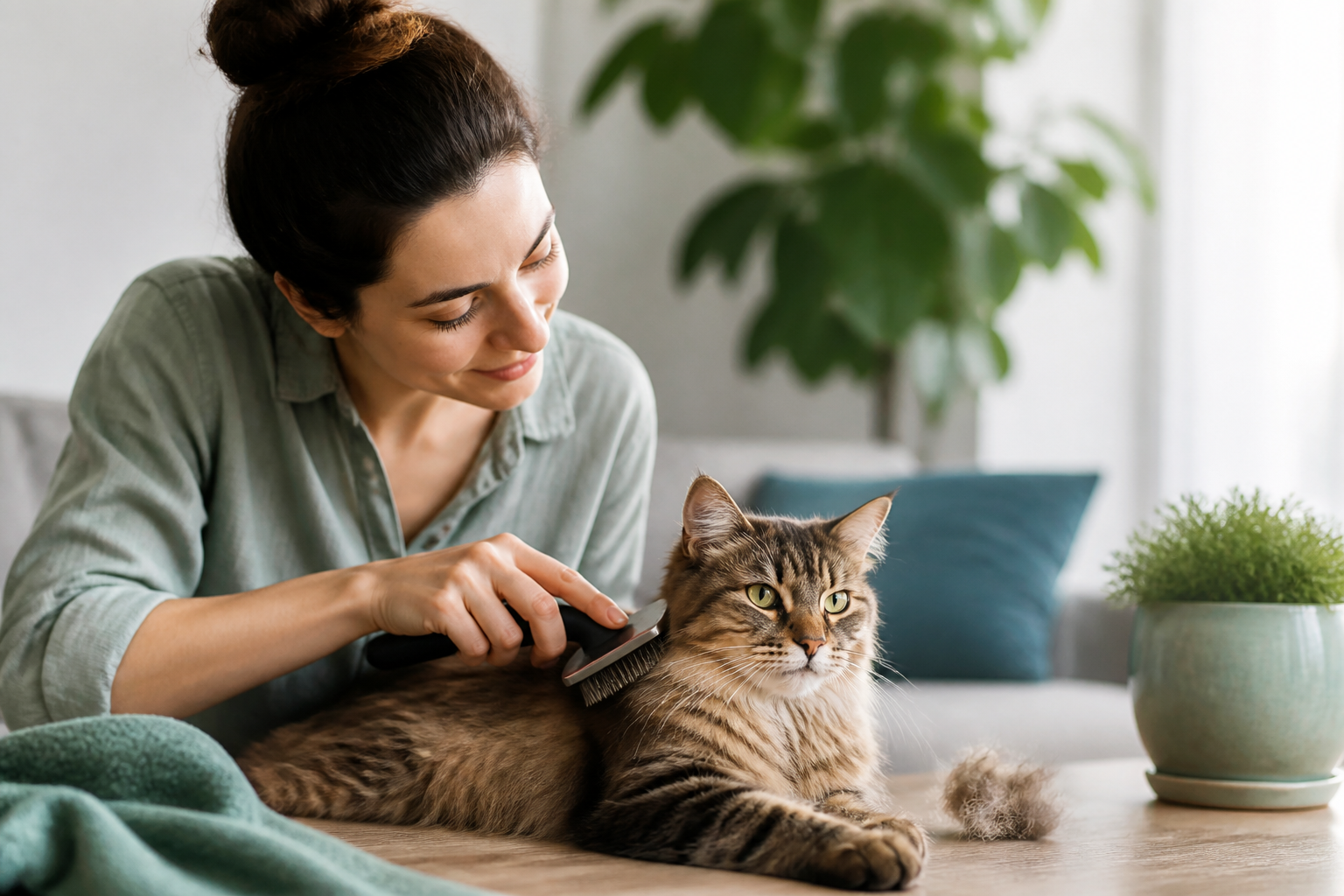
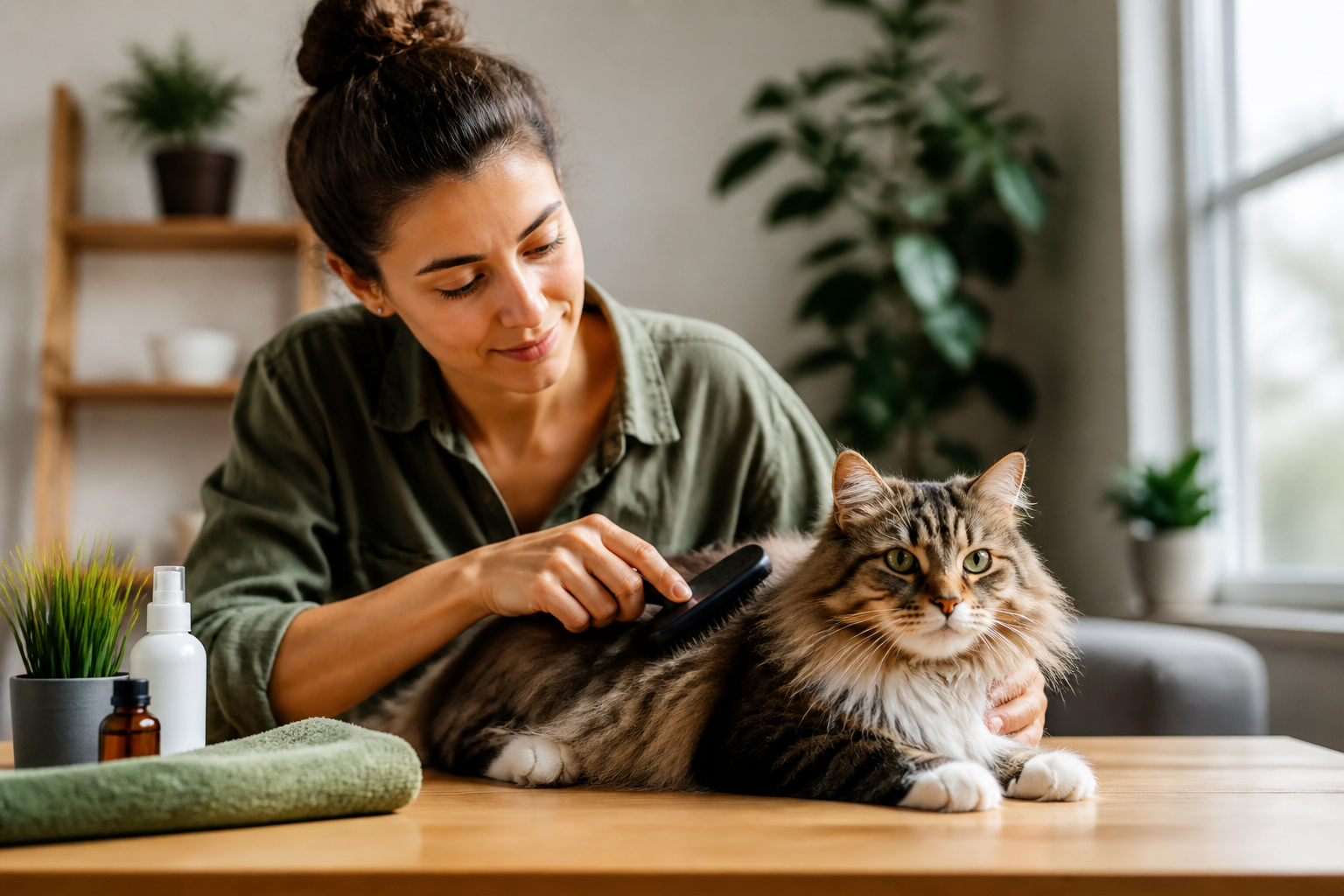
The fastest way to remove existing flakes is through manual grooming. This does not mean you should reach for the shampoo immediately. Most cats find baths stressful, and stress can actually make skin conditions worse. Instead, focus on a consistent brushing routine.
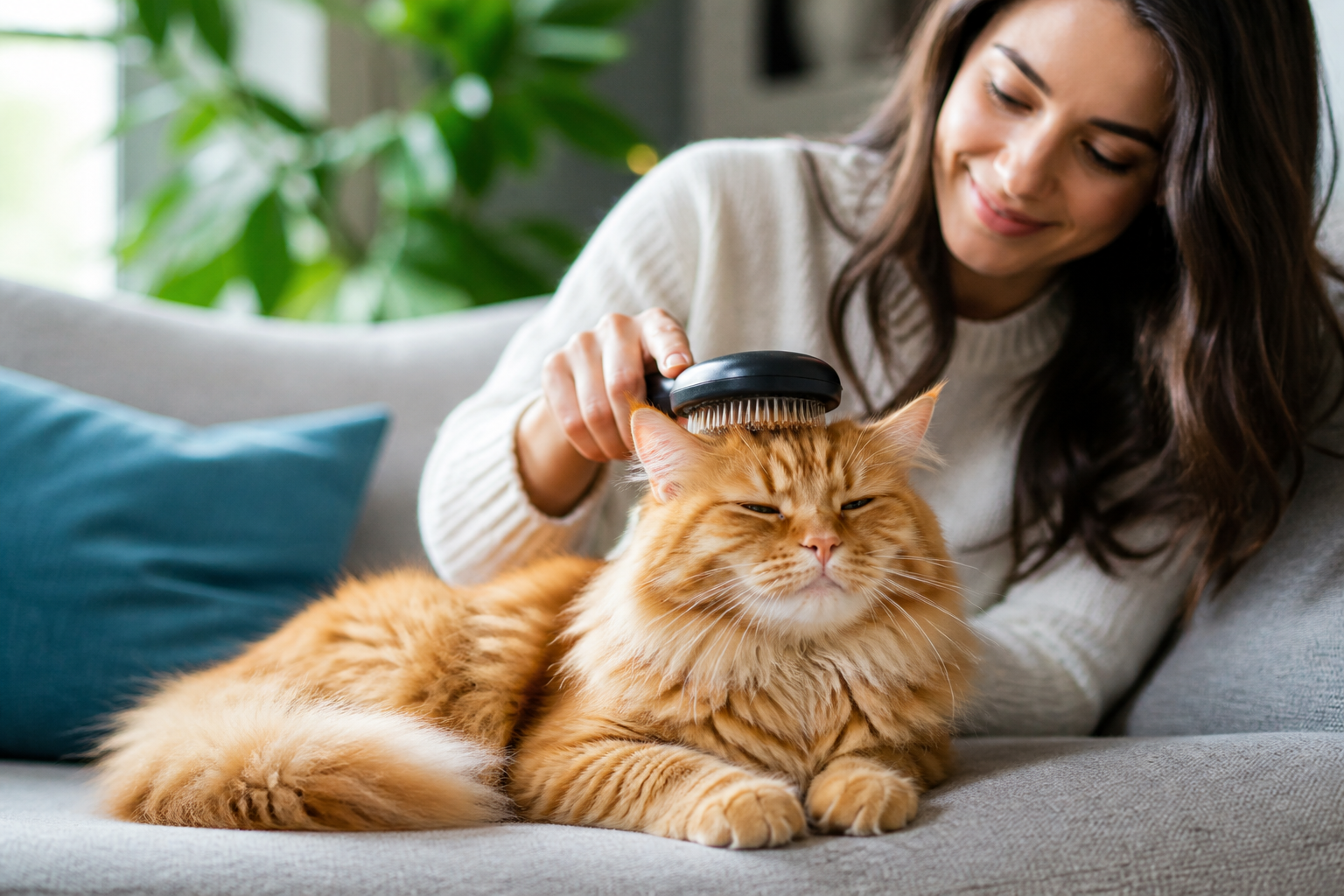
Step 1: Choose the right tool. / Use a soft slicker brush or a fine-toothed comb designed for cats. These tools are effective at lifting flakes away from the skin without causing irritation. Explore our cat grooming supplies for brushes, combs, and grooming wipes.
Step 2: Brush with the grain. / Start at the head and work your way toward the tail. Use gentle, sweeping motions to catch the loose skin cells trapped in the undercoat.
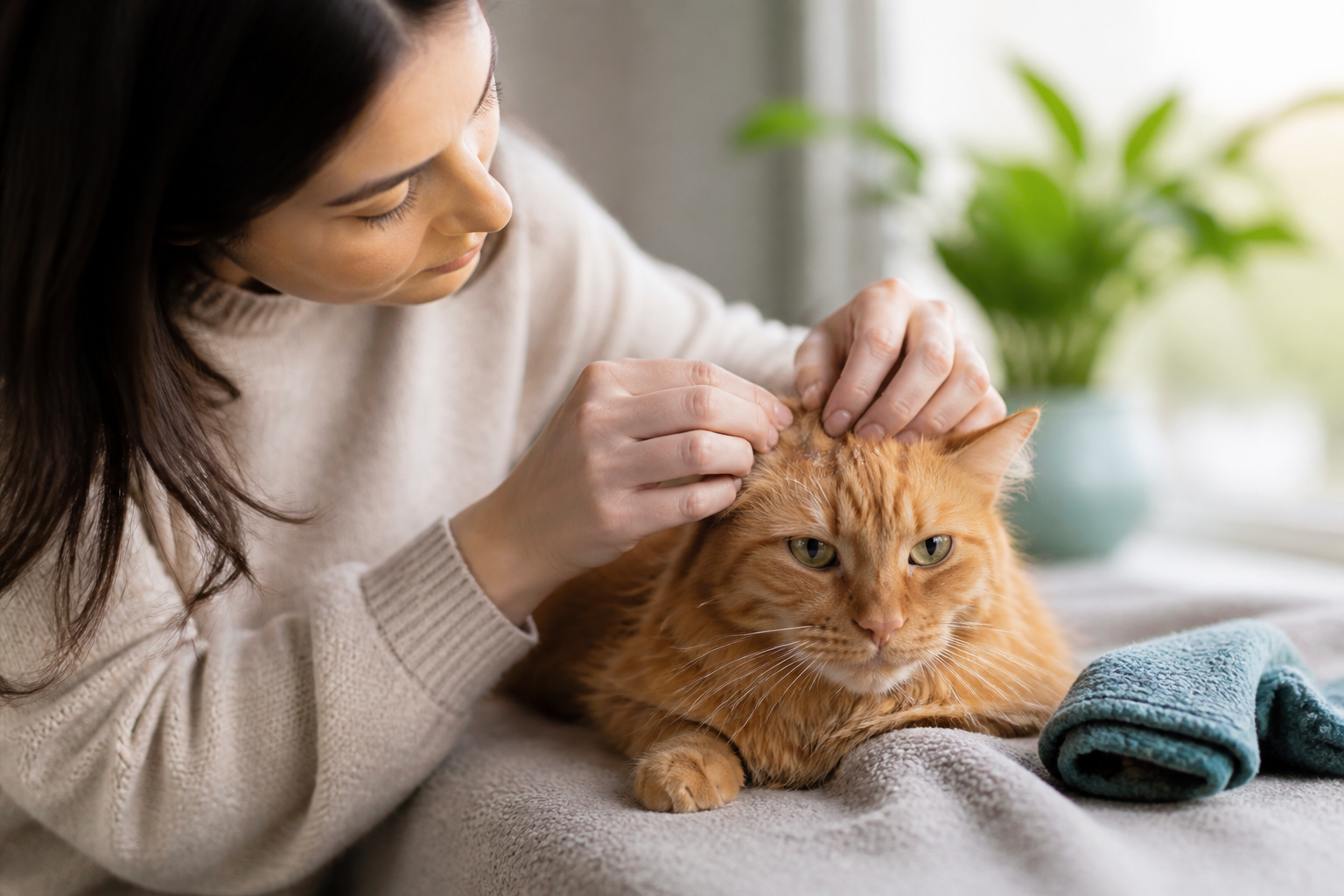
Step 3: Focus on the lower back. / Dandruff often accumulates near the base of the tail because this area is harder for some cats to reach during self-grooming.
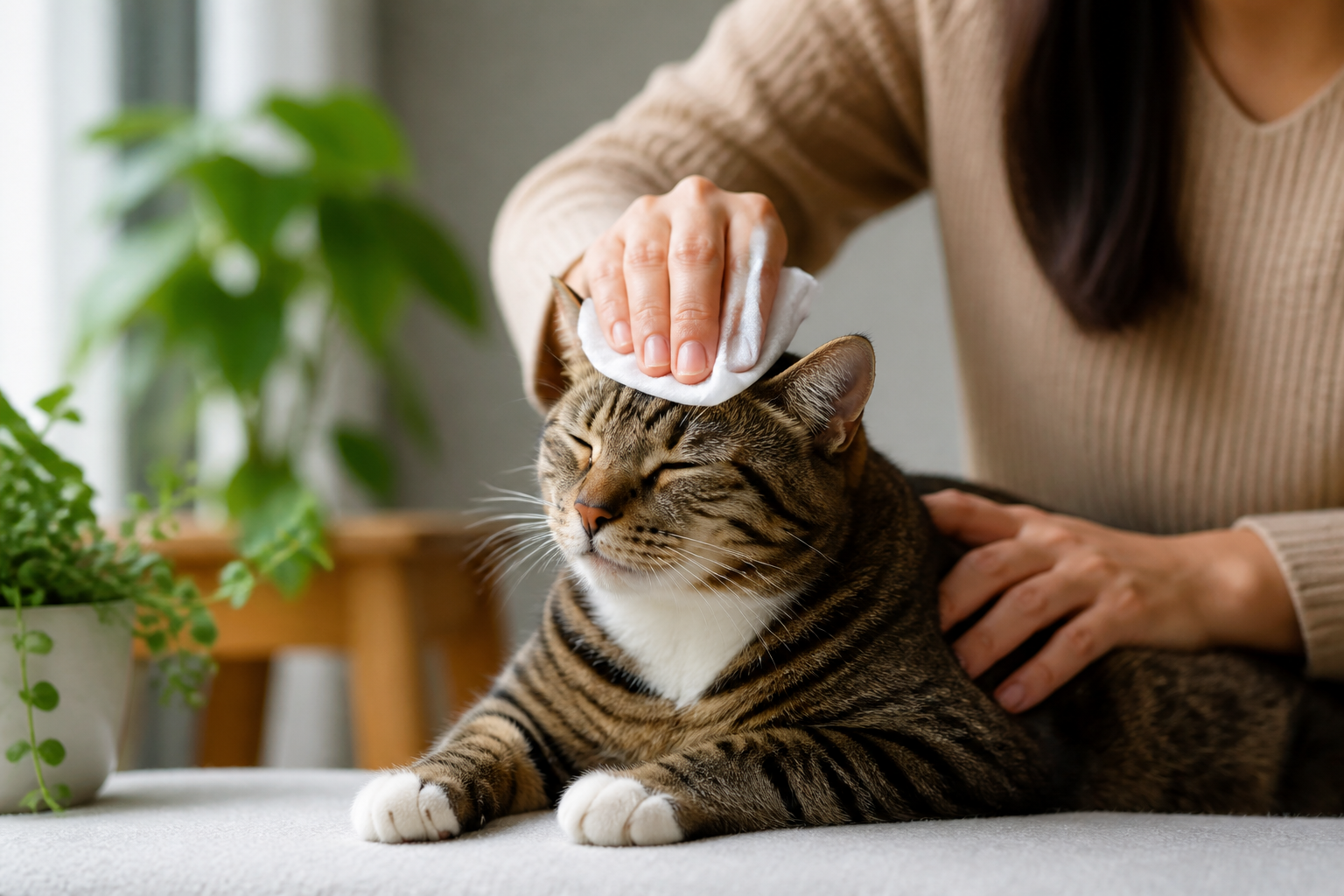
Step 4: Wipe the coat. / After brushing, use a damp, soft cloth or a cat-specific grooming wipe to pick up any remaining loose flakes. This leaves the coat looking clean and refreshed.
The Problem with Over-Bathing
Many owners think a bath is the only way to get a cat clean. However, frequent bathing can strip the natural oils from your cat’s skin. This leads to more dryness and more dandruff. Unless your cat has a specific medical condition or has gotten into something sticky, skip the tub. Focus on daily brushing to distribute natural oils across the fur.
Key Takeaway: Regular brushing is the most effective way to remove dandruff. It stimulates the skin and spreads natural oils that keep the coat healthy.
Addressing Environmental Causes
Your home environment plays a massive role in your cat’s skin health. During the winter months, indoor heating systems pull moisture out of the air. This dry air pulls moisture from your cat’s skin, leading to flaking.
Use a Humidifier
If you notice that your own skin feels tight or dry during the winter, your cat is likely feeling it too. Placing a humidifier in the room where your cat spends the most time can make a big difference. Aim for a humidity level between 40 and 50 percent. This helps keep the skin barrier intact and prevents the outer layer from drying out.
Reduce Stress
Cats are sensitive to changes in their environment. Stress can trigger a physical reaction that causes the skin to become oily or excessively dry. If you have recently moved, added a new pet, or changed your daily routine, your cat’s dandruff might be a stress response. Providing vertical space, quiet hiding spots, and consistent play sessions can help lower their anxiety levels.
Nutrition and Hydration
Healthy skin starts from the inside. If your cat is not getting the right nutrients, their coat will be the first place you see the results. A dull, flaky coat is often a sign of a nutritional gap.
The Power of Omega Fatty Acids
Omega-3 and Omega-6 fatty acids are essential for maintaining the skin’s moisture barrier. Many standard dry foods are lower in these healthy fats than cats need. Adding a high-quality fish oil supplement can help. Salmon oil or pollock oil provides EPA and DHA, which reduce inflammation and support skin health. You can browse our cat skin and coat care selection for supplements and related wellness products.
Hydration and Wet Food
Cats have a low thirst drive. In the wild, they get most of their moisture from their prey. If your cat only eats dry kibble, they may be slightly dehydrated. Chronic low-level dehydration leads to dry, brittle skin. For more ideas, read about wet food and hydration for cats.
- Try incorporating wet food into their daily diet to increase water intake.
- Use a pet water fountain to encourage more frequent drinking.
- Ensure fresh water is available in multiple locations throughout your home.
We offer a variety of premium wet cat foods and supplements through our website. If you find a brand your cat loves, our Autoship program is a great way to ensure you never run out while saving on every order.
Vet Tip: If you decide to add a skin and coat supplement, start with a small amount. Some cats have sensitive stomachs, and a slow introduction helps prevent digestive upset.
When Dandruff Signals a Health Problem
Sometimes, no amount of brushing or fish oil will solve the problem. In these cases, the dandruff is a symptom of a deeper medical issue.
Mobility Issues and Obesity
If a cat is overweight or has arthritis, they simply cannot reach certain parts of their body to groom. You will often see a thick patch of dandruff and matted fur on their lower back. This is because the cat cannot twist around to clean that area. Learn more about arthritis and grooming changes in cats.
- Obesity: Overweight cats have physical folds that trap skin cells and moisture.
- Arthritis: Joint pain makes the stretching required for grooming nearly impossible.
If your cat is struggling with weight or mobility, we recommend talking to your veterinarian about a management plan. Our cat pharmacy carries prescription diets and medications through our partnership with Pet's Choice that can help manage these chronic conditions.
External Parasites and Walking Dandruff
There is a specific mite called Cheyletiella that causes a condition known as "walking dandruff." These mites are large enough to see, and they look like moving white flakes. If the dandruff on your cat seems to be twitching or moving, it is likely a parasite. This requires medical treatment to eliminate the mites from your cat and your home. You can also review our cat flea and tick collection when checking for external parasite concerns.
Internal Health Conditions
In older cats, a sudden change in coat quality can be a red flag for systemic issues. Conditions like hyperthyroidism, diabetes, or kidney disease can affect how the body processes nutrients and maintains the skin.
Vet Tip: Always schedule a vet visit if dandruff is accompanied by weight loss, increased thirst, or lethargy. These could be signs of an underlying metabolic disorder that needs professional diagnosis.
Managing the Grooming Routine
Consistency is the most important factor in managing skin health. You cannot fix a flaky coat with a single session. It takes time for the skin to heal and for new, healthy fur to grow in.
- Weekly Goal: Aim for at least three short brushing sessions per week.
- Daily Check: Take a quick look at the coat every day to catch any new mats or heavy flaking early.
- Supplements: Allow 4 to 6 weeks of consistent supplement use before expecting to see a major change in coat quality.
At the BaxterBoo warehouse, we keep a wide selection of grooming tools and skin-safe wipes in stock. We only carry brands that we trust for our own pets. Using the right tools makes the process easier for you and more comfortable for your cat. For additional grooming guidance, see our article about keeping a cat’s coat and whiskers healthy.
Bottom line: A combination of proper grooming, environmental moisture, and targeted nutrition is the most effective way to eliminate cat dandruff.
Summary of Solutions
| Solution Type | Action to Take | Expected Benefit |
|---|---|---|
| Grooming | Brush 3 times weekly with a slicker brush. | Removes dead cells and spreads natural oils. |
| Environmental | Add a humidifier to the main living area. | Prevents skin from drying out in winter. |
| Nutritional | Add Omega-3 supplements or wet food. | Strengthens the skin barrier from the inside. |
| Medical | Visit a vet for persistent or moving flakes. | Rules out mites, allergies, or internal disease. |
Conclusion
Getting dandruff out of cat fur requires a two-part approach. You must remove the existing flakes through gentle grooming and then address the root cause to prevent them from coming back. Whether the issue is dry winter air, a lack of fatty acids in the diet, or a mobility struggle, there is almost always a practical solution. Remember that your cat’s skin is a reflection of their overall wellness. By staying consistent with their care, you can help them feel more comfortable and keep their fur looking beautiful. If you need supplies to get started, browse our Grooming and Skin & Coat categories. For those managing long-term health conditions that cause skin issues, our pharmacy provides a convenient way to get the prescription foods and medications your vet recommends.
FAQ
Why does my cat have so much dandruff on their lower back?
The lower back and base of the tail are the hardest areas for a cat to reach during grooming. If a cat is slightly overweight or has stiff joints from arthritis, they may stop cleaning this area entirely. This leads to a buildup of dead skin cells and natural oils that eventually turn into visible dandruff.
Can I use human dandruff shampoo on my cat?
No, you should never use human dandruff shampoo on a cat. These products are formulated for the pH level of human skin and often contain ingredients that are toxic to cats if licked off the fur. If your cat needs a medicated bath, always use a product specifically labeled for felines or one recommended by your veterinarian.
Does dandruff mean my cat has fleas?
Not necessarily, but the two often go hand-in-hand. Fleas cause skin irritation and itching, which can lead to increased flaking. Additionally, "walking dandruff" is actually a type of mite that can be mistaken for dry skin. It is always a good idea to check for dark specks of flea dirt or live insects if you notice a sudden increase in white flakes.
Will changing my cat's food help with their dry skin?
It often does. Many cats thrive on a diet that is high in protein and rich in moisture and healthy fats. If your cat currently eats only dry kibble, adding wet food or a fish oil supplement can provide the nutrients their skin needs to stay hydrated and flexible. Just be sure to transition to any new food slowly to avoid stomach upset.