
 Save 15% on your 1st Autoship learn more

 Email us
 Live Chat
 FAQs





Introduction
You fill the food bowl and set it down. Before you can even stand back up, your dog has inhaled every single kibble. Or perhaps you have a cat who meanders around the house, looking for trouble because they have too much pent-up energy. These moments are common for pet owners, but they often signal a need for more mental engagement. At BaxterBoo, we believe that a bored pet is often a mischievous one. One of the best ways to solve both fast eating and boredom is by using a snuffle mat. This DIY project is simple, affordable, and highly effective for pets of all sizes. This post covers the materials you need and the steps to build a durable mat at home. We will show you how to turn mealtime into a rewarding brain game.
What is a Snuffle Mat?
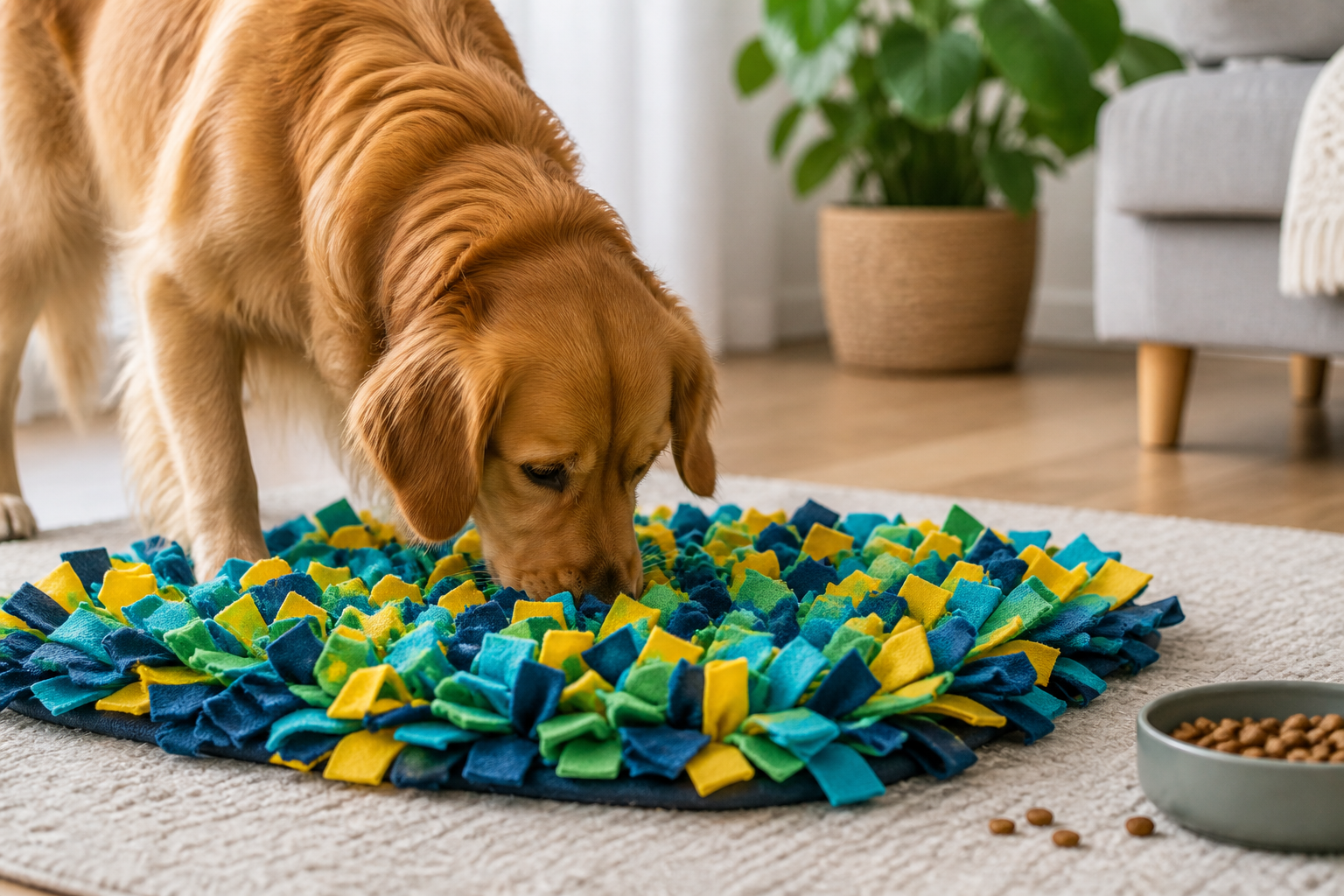
A snuffle mat is an enrichment toy designed to mimic the natural foraging behaviors of animals. It consists of a sturdy base, usually made of rubber or plastic, with hundreds of fabric strips tied to it. These strips create a thick, grassy texture that hides dry food or treats. Your dog or cat must use their nose to hunt for each piece. This activity is often called nose work. It is a low-impact way to tire out a high-energy animal.
Most pets have a natural drive to forage. In the wild, they would spend a large portion of their day searching for food. Modern life makes things easy with a ceramic bowl, but that ease can lead to boredom. A snuffle mat brings that instinct back into their daily routine. It forces them to slow down and think. This is especially helpful for pets who struggle with weight management or anxiety.
Quick Answer: A snuffle mat is a DIY foraging toy made of fleece strips tied to a sink mat. It encourages pets to use their sense of smell to find hidden treats, which provides mental stimulation and slows down fast eaters.
Interactive and Treat Dog Toys








Why Mental Enrichment Matters
Many people think that a long walk is the only way to tire out a dog. While physical exercise is vital, mental exercise is just as important. For some pets, fifteen minutes of sniffing is as tiring as an hour-long walk. This is because the part of the brain that processes smells is quite large in dogs. When they use their noses, they are working their brains at a high level.
Cats also benefit from this type of play. We often think of cats as solitary or lazy, but they are natural hunters. Hiding treats in a mat allows them to "hunt" for their snacks. This can reduce unwanted behaviors like scratching furniture or late-night zoomies. If your pet is recovering from surgery or has mobility issues, mental enrichment is a lifesaver. It keeps them occupied when they cannot be physically active.
Key Takeaway: Scent-based games like using a snuffle mat provide essential mental stimulation that can be more tiring and rewarding for a pet than physical exercise alone.
For more ways to keep pets engaged indoors, explore these indoor enrichment ideas.
Gathering Your Supplies
You do not need to be a professional crafter to make a great snuffle mat. Most of these supplies are available at local hardware or craft stores. You can also upcycle items you already have at home. Using high-quality materials ensures the mat lasts through many wash cycles.
The Base
The best base for a snuffle mat is a rubber sink mat or a plastic drainer mat. You want something with holes that are large enough to thread fabric through. Avoid foam mats. They are too easy for a dog to chew apart and swallow. A heavy rubber mat also stays in place on the floor better than a light plastic one.
The Fabric
Fleece is the best choice for this project. It does not fray when you cut it, so you do not need to sew any edges. It is also soft on your pet's nose. You can buy fleece by the yard or use old fleece blankets. You will generally need about 1.5 to 2 yards of fabric for a standard-sized mat.
Tools
- Fabric scissors or a rotary cutter.
- A ruler or measuring tape.
- A permanent marker to mark your cutting lines.
Preparing Your Materials
Before you start tying, you need to prep the fleece. This is the most time-consuming part of the process. If you have a friend or family member to help, the work goes twice as fast. Consistent strip sizes make the mat look better, but your pet truly will not care if the edges are straight.
Step 1: Lay your fleece flat on a table. / Use your ruler to mark out strips that are about 1 inch wide and 7 to 8 inches long.
Step 2: Cut the strips. / You will need a lot of them. A standard 12x15 inch mat can require 200 to 300 strips to make it feel full and dense.
Step 3: Organize your colors. / If you are using multiple colors, separate them into piles. This helps you create a pattern or a random "rainbow" look as you work.
Note: Using slightly longer strips (up to 10 inches) can make the mat more challenging for advanced "snufflers" because the treats sink deeper into the fabric.
Step-by-Step Construction Guide
Once your strips are cut, it is time to assemble the mat. This is a great activity to do while watching a movie. It is repetitive but very satisfying as you see the mat get fluffier.
Starting at the Corner
Begin at one corner of your rubber mat. Take a single fleece strip and push one end through the first hole. Take the other end of the same strip and push it through the adjacent hole. Now both ends of the strip should be on the same side of the mat.
Tying the Knots
Tie the two ends together in a simple overhand knot. You do not need a double knot. Fleece is naturally "grippy" and will stay in place once tightened. Pull it firm but not so tight that you warp the rubber base.
Filling the Rows
Work your way across the first row of holes. Put a strip between every pair of holes. Once you finish the first row, move to the second. Repeat this until every horizontal pair of holes has a strip.
Adding the Vertical Strips
To make the mat truly dense, you should also tie strips vertically. Go back to the first row. Tie a strip between the first hole of row one and the first hole of row two. Continue this pattern across the entire mat. This creates a "cross-hatch" pattern on the bottom of the mat. It ensures there are no large gaps where kibble could fall straight through to the floor.
Vet Tip: Always inspect the mat for loose threads or small plastic bits after construction. If your pet is a heavy chewer, supervise them during use to ensure they do not ingest the fleece strips or the rubber base.
Choosing the Best Treats for Snuffling
The success of a snuffle mat depends on the reward. If the treats are not enticing, your pet might lose interest. You want something dry and small. Wet or greasy treats will make the fleece dirty very quickly and are harder to wash out.
You can find suitable options in our dog treats collection. Freeze-dried treats are especially convenient because they are lightweight and easy to tuck between fleece layers.
We carry several brands that are perfect for this. Stella and Chewy’s freeze-dried raw morsels are a fan favorite. The Honest Kitchen also makes small, crunchy treats that fit perfectly between the fleece layers. If you are using the mat for daily meals, standard dry kibble works perfectly well.
If your pet is on a restricted diet, you can still use a snuffle mat. Many prescription diets come in dry kibble forms that are highly palatable. Our pharmacy offers a wide range of these specialized foods. You can order them through our partnership with Pet's Choice. This allows you to manage health conditions like allergies or weight issues while still providing mental enrichment.
Training Your Pet to Use the Mat
Some pets understand the concept immediately. Others might look at the pile of fabric and feel confused. It is important to set them up for success during the first few sessions.
Step 1: Make it easy. / Drop a few treats right on top of the fleece. Let your pet see you do it. Use a command like "find it" or "search."
Step 2: Increase the difficulty. / Once they eat the treats on top, start tucking the next round slightly under the top layer of fleece.
Step 3: Go deep. / As your pet becomes an expert, push the treats all the way to the bottom of the mat. You can even ruffle the fleece to hide them completely.
Step 4: End on a high note. / When they have found all the treats, take the mat away. This keeps the toy "special" and prevents them from chewing on the base out of frustration.
For additional play ideas involving puzzles and scent-based activities, read this guide to dog boredom busters.
Benefits for Fast Eaters and Weight Management
If your dog eats too fast, they may swallow a lot of air. This can lead to bloating or upset stomachs. A snuffle mat turns a thirty-second meal into a ten-minute activity. This slower pace gives their brain time to register that they are full.
For pets struggling with obesity, every calorie counts. Instead of giving extra treats, put their measured dinner into the snuffle mat. They get the reward of "finding" food without the extra calories. If your veterinarian has suggested a weight-loss plan, our pharmacy can help. We provide FDA-approved prescription diets that are formulated specifically for weight management. These can be used in the mat to keep your pet satisfied while they drop those extra pounds.
Bottom line: A snuffle mat is a highly effective tool for slowing down fast eaters and assisting in weight management plans.
Cleaning and Maintenance
Because the mat holds food, it will eventually get dirty. Saliva and food dust can build up over time. If you used a rubber sink mat and fleece, your mat should be easy to clean.
Most DIY snuffle mats can be hand-washed in a tub with warm water and a mild, pet-safe detergent. Rinse it thoroughly to make sure no soap residue remains. If you want to use a washing machine, place the mat inside a pillowcase and tie it shut. Use a gentle cycle with cold water.
Always air-dry the mat. Do not put it in the dryer. The high heat can melt the rubber base or damage the fleece fibers. Hanging it outside in the sun is a great way to freshen it up. Inspect the mat after every wash. If strips are coming loose or the rubber is cracking, it is time to make a new one.
Using Snuffle Mats for Cats
While often associated with dogs, cats are excellent candidates for snuffle mats. Cats have a highly developed sense of smell. In nature, they hunt small prey by sound and scent. A snuffle mat mimics the tall grass where they might find a mouse.
For cats, use smaller treats or high-quality dry food. Brands like Tiki Cat or Fussie Cat offer crunchy kibble options that cats find very appealing. You can browse our cat treats collection for small rewards that are easy to hide in the mat.
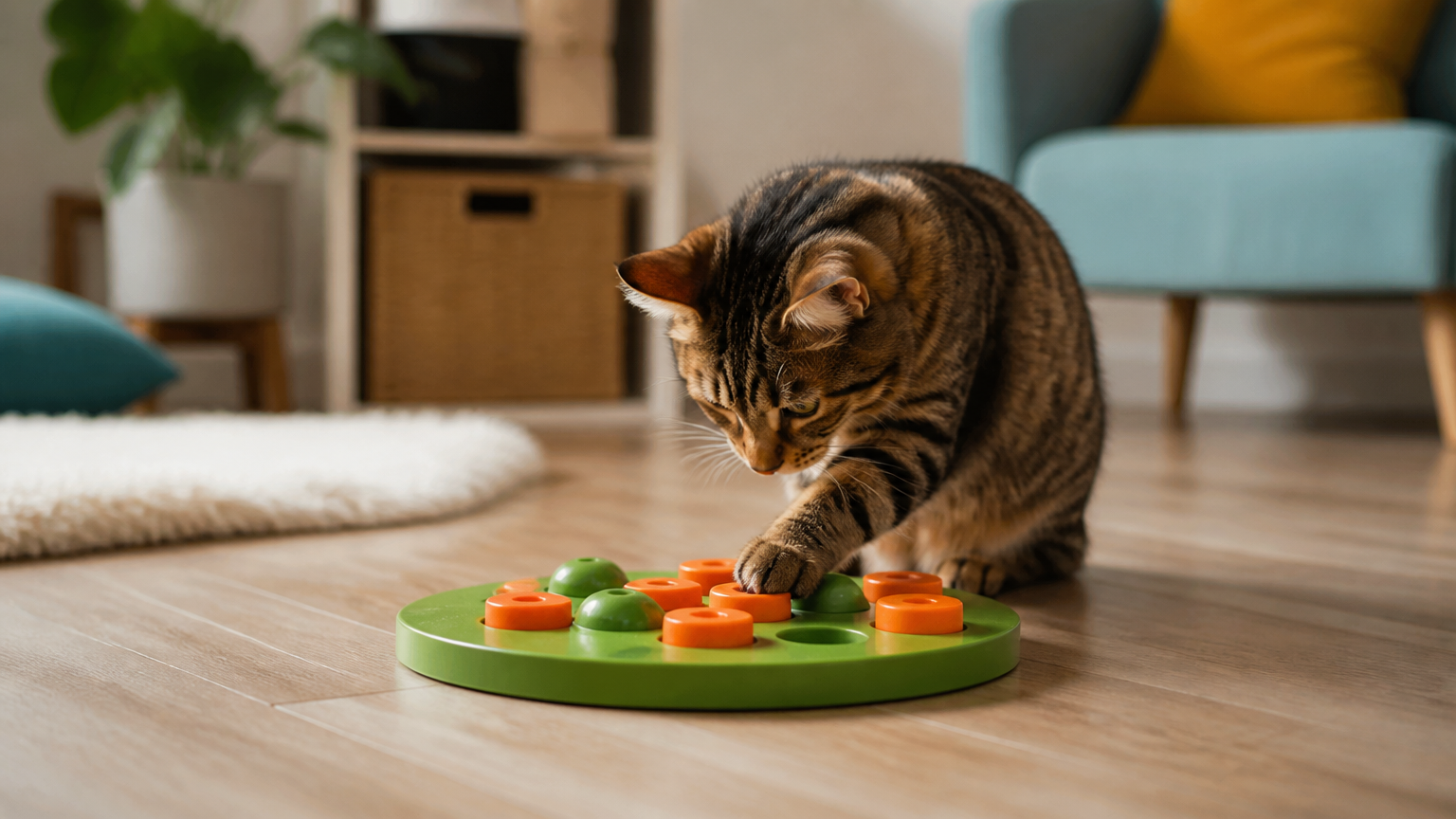
You might find that your cat prefers to use their paws to "fish" the treats out rather than just using their nose. This is great for their coordination and keeps them active indoors.
If you have a multi-pet household, give each pet their own mat. This prevents resource guarding and ensures everyone gets to play safely. Supervise them to make sure the dog does not try to take the cat's mat, as cat treats are often higher in protein and fat.
Safety Precautions and Supervision
A snuffle mat is a tool, not a chew toy. Some dogs, especially puppies, might decide that the fleece strips are fun to pull off and eat. Ingesting fabric can cause serious intestinal blockages. These conditions often require expensive emergency surgery.
Always put the mat away when the session is over. If you see your pet starting to dig aggressively or bite the mat, redirect them. Tell them "no" and show them how to use their nose instead. If they continue to chew, remove the mat and try again later. Most pets learn quickly that the mat only stays if they play the game correctly.
If your pet does ingest something they shouldn't, contact your vet immediately. For long-term health peace of mind, we offer a partnership with FIGO Pet Insurance. This can help cover the costs of unexpected accidents or illnesses that occur during play or daily life.
Troubleshooting Common Issues
Sometimes the mat doesn't work as planned. Here are a few common problems and how to fix them.
- The treats fall through: This usually means the mat isn't dense enough. Add more vertical strips to fill in the gaps.
- The pet isn't interested: Try a higher-value treat. Use something with a very strong smell, like freeze-dried liver.
- The mat slides around: If you used a lightweight plastic base, it might slide on hardwood floors. You can glue a piece of non-slip shelf liner to the bottom of the mat.
- The fleece is getting "flat": After many uses, the fleece can lose its fluff. Give it a good shake or a quick wash to revitalize the fibers.
Why DIY is Often Better Than Buying
You can find pre-made snuffle mats online, but making one yourself has several benefits. First, it is much cheaper. You can often make a large mat for under fifteen dollars. Second, you can customize the size. If you have a Great Dane, you can join two sink mats together with zip ties to create a massive foraging area.
You also get to choose the quality of the fleece. Some cheap store-bought mats use thin fabric that falls apart after one wash. By choosing your own materials, you ensure a longer-lasting toy. Plus, there is a certain satisfaction in watching your pet enjoy something you built with your own hands.
Enrichment Beyond the Mat
Once your pet masters the snuffle mat, you can look into other ways to keep them busy. At BaxterBoo, we stock a variety of enrichment toys from brands like Kong and Jackson Galaxy. You can rotate these with your DIY mat to keep things fresh.
Mixing up the types of puzzles your pet solves prevents them from getting bored with one routine. One day you can use the snuffle mat, the next a rubber toy stuffed with peanut butter, and the following day a treat-dispensing ball. This variety is the key to a happy, well-adjusted pet.
Key Takeaway: A snuffle mat is a fantastic foundation for a broader pet enrichment program that includes DIY projects and expertly curated toys.
Conclusion
Building a snuffle mat is one of the most rewarding projects you can do for your pet. It provides a healthy outlet for their natural instincts and helps manage common issues like fast eating and boredom. With just a rubber mat, some fleece, and a bit of time, you can create a high-quality enrichment tool that lasts for years. Remember to supervise your pet and keep the mat clean to ensure it stays a safe and fun part of their routine. We are proud to support your journey in pet ownership by providing the supplies and expertise you need. For the treats and kibble to fill your new mat, consider signing up for our Autoship programme to save on every order.
FAQ
Can I wash my DIY snuffle mat in the machine?
Yes, most DIY snuffle mats can be machine-washed if you use the right settings. Place the mat inside a laundry bag or pillowcase to prevent the strips from getting caught in the machine. Use cold water and a gentle cycle, then always allow the mat to air-dry to prevent the rubber base from melting or warping.
What is the best fabric to use for a snuffle mat?
Anti-pill fleece is the gold standard for snuffle mats because it does not fray when cut into strips. This means you do not have to sew any of the hundreds of pieces you create. It is also soft on a pet’s nose and holds up well to repeated washings compared to cotton or felt.
How long should I let my dog use the snuffle mat?
A snuffle mat session usually lasts between 5 to 15 minutes, depending on how many treats you hide and your pet's skill level. It is best to remove the mat once they have found all the food. This prevents them from starting to chew on the fabric or base, which can be dangerous if swallowed.
Will a snuffle mat help a dog that barks at everything?
While it is not a direct cure for barking, a snuffle mat can help reduce barking caused by boredom or pent-up energy. Engaging a dog’s nose lowers their heart rate and provides a calming effect. If the barking is due to anxiety, a snuffle mat can be a great tool to redirect their focus during stressful times.


- Site & Contents BaxterBoo.com. BaxterBoo is located in the United States.
- Privacy & Security
- Terms of Use
- Accessibility Statement
