Save 15% on your 1st Autoship learn more

 Email us
 Live Chat
 FAQs
FAQs





Introduction
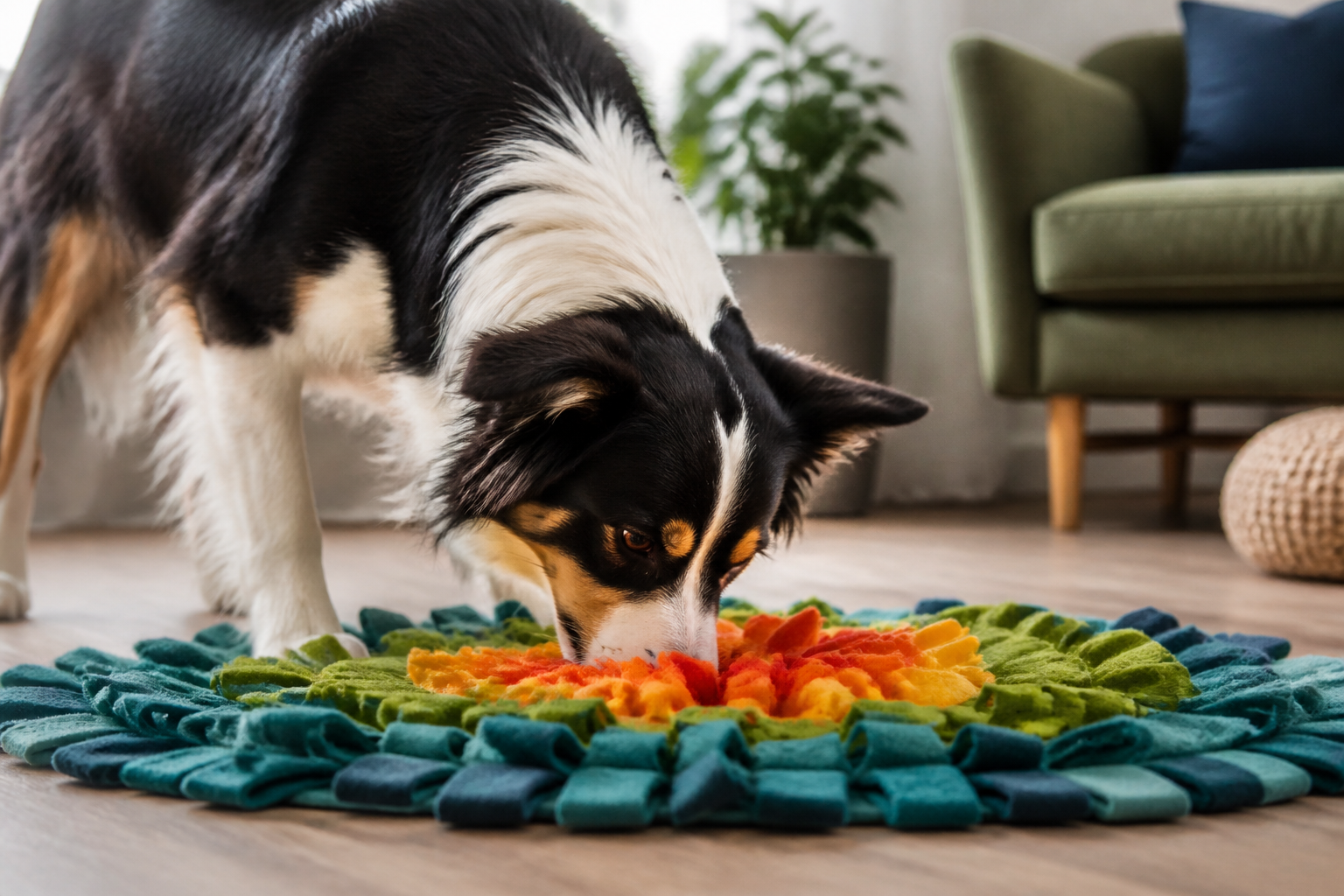
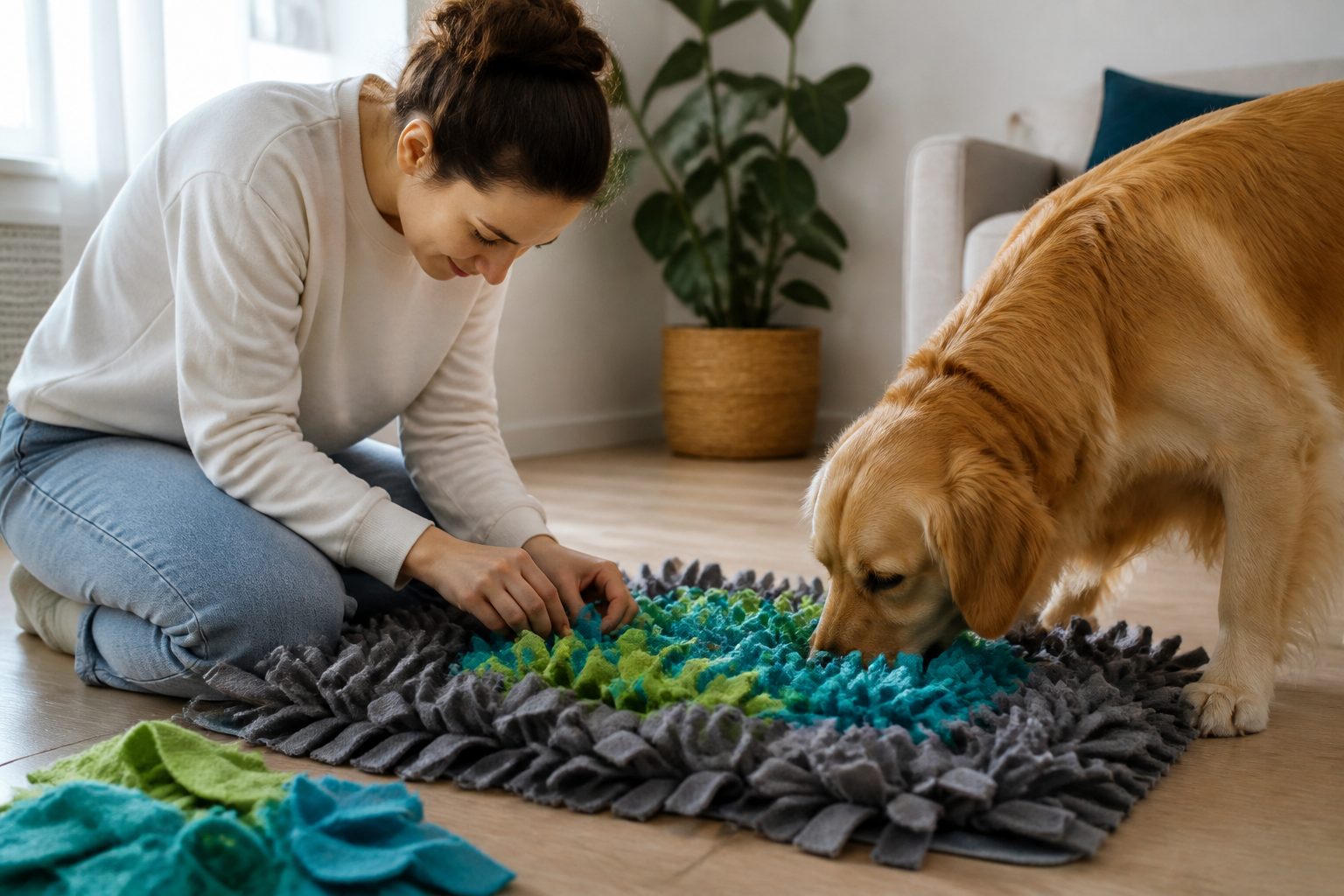
You know the look your dog gives you when their dinner disappears in ten seconds flat. They stand over an empty bowl, looking up at you as if to ask, "Is that all?" This common scenario often leads to boredom, begging, or even digestive upset. Most dogs have a powerful natural drive to forage and sniff, but our modern routines often skip this vital mental exercise. At BaxterBoo, we have spent years helping pet owners find ways to keep their dogs engaged and healthy. A snuffle mat is one of the most effective tools for slowing down fast eaters and providing low-impact mental stimulation. This simple DIY project uses basic materials to create a rewarding puzzle for your pet. We will walk you through the supplies, the construction, and the best ways to use this enrichment tool for a happier dog.
Quick Answer: A snuffle mat is an enrichment toy made by tying fleece strips to a rubber mat. You hide dry food or treats inside the fabric, forcing your dog to use their nose to find their meal.
Understanding the Power of the Dog's Nose
To understand why you should make a snuffle mat for your dog, you have to understand how they see the world. While humans rely primarily on sight, dogs experience their environment through scent. Their olfactory bulb is roughly forty times larger than ours relative to brain size. When a dog sniffs, they are not just identifying a smell. They are gathering information about who was there, how they felt, and what might happen next.
Using a snuffle mat taps into a part of the brain called the seeking system. This system releases dopamine when a dog is searching for a reward. This makes the act of searching just as satisfying as the act of eating. It is why a dog might spend twenty minutes sniffing a single bush on a walk. By bringing this activity indoors, you provide a constructive outlet for their natural instincts.
Why Enrichment Matters
Enrichment is not just about fun. It is a vital part of canine health. A dog that does not get enough mental stimulation will often find their own "jobs." These self-assigned jobs usually involve chewing your shoes, barking at the window, or digging in the garden.
A snuffle mat provides a focused task. It requires concentration and problem-solving. Ten minutes of intense sniffing can be as tiring for a dog as a long walk. This makes it a perfect tool for rainy days, recovery after surgery, or for senior dogs with limited mobility. For more ideas, explore our guide to indoor enrichment activities for pets.
Benefits for Different Life Stages
Every dog can benefit from a snuffle mat, but it serves different purposes depending on their age and health.
For puppies, a mat is a great way to introduce them to basic puzzle-solving. It helps build confidence as they learn that using their nose leads to a reward. It also keeps them occupied during that high-energy "zoomie" hour in the evening.
For adult dogs, especially high-energy breeds like Shepherds or Labradors, it provides a "job" to do. These dogs often struggle with relaxation. The repetitive, rhythmic action of sniffing and foraging has a naturally calming effect on the nervous system.
Vet Tip: For senior dogs or those with cognitive decline, scent games can help keep the brain sharp. If your senior dog is struggling with joint pain, a snuffle mat allows them to "work" without putting stress on their hips or knees.
Managing Weight and Digestion
One of the most practical reasons to make a snuffle mat for your dog is to manage their eating speed. Dogs that "inhale" their food are at a higher risk for bloating and indigestion. When a dog eats from a bowl, they can finish a cup of kibble in moments. The same amount of food spread across a snuffle mat can take fifteen to twenty minutes to consume.
This delay gives the brain time to register that the stomach is full. If you are managing a dog's weight, this is a vital advantage. Many of our customers use prescription weight management diets. Our pet pharmacy offers these specialized foods and medications. Using a snuffle mat with these veterinary diets ensures your dog feels satisfied even if their calorie count has decreased.
Key Takeaway: Snuffle mats are powerful tools for weight management and anxiety because they slow down consumption and trigger the brain's natural "feel-good" chemicals.
Gathering Your DIY Supplies
One of the best things about this project is how affordable it is. You do not need expensive tools or advanced sewing skills. In fact, there is no sewing involved at all. You can find most of these items at a local craft store or even a dollar store.
The Base Mat
You need a sturdy, flexible base with holes. A rubber or plastic sink mat is the most common choice. These are usually found in the kitchen section of a department store. Look for one that is non-skid so it does not slide across the floor while your dog is working.
If you have a very large dog, you can use a heavy-duty rubber doormat with a grid pattern. For small dogs, a standard sink mat is plenty of space. You can also zip-tie two smaller mats together to create a larger surface area.
Fleece Fabric
Fleece is the best material for this project because it does not fray when cut. It is also soft on your dog's nose and easy to wash. You will need about 1.5 to 2 yards of fleece for a standard-sized mat.
You can buy new fabric from a bolt or upcycle old fleece blankets. If you want to be cost-effective, check the clearance section for "anti-pill" or "blizzard" fleece. Your dog does not care about the pattern or color, so this is a great place to save money.
Cutting Tools
A good pair of sharp fabric scissors is essential. If you want to make the process faster, a rotary cutter and a self-healing mat are helpful. A ruler or measuring tape will help you keep the strips consistent, though perfection is not required.
Bottom line: High-quality fleece and a non-skid rubber base are the only two mandatory components for a durable, safe snuffle mat.
Preparing Your Materials
Before you start tying, you need to prepare the fabric. Consistent sizing makes it easier to tie the knots and ensures the mat has a dense, uniform feel.
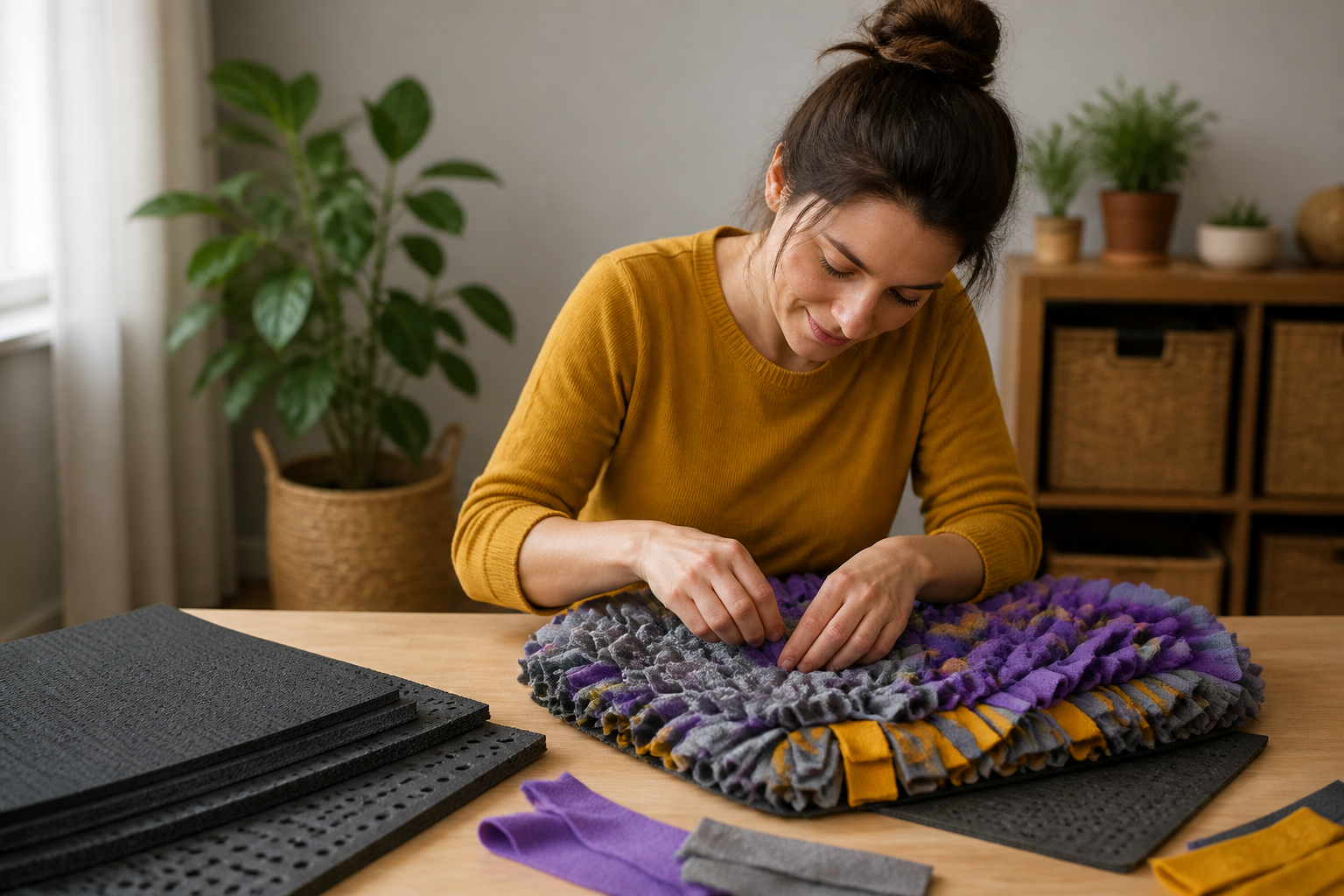
Step 1: Flatten the fleece. / Lay your fabric out on a large table or the floor. Smooth out any wrinkles so you can cut straight lines.
Step 2: Cut the fleece into wide sections. / Cut the fabric into long strips that are about 6 to 8 inches wide.
Step 3: Cut the individual strips. / Take those wide sections and cut them into smaller strips about 1 inch wide. Your final strips should be roughly 1 inch by 6 to 8 inches.
Step 4: Organize by color. / If you are using multiple colors, separate them into piles. This helps you create a pattern or ensure the colors are mixed evenly across the mat.
How Many Strips Do You Need?
A standard sink mat usually has around 100 to 150 holes. Since you will be tying strips through every hole and often across the bridges between holes, you will likely need between 200 and 300 strips. It sounds like a lot, but the cutting goes quickly once you get into a rhythm.
Step-by-Step Construction Guide
Once your strips are ready, find a comfortable spot to sit. This is a great "couch project" to do while watching a movie.
Step 1: Start at a corner. / Take your first strip of fleece. Feed one end through the first hole and the other end through the adjacent hole.
Step 2: Tie a single knot. / Pull the ends up so they are even and tie a basic overhand knot. Pull it tight. You do not need a double knot. The friction of the fleece will keep it in place.
Step 3: Work in a row. / Continue tying strips down the first row of holes. Both ends of the fleece should always point upward.
Step 4: Fill the vertical gaps. / Once you finish a row, go back and tie strips through the holes vertically. This creates a "criss-cross" pattern that makes the mat look very full.
Step 5: Check for gaps. / Flip the mat over occasionally. If you see any large areas of exposed rubber, add more strips. You want the mat to be dense enough that kibble cannot fall straight through to the floor.
Note: If you use a mat with very small holes, you might find it helpful to use a crochet hook or a pair of blunt tweezers to pull the fleece through.
Introducing the Mat to Your Dog
The first time you give your dog the snuffle mat, you want them to be successful. If it is too hard, they might get frustrated and try to chew or shake the mat instead of sniffing.
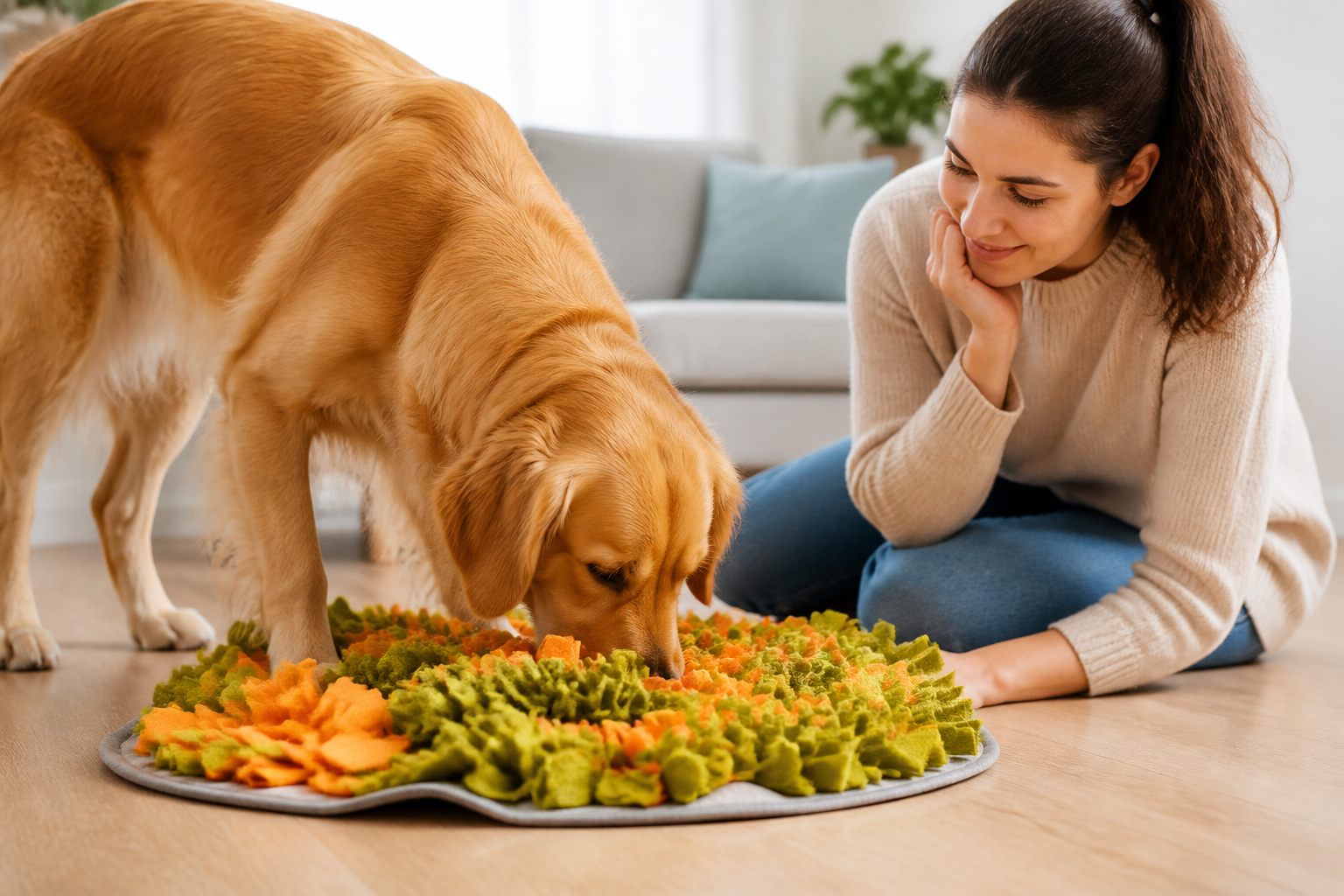
Start by placing a few high-value treats right on top of the fleece. Let your dog see you put them there. Use words of encouragement like "find it" or "search." Once they eat the visible treats, they will naturally start to sniff for more.
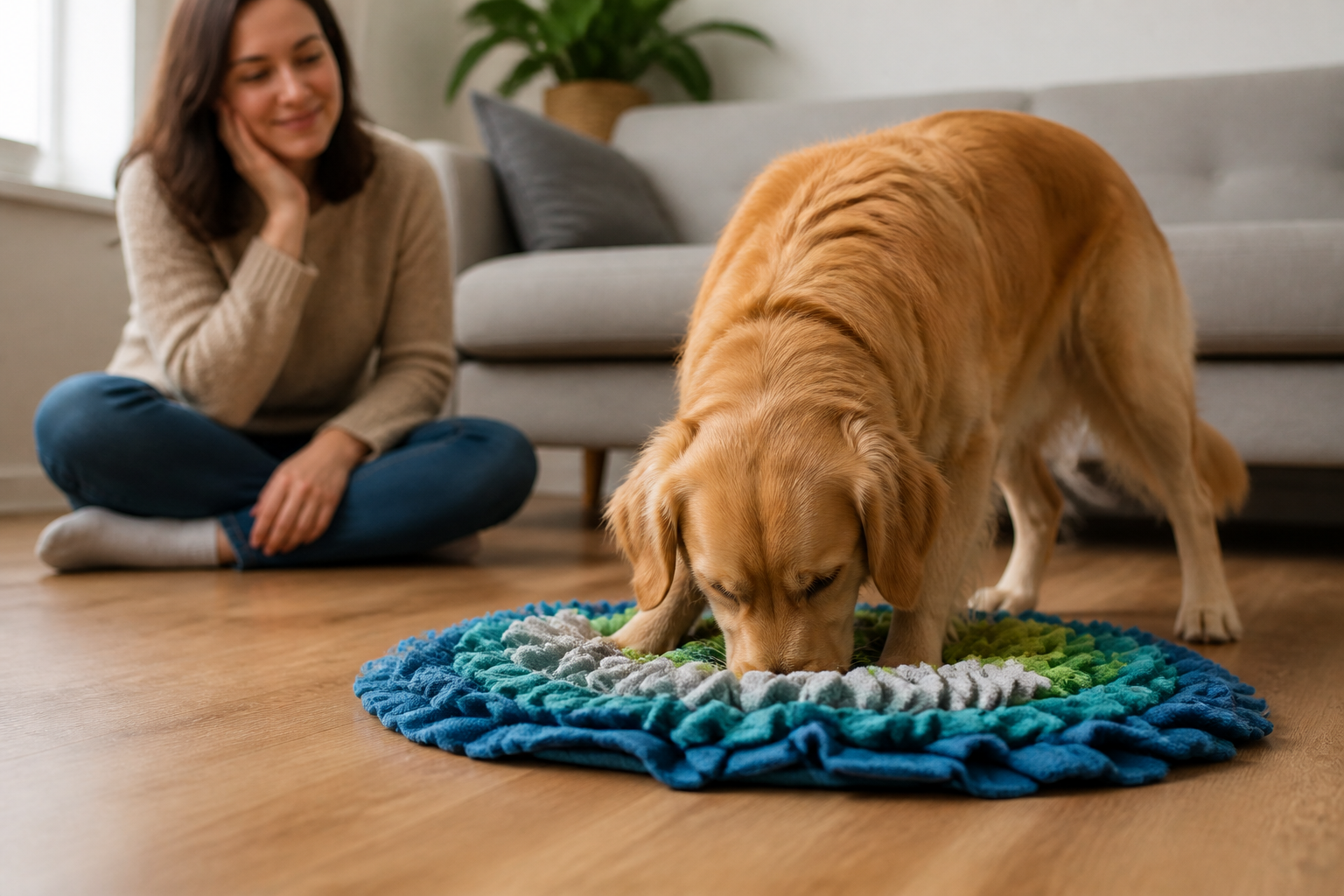
As they get better at the game, you can start tucking the treats deeper into the fabric. Eventually, you can sprinkle their entire meal of dry kibble over the mat and give it a light shake. The food will disappear into the "grass" of the fleece, and your dog will happily spend the next fifteen minutes rooting it out. You can also compare this approach with other dog brain games and scent-based activities.
Managing Different Personalities
Different dogs interact with the mat in different ways. Some are methodical. They will start at one corner and clear the whole mat systematically. Others are more chaotic. They might nudge the mat with their nose or use their paws to dig.
If your dog tries to pick up the mat and shake it, gently take it away and reset. The goal is nose work, not a game of tug. Most dogs learn very quickly that sniffing is the only way to get the food out.
Safety and Supervision
While snuffle mats are generally safe, you should always supervise your dog during use. This is especially important for "power chewers." Fleece is durable, but a determined dog can chew off strips. If swallowed, these can cause intestinal blockages.
Once your dog has finished finding all the food, pick the mat up and put it away. This serves two purposes. First, it prevents the dog from chewing on the mat out of boredom. Second, it keeps the mat "special." If the mat is always available, it becomes just another piece of furniture. If it only comes out at mealtimes, it remains a high-value enrichment toy.
Vet Tip: Always inspect your DIY mat for loose strips or signs of wear. If you notice your dog is ingesting fabric, stop using the mat immediately and consult your veterinarian.
Cleaning and Maintenance
Because your dog will be drooling on the mat and food particles will get trapped, you need to clean it regularly. A dirty mat can harbor bacteria or mold, especially if you use moist treats.
If you used a plastic or rubber base, you can usually wash the mat in the machine on a gentle, cold cycle. However, the heavy rubber can sometimes be hard on your washing machine. A safer bet is to soak the mat in a tub of warm, soapy water. Use a pet-safe, unscented detergent.
Rinse it thoroughly and hang it to dry. Do not put the mat in the dryer, as the heat can melt or warp the plastic base. Air drying usually takes about 24 hours depending on the thickness of the fleece.
Using the Mat for Anxiety and Focus
We often recommend snuffle mats for dogs dealing with separation anxiety or noise phobias. The act of sniffing lowers the heart rate. If you know a thunderstorm is coming, or if you are preparing to leave the house, giving your dog a snuffle mat can help them stay in a calm state of mind.
If your dog is on calming supplements or medications from our pet pharmacy, the snuffle mat works as an excellent behavioral companion to those treatments. It gives the dog a productive way to channel their nervous energy. Instead of pacing or whining, they can focus on the "hunt."
Variations for Advanced Snufflers
Once your dog is a pro, you can change the game to keep it challenging. You can use different types of treats with stronger or weaker scents. You can also hide the mat itself. Place the loaded mat in a different room and tell your dog to "go find." This adds a whole new layer of scent tracking to the activity.
Another variation is to use different textures. You can tie in pieces of old t-shirts or denim along with the fleece. Different fabrics hold scents differently, providing a more complex olfactory experience for your dog.
Why Quality Gear Matters
While making a snuffle mat is a fun project, we know that not every pet owner has the time to DIY. We carry a wide range of expertly curated dog enrichment toys that serve the same purpose. Whether you choose to make one or buy one, the goal is the same: providing your dog with a life that is mentally and physically fulfilling.
Our team is dedicated to finding products that stand up to real-world use. We have been in business since 2006, and we only stock brands we would give to our own pets. From high-quality treats to the latest in puzzle technology, we want to be your partner in pet care.
Final Thoughts
Building a snuffle mat is a simple way to show your dog you care about their mental well-being. It turns a mundane daily task like eating into an exciting adventure. By following these steps, you can create a durable, washable toy that provides years of entertainment.
Key Takeaway: A DIY snuffle mat is a cost-effective way to improve your dog's digestion, reduce anxiety, and provide essential mental enrichment through natural foraging.
If you are ready to start this project, grab your fleece and a sturdy mat. If you find your dog loves the challenge, consider looking into the MVP Rewards programme to save on the high-quality treats and kibble you will need to keep the game going. Happy sniffing!
FAQ
How do I stop my dog from chewing the snuffle mat?
Supervision is the most important factor in preventing chewing. If your dog starts to gnaw on the fabric, say "no" or "leave it" and redirect them to sniffing. Once they find a few treats, they usually understand the purpose of the mat. If the chewing persists, remove the mat and try again later when they are calmer.
Can I use wet food in a snuffle mat?
It is not recommended to use wet food or "messy" treats in a fleece snuffle mat. The moisture will soak into the fabric, making it difficult to clean and potentially leading to mold or bacteria growth. Stick to dry kibble, dehydrated treats, or crunchy biscuits that can be easily shaken out or washed away.
Is a snuffle mat good for puppies?
Yes, snuffle mats are excellent for puppies. They provide a safe way to burn off energy without putting stress on growing joints. It also helps with crate training; giving a puppy a loaded snuffle mat in their crate can help them associate the space with a positive, calming activity.
How often should I wash my DIY snuffle mat?
You should wash your mat at least once every two weeks if you use it daily. If your dog is a heavy drooler or if you use treats with a strong odor, you may need to wash it weekly. Always ensure the mat is completely dry before using it again to prevent any mildew from forming in the deep layers of fleece.