Save 15% on your 1st Autoship learn more

 Email us
 Live Chat
 FAQs
FAQs





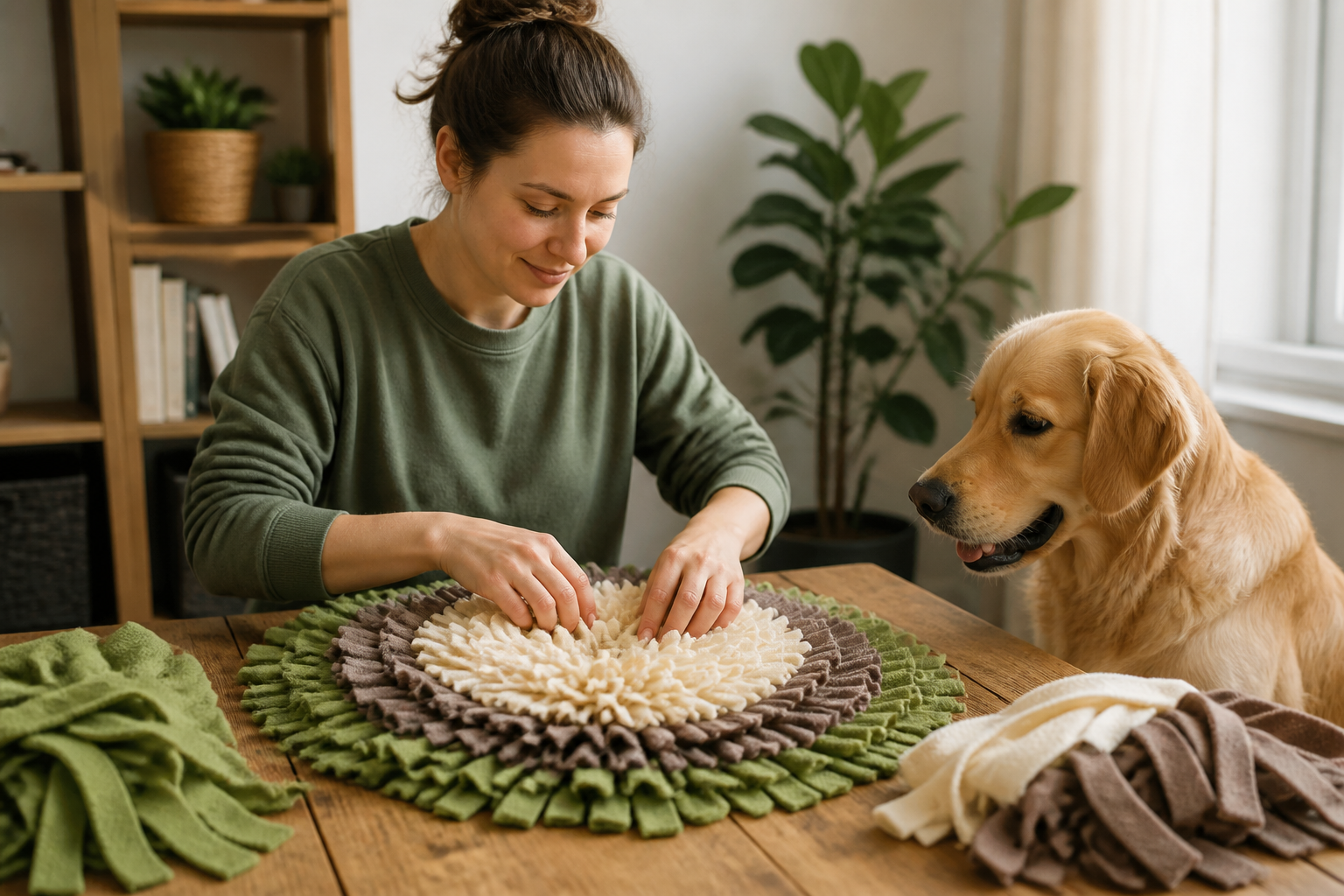
Table of Contents
- Introduction
- The Science of Sniffing and Enrichment
- Why DIY is Often Better Than Buying
- Supplies You Will Need
- Preparing Your Materials
- How to Tie the Snuffle Mat
- Introducing the Mat to Your Dog
- Cleaning and Maintenance
- Health and Weight Management
- Variations for Different Pets
- Troubleshooting Common Issues
- Building a Routine
- Making This a Social Project
- The BaxterBoo Difference
- FAQ
Introduction
You fill the food bowl and barely set it down before your dog has inhaled every single kibble. This "scarf and barf" routine is common for many pet owners. It often leads to digestive upset or weight concerns. Or perhaps you have a high-energy pup who remains restless even after a long walk around the neighborhood. In these moments, you need a way to slow down the meal and engage their brain. At BaxterBoo, we believe that mental enrichment is just as important as physical exercise for a happy pet. This guide will show you exactly how to create a DIY snuffle mat from simple materials. We will cover everything from choosing the right fabric to the specific tying techniques that ensure a durable finished product. Learning how to make a snuffle mat is a practical way to support your dog's natural foraging instincts while providing hours of quiet entertainment.
Quick Answer: A snuffle mat is a DIY enrichment toy made by tying strips of fleece fabric to a sturdy rubber base. You hide dry food or treats within the fabric folds to encourage your dog to use their nose to forage. This simple tool slows down fast eaters and provides essential mental stimulation.
The Science of Sniffing and Enrichment
Before you start cutting fabric, it helps to understand why this tool is so effective. Dogs experience the world primarily through their sense of smell. Their noses have up to 300 million olfactory receptors. In comparison, humans have about six million. When a dog sniffs, they are processing an incredible amount of information. This activity is actually quite tiring for them.
Many pet owners focus exclusively on physical exercise. While walks are great, they do not always satisfy a dog's cognitive needs. This is where nose work comes in. Foraging for food is a natural behavior. In the wild, animals spend a large portion of their day searching for their next meal. Domestic dogs rarely get to practice this skill because we serve their food in a convenient bowl.
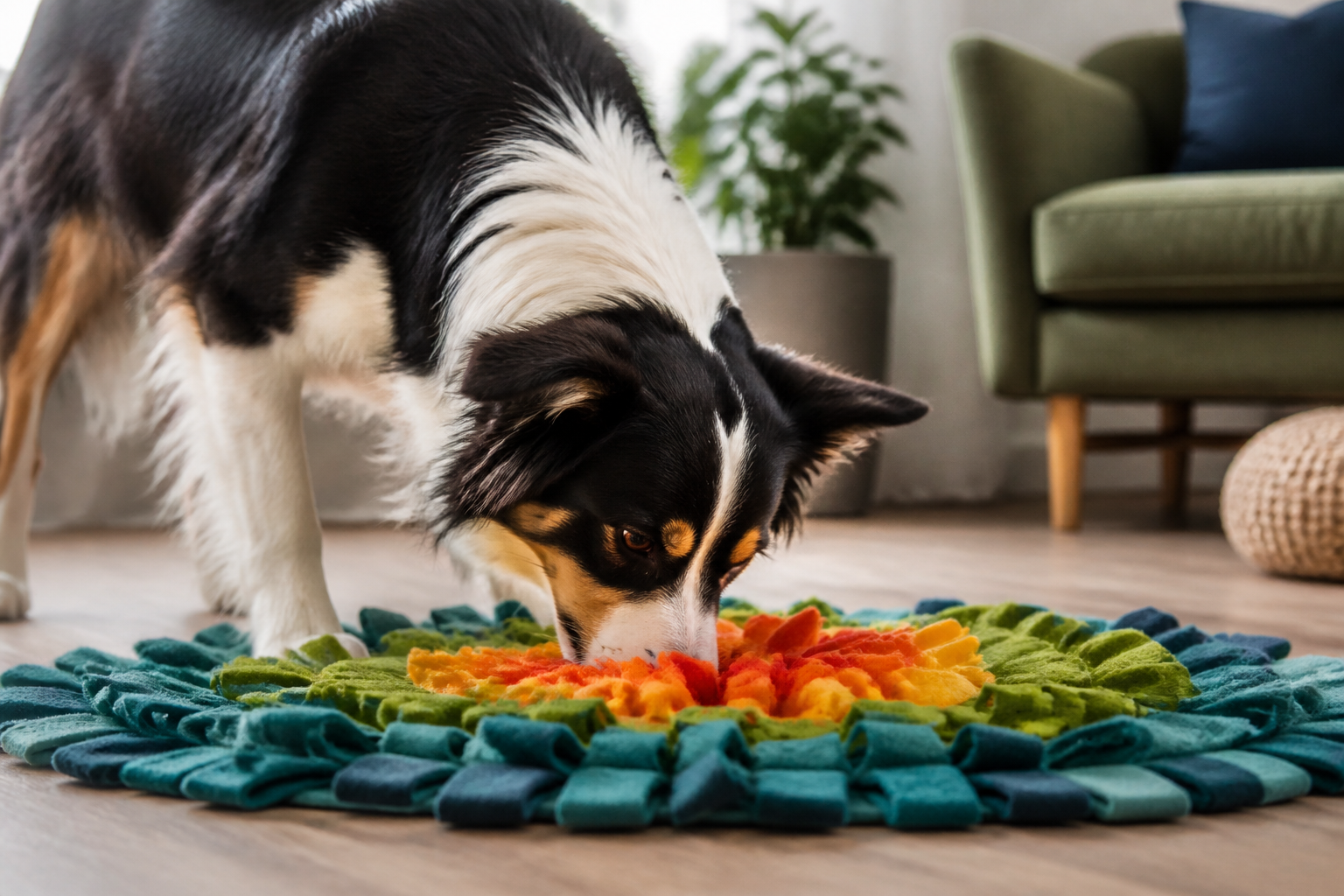
A snuffle mat recreates that foraging experience. It forces the dog to problem-solve. They must move the fabric aside and use their nose to locate the hidden "prey." This focused work lowers their heart rate and can help reduce anxiety. It is an excellent solution for rainy days or for senior dogs who cannot go on long walks. For more ideas, explore these dog brain games and enrichment activities.
Key Takeaway: Ten minutes of sniffing and foraging is often more mentally exhausting for a dog than a thirty-minute walk. Using a snuffle mat turns mealtime into a brain-training session.
Why DIY is Often Better Than Buying
You can find pre-made mats in many stores, but making your own has several advantages. First, you can control the size. A tiny Chihuahua needs a different mat than a massive Great Dane. When you make it yourself, you can customize the dimensions of the base and the length of the fabric strips.
Second, you choose the quality of the materials. Some store-bought mats use thin, flimsy fabric that tears easily. By selecting a thick, high-quality fleece, you create a toy that lasts for years. You can also match the colors to your home decor or your dog's personality.
Finally, the cost is significantly lower. You can often find the necessary supplies at a local hardware store or craft shop for a fraction of the price of a boutique enrichment toy. It is a rewarding project that pays off every time you see your dog happily snuffling away.
Supplies You Will Need
You do not need a workshop full of tools to complete this project. Most of these items are readily available.
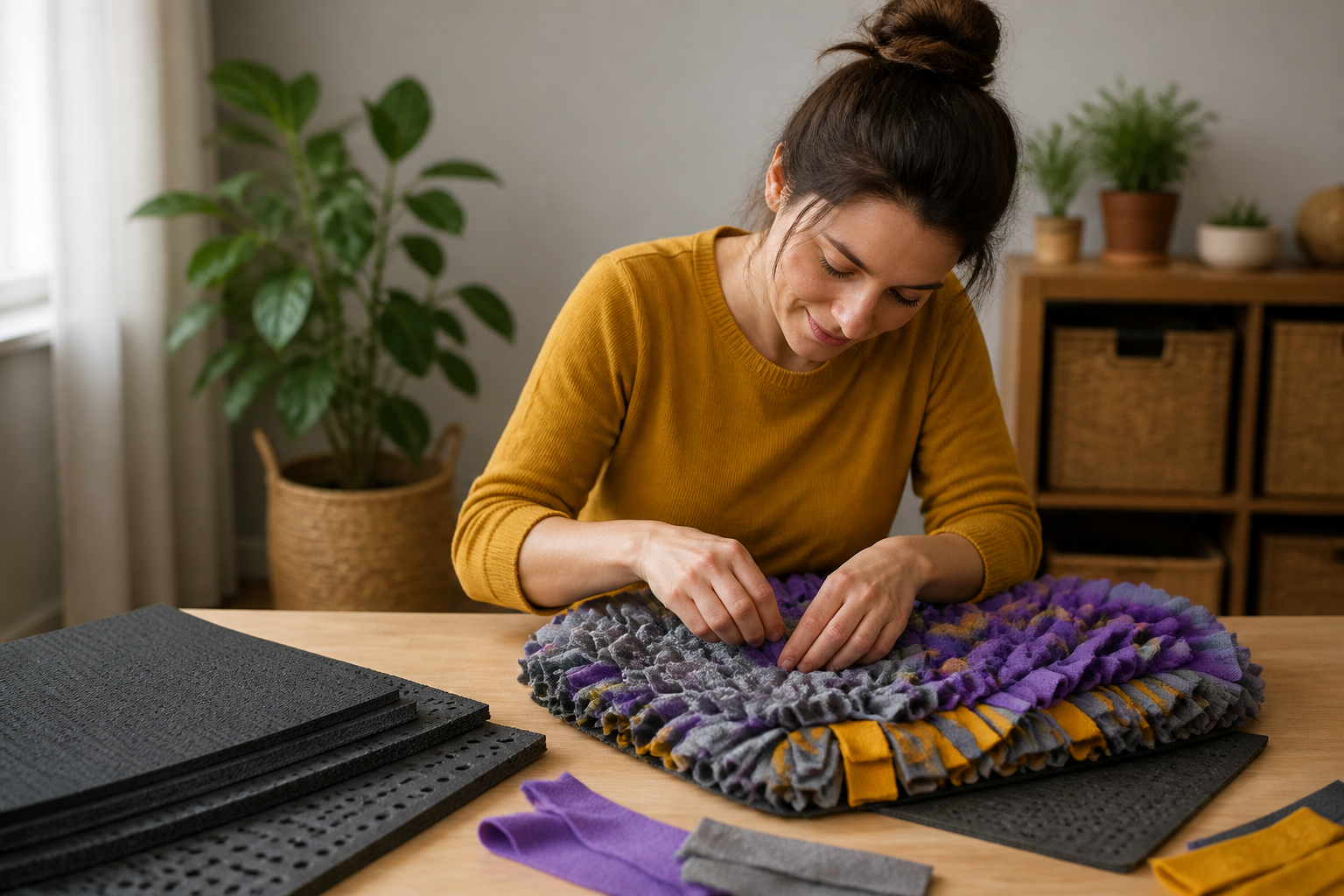
- A Rubber Sink Mat: Look for a heavy-duty mat with holes. It should be flexible but sturdy. Avoid foam mats as they can be easily shredded. A standard 12 by 15 inch mat is perfect for most dogs.
- Fleece Fabric: You will need approximately 1.5 to 2 yards of anti-pill fleece. Fleece is the gold standard for this project because it does not fray when cut. You can use one solid color or several different patterns.
- Sharp Scissors or a Rotary Cutter: You will be cutting a lot of fabric. Sharp blades will save your hands from fatigue.
- A Ruler or Tape Measure: This helps keep your strips consistent.
- A Small Bowl of Treats: Use these for testing the "hide-ability" of the mat once you finish.
Vet Tip: Always choose anti-pill fleece for DIY pet toys. Standard felt or cotton fabrics can fray and create long threads. If a dog swallows these threads, they can cause serious intestinal obstructions.
Preparing Your Materials
The first step is to prepare the base. If you have a large dog, you might want to join two sink mats together. You can do this using heavy-duty plastic zip ties. Simply overlap the edges of two mats and secure them in three or four places. Be sure to trim the excess plastic and file down any sharp edges.
Next, you need to prepare your fleece. If you bought your fabric from a bolt, it might have a factory edge that feels a bit stiff. You can trim this off first. It is also a good idea to wash the fleece once before you start. This removes any chemical residues from the manufacturing process. Use a pet-safe, scent-free detergent.
Cutting the Strips
This is the most time-consuming part of the process. For a standard sink mat, you will need between 150 and 200 strips of fabric. Do not let that number intimidate you. You can do this while watching a movie or listening to a podcast.
- Cut your fleece into long sections that are 7 inches wide.
- Stack three or four of these sections on top of each other.
- Cut across the width to create strips that are 1 inch wide.
- Your final strips should be approximately 1 inch by 7 inches.
If your strips are too short, they will be hard to tie. If they are too long, they will flop over and not hide the food effectively. The 7-inch length provides enough fabric to tie a secure knot while leaving about 3 inches of "grass" on each side.
Organizing Your Workspace
Keep your strips in a basket or a pile within easy reach. Place your rubber mat on a flat surface like a coffee table or a desk. If the mat tends to slide around, you can place a damp towel underneath it. This keeps everything steady while you work.
Key Takeaway: Consistency in strip size is key. While the dog does not care if the cuts are perfectly straight, having uniform lengths makes the finished mat look fuller and more professional.
How to Tie the Snuffle Mat
There are two ways to tie the strips to the mat. You can tie them in a single direction or a "cross-hatch" pattern. The cross-hatch pattern creates a much denser mat that is better at hiding small pieces of kibble.
The Basic Knotting Technique
Start at one corner of the mat. Take a single strip of fleece and thread one end down through a hole and back up through the adjacent hole. The two ends of the fabric should now be pointing up toward you. Tie them together in a simple overhand knot.
You do not need to double-knot the fleece. Fleece is naturally grippy. Once you pull that first knot tight, it will stay in place. Double-knots actually create bulky hard spots that might be uncomfortable for your dog's nose.
Filling the Rows
Work your way across the first row of holes. Put a strip in every single hole. Once you finish the first horizontal row, move to the second. Continue this until every hole has a strip running horizontally.
Adding the Vertical Layer
To make the mat truly effective, you should now go back and add vertical strips. This means you will be tying strips between the holes you just used, but in the perpendicular direction. This fills in the gaps and creates a thick, plush surface.
- Look at the mat from the bottom.
- Find the plastic "bars" between the holes that do not have a strip wrapped around them.
- Thread a strip through those holes and tie it on the top side.
- Repeat this for the entire mat.
When you are finished, you should not be able to see the rubber base through the fabric. It should look like a dense, colorful shaggy rug.
Introducing the Mat to Your Dog
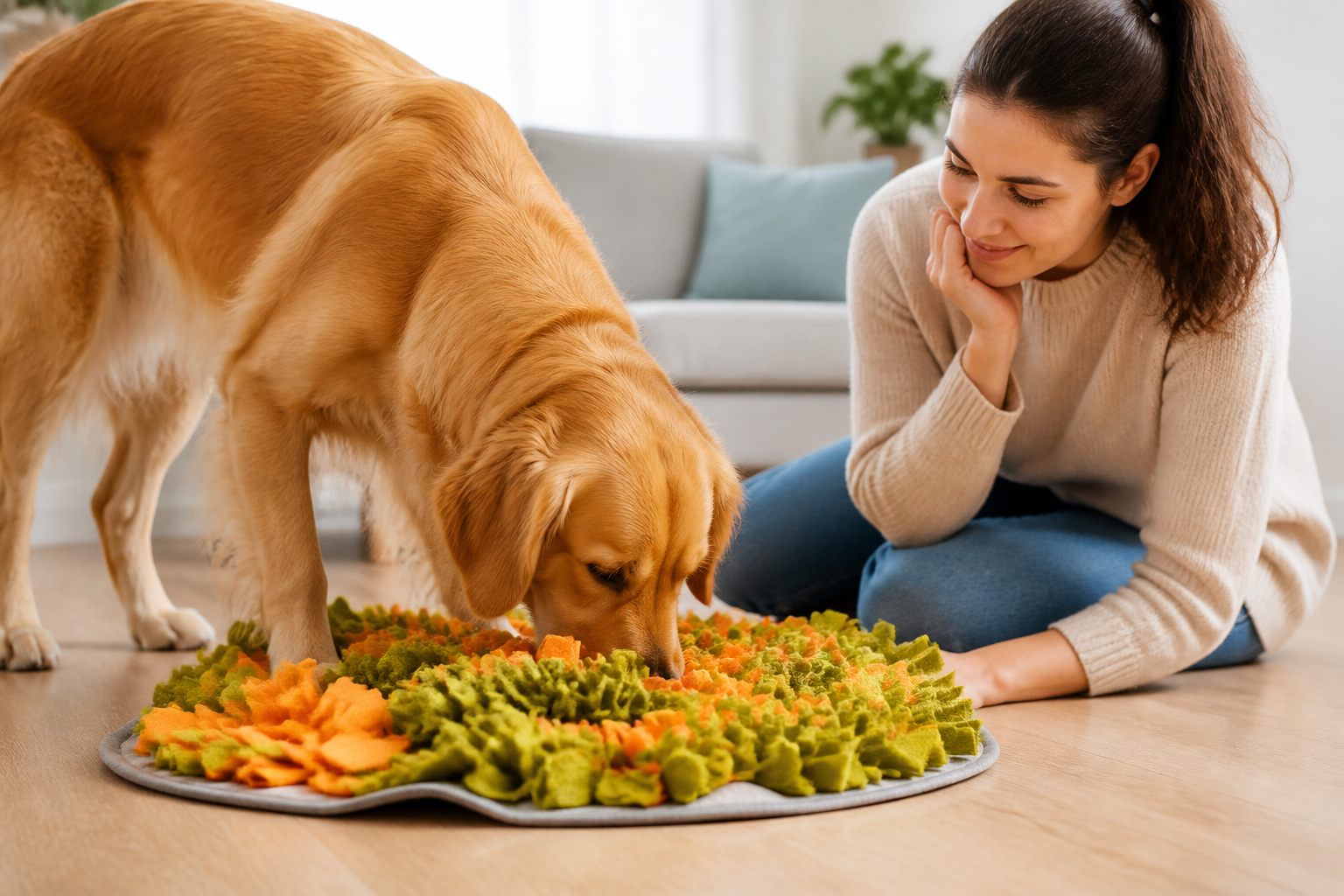
Once the mat is finished, do not just toss it on the floor and walk away. You need to teach your dog how to use it. If they are used to a bowl, they might be confused or even frustrated by the fabric.
Step 1: Start easy. Place five or six high-value treats directly on top of the fleece strips. Let your dog see you do it.
Step 2: Encourage them to "find it." As they eat the visible treats, they will realize the mat is a source of rewards.
Step 3: For the next session, tuck the treats slightly into the fabric folds. Do not bury them deep yet.
Step 4: Gradually increase the difficulty. Once your dog is a "pro," you can bury the treats at the very bottom of the mat.
Managing Expectations
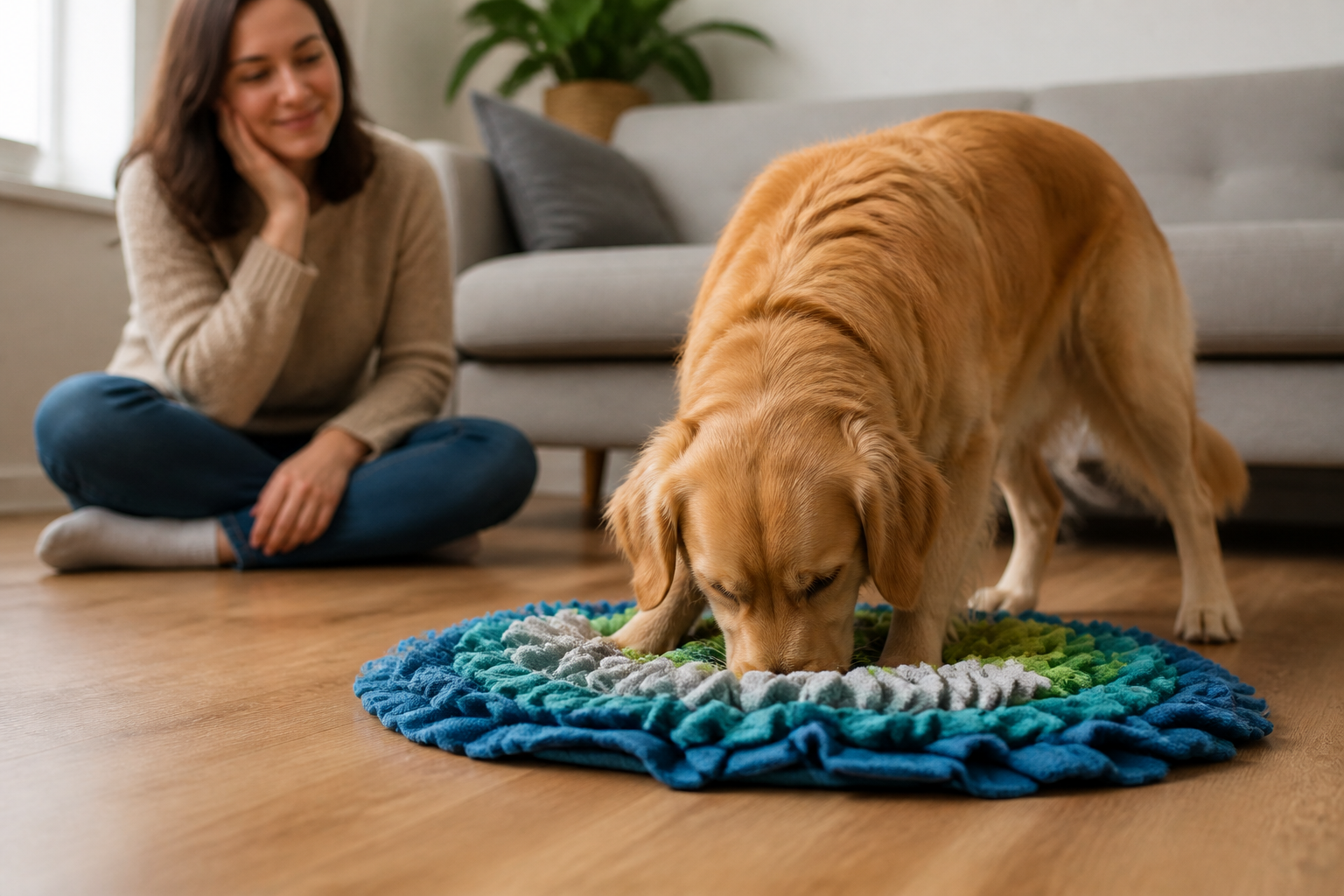
Every dog has a different snuffling style. Some are very methodical. They will use their nose to gently part the fabric and pick out one piece at a time. Others are more "active." They might try to dig at the mat or even pick it up and shake it.
If your dog tries to chew the mat or the rubber base, interrupt them immediately. This is a foraging tool, not a chew toy. If they persist in trying to destroy it, take the mat away and try again later when they are calmer.
Safety and Supervision
Always supervise your dog during snuffle mat sessions. Even the most durable DIY project can be damaged by a determined chewer. If your dog manages to rip off a strip of fleece, they could swallow it. Once the food is gone, pick the mat up and put it away. This keeps the mat "special" and prevents it from becoming a target for chewing.
Bottom line: Controlled, supervised use of the snuffle mat ensures it remains a safe and exciting enrichment tool for your pet.
Cleaning and Maintenance
Because your dog's nose and mouth are in constant contact with the mat, it will eventually get dirty. Saliva and food crumbs can lead to bacteria growth. Fortunately, if you used the materials suggested, your mat is easy to clean.
Most DIY snuffle mats can go right into the washing machine. Use a cold water cycle and a small amount of mild detergent. It is best to place the mat inside a pillowcase or a laundry bag. This prevents the fleece strips from getting tangled in the agitator.
Do not put the mat in the dryer. The heat can warp the rubber base or even melt it. Instead, give the mat a good shake to fluff the fleece and lay it flat to air dry. Depending on the thickness of your fleece, it may take 24 hours to dry completely.
Health and Weight Management
At our BaxterBoo warehouse, we often talk to customers whose dogs are struggling with weight management. A snuffle mat is a fantastic tool for these pets. When a dog eats too fast, their brain does not have time to register that the stomach is full. This leads to overeating and constant begging.
By using the mat for their daily meals, you turn a thirty-second meal into a fifteen-minute activity. This slower pace helps them feel more satisfied. If you are using a prescription diet for weight management, check with our pet pharmacy. We partner with Pet's Choice to provide FDA-approved prescription foods and medications. Using your prescribed kibble in a snuffle mat is a great way to help your dog reach a healthy weight without feeling deprived.
Vet Tip: If your dog is on a strict weight loss plan, remember to subtract the calories of any treats used in the mat from their total daily allowance. Using their regular kibble for the snuffle mat is the safest way to prevent weight gain.
Variations for Different Pets
While we usually think of snuffle mats for dogs, cats can enjoy them too. Cats are natural hunters and foragers. A smaller mat with shorter fleece strips is perfect for hiding dry cat treats or kibble. It can be especially helpful for indoor cats who need extra mental stimulation.
For very small dogs or puppies, you can make a "mini" version using a smaller plastic grid. You might also use thinner fleece strips to make it easier for their smaller noses to navigate. If you have a dog with a flat face, like a Pug or Bulldog, keep the strips on the shorter side. This prevents them from getting frustrated if they cannot reach the bottom of a deep mat.
Troubleshooting Common Issues
If your mat feels too sparse, you can always go back and add more strips. This is the beauty of the DIY model. You can "edit" the project as you go. If the mat slides around too much on hardwood floors, look for a sink mat that has small suction cups on the bottom.
If your dog loses interest, you might be making it too hard. Go back to placing the treats on top for a few sessions. You might also need to use "smellier" treats. Freeze-dried liver or small bits of dehydrated meat have a strong aroma that will draw the dog back to the mat.
We carry a wide variety of dog treats that work perfectly for this. Look for brands like Stella & Chewy's or The Honest Kitchen for small, dry treats that won't leave a greasy residue on your fleece fabric.
Building a Routine
Enrichment works best when it is consistent. Try to incorporate the snuffle mat into your dog's daily routine. Maybe they get it while you are eating dinner to prevent begging. Or perhaps it is their reward when you return home from work.
Consistency helps lower stress. When a dog knows they have a designated time for mental work, they are often calmer during the rest of the day. You can even alternate between the snuffle mat and other toys like Kongs or puzzle feeders. This variety keeps their brain sharp and prevents boredom. For additional ideas, read 10 indoor enrichment activities for pets.
Making This a Social Project
Learning how to make a snuffle mat is a great activity for a group of pet lovers. You can host a "craft night" where everyone brings a yard of fleece and you swap colors to make multi-colored mats. It is also a wonderful project for children. As long as an adult handles the sharp cutting tools, kids can help with the tying process.
Many local animal shelters also appreciate donations of snuffle mats. Shelter life is incredibly stressful for dogs. Providing them with a way to forage and use their noses can significantly improve their quality of life while they wait for their forever homes. If you have leftover fabric scraps, consider making a few extra mats for your local rescue.
The BaxterBoo Difference
We know that you want the best for your pets, whether you are buying a premium harness or making your own toys at home. Our goal at BaxterBoo is to be your partner in pet care. We curate every product in our warehouse with the same care you put into your DIY projects. From the snacks you hide in the mat to the supplements that support your senior dog's joints, we are here to help.
If you are looking for more ways to support your pet's health, consider joining our MVP Rewards program. You can earn points on every purchase of treats and gear, which you can then use for future savings. It is our way of saying thank you for being a dedicated pet parent.
Bottom line: A snuffle mat is a low-cost, high-impact tool that improves your dog's mental health, slows down their eating, and strengthens the bond between you and your pet.
FAQ
How long does it take to make a snuffle mat?
For a standard 12 by 15 inch mat, expect to spend about one to two hours on the project. The majority of this time is spent cutting the fabric into strips. The actual tying process goes quite quickly once you get into a rhythm.
Can I use any fabric besides fleece?
Fleece is strongly recommended because it is durable and does not fray. Other fabrics like cotton or wool will unravel over time, creating long strings that are a choking hazard. Fleece is also soft on a dog's sensitive nose and stands up well to repeated machine washings.
Is a snuffle mat safe for puppies?
Yes, puppies can benefit greatly from the mental stimulation of a snuffle mat. However, puppies are also prone to chewing everything in sight. You must supervise them closely to ensure they do not try to eat the fabric strips or the rubber base.
What should I hide in the snuffle mat?
Dry, crunchy treats or kibble are the best choices. Avoid using wet food or "greasy" treats, as these will ruin the fabric and be difficult to clean. Small, high-value treats like freeze-dried meat are excellent for keeping a dog engaged with the foraging process.